Views: 210 Author: ZHENYIBIO Publish Time: 2026-08-13 Origin: Site
Content Menu
● Why Acne-Related PIH Needs a Different Strategy
>> How Phytosterols Support Acne-Prone Skin
>> Can Phytosterols Fade PIH Directly?
>> How 4-Hexylresorcinol Works for PIH
>> Why 4-Hexylresorcinol Is Valuable for Brands
● Phytosterols vs. 4-Hexylresorcinol: Formulation Comparison
● Which Ingredient Should You Choose?
● Building a Better PIH Formula
● Development Notes for OEM and ODM Projects
● Avoid the "Brighten at Any Cost" Trap
● Develop Your Next PIH Solution
>> Is 4-Hexylresorcinol suitable for acne-prone skin?
>> Do phytosterols remove post-acne dark spots?
>> Can phytosterols and 4-Hexylresorcinol be used together?
>> How long does it take to see improvement in acne-related PIH?
>> Is sunscreen necessary when using PIH products?
>> Should a PIH formula also include an acne active?
Post-inflammatory hyperpigmentation in acne-prone skin is not simply a "dark spot" concern. It is the visible result of inflammation, pigment signaling, barrier disruption, and environmental exposure working together. For formulators developing products for acne-prone consumers, phytosterols and 4-hexylresorcinol offer two distinctly valuable—but very different—routes to managing PIH.
From a formulation-development perspective, the best choice is rarely about selecting the strongest brightening story in isolation. It is about building a system that reduces the risk of new acne-related marks while supporting comfortable, consistent daily use. Phytosterols are primarily barrier-supportive and soothing lipid ingredients. 4-Hexylresorcinol is a targeted pigmentation-regulating active with stronger direct relevance to melanin formation.
This guide compares their mechanisms, formulation roles, evidence profile, compatibility, and product-development potential for brands creating effective acne and dark-spot care.
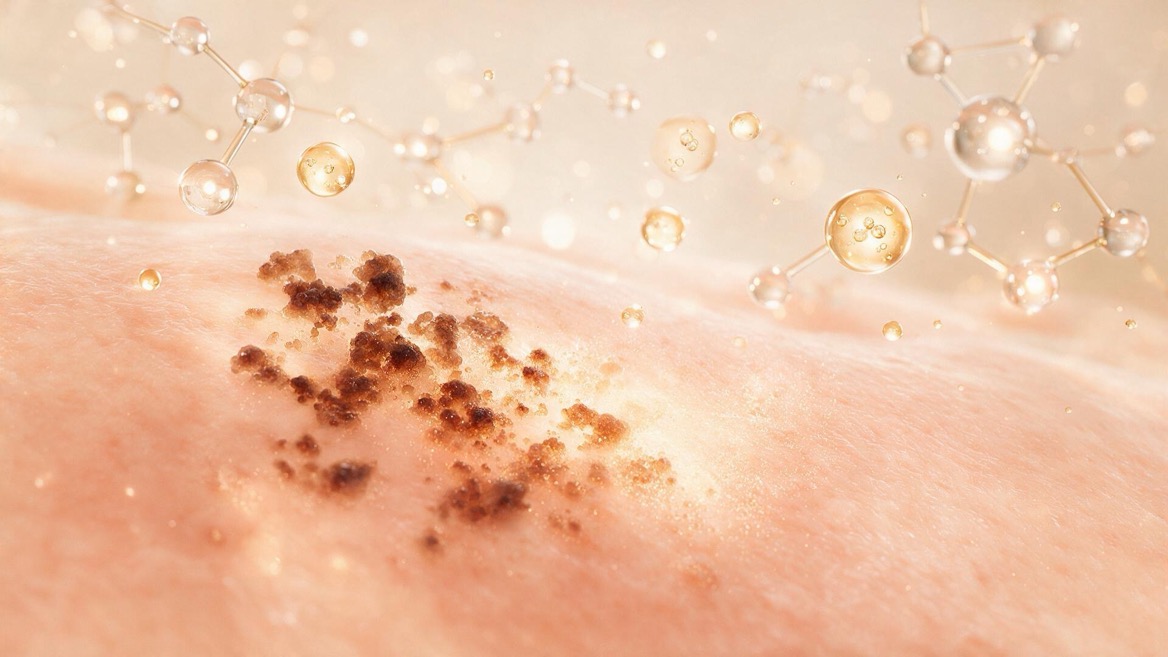
Acne-induced PIH appears after a papule, pustule, cyst, or even low-grade inflammation triggers excess melanin production. It is especially persistent in pigment-prone skin and can remain long after the active blemish has healed.
The consumer journey is often frustrating. A person may see fewer breakouts but still feel that their complexion looks uneven because the marks remain. This is why a successful acne-prone brightening product should not focus only on fading existing discoloration. It should also minimize irritation, protect the skin barrier, and support prevention.
Inflammation is the key connection between acne and PIH. When skin becomes repeatedly irritated by harsh cleansing, aggressive exfoliation, picking, or poorly tolerated actives, it may create another cycle of breakouts and discoloration.
For product developers, this creates four priorities:
- Control the conditions that contribute to acne-related inflammation.
- Help protect and restore the stratum corneum barrier.
- Address excess melanin formation without unnecessary irritation.
- Pair the formula with reliable daily photoprotection guidance.
Phytosterols and 4-hexylresorcinol fit into this framework differently. One acts mainly as a supportive foundation; the other provides a more direct pigmentation-focused pathway.
Phytosterols are plant-derived sterol compounds with structures that resemble cholesterol. Common cosmetic phytosterols include beta-sitosterol, campesterol, and stigmasterol. They may be sourced from soybean, rice bran, rapeseed, sunflower, corn, pine, and other botanical materials.
In skin care, phytosterols are valued less as instant spot-fading ingredients and more as multifunctional lipid-support ingredients. Their relevance to acne-prone skin comes from their ability to support a healthier barrier environment.
The outer skin barrier depends on a balanced lipid structure. Acne-prone consumers often unintentionally compromise this barrier through frequent cleansing, exfoliating acids, retinoids, benzoyl peroxide, dry climates, or overuse of multiple treatments.
A compromised barrier can feel tight, sting easily, and become more reactive. That matters because irritation may prolong visible redness and contribute to the inflammatory conditions associated with PIH.
Barrier support is where phytosterols are most compelling. They can help formulators create nourishing emulsions, recovery serums, lightweight creams, and calming masks that feel protective without necessarily relying on heavy occlusive textures.
Potential formulation benefits include:
- Supporting barrier recovery after environmental or treatment-related stress.
- Improving the skin-conditioning profile of emulsions.
- Helping reduce the dry, uncomfortable feel associated with active acne routines.
- Complementing ceramides, fatty acids, squalane, panthenol, and humectants.
- Adding a botanical-origin lipid story for plant-active product positioning.
Human research on soybean phytosterols has reported improved barrier recovery in compromised skin compared with a vehicle control. That is meaningful for acne-focused product design because tolerability is not an optional benefit—it is a condition for long-term consumer adherence.
Phytosterols should not be positioned as a stand-alone, high-performance melanin inhibitor. Their strongest role is indirect PIH management: helping reduce barrier stress and supporting a skin environment that is less vulnerable to irritation-driven pigmentation.
This distinction is commercially important. A brand that promises rapid dark-spot correction from phytosterols alone may create unrealistic expectations. A brand that uses phytosterols within a prevention-oriented, barrier-first PIH routine makes a more credible and useful claim.
Phytosterols are particularly suitable when the target consumer has:
- Acne-prone but dehydrated skin.
- Sensitivity after acids, retinoids, or blemish treatments.
- A damaged barrier with visible flaking or tightness.
- Concern about dark marks but low tolerance for intensive brightening regimens.
- A preference for botanical lipid ingredients.

4-Hexylresorcinol, often abbreviated as 4-HR, is a resorcinol derivative used in cosmetic brightening and tone-evening formulations. It is recognized for its ability to influence melanogenesis, the biological process through which skin produces melanin.
Unlike phytosterols, 4-Hexylresorcinol has a more direct relationship with hyperpigmentation management. It is commonly discussed as a tyrosinase-focused ingredient. Tyrosinase is a central enzyme involved in melanin production.
Melanin control makes 4-Hexylresorcinol highly relevant for acne-related PIH products, especially when a brand needs a scientifically grounded active for uneven tone, post-acne marks, and visible spot concerns.
Following acne inflammation, pigment-producing cells can become more active. The result is excess pigment deposition in the affected area. A targeted active that helps regulate melanin formation can be useful within a broader PIH protocol.
Research indicates that 4-Hexylresorcinol can inhibit melanogenesis in human melanocytes and has shown pigmentation-reducing potential in clinical testing. In one 12-week randomized, double-blind split-face study, a formula containing 0.4% 4-Hexylresorcinol plus 3% niacinamide produced better measured improvements in hyperpigmentation spots and skin tone than niacinamide alone.
This does not mean that every 4-Hexylresorcinol formula will deliver identical results. Performance depends on concentration, vehicle design, solubilization, packaging, pH, adjunct ingredients, consumer compliance, and sun exposure.
For an acne-prone brightening serum or lotion, 4-Hexylresorcinol can offer a compelling active-led position. It is particularly relevant for brands seeking alternatives to more controversial or potentially irritating pigment-correcting approaches.
Potential product claims, subject to formula substantiation and local regulatory review, may focus on:
- Improving the appearance of post-acne dark marks.
- Helping promote a more even-looking skin tone.
- Supporting the appearance of brighter, clearer-looking skin.
- Targeting visible discoloration associated with prior blemishes.
- Complementing a daily anti-blemish and tone-evening routine.
Precision is the advantage of 4-Hexylresorcinol. It gives formulators a clearly identifiable brightening active with a mechanism aligned to pigment formation, rather than relying only on general soothing or antioxidant language.
| Formulation Factor | Phytosterols | 4-Hexylresorcinol |
|---|---|---|
| Primary role | Barrier support and skin conditioning | Direct pigmentation-management active |
| Main PIH pathway | Indirect; helps reduce irritation-related vulnerability | Direct; helps regulate melanogenesis |
| Best product formats | Creams, emulsions, recovery serums, masks, barrier lotions | Serums, emulsions, spot-care products, tone-evening treatments |
| Acne-prone skin benefit | Helps make active routines feel more comfortable | Targets the appearance of persistent post-acne marks |
| Immediate sensory value | Adds emolliency and a cushioned skin feel | Depends strongly on vehicle and delivery system |
| Strength of direct brightening story | Limited when used alone | Stronger and more specific |
| Ideal companions | Ceramides, panthenol, beta-glucan, ectoin, squalane | Niacinamide, antioxidants, soothing agents, humectants |
| Main formulation watchout | Excessive lipid load may not suit every oily-skin texture | Requires attention to solubility, stability, and irritation screening |
| Best positioning | "Barrier-supportive care for stressed acne-prone skin" | "Targeted post-acne mark and uneven-tone care" |
The practical conclusion is clear: phytosterols and 4-Hexylresorcinol should not be treated as interchangeable ingredients. They solve different parts of the same consumer problem.
Choose phytosterols when your main objective is to create a gentle, recovery-centered product for acne-prone skin that is dry, sensitized, over-exfoliated, or weakened by active treatments.
Choose 4-Hexylresorcinol when your product's central promise is visible improvement in the appearance of post-acne dark spots and uneven skin tone.
Choose both when your development strategy is to address PIH from two directions: reduce the conditions that can worsen irritation while adding a dedicated pigmentation-regulating active.
Combination design is often the most sophisticated approach. A serum or lotion can pair 4-Hexylresorcinol with niacinamide for tone support, then include phytosterols in the emulsion system to improve comfort and reduce the "treatment fatigue" that commonly leads consumers to abandon a routine.
A modern PIH product for acne-prone skin should be designed around the entire user experience, not only an ingredient list. Heavy textures can discourage use on oily skin. Overly aggressive formulas can sting, trigger dryness, and undermine the goal of reducing post-acne marks.
A practical formulation blueprint may include the following components:
1. A pigment-focused active: 4-Hexylresorcinol can be the hero ingredient for visible post-acne marks.
2. A barrier-support system: Phytosterols, ceramides, panthenol, or beta-glucan can improve the recovery profile of the formula.
3. A compatible brightening partner: Niacinamide is a strong candidate because it is widely used in tone-evening and acne-prone skin formulas.
4. A low-irritation vehicle: Select a non-greasy serum-emulsion, gel-cream, or light lotion based on regional preference and skin-feel targets.
5. A photoprotection message: Daily broad-spectrum sun protection is essential because ultraviolet and visible light can worsen PIH.
For deeper skin tones and consumers with high visible-light exposure, tinted broad-spectrum sunscreen with iron oxides is especially relevant. This should be positioned as a routine partner to a leave-on PIH serum—not as an afterthought.
From an ingredient supplier's and product-development partner's perspective, an effective brief needs more than a request for a "brightening acne serum." It should define the market, product texture, target skin profile, claims boundary, and testing plan.
Before beginning an OEM or ODM project, clarify:
- Is the target consumer oily, combination, sensitive, or acne-treatment-experienced?
- Is the core market humid, dry, high-UV, or seasonal?
- Will the product be a serum, moisturizer, essence, cleanser, or sunscreen companion?
- Is the desired positioning botanical, clinical, minimalist, premium, or dermatologist-inspired?
- Which claim-support tests will be used: patch testing, consumer perception, instrumental tone measurement, or controlled use testing?
- Does the packaging protect the formula from air, light, and repeated contamination?
Validation matters. Ingredient-level research is useful, but finished-product performance must be evaluated in the actual formula, at the intended use level, on the relevant consumer population.
In my experience reviewing acne and brightening concepts, the most common strategic error is treating PIH as if it were separate from acne sensitivity. It is not.
A highly potent formula may generate appealing short-term marketing language, but a formula that causes stinging, dryness, flaking, or rebound irritation may work against the consumer's long-term goals. The strongest product concept is one that consumers can use consistently for weeks and months.
For that reason, phytosterols have strategic value beyond their direct efficacy profile. They help make advanced active systems more wearable. Meanwhile, 4-Hexylresorcinol provides the sharper pigment-focused rationale needed for a serious post-acne mark product.
The best formulas do not force brands to choose between efficacy and comfort. They engineer both.
ZHENYIBIO TECHNOLOGY INC supports beauty brands, wholesalers, and manufacturers developing plant-active cosmetic solutions for global markets. For an acne-prone PIH serum, gel-cream, recovery moisturizer, or customized brightening system, our team can help evaluate ingredient selection, active compatibility, texture direction, and OEM or ODM development requirements.
Contact our formulation team to discuss a phytosterol-based barrier-care concept, a 4-Hexylresorcinol post-acne mark solution, or a combined active system designed for your market.

Yes, it can be suitable when incorporated into a well-designed, non-comedogenic leave-on formula. The complete vehicle, concentration, and supporting ingredients matter as much as the active itself.
Phytosterols are better understood as barrier-supportive ingredients than direct dark-spot correctors. They may support PIH management by helping reduce dryness and irritation that can contribute to persistent discoloration.
Yes. They are complementary: 4-Hexylresorcinol can provide targeted support for uneven tone, while phytosterols can strengthen the formula's comfort and barrier-support profile.
Results vary with the depth of pigmentation, skin tone, acne control, product consistency, and photoprotection habits. A realistic evaluation period for a leave-on brightening routine is often 8 to 12 weeks.
Yes. Daily broad-spectrum sunscreen is fundamental because ultraviolet radiation and visible light can darken existing PIH and contribute to new discoloration. Acne-prone consumers should look for a comfortable, non-comedogenic formula.
Often, yes. Preventing new breakouts is important because every new inflammatory lesion can create another potential mark. However, the active combination should be selected carefully to avoid excessive irritation.
1. Lin, T. K. et al. "Anti-Inflammatory and Skin Barrier Repair Effects of Topical Application of Some Plant Oils." *International Journal of Molecular Sciences*, 2018. Discusses plant lipids, skin-barrier support, and the cited human work on soybean phytosterols. [Read the article]. [pmc.ncbi.nlm.nih]
2. Puglia, C., and Bonina, F. "In Vivo Spectrophotometric Evaluation of Skin Barrier Recovery After Topical Application of Soybean Phytosterols." *Journal of Cosmetic Science*, 2008. Human volunteer study reporting improved barrier recovery at phytosterol-treated sites after tape stripping. [Read the PubMed record]. [pubmed.ncbi.nlm.nih]
3. Shariff, A. et al. "Superior Even Skin Tone and Anti-Ageing Benefit of a Combination of 4-Hexylresorcinol and Niacinamide." *International Journal of Cosmetic Science*, 2022. Randomized, double-blind split-face study of 0.4% 4-Hexylresorcinol plus 3% niacinamide over 12 weeks. [Read the article]. [pmc.ncbi.nlm.nih]
4. Rinnerthaler, M. et al. "Tyrosinase Inhibition and Antimelanogenic Effects of Resorcinol Derivatives." *International Journal of Cosmetic Science*, 2024. Reviews tyrosinase biology and reports the melanogenesis-inhibiting relevance of 4-Hexylresorcinol. [Read the article]. [pmc.ncbi.nlm.nih]
5. Auffret, N. et al. "Acne-Induced Post-Inflammatory Hyperpigmentation." *Acta Dermato-Venereologica*, 2025. Reviews acne-related PIH and highlights the prevention value of emollients and broad-spectrum, visible-light-conscious photoprotection. [Read the article]. [pmc.ncbi.nlm.nih]
6. Davis, E. C., and Callender, V. D. "Postinflammatory Hyperpigmentation: A Review of the Epidemiology, Clinical Features, and Treatment Options in Skin of Color." *Journal of Clinical and Aesthetic Dermatology*, 2010. Reviews PIH management and the role of daily broad-spectrum sun protection. [Read the article]. [pmc.ncbi.nlm.nih]
7. American Academy of Dermatology. "How to Fade Dark Spots in Darker Skin Tones." Consumer guidance on tinted sunscreen, iron oxides, broad-spectrum protection, and non-comedogenic selection for acne-prone skin. [Read the guidance]. [aad]