


Views: 246 Author: ZHENYIBIO Publish Time: 2026-08-11 Origin: Site
Content Menu
● Capryloyl Salicylic Acid vs. Salicylic Acid at a Glance
● What Capryloyl Salicylic Acid Does for Sensitive, Uneven Skin
● What Salicylic Acid Does for Pores and Post-Blemish Marks
● How the Two Acids Differ in Pigmentation-Focused Routines
● Expert Formulation Framework: Build the System, Not Just the Active
>> A Practical Eight-Week Consumer Protocol
● Evidence That Informs Responsible Product Claims
● OEM and ODM Development Opportunities
>> Is Capryloyl Salicylic Acid better than Salicylic Acid for sensitive skin?
>> Can Capryloyl Salicylic Acid help with dark spots?
>> Is Salicylic Acid suitable for post-acne marks?
>> Can LHA and BHA be used together in one product?
>> What should a brand request from an acid-active supplier?
>> How should consumers start an exfoliating serum for sensitive skin?
Capryloyl Salicylic Acid vs. Salicylic Acid is not simply a choice between a "gentle" acid and a "strong" acid. For sensitive, blemish-prone skin with visible post-blemish marks or uneven tone, it is a formulation decision about where exfoliation happens, how quickly it occurs, and what the skin can tolerate repeatedly. The right choice depends on the product format, target consumer, supporting system, and the claim story a brand can substantiate.
At ZHENYIBIO TECHNOLOGY INC, we approach acid actives as part of a complete skin-performance system. Traditional plant knowledge can inform the selection of soothing botanicals, antioxidants, and fermentation-derived humectants. Modern formulation science then determines whether the chosen exfoliant reaches its intended site without creating avoidable irritation. This guide compares Capryloyl Salicylic Acid, often called LHA, with Salicylic Acid, commonly known as BHA, for brands developing targeted exfoliating products for sensitive skin with pigmentation concerns.

Both ingredients are salicylic-acid-based exfoliants. Both are oil-compatible and relevant to congested, uneven-looking skin. Their most useful difference is not a simple potency ranking. It is their penetration profile and exfoliation behavior.
| Comparison Point | Capryloyl Salicylic Acid (LHA) | Salicylic Acid (BHA) |
|---|---|---|
| Chemical relationship | Lipophilic salicylic acid derivative | Parent beta-hydroxy acid |
| Common positioning | Surface-focused, gradual refining | Pore-focused, more established clarifying action |
| Skin interaction | Tends to remain more concentrated in the outermost skin layer | Can penetrate more readily beyond the outermost layer |
| Best product opportunity | Sensitive-skin texture, dullness, and uneven-tone care | Congestion, oiliness, blackhead, and breakout-prone care |
| Formulation focus | Solubilization, uniform deposition, barrier-supporting vehicle | pH control, solubility, dose control, and irritation management |
| Development watch-out | Do not overstate "zero irritation" or superiority | Do not equate a higher percentage with a better consumer outcome |
For buyers, the key takeaway is direct: LHA supports a measured exfoliation narrative; BHA supports a more familiar pore-clarifying narrative. Either can be appropriate for discoloration-prone consumers when the finished product protects the barrier and is paired with daily sunscreen guidance.
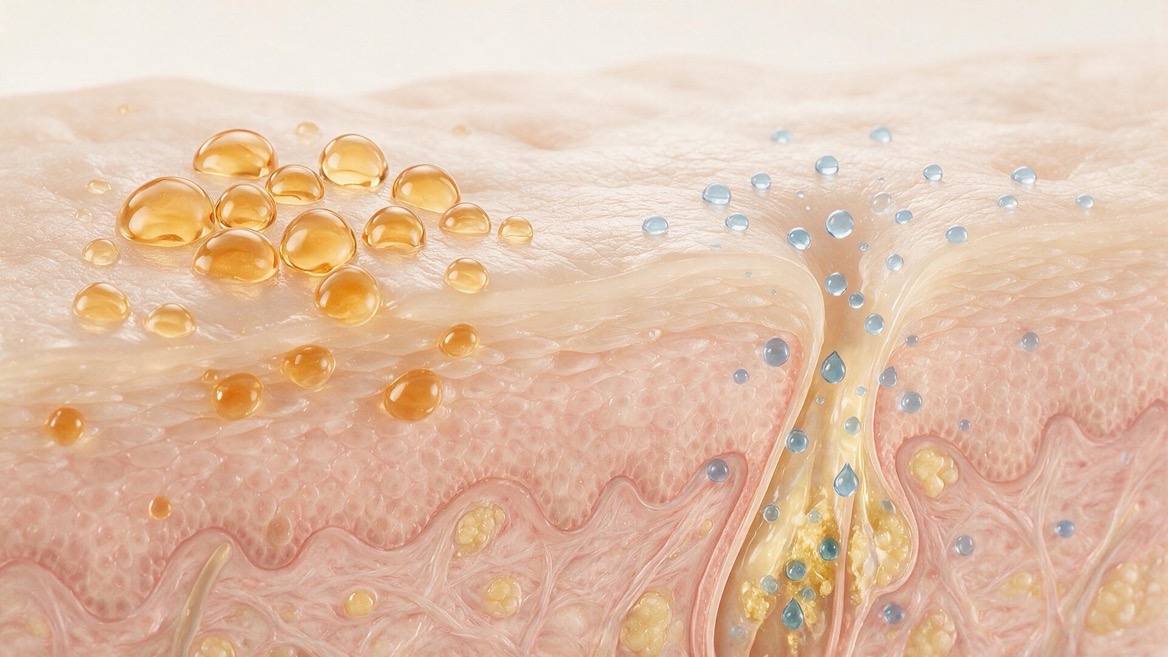
Capryloyl Salicylic Acid is the INCI name for a salicylic acid derivative carrying an eight-carbon lipophilic chain. It is also described as lipohydroxy acid. That structure contributes to its affinity for skin surface lipids and its comparatively gradual interaction with corneocytes, the cells of the stratum corneum.
In practical product development, LHA is valuable when a brand wants to improve the look of roughness, dullness, irregular texture, and residual marks without making an aggressive "peel" the center of the user experience. It is especially relevant for consumers who stop using conventional acid products after stinging, flaking, or visible redness.
Its potential benefits include:
- More controlled surface renewal for skin that looks rough or lackluster
- Support for a clearer-looking skin surface where dead-cell buildup contributes to uneven tone
- A sensorially elegant option for low-frequency or leave-on treatment formats
- Compatibility with a calm-skin concept built around moisturizers, humectants, and selected botanical support ingredients
A useful nuance matters here. "Gentler" is a formulation hypothesis, not a universal guarantee. LHA products can still irritate when the use level, vehicle, application frequency, or companion actives are poorly chosen. A consumer with active dermatitis, a compromised barrier, or sensitivity to other formula components may react regardless of the exfoliant selected.
Salicylic Acid is a well-known beta-hydroxy acid with a long history in skin-clearing products. Because it is lipophilic, it has particular relevance to oily areas and follicular congestion. It helps loosen the cohesion of surface cells and can help improve the appearance of clogged pores, blackheads, and blemish-prone texture.
For a consumer whose pigmentation concern is mainly post-inflammatory hyperpigmentation, controlling the visible cycle of congestion and breakouts is important. New inflammatory lesions can create new marks. In that context, Salicylic Acid may be the stronger strategic choice when the primary brief is oil control and pore clarity, while uneven tone is a secondary benefit.
Its potential benefits include:
- Established pore-clarifying performance in acne-prone skincare categories
- A strong fit for cleansers, toners, serums, targeted gels, and scalp products where permitted
- A familiar ingredient story that consumers and professional formulators readily understand
- An effective platform for routines focused on blackheads, rough pores, and recurring congestion
However, Salicylic Acid must be handled with discipline. Percentage alone does not predict performance. The amount of free acid, pH, solvent system, crystal stability, contact time, packaging, and user behavior all shape the final result. For a reactive-skin audience, the product's tolerability data is often more valuable than an impressive-looking concentration on the front label.
Neither LHA nor BHA should be presented as a standalone answer to all pigmentation. Dark marks can arise from acne, inflammation, sun exposure, hormonal influences, irritation, or other causes. A cosmetic formula may help improve the appearance of uneven tone through surface renewal and by reducing the conditions that make marks look more pronounced. It should not promise to diagnose or treat pigmentary disease.
For consumers with sensitive skin, excessive exfoliation can become counterproductive. It may trigger visible irritation, prolong post-blemish redness, or encourage inconsistent use. Consistency at a tolerable dose usually beats short bursts of overuse.
Choose Capryloyl Salicylic Acid as the lead exfoliant when the brief prioritizes:
- Sensitive skin with dullness, fine roughness, and uneven-looking tone
- A slow-and-steady renewal story rather than an intensive corrective treatment
- A premium serum, cream, or lotion concept with a refined skin feel
- A formula that pairs exfoliation with fermented humectants, barrier lipids, or soothing botanical fractions
- Consumers who are new to leave-on acids or who have previously found acids difficult to maintain
Choose Salicylic Acid as the lead exfoliant when the brief prioritizes:
- Oily, congested, blackhead-prone, or blemish-prone skin
- A daily or periodic pore-care product, subject to regional safety requirements
- Post-blemish marks linked to recurring breakouts
- A cleanser, toner, spot-format, or scalp-care concept where the active has a clear functional role
- A consumer group that expects recognizable acne and pore-care ingredients
In our experience supporting product ideation, sensitive-skin success is usually determined by the whole formula. Brands often ask which acid is "best," but the more productive question is: what must this product accomplish after eight weeks of responsible, consistent use?
Use this development sequence:
1. Define the primary concern. Separate congestion, textural dullness, post-blemish marks, and generalized uneven tone. One formula does not need to solve every skin concern.
2. Select the exfoliation pathway. Use BHA when pore clearing leads the brief. Use LHA when gradual surface refinement and comfort lead the brief.
3. Design the support matrix. Add hydration, barrier support, and carefully chosen calming components. Plant extracts should be selected for standardization, safety review, color and odor impact, and compatibility—not only for a compelling origin story.
4. Control technical variables. Confirm solubility, free-acid profile, pH, viscosity, preservative compatibility, packaging interaction, and stability through the intended shelf life.
5. Test the finished formula. Evaluate stability, microbial quality, compatibility, and human tolerance according to the destination market and product risk profile. Claims should follow evidence from the final formula, not from an ingredient supplier's data alone.
6. Create clear use instructions. State frequency, amount, sunscreen use, and when to pause use. Clear instructions reduce misuse and strengthen real-world satisfaction.
For a leave-on exfoliating product intended for sensitive skin, the launch guidance can be as important as the formula.
- Patch test before facial use.
- Begin two evenings per week for the first two weeks.
- If skin remains comfortable, increase gradually according to the label direction.
- Apply on clean, fully dry skin, then follow with a simple moisturizer.
- Avoid layering with multiple strong exfoliants in the same routine unless professionally advised.
- Use broad-spectrum sun protection daily; this is essential when managing the appearance of dark marks.
- Pause if persistent burning, swelling, rash, or significant peeling occurs, and seek qualified medical advice when needed.
This protocol does not replace individualized professional care. It does establish a sensible baseline for a broad consumer audience and can reduce the "more is better" behavior that damages long-term product results.
Ingredient evidence provides direction, but it is not a shortcut to a finished-product claim. A clinical comparison involving LHA peels and glycolic-acid peels reported improvement in facial hyperpigmentation and fine lines over 12 weeks, with LHA performing comparably under that study design. This is a useful signal for formulation exploration, not proof that every LHA serum will produce the same result.
Safety assessment literature also reports lower penetration beyond the stratum corneum for Capryloyl Salicylic Acid than for Salicylic Acid in the same vehicle after extended contact. That mechanistic distinction supports the rationale for surface-oriented LHA concepts. It does not mean LHA is automatically suitable for every sensitive-skin user.
For Salicylic Acid, the evidence base and consumer familiarity are considerable, particularly in acne-oriented categories. Yet brands should avoid medical wording unless their regulatory pathway and substantiation support it. Use cosmetic language such as "helps visibly refine pores," "improves the look of uneven texture," or "helps skin appear clearer," then validate those claims on the finished formula.
ZHENYIBIO TECHNOLOGY INC combines botanical-active expertise with modern bio-fermentation approaches to help international brands build differentiated exfoliation systems. Our role can extend beyond supplying a single ingredient. We can help translate a market brief into an active concept, a compatible support system, and a documentation-focused development plan for OEM and ODM projects.
Potential concepts include:
- LHA Barrier-Comfort Renewal Serum: a low-intensity, uneven-tone and texture concept with fermentation-derived hydration support and standardized botanical actives.
- BHA Clarifying Essence: a targeted concept for oily, congested, post-blemish skin, designed with measured exfoliation and a non-stripping skin feel.
- Dual-Routine Program: an LHA comfort-renewal product for broad facial use plus a separate BHA pore-focused treatment for limited areas. This is often more controllable than placing both acids at high intensity in one formula.
- Gentle Clarifying Cleanser: a rinse-off format that emphasizes cleansing experience, formulation stability, and a consumer-friendly introduction to pore care.
For every project, documentation and market alignment must be considered early. Formula limits and permitted uses vary by market, product category, consumer group, and presentation format. A robust development plan includes ingredient specifications, certificates of analysis, stability and compatibility data, microbial testing, safety assessment support, and claim-substantiation planning appropriate to the target region.
For sensitive skin with pigmentation issues, Capryloyl Salicylic Acid is often the more elegant starting point when comfort, surface texture, and gradual visible renewal drive the brief. Salicylic Acid remains the more direct choice when clogged pores, oil, and recurring breakouts are the central triggers behind visible marks.
The winning product is rarely the one with the most aggressive acid story. It is the one consumers can use consistently, understand easily, and trust. Build that product with a well-characterized active, a barrier-respecting delivery system, careful testing, and claims that match the evidence.
Ready to develop a targeted exfoliation concept? Contact ZHENYIBIO TECHNOLOGY INC to discuss botanical active selection, bio-fermentation support ingredients, prototype direction, bulk supply, and custom OEM or ODM development for your target market.
Not automatically. LHA's more surface-oriented behavior makes it an attractive option for gentle-renewal concepts, but final tolerance depends on concentration, vehicle, pH, supporting ingredients, frequency, and the user's skin condition. Finished-product testing is the meaningful standard.
It can support a routine aimed at improving the appearance of dullness and uneven-looking tone by promoting controlled surface renewal. Dark spots have multiple causes, so daily sun protection and a complete routine remain essential. Persistent or changing pigmentation should be evaluated by a qualified clinician.
It can be useful when active congestion and recurring breakouts contribute to new marks. By supporting clearer-looking pores and smoother texture, it may complement a post-blemish routine. It should be introduced gradually, particularly on sensitive skin.
They can be technically combined, but combination is not automatically better. The formula should have a clear purpose, an appropriate exposure level, and tolerance evidence. Many brands obtain a clearer consumer experience by using one lead exfoliant or separate products for different zones and frequencies.
Request the INCI and CAS identification, specification, assay method, impurity profile, safety information, certificate of analysis, storage guidance, recommended formulation conditions, stability information, and applicable regulatory documentation. For botanical support ingredients, also request plant part, extraction or fermentation method, standardization marker, and contaminant controls.
Start slowly, preferably two evenings weekly, apply to dry skin, and follow with a simple moisturizer. Avoid adding several strong exfoliants at once. Use sunscreen daily and stop use if persistent irritation develops.
1. Oresajo C, Yatskayer M, Galdi A, Foltis P, Pillai S. [Clinical Tolerance and Efficacy of Capryloyl Salicylic Acid Peel Compared to Glycolic Acid Peel in Subjects With Facial Photodamage]. *Journal of Cosmetic Dermatology*. 2008.
2. Johnson W, Bergfeld WF, Belsito DV, et al. [Safety Assessment of Capryloyl Salicylic Acid as Used in Cosmetics]. *International Journal of Toxicology*. 2024.
3. European Commission, Scientific Committee on Consumer Safety. [Opinion on Salicylic Acid (SCCS/1645/22)]. 2023.
4. European Commission. [Salicylic Acid: Commission Regulation (EU) 2019/1966]. 2019.
5. European Commission. [Cosmetic Ingredient Database Entry: Capryloyl Salicylic Acid]. Accessed August 2026.
6. Thiboutot D, Gollnick H, Bettoli V, et al. [Topical Acne Drugs: Review of Clinical Properties, Systemic Exposure, and Safety]. *American Journal of Clinical Dermatology*. 2003.


