


Views: 219 Author: ZHENYIBIO Publish Time: 2026-10-09 Origin: Site
Content Menu
● Germany's Position in the Sialic Acid Supply Chain
>> A Strong Customer Market, Not a Proven Bulk-Production Leader
>> Relevant Commercial and Research Locations
● Selection Criteria: How the Suppliers Were Assessed
● Understanding Sialic Acid Powder Before Comparing Suppliers
>> Define the Exact Chemical You Need
>> Material Grades Are Not Interchangeable
>> Manufacturing Route and Sustainability Need Separate Evidence
>> CE and RoHS Are Not Appropriate Ingredient Qualification Shortcuts
>> 1. ZHENYIBIO TECHNOLOGY INC — International Cosmetic Ingredient and Customization Partner
>>> Company Background and Markets
>>> Core Strengths
>>> OEM/ODM Scope and Working Flexibility
>>> Points to Verify
>> 2. Merck / Sigma-Aldrich — Established Research and Analytical Supply Channel
>>> Company Background and Markets
>>> Core Strengths
>>> OEM/ODM Scope and Limitations
>> 3. Carl ROTH — German Laboratory Supplier for Small-Scale Evaluation
>>> Company Background and Markets
>>> Core Strengths
>>> OEM/ODM Scope and Limitations
>> 4. TCI Deutschland GmbH — Germany-Based Access to a Global Chemical Manufacturer
>>> Company Background and Markets
>>> Core Strengths
>>> OEM/ODM Scope and Limitations
>> 5. Biosynth — Carbohydrate Chemistry and Custom Manufacturing Specialist
>>> Company Background and Markets
>>> Core Strengths
>>> OEM/ODM Scope and Limitations
● Supplier Comparison: Capacity, MOQ, and Quality Evidence
● Buyer's Guide: Qualifying a Long-Term Sialic Acid Partner
>> 1. Establish Who Actually Manufactures the Powder
>> 2. Build One Specification Before Requesting Prices
>> 3. Qualify Samples Against Routine Production
>> 4. Investigate Capacity Through Records, Not Facility Photos
>> 5. Confirm Logistics and Storage for the Exact Grade
● Common Purchasing Pitfalls—and a Less Obvious Analytical Trap
>> Pitfall 1: Buying the Name Instead of the Chemical
>> Pitfall 2: Assuming "High Purity" Means Commercially Suitable
>> Pitfall 3: Treating Certificates as Product Approvals
>> The Internal Procurement Check: Read the Assay Basis Before the Percentage
● Conclusion: Match the Supplier to the Purchasing Stage
● FAQs
>> 1. How Can I Check Whether a Supplier's ISO Certificate Is Expired or Outside Its Scope?
>> 2. Can Two Powders with the Same CAS Number and 98% Purity Be Used Interchangeably?
>> 3. Does Fermentation-Derived Neu5Ac Automatically Qualify as Vegan or Sustainable?
>> 4. Is a Catalogue Research Grade Acceptable for a Commercial Cosmetic?
>> 5. Does an Ingredient Supplier's "EU Compliant" Statement Complete My Regulatory Obligations?
Finding a dependable sialic acid powder supplier requires more than comparing purity claims and price quotations. For professional buyers, the important questions concern manufacturing traceability, analytical methods, batch consistency, regulatory documentation, and the supplier's ability to support repeat orders.
A practical qualification process starts with five checks: factory and certificate verification, relevant research capabilities, batch-level quality control, delivery performance, and clearly defined customization services. These checks help distinguish a suitable commercial partner from a laboratory distributor—or a trader presenting another company's production capabilities as its own.
Germany offers established chemical and life-science suppliers, accessible research-grade materials, and a substantial cosmetics customer base. However, buyers should distinguish between suppliers operating in Germany and manufacturers actually producing sialic acid there. A German sales address does not establish German manufacturing origin.
This guide compares five sourcing options relevant to German buyers: ZHENYIBIO TECHNOLOGY INC, Merck/Sigma-Aldrich, Carl ROTH, TCI Deutschland, and Biosynth. Their roles differ substantially, from cosmetic ingredient development to laboratory reagent supply.
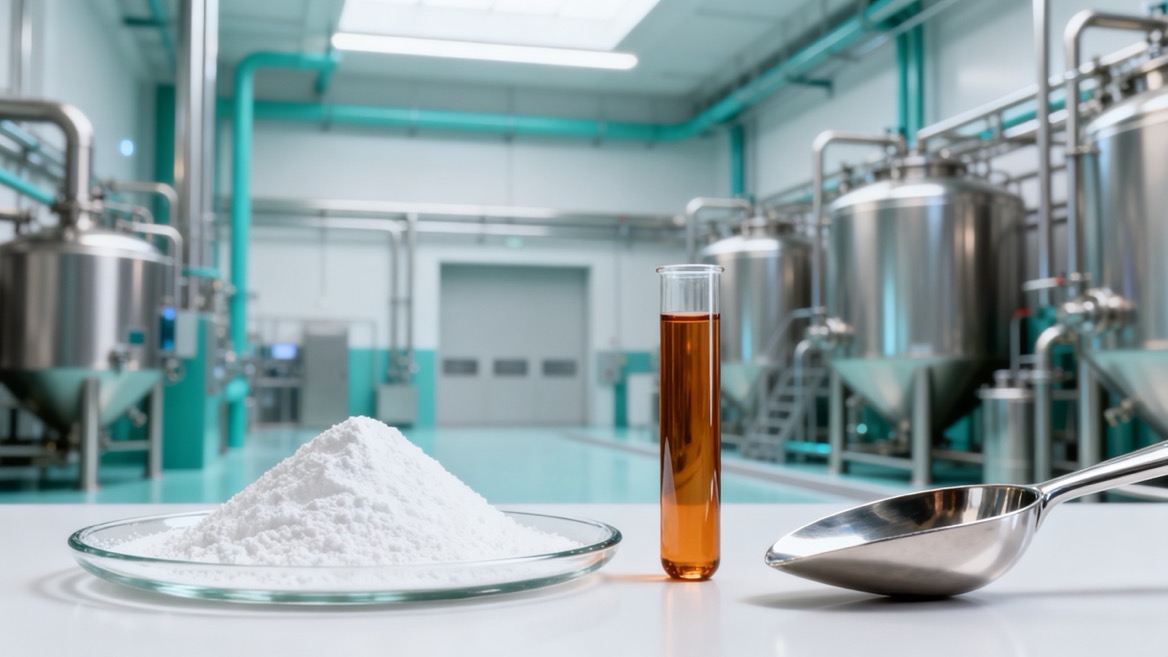
Germany's relevance to sialic acid procurement rests on its chemical supply infrastructure, research organizations, and cosmetics market—not on a verified claim that it leads global Neu5Ac powder production.
Cosmetics Europe reports that European cosmetics and personal-care retail sales reached €110 billion in 2025, with Germany accounting for €18.0 billion, making it the largest national market in the association's published comparison. These figures describe finished-product retail sales, not sialic acid ingredient sales.
The German Cosmetic, Toiletry, Perfumery and Detergent Association, IKW, provides additional context. Its December 2025 projections put combined beauty and home-care industry sales at €35.6 billion, up 2.9%, and export sales at €11.8 billion, down 2.1%. The export projection was based on Federal Statistical Office data for January–August 2025. IKW also projected moderate industry growth of 1.5% for 2026; that figure was an outlook, not a completed-year result.
These figures support Germany's importance as a customer and distribution market. They do not establish German sialic acid production tonnage, supplier market shares, or ingredient-specific export values.
Rather than presenting a single "sialic acid manufacturing cluster," buyers can identify several relevant supplier locations:
- Darmstadt is home to Merck, whose business originated in 1668.
- Frankfurt is the location identified in TCI's history for the establishment of TCI Deutschland in 2006.
- Karlsruhe is home to Carl ROTH, established in 1879.
The practical advantage is access to established chemical businesses and technical supply channels. Buyers must still investigate the manufacturing site, country of origin, and commercial suitability of each specific product.
The following framework prioritizes purchasing relevance over company size alone.
| Assessment area | Evidence to request | Why it matters |
|---|---|---|
| Product identity | Chemical name, CAS number, molecular formula, identity testing | Prevents substitution with related compounds or unspecified blends |
| Manufacturing traceability | Actual production site, legal manufacturer, process declaration, country of origin | Separates manufacturing capability from distribution |
| Quality control | Batch COA, assay method, water content, impurity profile, microbiological results | Makes specifications comparable |
| Quality systems | Current certificates with relevant site and scope | Prevents reliance on expired or unrelated credentials |
| Supply continuity | Product-specific capacity, batch sizes, stock policy, lead-time records | Tests whether repeat supply is realistic |
| Technical support | Formulation guidance, analytical assistance, change-control procedures | Reduces development and scale-up risk |
| Commercial flexibility | Sample policy, MOQ, packaging choices, quotation validity | Determines suitability for emerging and established brands |
| Customization | Written ingredient, blend, packaging, and finished-product service scope | Distinguishes genuine OEM/ODM support from standard catalogue sales |
The shortlist includes suppliers with identifiable Neu5Ac product listings or relevant ingredient capabilities. Public product availability is not treated as proof of cosmetic suitability, independently verified certification, or guaranteed industrial capacity.

"Sialic acid" describes a family of related substances. For the products discussed here, the purchasing target is N-acetylneuraminic acid, commonly abbreviated Neu5Ac or NANA:
- CAS number: 131-48-6
- Molecular formula: C11H19NO9
- Molecular weight: 309.27 g/mol
Merck/Sigma-Aldrich and TCI identify their relevant products using these specifications. A purchase order should state the chemical identity rather than relying only on the phrase "sialic acid powder."
A high-purity research reagent is not automatically qualified for commercial skincare production.
The distinction is visible in the supplier listings. Carl ROTH describes its material as suitable for biochemistry, while Biosynth explicitly restricts product MA00746 to research purposes and excludes personal or veterinary use.
For a cosmetic project, require documentation appropriate to the proposed use, including:
- Identity and quantitative assay.
- Relevant impurity and contaminant specifications.
- Microbiological limits and test methods.
- Manufacturing-origin information.
- Storage and shelf-life justification.
- Safety information sufficient for the finished-product assessment.
The EU Cosmetics Regulation requires finished-product safety assessment and supporting product information. A raw-material COA alone does not meet all those obligations.
ZHENYIBIO's product page states that its sialic acid is produced through microbial fermentation and is animal-free. However, the same page also contains generic wording describing a synthetic product. Buyers should obtain a signed, product-specific manufacturing-route declaration to resolve that inconsistency before using origin-related marketing claims.
For any supplier, ask about fermentation inputs or synthesis starting materials, processing aids, purification steps, and relevant residuals. An animal-free declaration should address the complete production route, not merely the final molecule.
Likewise, fermentation does not by itself establish a lower environmental footprint. Request measurable evidence on resource consumption, waste treatment, or life-cycle performance before making sustainability comparisons.
CE marking applies only to products covered by EU legislation that specifically requires it. RoHS addresses restricted substances in electrical and electronic equipment. Neither should be treated as a general environmental or quality certification for cosmetic sialic acid powder.
For ingredient purchasing, focus on applicable chemical obligations, relevant quality systems, contaminant controls, traceability, and finished-product cosmetic compliance. REACH responsibilities must also be assessed for the relevant EU manufacturer, importer, or only representative; they cannot be replaced by a general "EU compliant" statement.
Established in 2012, ZHENYIBIO is based in Xi'an's high-tech development zone in China. Its company profile focuses on natural plant-active cosmetic ingredients and related materials, including glutathione, hyaluronic acid, polyglutamic acid, peptides, and liposomes. The company reports sales to more than 50 countries across Asia, Europe, and the Americas.
Its sialic acid listing specifies a white fine powder with 98% purity, CAS 131-48-6, and molecular weight 309.27. The page describes microbial fermentation as the production route. These are supplier-published specifications and should be confirmed against the current batch documentation.
ZHENYIBIO reports a 10,000-square-meter production area and a 1,500-square-meter research center. Its published quality-control description covers purity, water content, heavy metals, residual solvents, and microbiological testing, with references to third-party testing relationships. These figures indicate the company's broader infrastructure; they are not evidence of dedicated sialic acid annual capacity.
Its positioning is particularly relevant to small and medium-sized cosmetic brands seeking ingredient supply alongside technical development support. The potential value is a more integrated discussion of raw materials, formulation needs, packaging, and project economics—not an unverified claim that its powder is always cheaper.
For the OEM/ODM offering described by the company, buyers should define whether the project involves:
- Standard sialic acid ingredient supply.
- Customized ingredient blends or concentrations.
- Packaging and labeling requirements.
- Formulation-development assistance.
- Finished-product development and manufacturing.
The public site describes formulation guidance and customized ingredient concentrations. However, it does not establish a universal sialic acid MOQ, guaranteed response time, or complete finished-product service package.
To assess communication efficiency, request one named technical contact, a consolidated document package, and a written schedule for sample feedback and quotation revisions. This makes flexibility measurable rather than promotional.
Request product-specific capacity, commercial MOQ, recent COAs, analytical methods, and current certificates. The company profile contains inconsistent ISO standard notation, so the actual certificate—not the website wording—should determine the standard, scope, site, and validity.
Best-fit purchasing role: a candidate for cost-conscious cosmetic ingredient and customization projects, subject to sample qualification and a clearly documented service scope.
Merck is headquartered in Darmstadt and traces its foundation to 1668. Its Sigma-Aldrich catalogue provides a relevant Neu5Ac sourcing route for research and laboratory procurement.
Product A0812 is listed as synthetic N-acetylneuraminic acid powder with an assay of at least 95% on an anhydrous basis. The page identifies research uses in biochemistry, metabolism, uptake studies, and nanocarrier development.
The main purchasing advantage is a clearly identified product with technical information, including assay basis, appearance, solubility, and storage temperature. This makes the product relevant to analytical development and controlled research work.
It should not automatically be labeled a certified reference material. Buyers requiring a formal reference standard must verify the product's certification and intended analytical role separately.
The reviewed A0812 listing does not establish cosmetic OEM/ODM services or bulk cosmetic-grade supply. For commercial manufacturing, ask whether an appropriate grade and documentation package are available under a separate supply arrangement.
Best-fit purchasing role: laboratory development and analytical work, rather than an assumed turnkey skincare manufacturing partner.
Carl ROTH was founded in Karlsruhe in 1879. The company reports five European subsidiaries and deliveries to customers in more than 100 countries. Its activities cover laboratory supplies, life sciences, and chemicals for research and industry.
Its standard N-acetylneuraminic acid listing states purity of at least 98% and identifies the material as "for biochemistry." Published pack sizes include 100 mg, 500 mg, 1 g, and 5 g.
The small catalogue packs are useful for early-stage testing when a laboratory does not yet require a bulk ingredient contract. The product listing also provides access to analytical and safety documentation.
The reviewed listing does not demonstrate sialic acid OEM/ODM production or finished-cosmetic development. A supplier's broad manufacturing or distribution activities should not be transferred automatically to every catalogue item.
Best-fit purchasing role: small-scale biochemical evaluation and laboratory purchasing. For commercial cosmetics, obtain written confirmation of suitability and bulk availability.
TCI's modern organic laboratory chemical business dates to 1946. Its corporate history records the establishment of TCI Deutschland in Frankfurt in 2006. Keeping these dates separate avoids confusing the group's origins with the German subsidiary's establishment.
TCI describes itself as a global manufacturer supplying research chemicals across chemistry, life sciences, materials science, and analytical applications. Its company profile also identifies pharmaceutical and cosmetic raw materials within its broader fine-chemical activities.
TCI lists N-acetylneuraminic acid as product A1105, with purity above 98.0% by titration and HPLC. The German listing identifies handling concerns including hygroscopicity, air sensitivity, and heat sensitivity.
These details are valuable for developing incoming-material specifications and laboratory handling procedures.
The A1105 product listing does not itself establish private-label skincare production or a cosmetic development package. Buyers should distinguish the group's broader chemical manufacturing capabilities from the grade and commercial terms of this particular item.
Best-fit purchasing role: defined research-chemical procurement and technical development through a German commercial entity. Bulk cosmetic use requires a separate qualification discussion.
Biosynth's history begins in 1966, and the company is headquartered in Staad, Switzerland. Its global business supplies pharmaceutical, life-science, diagnostic, food, agricultural-chemistry, and cosmetics customers. It also identifies a facility presence in Berlin, Germany.
That German presence does not establish German manufacture of its Neu5Ac catalogue product.
Biosynth specializes in carbohydrate chemistry, nucleosides, and enzyme substrates. Its custom synthesis services include route development, analytical support, and projects that may progress toward larger-scale or GMP manufacture. These are company-wide capabilities rather than product-specific guarantees.
Biosynth lists N-acetylneuraminic acid under product MA00746, but explicitly labels it "Strictly for Research Purposes only. Not for Personal or Veterinary use." That restriction is decisive for cosmetic buyers evaluating the listed product.
A commercial-use project would require a separate discussion of grade, specifications, manufacturing route, and contractual suitability.
Best-fit purchasing role: specialized carbohydrate research or custom chemical-development projects, not direct use of the restricted catalogue material in consumer skincare.
The table separates product-specific facts from broader company capabilities. Published package size is not treated as a negotiated commercial MOQ.
| Supplier | Product evidence | Sialic acid capacity | MOQ or pack information | Certification and quality evidence | Customization relevance |
|---|---|---|---|---|---|
| ZHENYIBIO | 98% powder; fermentation stated. | Not publicly quantified; general facility area is not product capacity. | Commercial MOQ requires quotation. | Company reports ISO, GMP-related, Halal, and Kosher credentials; current scope and validity require verification. | Ingredient customization and formulation guidance; project scope requires agreement. |
| Merck/Sigma-Aldrich | A0812; ≥95% on anhydrous basis; synthetic powder. | Not disclosed in reviewed listing. | Confirm regional pack availability and bulk terms. | Product assay and technical specifications published; no product-specific cosmetic certification established here. | Laboratory supply; cosmetic OEM/ODM not established by listing. |
| Carl ROTH | ≥98%; for biochemistry. | Not disclosed in reviewed listing. | Listed packs from 100 mg to 5 g; not a bulk MOQ. | Product analysis documentation available; commercial cosmetic suitability requires confirmation. | Small-scale laboratory evaluation. |
| TCI Deutschland | A1105; >98.0% by titration/HPLC. | Not disclosed in reviewed listing. | A 1 g packaging entry appears in the German listing; request bulk terms. | Published methods and handling information; current site certificates require separate review. | Research supply; project-specific commercial discussion. |
| Biosynth | MA00746; explicitly research-only. | Neu5Ac-specific capacity not disclosed; broader milligram-to-ton capability must not be substituted. | Confirm current packs; custom projects quoted separately. | Group describes ISO 9001 and GMP capabilities; applicable site and product scope require verification. | Custom synthesis and carbohydrate development, subject to separate qualification. |
Request the legal manufacturer, production address, country of origin, and an explanation of any distribution relationship.
For private-label material, confirm whether the seller can provide original batch documentation and notify you before changes to the manufacturing source. A distributor can be a capable long-term partner, but its role must be clear.
For higher-value contracts, consider a remote technical audit followed by a site audit where commercially justified. Review batch release, deviation handling, traceability, and complaint procedures.
Send each candidate the same purchasing specification. Include:
- Neu5Ac identity and CAS number.
- Required assay and reporting basis.
- Water content and relevant impurity limits.
- Heavy-metal and microbiological requirements.
- Manufacturing-route and animal-origin declarations.
- Packaging, storage, and remaining shelf life.
- Documentation requirements for the intended market.
This prevents a low quotation for a different grade from appearing more competitive than a qualified offer.
Ask whether the sample comes from a normal production batch, retained stock, or a specially prepared development batch.
Use a staged process:
1. Review documentation before accepting the sample.
2. Confirm identity and quantitative assay independently where warranted.
3. Test the ingredient in the intended formulation.
4. Evaluate stability, appearance, odor, and relevant compatibility.
5. Compare additional routine batches before committing to repeat supply.
Formulation performance does not replace finished-product safety assessment, and laboratory purity does not establish a supported cosmetic efficacy claim.

Ask for normal batch size, product-specific output, available allocation, and a schedule covering production through quality release.
Separate:
- Existing released stock.
- Confirmed production slots.
- Theoretical maximum capacity.
- Capacity available to your contract.
A company may have substantial infrastructure without maintaining dedicated Neu5Ac inventory or allocation.
Storage conditions vary by product. Merck's A0812 listing specifies −20°C storage, while a Carl ROTH listing identifies −20°C storage with ambient transport. TCI's German listing warns about hygroscopicity and heat sensitivity. These differences demonstrate why one supplier's handling conditions should not be copied to another material.
Before shipment, agree on:
- Moisture-resistant packaging and seal integrity.
- Permitted transport temperatures and excursion handling.
- Lot identification on inner and outer packaging.
- Minimum remaining shelf life at delivery.
- Customs documents and importer responsibilities.
- Incoterms, freight charges, insurance, and rejection procedures.
Compare landed cost only after accounting for qualification, testing, freight, customs clearance, and inventory requirements.
Avoid accepting "sialic acid" as sufficient identification. Require Neu5Ac-specific identity documentation and investigate any blend, salt, derivative, or carrier.
A research-only restriction cannot be overcome by a high assay result. Biosynth's MA00746 listing illustrates why intended use must be checked separately from chemical identity.
A management-system certificate is not a guarantee that every ingredient meets your specification. Verify the manufacturing site, certification scope, and current status before relying on it.
An easily missed issue is that "98% purity" can describe different measurements.
TCI publishes purity by titration and HPLC, while Merck reports its A0812 assay on an anhydrous basis. Those descriptions are not automatically interchangeable.
A chromatographic area percentage describes the detected chromatographic profile under a particular method. It should not automatically be interpreted as the mass of active Neu5Ac per gram of delivered powder.
For comparable purchasing decisions, request:
- Whether the result is area normalization or calibrated quantitative assay.
- Whether the value is reported as received, on a dry basis, or on an anhydrous basis.
- Water content and relevant nonchromatographic residues.
- The identity and traceability of the calibration standard.
- The validated method used for commercial batch release.
The useful procurement principle is simple: compare equivalent analytical measurements before comparing percentages or prices.
The shortlist represents different sourcing functions rather than five interchangeable factories.
ZHENYIBIO is an international candidate for cosmetic ingredient supply and customization discussions. Merck/Sigma-Aldrich, Carl ROTH, and TCI provide identifiable laboratory sourcing routes. Biosynth adds carbohydrate chemistry and custom-development capabilities, while its listed MA00746 material remains explicitly restricted to research use.
For long-term supply, prioritize a traceable manufacturer, comparable assay data, repeatable batch quality, and written commercial commitments. Resolve the intended grade and regulatory documentation before negotiating annual volumes.
To evaluate ZHENYIBIO for a German-market project, submit the required grade, sample quantity, annual demand, packaging preferences, and OEM/ODM scope. Request a current specification, representative batch COA, manufacturing-route declaration, certificate package, and itemized quotation from alexxue@zhenyibio.com.
Obtain the complete certificate, including certificate number, legal entity, production address, standard, scope, issuer, and validity dates.
Use IAF CertSearch to check status and accreditation information, then contact the issuing certification body if clarification is needed. The database supports verification of active, suspended, withdrawn, or expired certificates.
A certificate for trading activities or another site should not be presented as evidence covering the proposed manufacturing operation.
Not without qualification.
The CAS number establishes chemical identity, but it does not establish identical impurity profiles, water content, manufacturing origins, microbiological controls, or analytical reporting bases. The different specifications published by Merck and TCI demonstrate why the method and basis require attention.
Treat a supplier change as a controlled technical change and assess its effect on the finished formulation.
No. Request declarations covering raw materials, media components, processing aids, and cross-contamination controls.
ZHENYIBIO states that its material is fermentation-derived and animal-free, but buyers should verify the signed documentation applicable to their product and batch. Environmental claims require separate evidence rather than inference from the production route.
Do not assume so.
Check the supplier's intended-use restrictions, contractual terms, safety data, impurity controls, and willingness to support commercial qualification. Biosynth's research-only restriction is explicit; Carl ROTH identifies its product for biochemistry.
The finished cosmetic must still undergo the applicable safety assessment and documentation process.
No. Determine the obligations of the EU importer or other relevant legal entity under REACH, and separately establish compliance of the finished cosmetic.
For a finished product, the EU Cosmetics Regulation addresses responsibilities including the EU responsible person, safety assessment, product information, manufacturing practice, notification, and claims. An ingredient COA or general compliance statement does not complete those obligations.
- IKW — 2025 German beauty and home-care market projections, export figures based on Federal Statistical Office data, and the published 2026 outlook. [ikw]
- Cosmetics Europe — European and national cosmetics retail market data for 2025. [cosmeticseurope]
- EUR-Lex — Regulation (EC) No 1223/2009 on cosmetic products; review the applicable consolidated text and subsequent amendments for a live project. [eur-lex.europa]
- European Chemicals Agency — Explanation of REACH and the responsibilities of relevant supply-chain entities. [echa.europa]
- European Commission, Your Europe — CE marking applicability and limitations. [europa]
- European Commission, Environment — Scope of the RoHS Directive for electrical and electronic equipment. [environment.ec.europa]
- IAF CertSearch — Accredited management-system certificate verification, including status, scope, and issuing-body information. [iafcertsearch]


