


Views: 255 Author: ZHENYIBIO Publish Time: 2026-10-06 Origin: Site
Content Menu
● Undecylenoyl Glycine vs. Benzoyl Peroxide: The Essential Comparison
● Why Adult Acne Requires More Than Antibacterial Activity
● What Is Undecylenoyl Glycine?
>> Ingredient Identity and Purifying Applications
>> Does Undecylenoyl Glycine Control Acne Bacteria?
>> An Established Treatment for Inflammatory Acne
>> Why Benzoyl Peroxide Can Cause Dryness
● Clinical Data: What the Numbers Actually Show
● Is Undecylenoyl Glycine Gentler Than Benzoyl Peroxide?
● How to Reduce Excessive Dryness Without Sacrificing Treatment
>> Reconsider Strength Before Assuming More Is Better
>> Evaluate the Complete Routine
● Expert Formulation Insight: Contact Time Changes the Comparison
● A Practical Testing Framework for OEM and ODM Projects
>> Step 1: Define the Product's Intended Role
>> Step 2: Establish Raw-Material and Formula Specifications
>> Step 3: Measure Performance and Comfort Separately
>> Step 4: Design a Fair Comparison
● Regulatory Positioning, Natural Origin, and Sustainability
>> Cosmetic Purification Is Not the Same as Acne Treatment
>> Verify Natural-Origin and Fermentation Claims
● Choosing the Right Development Direction
>> Can Undecylenoyl Glycine Replace Benzoyl Peroxide?
>> Is Undecylenoyl Glycine Suitable for Sensitive Skin?
>> Is 2.5% Benzoyl Peroxide Always Better Than 5%?
>> Can Both Ingredients Be Used in One Routine?
>> Does Undecylenoyl Glycine Preserve the Skin Microbiome?
>> How Long Should Benzoyl Peroxide Take to Work?
Undecylenoyl glycine vs. benzoyl peroxide is not simply a comparison between a gentle cosmetic ingredient and a stronger acne treatment. It is a comparison between different functions, evidence standards, and formulation strategies. For adult acne-prone skin, benzoyl peroxide has substantially stronger clinical evidence for treating inflammatory breakouts. Undecylenoyl glycine offers a cosmetic route worth investigating for purifying skincare, but it should not be presented as an equally proven, irritation-free replacement.
From a formulation perspective, the most useful question is not "Which ingredient kills more bacteria?" It is "Which approach delivers the intended benefit while remaining comfortable enough for consistent use?"
For international brands, wholesalers, and manufacturers, that distinction shapes ingredient selection, product positioning, testing, and responsible communication.
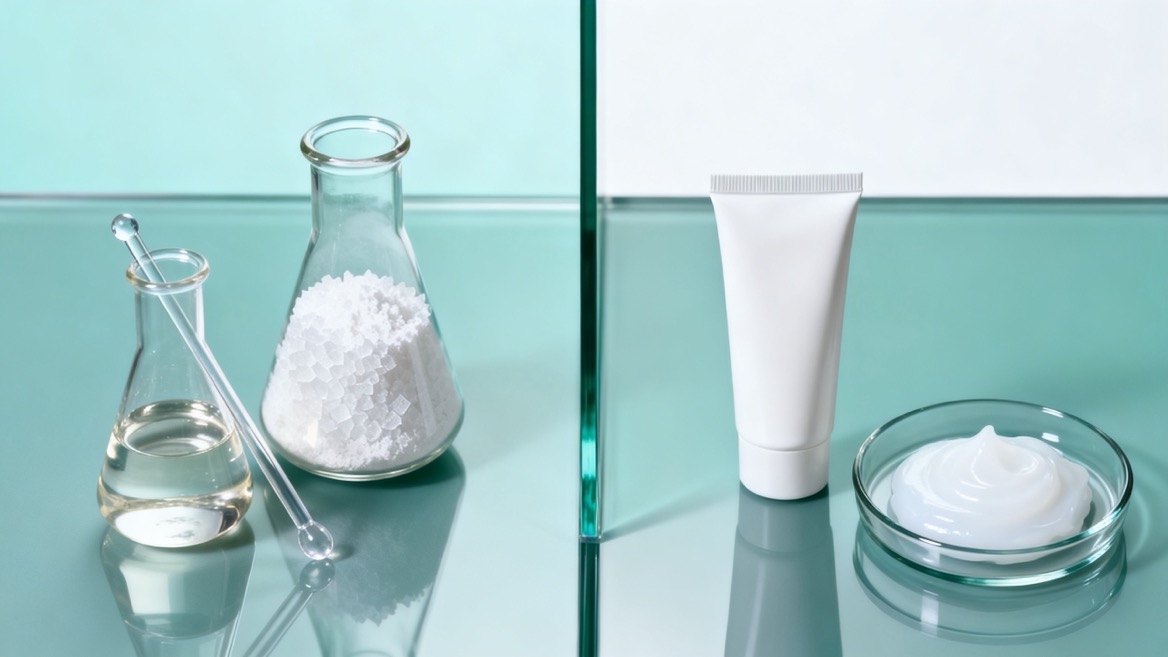
The central difference is evidence. Benzoyl peroxide is an established acne-treatment active. Undecylenoyl glycine is a cosmetic ingredient with supplier-supported purifying applications, but the public sources reviewed do not establish comparable clinical acne efficacy.
| Comparison point | Undecylenoyl glycine | Benzoyl peroxide |
|---|---|---|
| Primary positioning | Purifying cosmetic care for acne-prone skin | Treatment of acne |
| Microbial-control rationale | Supplier-described activity against microorganisms associated with skin concerns | Oxidative antibacterial activity against Cutibacterium acnes |
| Clinical evidence | Limited publicly accessible acne-specific evidence in the reviewed sources | Clinical trials and dermatology guideline support |
| Dryness considerations | Finished-product tolerability requires testing | Dryness, peeling, redness, and irritation are recognized risks |
| Concentration decisions | Follow grade-specific supplier guidance and formulation testing | The U.S. OTC monograph permits 2.5–10%, subject to its conditions |
| Suitable development direction | Purifying serums, moisturizers, and complementary skincare | Compliant acne-treatment products |
| Main limitation | Cosmetic ingredient data do not prove acne-treatment equivalence | Effective treatment may require careful irritation management |
Neither column justifies a universal promise of "microbial control without dryness." That outcome depends on the complete formulation and its use.
Acne involves several interacting processes: follicular blockage, sebum production, inflammation, and microbial involvement. Endocrine factors can also contribute. Reducing bacteria addresses only part of this system.
This matters when evaluating adult acne ingredients. A person may have inflammatory pimples alongside clogged pores, sensitive cheeks, or recurring menstrual-pattern breakouts. One antimicrobial ingredient cannot be assumed to address every contributing factor.
The practical implications are straightforward:
- Separate acne treatment from supportive cosmetic care.
- Evaluate lesion improvement and skin comfort independently.
- Avoid interpreting oiliness as proof that a product should aggressively dry the skin.
- Refer persistent, painful, or scarring acne for clinical assessment.
A product that feels comfortable but does not adequately treat inflammatory acne has limitations. So does an effective product that users repeatedly abandon because of irritation.
Undecylenoyl glycine combines an undecylenic-acid-derived component with glycine. Commercial supplier materials describe it as a purifying, dermoprotective ingredient for applications including acne-prone skin, oily scalp care, dandruff care, and deodorants.
These descriptions provide a formulation rationale, not automatic proof of every proposed consumer benefit.
Its inclusion in a cosmetic serum may support a purifying product concept. However, an ingredient's activity in a laboratory assay does not demonstrate that a finished serum will reduce inflammatory acne lesions in people.
The ingredient grade, concentration, delivery system, and test conditions all matter.
Supplier descriptions discuss microbial control, but developers should examine the underlying organism-specific data rather than rely on broad language such as "antimicrobial."
Activity against one microorganism cannot automatically be extrapolated to *C. acnes*. Likewise, inhibition in laboratory media does not establish effectiveness inside acne-associated follicles.
Before making a claim, ask:
1. Which organisms and strains were tested?
2. Was the ingredient tested alone or in a finished formula?
3. What concentration and contact time were used?
4. Was the endpoint microbial inhibition, microbial killing, or clinical improvement?
5. Was the study independently published or supplier-generated?
These questions distinguish an interesting raw material from a substantiated finished-product claim.
Benzoyl peroxide acts through oxidative antibacterial activity. Published research supports activity against both antibiotic-susceptible and antibiotic-resistant *C. acnes*.
It is not an antibiotic. Dermatology guidelines strongly recommend benzoyl peroxide for acne and recommend its use alongside antibiotics to help address antibiotic-resistance concerns.
Its established role makes it a stronger choice when the intended benefit is treatment of inflammatory acne rather than cosmetic purification alone.
Nevertheless, "established" does not mean universally comfortable. Product strength, vehicle, application frequency, and individual sensitivity influence the experience.
Recognized local reactions include:
- Peeling or scaling.
- Redness.
- Burning or irritation.
- Itching.
- Contact dermatitis.
These effects should not be promoted as evidence that treatment is "working." Dryness is an unwanted tolerability outcome, not a performance target.
Benzoyl peroxide can also bleach hair and fabrics, which affects instructions, packaging communication, and consumer expectations.
A 12-week randomized, double-blind, placebo-controlled Japanese study assigned 609 participants to 2.5% benzoyl peroxide, 5% benzoyl peroxide, or placebo gel.
At the final evaluation, median inflammatory-lesion reductions were:
| Treatment | Median inflammatory-lesion reduction |
|---|---|
| 2.5% benzoyl peroxide | 72.7% |
| 5% benzoyl peroxide | 75.0% |
| Placebo | 41.7% |
Both active treatments outperformed placebo. However, these figures do not mean that every user experienced the same improvement.
The trial also reported skin exfoliation in 20.6% of the 2.5% group and 24.0% of the 5% group. Application-site irritation occurred in 8.3% and 12.3%, respectively.
An important limitation is often overlooked: more than 80% of participants were aged 12–25, and women with menstrual-cycle-related acne fluctuations were excluded. The study therefore supports acne efficacy, but it is not a dedicated trial of mature adult or hormonally fluctuating acne.
That distinction is particularly relevant when developing products specifically marketed to adults.
The reviewed public evidence does not establish a reliable head-to-head answer.
Undecylenoyl glycine may be attractive for comfort-focused cosmetic development because it is not being used as an oxidative acne-treatment active. However, that formulation rationale does not prove superior tolerability.
A finished product can irritate because of its fragrance, solvents, surfactants, acidity, preservatives, or other active ingredients. Conversely, a carefully formulated benzoyl peroxide product may be tolerable for many users.
Responsible comparisons should therefore avoid statements such as:
- "As effective as benzoyl peroxide."
- "Guaranteed not to dry the skin."
- "Safe for all sensitive skin."
- "Preserves beneficial bacteria."
- "Treats hormonal acne naturally."
Each statement requires its own supporting evidence. Absence of published irritation data is not proof of absence of irritation.
An older comparison involving 153 patients found that 2.5% benzoyl peroxide reduced inflammatory lesions similarly to 5% and 10% preparations. Burning, redness, and desquamation were less frequent with 2.5% than with 10%.
This supports considering a lower-strength option when appropriate. It does not establish that every 2.5% product is gentler than every higher-strength product, because formulations differ.
For consumers, product directions and professional advice should guide strength and frequency.
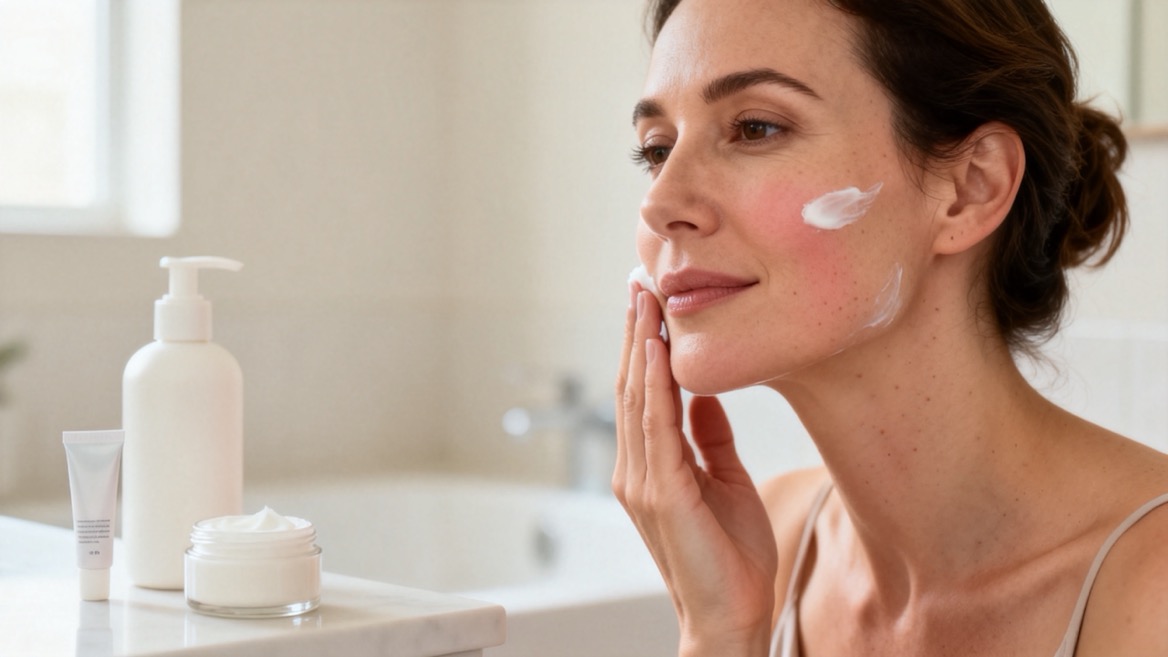
Dryness management should include more than changing one active:
1. Use a gentle cleanser rather than aggressive scrubbing.
2. Include a moisturizer suited to the user's skin.
3. Avoid introducing several potentially irritating treatments simultaneously.
4. Adjust use according to labeling and tolerability.
5. Seek advice for persistent irritation or inadequate acne control.
Stop using a product and seek medical advice for suspected allergy or significant reactions. Severe swelling or breathing difficulty requires urgent care.
Undecylenoyl glycine skincare may occupy a supportive role, but replacing effective treatment solely to avoid dryness can leave acne undertreated.
A 2022 laboratory study illustrates why concentration alone is insufficient.
For bactericidal activity against all tested *C. acnes* isolates, the reported minimum contact times were:
- 2.5% benzoyl peroxide: 15 minutes.
- 5% benzoyl peroxide: 30 seconds.
- 10% benzoyl peroxide: 30 seconds.
These were laboratory results, not clinical instructions.
Their development value is methodological: rinse-off and leave-on products should not be treated as interchangeable simply because they contain the same active percentage.
For undecylenoyl glycine, the same principle applies. Developers should test the intended exposure pattern rather than assume that an ingredient assay predicts performance in a cleanser, serum, and moisturizer equally.
For ZHENYIBIO TECHNOLOGY INC and its international partners, a useful development brief should separate three questions:
- Does the formula deliver the intended benefit?
- Is it tolerable in the target population?
- Can its proposed claims be supported?
The following is a proposed testing framework, not a report of completed company trials.

Decide whether the product is an acne treatment, a purifying cosmetic, or complementary skincare used alongside treatment.
Specify the intended market, user age range, skin concerns, application method, and acceptable claims before selecting ingredients.
Request documentation covering identity, purity, impurities, recommended processing, and grade-specific use guidance.
For the finished formula, assess stability, packaging compatibility, preservation, and active-content retention where relevant.
Do not confuse a purifying ingredient with a validated preservation system.
Potential endpoints include:
- Investigator-counted inflammatory and non-inflammatory lesions.
- Standardized photographs.
- Instrumental skin hydration.
- Transepidermal water loss.
- Redness and scaling assessments.
- Participant-reported stinging, tightness, and comfort.
- Adherence and discontinuation rates.
Transepidermal water loss measures water escaping through the skin and can contribute to barrier assessment. It should be interpreted alongside other endpoints, not as a stand-alone verdict.
A meaningful head-to-head trial requires predefined outcomes, suitable controls, adequate statistical planning, and documented usage.
If "less dryness" is the commercial objective, measure dryness directly. If "comparable acne efficacy" is the objective, a well-designed clinical comparison is necessary.
Neither claim can be inferred from ingredient identity alone.
In the United States, the OTC acne monograph includes benzoyl peroxide at 2.5–10%, subject to applicable formulation and labeling conditions.
Undecylenoyl glycine is not listed as an acne-treatment active in that monograph. Its presence does not establish a monograph-compliant acne drug.
Claims such as "treats acne" can change a product's regulatory positioning. Brands should review target-market requirements before approving packaging or promotional language.
ZHENYIBIO's plant-active and biotechnology positioning provides a relevant brand context. It should not, however, imply that every ingredient discussed is plant-derived, fermented, or environmentally superior.
For a specific undecylenoyl glycine grade, request evidence of feedstock origin, manufacturing route, traceability, and applicable natural-origin calculations.
Similarly, "sustainable" should be supported by defined evidence rather than assumed from botanical associations. Neither fermentation nor natural origin automatically proves clinical efficacy or lower irritation.
For inflammatory acne treatment, benzoyl peroxide has the stronger evidence base.
For purifying cosmetic care, undecylenoyl glycine may merit formulation investigation, particularly when the brief emphasizes a pleasant daily-use experience. Its benefits and tolerability must still be established in the finished product.
A two-product concept—treatment plus supportive skincare—may also be worth evaluating. It should not imply that the supportive product replaces treatment or prevents irritation without testing.
To begin an OEM or ODM discussion with ZHENYIBIO TECHNOLOGY INC, submit your target market, intended claims, dosage form, preferred sensory profile, and testing requirements. Request a grade-specific technical dossier and a proposal identifying which benefits require finished-product validation before commercialization.
Not as an evidence-equivalent acne treatment. The reviewed sources support benzoyl peroxide through clinical trials and guidelines. Undecylenoyl glycine has cosmetic purifying applications, but comparable clinical efficacy has not been established here.
Suitability depends on the finished formula and individual tolerance. Sensitive-skin positioning requires relevant testing; an ingredient description alone is insufficient.
No. Lower strength may be useful when irritation is a concern, but effectiveness and comfort depend on formulation and use. Clinical research supports both strengths.
Potentially, but the reviewed evidence does not establish the efficacy or tolerability of that specific combination. Formulators must assess compatibility, while consumers should avoid adding multiple new products simultaneously.
That claim is not established by broad antimicrobial activity. It would require appropriately designed microbiome research in the intended finished product.
The cited trial observed improvement at early assessments and evaluated treatment over 12 weeks. Individual results vary. Persistent, worsening, painful, or scarring acne warrants professional assessment.
1. Reynolds, R. V., et al. "Guidelines of care for the management of acne vulgaris." *Journal of the American Academy of Dermatology*, 2024; 90(5):1006.e1–1006.e30. DOI: 10.1016/j.jaad.2023.12.017. Supports treatment recommendations and the distinction between treatment and supportive care. [pubmed.ncbi.nlm.nih]
2. Kawashima, M., et al. "Twelve-week, multicenter, placebo-controlled, randomized, double-blind, parallel-group, comparative phase II/III study of benzoyl peroxide gel in patients with acne vulgaris: A secondary publication." *Journal of Dermatology*, 2017; 44(7):774–782. DOI: 10.1111/1346-8138.13798. Source of lesion-reduction figures, adverse-event rates, and study-population limitations. The study was funded by Maruho Co. Ltd. [pmc.ncbi.nlm.nih]
3. Mills, O. H. Jr., Kligman, A. M., Pochi, P., and Comite, H. "Comparing 2.5%, 5%, and 10% benzoyl peroxide on inflammatory acne vulgaris." *International Journal of Dermatology*, 1986; 25:664–667. Supports the discussion of concentration, inflammatory-lesion reduction, and comparative irritation. [read.qxmd]
4. "Minimum Contact Time of 1.25%, 2.5%, 5%, and 10% Benzoyl Peroxide for a Bactericidal Effect Against *Cutibacterium acnes*." *Clinical, Cosmetic and Investigational Dermatology*, 2022. DOI: 10.2147/CCID.S359055. Source of laboratory contact-time findings; not a clinical dosing guide. [tandfonline]
5. Seppic. "LIPACIDE™ UG: Dermoprotector for skin and scalp." Commercial supplier information describing undecylenoyl glycine's purifying applications. Supplier claims are distinguished from independent clinical evidence. [seppic]
6. UL Prospector. "LIPACIDE™ UG by Seppic." Commercial ingredient listing supporting the ingredient-identity discussion and supplier-described applications. [ulprospector]
7. U.S. Food and Drug Administration. *OTC Monograph M006: Topical Acne Drug Products for Over-the-Counter Human Use*, posted November 23, 2021. Supports the U.S. benzoyl peroxide concentration range and monograph distinction. [accessdata.fda]
8. DailyMed, U.S. National Library of Medicine. "Benzoyl Peroxide 10% Gel." Product labeling supporting cautions concerning dryness, irritation, and concurrent topical acne medication. [dailymed.nlm.nih]


