


Views: 251 Author: ZHENYIBIO Publish Time: 2026-07-03 Origin: Site
Content Menu
● Understanding Chronic Inflammation in Skin
● What Is Superoxide Dismutase (SOD)?
● What Is Fullerene C60 in Cosmetics?
● Enzymatic vs Non‑Enzymatic Scavenging: Core Difference
● Mechanisms of Action in Chronic Inflammation
● Comparative Benefits for Skin Applications
● Stability, Formulation, and Delivery Considerations
● Safety and Regulatory Perspectives
● Practical Formulation Scenarios (Expert View)
● SOD vs Fullerene C60: Expert Comparison Table
● Industry Case Insights and Emerging Data
● How a High‑Tech Botanical OEM Partner Adds Value
● Practical Selection Guide: When to Choose SOD vs C60
● Actionable Steps for Brand Owners and Formulators
● FAQs
Superoxide dismutase (SOD) and fullerene C60 are both powerful antioxidant actives for cosmetic applications, but they work through fundamentally different mechanisms and offer distinct advantages for managing chronic, low‑grade inflammation in skin. From both a personal "formulator's eye" and an industry expert perspective, understanding these differences is critical for R&D teams, brand owners, and procurement specialists evaluating next‑generation active ingredients for anti‑inflammatory and anti‑aging skincare portfolios. [chemicalbook]
Chronic inflammation in skin is typically driven by long‑term oxidative stress: ultraviolet exposure, pollution, digital blue light, and lifestyle factors increase the production of reactive oxygen species (ROS) that slowly damage lipids, proteins, and DNA. [zhuhaigbc]
Over time, this subclinical inflammation manifests as barrier disruption, erythema, hyperpigmentation, and accelerated wrinkle formation, which is why chronic inflammation is now recognized as a core driver of "inflammaging" in dermatology and cosmetic science. [ojs.vitu-pub]
Because ROS sits at the center of this cascade, both enzymatic scavengers like superoxide dismutase (SOD) and non‑enzymatic scavengers like fullerene C60 are increasingly used as strategic actives to modulate oxidative stress and downstream inflammatory signaling in cosmetic formulations. [slideshare]
Superoxide dismutase (SOD) is an endogenous antioxidant enzyme present in animals, plants, and microorganisms, where it catalyzes the dismutation of the superoxide anion into oxygen and hydrogen peroxide. [zcibio]
Different isoforms (Cu/Zn‑SOD, Mn‑SOD, Fe‑SOD) are localized in the cytosol, mitochondria, or chloroplasts, and all serve as first‑line defense systems against oxidative damage, making SOD one of the most important biological antioxidants for maintaining tissue homeostasis. [api.artdesignp]
In cosmetics, SOD is often derived from plant or microbial fermentation sources, then purified and stabilized as a cosmetic‑grade active that can be incorporated into serums, creams, masks, and sunscreens for anti‑oxidation, anti‑inflammatory, and anti‑aging benefits. [sme.gov]
Fullerene C60, sometimes called "buckyball," is a carbon allotrope composed of 60 carbon atoms arranged in a hollow spherical structure, characterized by high electron affinity and unique redox properties. [chemicalbook]
Originally explored in materials science, fullerene C60 has attracted cosmetic interest due to its ability to repeatedly accept and donate electrons, enabling it to scavenge multiple ROS molecules and act as a long‑lasting antioxidant in topical formulations. [chemicalbook]
To overcome its inherent hydrophobicity, cosmetic applications typically use functionalized or solubilized derivatives (e.g., water‑dispersible complexes), allowing C60 to be incorporated into serums and creams marketed for anti‑wrinkle, brightening, and anti‑pollution benefits. [163]
SOD is an enzymatic scavenger: it follows classical enzyme kinetics and specifically targets the superoxide anion, converting it into less reactive species in a catalytic cycle that can process large numbers of molecules. [chemicalbook]
Fullerene C60 is a non‑enzymatic scavenger: it does not behave like a traditional enzyme but instead functions as a physico‑chemical antioxidant, quenching ROS through electron transfer and radical trapping without a defined substrate‑binding active site. [slideshare]
From an R&D viewpoint, this means SOD offers pathway‑specific enzymatic control, while C60 provides broader physico‑chemical antioxidant capacity, making them complementary rather than mutually exclusive options for chronic inflammation management strategies. [ojs.vitu-pub]

SOD Mechanism (Enzymatic):
- Specifically catalyzes the conversion of superoxide \((O_2^-)\) into hydrogen peroxide and oxygen, thereby lowering superoxide‑driven lipid peroxidation and protein oxidation. [api.artdesignp]
- By reducing superoxide levels, SOD indirectly modulates signaling pathways linked to inflammatory cytokine production and cellular senescence, contributing to "calmer," more resilient skin over time. [chemicalbook]
Fullerene C60 Mechanism (Non‑Enzymatic):
- Acts as a "radical sponge," accepting electrons from various ROS and stabilizing them via its delocalized π‑electron system, which allows multiple redox cycles without structural breakdown under controlled conditions. [chemicalbook]
- Some studies report that C60 can reduce UV‑induced oxidative damage and matrix metalloproteinase activation, which are key processes in photo‑aging and chronic inflammation. [163]
Taken together, SOD primarily targets upstream ROS species enzymatically, while C60 provides broad‑spectrum ROS quenching, making combined use attractive for multi‑layered chronic inflammation management in high‑performance formulations. [slideshare]
From a practitioner's perspective working with global beauty brands, the "real‑world" benefits of SOD and C60 can be summarized across anti‑oxidation, anti‑inflammation, and anti‑aging outcomes. [zhuhaigbc]
- SOD
- Helps protect cell membranes from ROS‑induced lipid peroxidation.
- Supports anti‑inflammatory and soothing effects, especially useful for sensitive or redness‑prone skin.
- Contributes to anti‑aging and brightening by mitigating oxidative triggers of collagen breakdown and pigmentation. [zhuhaigbc]
- Fullerene C60
- Provides strong, long‑lasting antioxidant activity due to repeated electron transfer capacity.
- Is often positioned as a premium anti‑aging and anti‑wrinkle active with potential photoprotective support.
- May help reduce visible signs of oxidative stress such as dullness and fine lines. [163]
In practice, SOD is frequently chosen for sensitive‑skin and repair concepts, while C60 is often featured in high‑end, anti‑aging and "next‑gen" antioxidant lines, especially where marketing differentiation is important. [chemicalbook]
From a formulation standpoint, stability and delivery are often the decisive factors when choosing between SOD and C60 in a chronic inflammation management concept. [sme.gov]
- SOD
- Being a protein enzyme, SOD is sensitive to pH, temperature, and proteolytic degradation, requiring careful encapsulation or stabilization systems (e.g., liposomes, nano‑carriers, or specific excipient matrices). [sme.gov]
- Advanced approaches such as nano‑enzyme or biomimetic SOD systems show improved skin penetration, stability, and multi‑target regulation of oxidative stress and pigmentation. [ojs.vitu-pub]
- Fullerene C60
- Intrinsically chemically stable, but its hydrophobicity and aggregation tendency demand specialized solubilization strategies (e.g., dispersions with surfactants, complexation, or oil‑phase systems). [slideshare]
- Proper dispersion and particle size control are critical for safety, homogeneity, and performance in finished products. [163]
For OEM/ODM projects, a supplier with biotechnology and fermentation expertise can provide tailor‑made SOD solutions (e.g., plant‑derived or recombinant SOD with defined activity units), while also helping brands integrate C60 in a safe, compliant, and marketing‑ready way. [patents.google]
From an industry expert's perspective, safety and regulatory compliance are non‑negotiable, especially when developing actives for global markets. [api.artdesignp]
- SOD Safety
- SOD has a long history of use in medicine, food, and cosmetics, and is generally regarded as safe when formulated at appropriate concentrations, with studies demonstrating low irritation and sensitization potential in topical applications. [chemicalbook]
- Cosmetic patents and research emphasize defining SOD purity, activity, solubility, and crystal characteristics to ensure consistent efficacy and safety in finished products. [patents.google]
- Fullerene C60 Safety
- While C60 has drawn significant attention, its nano‑scale properties require careful toxicological assessment and adherence to cosmetic safety evaluation standards in each market. [chemicalbook]
- Regulatory views can vary depending on jurisdiction, particularly when C60 is used in nano form, so brands often rely on specialized partners to navigate dossier preparation and risk assessment. [slideshare]
For chronic inflammation‑focused launches, many brands adopt a "safe‑by‑design" approach, combining well‑characterized enzymatic systems like SOD with rigorously evaluated non‑enzymatic antioxidants such as C60. [ojs.vitu-pub]
Drawing from typical OEM/ODM project briefs, we can highlight three practical scenarios where SOD and C60 are positioned differently in chronic inflammation management portfolios. [sme.gov]
1. Sensitive‑Skin Calming Ampoule
- Core claim: rapid soothing, redness reduction, barrier reinforcement.
- Recommended approach: high‑activity plant or recombinant SOD, combined with barrier‑supporting lipids and humectants, minimal fragrance, and pH‑optimized base. [zhuhaigbc]
2. Anti‑Photoaging Serum for Urban Skin
- Core claim: anti‑wrinkle, anti‑dullness, anti‑pollution.
- Recommended approach: hybrid SOD + fullerene C60 system, pairing enzymatic superoxide control with broad ROS scavenging, plus vitamins (e.g., niacinamide) and UV‑adjacent claims through daily‑use positioning. [zhuhaigbc]
3. Premium "Next‑Gen Antioxidant" Line
- Core claim: cutting‑edge technology, luxury positioning, long‑term anti‑inflammaging benefits.
- Recommended approach: hero positioning of C60 for marketing storytelling, supported by biomimetic SOD nano‑enzyme technology to anchor scientific credibility and measurable benefits. [api.artdesignp]
In all cases, close collaboration between the ingredient manufacturer and brand partner is critical to translate complex enzyme and nanomaterial science into consumer‑friendly claims and regulator‑ready dossiers. [patents.google]
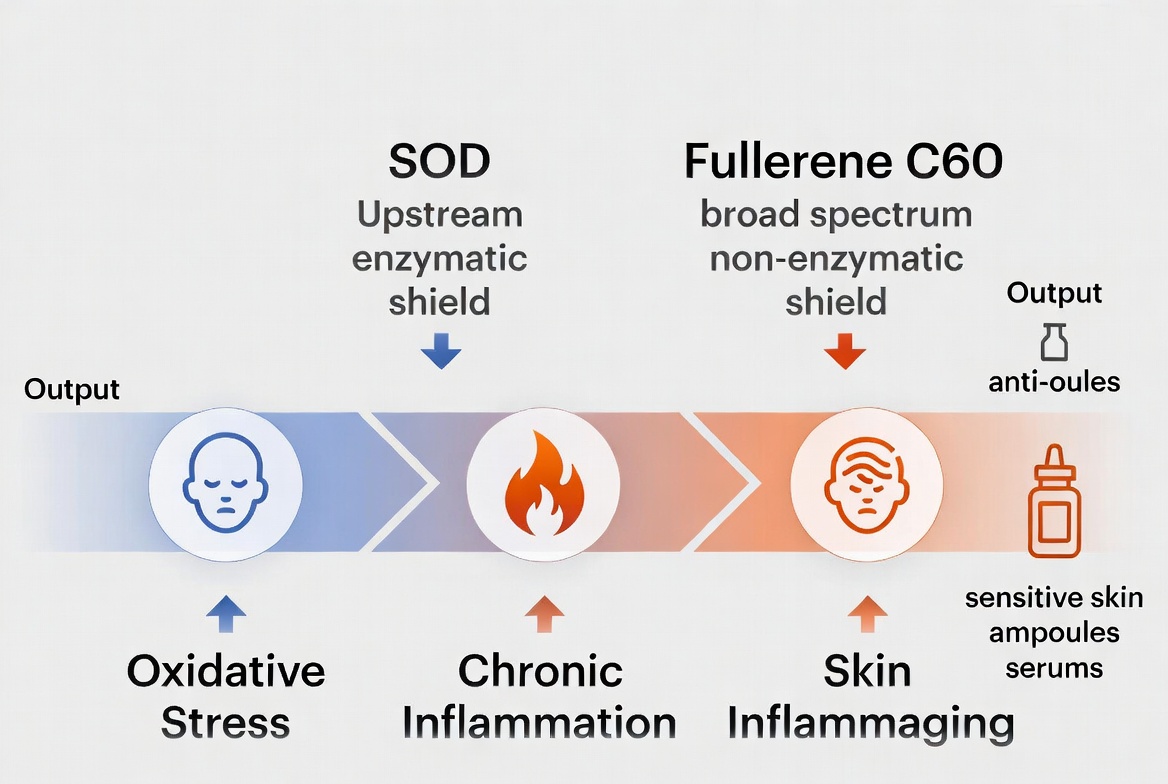
| Aspect | Superoxide Dismutase (SOD) | Fullerene C60 |
|---|---|---|
| Type | Enzymatic antioxidant enzyme derived from biological sources. (chemicalbook) | Non‑enzymatic carbon nanomaterial with high electron affinity. (chemicalbook) |
| Primary Target | Superoxide anion O2−O2−, upstream ROS. (chemicalbook) | Multiple ROS via electron transfer and radical trapping. (chemicalbook) |
| Mechanism | Catalytic dismutation into oxygen and hydrogen peroxide. (chemicalbook) | Physico‑chemical ROS quenching and redox cycling. (chemicalbook) |
| Key Benefits | Anti‑inflammatory, soothing, anti‑aging, brightening, barrier support. (chemicalbook) | Long‑lasting antioxidant, anti‑wrinkle, anti‑photoaging, anti‑dullness. (chemicalbook) |
| Stability | Protein; sensitive, requires encapsulation or careful formulation. (sme.gov) | Chemically stable but hydrophobic; requires solubilization or dispersion. (chemicalbook) |
| Safety Profile | Well‑documented, low irritation when properly formulated. (chemicalbook) | Requires nano‑specific safety evaluation and regulatory attention. (chemicalbook) |
| Ideal Use Cases | Sensitive‑skin care, repair ampoules, medical‑inspired lines. (chemicalbook) | Premium anti‑aging, high‑tech antioxidant and anti‑pollution ranges. (chemicalbook) |
This kind of structured comparison is particularly useful for procurement and product managers who need to justify active selection to internal stakeholders and regulatory teams. [patents.google]
Recent research on SOD nano‑enzymes shows multi‑target benefits, including improved skin hydration, reduced oxidative damage, and enhanced elasticity, positioning SOD‑based systems as promising functional materials for anti‑aging and regenerative skincare. [ojs.vitu-pub]
In parallel, technology assessments of C60 in "dermaceuticals" highlight its potential for UV protection, anti‑wrinkle effects, and moisture retention, though they also emphasize the importance of selecting suitable production routes and functionalization strategies for safe and scalable industrial use. [slideshare]
For a manufacturer specializing in natural plant actives combined with modern fermentation, integrating these emerging data points into product dossiers and marketing stories provides a powerful differentiation angle for international OEM/ODM clients focused on science‑backed chronic inflammation management. [sme.gov]
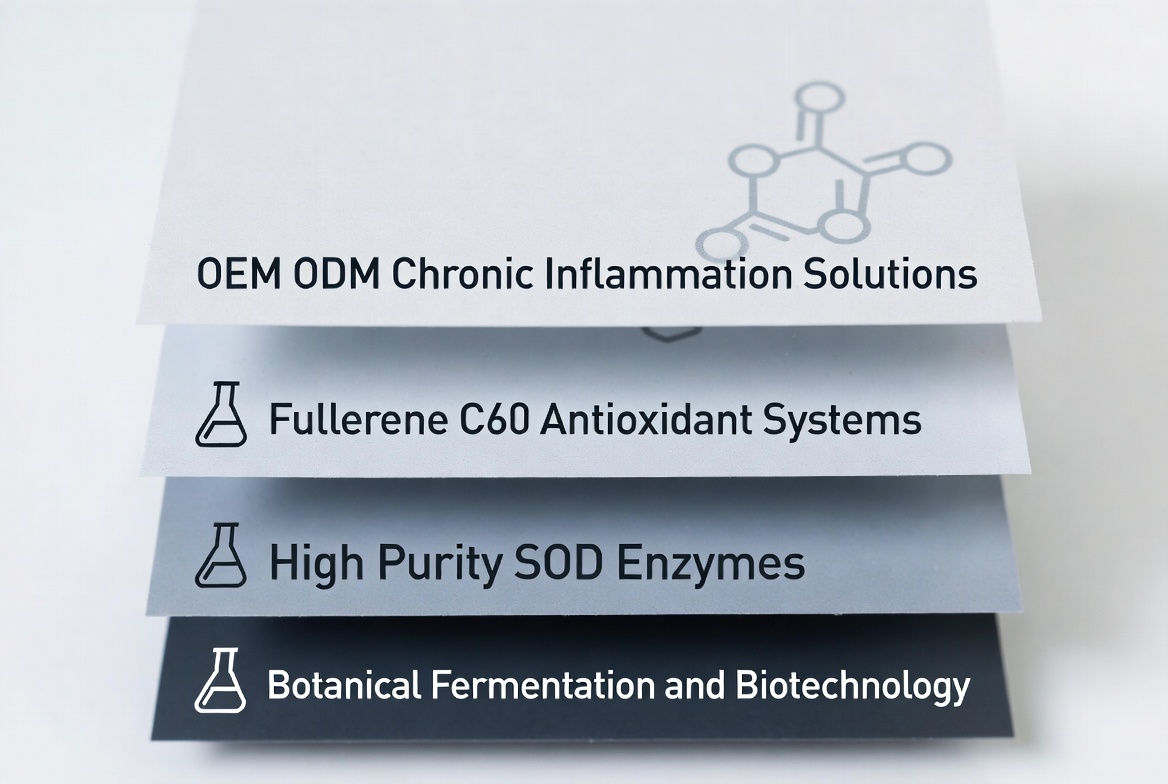
From a personal industry experience standpoint, the ingredient partner you choose can be as important as the active itself when it comes to chronic inflammation solutions. A high‑tech manufacturer that merges traditional botanical knowledge with modern biotechnologies such as fermentation and enzyme engineering can:
- Develop high‑purity, high‑activity SOD from botanical or microbial sources with defined activity units and robust QC profiles.
- Tailor delivery systems (liposomes, nano‑emulsions, biomimetic carriers) to maximize SOD stability and bioavailability in finished products. [sme.gov]
- Co‑develop multi‑active systems that combine SOD with fullerene C60 and other antioxidants to create synergistic, multi‑layered anti‑inflammatory strategies aligned with brand positioning. [api.artdesignp]
For global brands, wholesalers, and contract manufacturers, partnering with such a supplier streamlines the path from concept to market by providing technical documentation, regulatory support, and flexible OEM/ODM services tailored to specific markets and channels. [patents.google]
From a strategic product‑development viewpoint, the choice between SOD and fullerene C60 can be guided by a few pragmatic questions:
1. Is the brand targeting sensitive or medical‑inspired positioning?
- If yes, prioritize SOD‑centered concepts with well‑documented safety and enzyme‑based mechanistic narratives. [chemicalbook]
2. Is the goal to launch a high‑tech, premium anti‑aging line?
- If yes, consider C60 as a hero active, supported by SOD and other antioxidants to enhance scientific credibility and multi‑pathway coverage. [163]
3. What are the regulatory and communication constraints in target markets?
- For markets cautious about nano‑materials, a SOD‑focused "bio‑fermentation" story may be more straightforward to register and communicate. [chemicalbook]
Ultimately, many R&D teams adopt a hybrid strategy, using SOD as the enzymatic backbone and C60 as the high‑impact, non‑enzymatic booster, creating layered defense systems against chronic inflammation and oxidative stress. [chemicalbook]
For beauty brands, wholesalers, and manufacturers evaluating their next chronic inflammation‑focused launch, a step‑by‑step approach can help structure decision‑making:
1. Define your core claim and target consumer pain point
- Sensitive redness, anti‑wrinkle, barrier repair, anti‑pollution, or "inflammaging" prevention.
2. Select the primary antioxidant strategy
- Enzymatic (SOD‑centric) for sensitive and repair lines.
- Non‑enzymatic (C60‑centric) for premium anti‑aging and urban defense concepts.
3. Design synergistic active combinations
- Combine SOD with vitamins, niacinamide, or hyaluronic acid for multi‑dimensional benefits. [ojs.vitu-pub]
- Pair C60 with UV‑adjacent daily care and barrier support actives for holistic urban protection. [slideshare]
4. Work with a high‑tech botanical OEM/ODM partner
- Co‑develop customized activity levels, carriers, and claim language.
- Build robust documentation (in‑vitro, ex‑vivo, or clinical data where available) to support E‑E‑A‑T and regulatory requirements. [patents.google]
5. Plan global scalability
- Align raw material specifications, batch reproducibility, and compliance frameworks across target markets from the outset to avoid reformulation later. [zhuhaigbc]
By following these steps, brands can translate complex enzymatic vs non‑enzymatic antioxidant science into clear, differentiated, and scalable product architectures.
1. Is SOD or fullerene C60 better for sensitive skin?
SOD is generally more suitable for sensitive‑skin concepts due to its biological origin, well‑documented safety profile, and strong anti‑inflammatory properties when properly formulated. [chemicalbook]
2. Can SOD and fullerene C60 be used together in one formula?
Yes, many high‑performance concepts combine enzymatic SOD and non‑enzymatic C60 to create multi‑layered antioxidant systems that address both specific and broad ROS pathways. [api.artdesignp]
3. Does fullerene C60 qualify as a nano‑material in cosmetics?
Fullerene C60 often falls under nano‑material considerations depending on particle size and form, so brands must evaluate each raw material against local cosmetic regulations and safety assessment guidelines. [163]
4. How can brands verify the activity of SOD in cosmetic raw materials?
Brands should work with suppliers that provide detailed specifications on SOD activity units, purity, isoform type, solubility, and stability, as well as supporting analytical and performance data. [sme.gov]
5. What role do fermentation and biotechnology play in next‑gen SOD ingredients?
Modern fermentation and nano‑enzyme technologies enable high‑activity, stable, and targeted SOD systems with improved penetration and multi‑target regulation of oxidative stress and pigmentation, unlocking new applications in anti‑aging and regenerative skincare. [ojs.vitu-pub]
1. ChemicalBook – Function and applications of superoxide dismutase (SOD). https://www.chemicalbook.com/NewsInfo_22868.htm
2. ChemicalBook – Overview of fullerene in skincare applications. https://www.chemicalbook.com/NewsInfo_18247.htm
3. High‑activity biomimetic SOD cosmetic raw material. https://www.sme.gov.tw/technomart/article-technomart-895-6182
4. Slideshare – Application prospects of C60 in cosmeceuticals. https://www.slideshare.net/slideshow/60-13380915/13380915
5. CN116077371A – Cosmetic composition primarily comprising SOD. https://patents.google.com/patent/CN116077371A/zh
6. NetEase – Discussion of fullerene hype, cost, and realities. https://www.163.com/dy/article/EB6KRQ4G0514AU56.html
7. Zhuhai JibaiKang – Recombinant human SOD (cosmetic grade) product information. https://www.zhuhaigbc.com/chanpinzhongxin/meijidanbailei/meijijiaomulei/248.html
8. Overview of superoxide dismutase (SOD). http://www.zcibio.com/NewsDetail.aspx?ID=700
9. VITU Publishing – Study on composite ion SOD nano‑enzyme for whitening and anti‑aging. https://ojs.vitu-pub.com/index.php/mdyxqy/article/viewFile/156926/155839
10. ArtDesignP – Fe‑SOD enzymatic properties and applications in medicine and skincare. https://api.artdesignp.com/uploads/file/asp/20240409171536912d61689.pdf


