Views: 248 Author: ZHENYIBIO Publish Time: 2026-08-06 Origin: Site
Content Menu
● Why Chelators Matter More in Hard Water Regions
● What Is EDTA and How Does It Work
● What Is Sodium Phytate and Why It's Gaining Ground
● Head-to-Head Comparison for Brightening Formulas
● Practical Formulation Steps for Hard Water Markets
● Industry Insight: Why Manufacturers Are Reformulating Now
● Which Chelator Should You Choose?
Formulators shipping brightening products into hard water regions face a recurring headache: mineral ions destabilize actives before they ever reach the consumer's skin. Choosing between Sodium Phytate and EDTA as your chelating agent is no longer a minor technical footnote — it's a strategic decision that affects stability, marketing claims, and regulatory positioning across export markets.
As a manufacturer working daily with brightening actives, we've watched this debate shift from a purely functional question to one tied directly to clean-beauty positioning and formulation resilience.
Hard water contains elevated calcium, magnesium, and trace iron or copper ions. These metals catalyze oxidation, causing brightening actives like Vitamin C and niacinamide to degrade, discolor, or lose potency.
Chelating agents bind these metal ions, preventing them from triggering unwanted chemical reactions inside a formula. Without this protection, brands exporting to regions with naturally hard tap water — common across parts of the Middle East, Southeast Asia, and inland North America — risk shorter shelf life and inconsistent product performance.

EDTA (ethylenediaminetetraacetic acid) is a synthetic chelator that has anchored cosmetic stability science for decades. It's typically used as disodium EDTA for neutral to mildly acidic products like serums and creams, or tetrasodium EDTA for alkaline formulas such as cleansers and shampoos.
- Standard usage: 0.1%–0.3% for disodium EDTA; 0.1% for tetrasodium EDTA
- Strong, broad-spectrum metal-binding capacity, often outperforming natural alternatives in raw potency
- Widely studied, with decades of formulation data supporting predictable performance
Despite its efficacy, EDTA is poorly biodegradable and has drawn scrutiny in clean-beauty circles, prompting many brands to search for renewable substitutes.
Sodium Phytate is the sodium salt of phytic acid, a compound naturally abundant in grains, seeds, and bran. It binds calcium, magnesium, iron, and copper ions — the same troublemakers EDTA targets — but from a plant-derived, biodegradable source.
Key functional advantages:
- Works across both acidic and alkaline formulas, unlike some naturally derived alternatives
- Delivers secondary skin benefits: moisturization, improved elasticity, oil control, pore appearance reduction, and mild cellulite-related improvement
- Supports brightening claims directly by inhibiting metal-induced oxidative stress, which helps stabilize Vitamin C and niacinamide and reduces the metal-catalyzed pathways linked to hyperpigmentation
- Recommended usage rate: 0.1%–0.5%, sometimes cited as low as 0.05% depending on formula demands
One formulation nuance: Sodium Phytate carries a pH near 12, so finished formulas often require pH adjustment to stay within skin-compatible ranges.
| Attribute | Sodium Phytate | EDTA (Disodium/Tetrasodium) |
|---|---|---|
| Source | Plant-derived (phytic acid from grains/seeds) | Fully synthetic |
| Biodegradability | High; environmentally friendly | Low; persistent in wastewater |
| Usage Rate | 0.1%–0.5% | 0.1%–0.3% |
| pH Compatibility | Works in acid & alkaline systems; base pH ~12 | Best matched to pH-specific formulas |
| Secondary Skin Benefits | Moisturizing, brightening support, elasticity | None; purely functional |
| Chelation Strength | Strong, comparable to EDTA in most applications | Generally the stronger raw chelator |
| Clean-Beauty Positioning | Aligns with natural/green formulation trends | Increasingly flagged by clean-beauty audits |
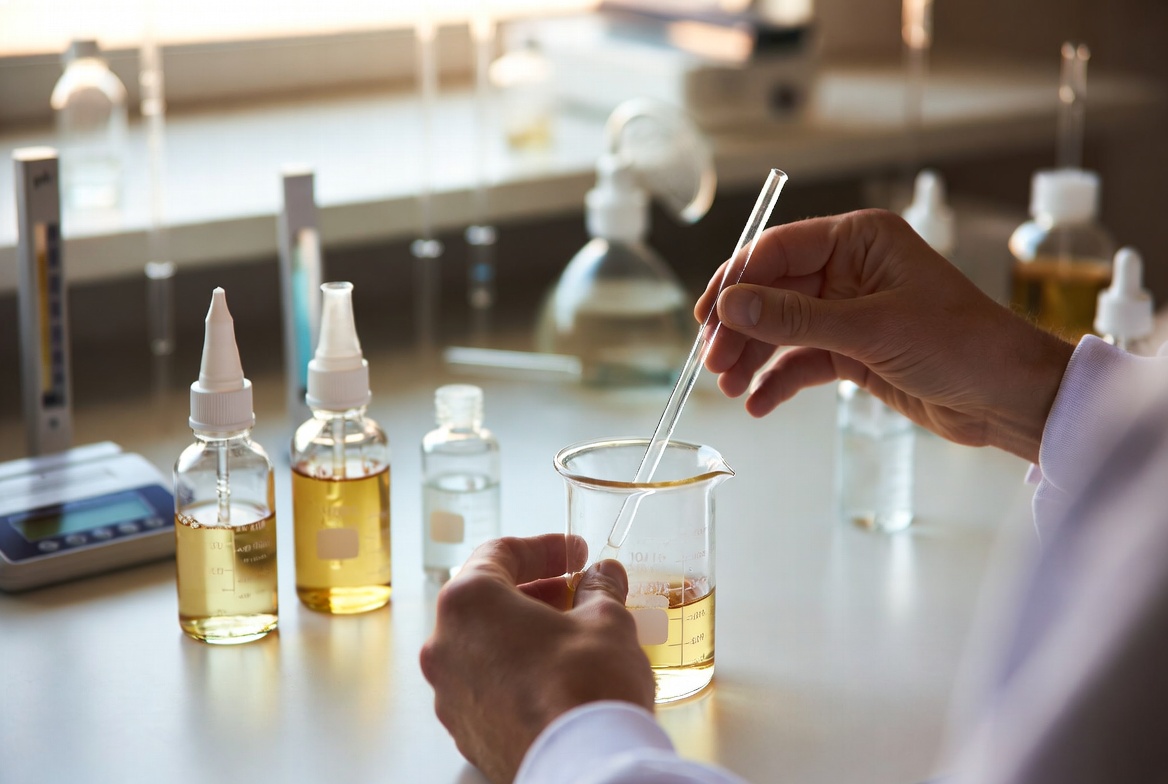
Transitioning from EDTA to Sodium Phytate isn't a simple one-to-one swap. Here's a practical sequence we recommend to brands and OEM partners:
1. Test local water hardness data for your target export market before finalizing chelator concentration.
2. Adjust base formula pH to accommodate Sodium Phytate's naturally alkaline profile.
3. Run accelerated stability testing (heat/cool cycling, light exposure) comparing both chelators side by side.
4. Pair with complementary antioxidants like Vitamin C derivatives to reinforce brightening efficacy.
5. Re-verify preservative efficacy, since chelators influence how well preservative systems perform against microbial challenge.
Global demand for plant-based, biodegradable ingredients has pushed chelator reformulation higher on brand priority lists over the past two years. Brands selling into hard water markets increasingly request dual-function ingredients — chelators that also support brightening or barrier-repair claims — rather than purely functional additives.
This shift matters most for OEM/ODM manufacturers supplying international brands, wholesalers, and private-label producers, since formulation choices at the raw material level directly determine what marketing claims a finished product can legally and credibly make.
For brands prioritizing clean-label positioning and secondary skin benefits, Sodium Phytate is generally the stronger strategic choice, particularly for brightening lines. For formulators needing maximum raw chelation strength at minimal cost, EDTA remains functionally reliable but faces growing consumer and retailer resistance.
If you're formulating for hard water export markets and want a natural chelator that also reinforces your brightening claims, our technical team can help you benchmark Sodium Phytate against your current EDTA-based system, run compatibility trials, and develop OEM/ODM samples tailored to your target region's water profile. Reach out to start a formulation consultation today.
Is Sodium Phytate as effective as EDTA in hard water formulas?
In most applications, Sodium Phytate performs comparably to EDTA for binding calcium, magnesium, iron, and copper ions, though EDTA is generally considered the stronger raw chelator in high-mineral conditions.
Can Sodium Phytate replace EDTA in every product type?
Not always. Because Sodium Phytate has a naturally alkaline pH near 12, some acidic formulas require adjustment before substitution is practical.
Does Sodium Phytate help with skin brightening directly?
Yes. It reduces metal-catalyzed oxidative stress that contributes to hyperpigmentation and helps stabilize brightening actives like Vitamin C and niacinamide.
What's the typical usage rate for Sodium Phytate in cosmetic formulas?
Most formulators use Sodium Phytate at 0.1%–0.5%, with some applications effective as low as 0.05%.
Why is EDTA facing more scrutiny in cosmetic formulation today?
EDTA is synthetic and poorly biodegradable, which conflicts with growing clean-beauty and sustainability expectations among consumers and retailers.
Do I need to change my preservative system when switching chelators?
Yes, it's recommended. Chelators influence preservative efficacy, so stability and microbial challenge testing should be repeated after any chelator change.
1. When to use a chelating agent in your DIY formula – Formula Botanica: https://formulabotanica.com/chelating-agent-formula/
2. Sodium Phytate: Ultimate Chelating Agent in Skincare? – Cosmetics topical resource: https://www.zhenyibio.com/sodium-phytate-ultimate-chelating-agent-in-skincare/
3. Sodium Phytate Formulation & Manufacturing Expert Guide – Zhenyibio: https://www.zhenyibio.com/sodium-phytate-formulation-manufacturing-expert-guide/
4. ZhenYiBio Technology Inc – Whitening & Lightening Raw Material Supplier: https://www.zhenyibio.com/
5. ZHENYIBIO OEM/ODM Services Overview: https://www.zhenyibio.com/oem-odm/