


Views: 220 Author: ZHENYIBIO Publish Time: 2026-09-15 Origin: Site
Content Menu
● What Does "Skin Cycling" Recovery Mean?
● Yeast Beta-Glucan: A Bioactive Soothing Ingredient
>> Why Yeast Beta-Glucan Fits Recovery Products
>> Yeast Beta-Glucan for Sensitive-Looking Skin
● Panthenol: The Established Barrier-Care Benchmark
>> Why Panthenol Remains Highly Relevant
>> Panthenol in Skin Cycling Recovery Creams
● Yeast Beta-Glucan vs. Panthenol: Side-by-Side Comparison
>> Which Has Superior Soothing Power?
● Why Combining Both Ingredients Can Be Stronger
>> Example: Premium Recovery Gel-Cream Concept
● Formulation Guidance for Brand Owners
>> Choose Yeast Beta-Glucan When:
● A More Responsible Recovery-Care Message
● FAQ
>> 1. Is yeast beta-glucan better than panthenol for sensitive skin?
>> 2. Can yeast beta-glucan and panthenol be used together?
>> 3. What percentage of panthenol is commonly used in skincare?
>> 4. Is yeast beta-glucan suitable after retinol or exfoliating acids?
>> 5. Does panthenol repair the skin barrier?
>> 6. What ingredients work well with yeast beta-glucan?
>> 7. What testing should brands conduct for recovery products?
For brands developing products for "skin cycling" recovery phases, the central formulation question is increasingly clear: Yeast Beta-Glucan vs. Panthenol—which ingredient delivers better soothing, hydration, and barrier-support performance after active-treatment nights? Both are highly relevant to sensitive-skin care, but they work through different mechanisms and can serve different commercial product positions.
At ZHENYIBIO TECHNOLOGY INC, we work with natural plant-derived actives and modern biotechnology to help beauty brands build evidence-informed, sustainable skincare concepts. From a formulation perspective, yeast beta-glucan offers a compelling story around bioactive polysaccharides, comfort, and skin-resilience support, while panthenol remains a widely recognized hydration and barrier-care benchmark. The strongest choice depends on the target user, product format, claim direction, sensory goals, and the role of the recovery product within a complete routine.

"Skin cycling" generally describes a rotating nighttime routine in which users alternate potentially intensive ingredients—commonly exfoliating acids and retinoids—with recovery-focused nights. A familiar four-night pattern may include exfoliation on the first night, a retinoid on the second, followed by two nights centered on hydration and barrier support.
The approach reflects a practical consumer need. Frequent use of exfoliating acids, retinoids, strong cleansers, or multiple active products can leave some users experiencing tightness, visible redness, dryness, rough texture, or discomfort. Recovery-phase products are designed to simplify the routine and prioritize moisture retention, skin comfort, and support for the outer barrier.
For product developers, this creates a valuable formulation opportunity: consumers do not simply want a "moisturizer." They look for a product that feels immediately comforting while supporting a healthier-looking, less reactive complexion over time.
A strong recovery-phase formula should aim to provide:
- Fast, non-stinging comfort after active-treatment nights
- Longer-lasting hydration without excessive heaviness
- Reduced appearance of dryness and temporary redness
- Barrier-support positioning appropriate for sensitive or stressed skin
- Compatibility with retinoid, acid, and post-treatment routines
- A gentle, minimal-irritation sensory experience
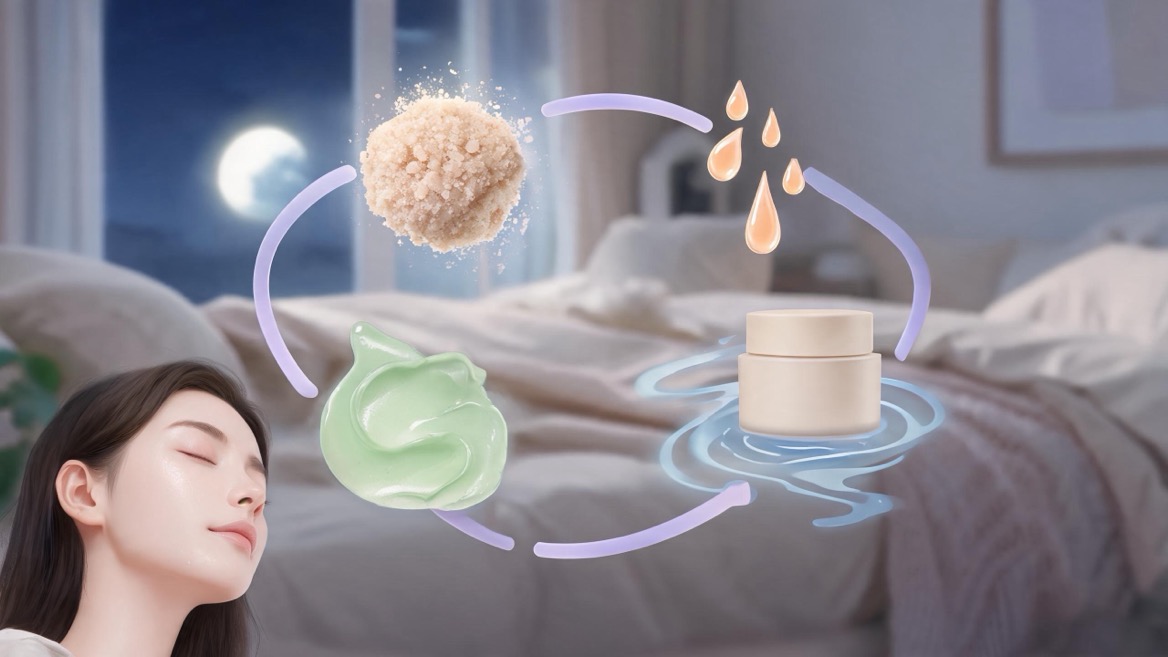
Yeast beta-glucan is a naturally occurring polysaccharide commonly obtained from the cell wall of yeast. In cosmetics, it is valued for its moisturizing, film-forming, soothing, and skin-conditioning potential. Its appeal is especially strong in recovery care because it can support a formulation narrative that is both biotechnology-driven and naturally inspired.
Unlike simple humectants, beta-glucan is often positioned as a multifunctional active with the potential to contribute to hydration, surface comfort, and a more resilient-looking skin appearance. Its molecular structure and origin also make it relevant to brands pursuing fermentation, microbiome-friendly, bio-based, or elevated sensitive-skin concepts.
Yeast beta-glucan can be particularly valuable when the goal is to create a premium recovery serum, gel cream, sheet mask, sleeping mask, or post-procedure comfort product. It is often chosen for formulas designed around visible sensitivity, compromised-feeling skin, environmental stress, or the temporary dryness associated with modern active-heavy routines.
Potential formulation benefits include:
- Water-binding support that helps improve the feel of hydrated skin
- A soft protective film that can reduce the sensation of tightness
- Soothing positioning for skin exposed to drying or irritating external factors
- A fermentation-based active story that supports contemporary beauty trends
- Versatility across skin-care formats, including aqueous serums and emulsions
- Premium differentiation beyond standard moisturizing ingredients
Research on beta-glucans indicates that they may support skin-related applications involving barrier disruption, inflammation, pruritus, and wound-healing-related processes. However, formulators should distinguish between the broader beta-glucan research category and the performance of a specific commercial raw material in a finished formula. Beta-glucan source, molecular characteristics, purity, concentration, solubility, and formulation environment can all influence performance.
A recovery product should feel like a pause button for overworked skin. Yeast beta-glucan is especially useful in this context because it can help brands communicate a "comfort-first" philosophy without relying on aggressive actives.
For example, a lightweight recovery gel may pair yeast beta-glucan with ectoin, hyaluronic acid, allantoin, ceramides, or plant-derived soothing extracts. This combination can create a multi-layered hydration and comfort profile:
| Recovery Need | Yeast Beta-Glucan Contribution | Complementary Ingredient Direction |
|---|---|---|
| Tight, dehydrated feeling | Humectant and film-forming support | Glycerin, sodium hyaluronate |
| Temporary visible redness | Soothing care positioning | Bisabolol, allantoin |
| Dryness after acids or retinoids | Skin-conditioning and moisture support | Ceramides, squalane |
| Weak-feeling skin barrier | Comfort and hydration layer | Cholesterol, fatty acids |
| Premium biotechnology story | Fermentation-derived active identity | Postbiotics, fermented extracts |
For brands serving consumers who associate recovery care with "calm," "reset," "resilience," and "repair," yeast beta-glucan provides a more distinctive active narrative than many commodity humectants.
Panthenol, also known as provitamin B5, is one of the most established ingredients in moisturizing and barrier-support skincare. When applied topically, panthenol is widely used in products for dry, sensitive, uncomfortable, or compromised-feeling skin.
It is popular for a practical reason: panthenol offers a familiar, easy-to-understand benefit profile. It is commonly associated with hydration, softness, comfort, and support for the skin barrier. It can also work effectively across many product types, from facial serums and creams to body lotions, cleansers, masks, baby care, scalp treatments, and post-sun products.
Clinical and review literature has reported that topical dexpanthenol or panthenol-containing products can improve stratum corneum hydration, reduce transepidermal water loss, and support barrier recovery. A review of dexpanthenol research notes that a double-blind, randomized controlled study in 60 healthy volunteers found improved skin hydration and reduced transepidermal water loss after seven days of twice-daily application of 2.5% dexpanthenol in a lipophilic vehicle.
Panthenol is not a trend-dependent ingredient. Its long-term relevance comes from its usability, stability in many systems, broad consumer familiarity, and strong fit with barrier-care routines.
Key advantages include:
- Recognizable consumer language around provitamin B5 and moisture
- Reliable hydration support for dry or rough-feeling skin
- Strong compatibility with many emulsion, gel, lotion, and mask formats
- Appropriate positioning for sensitive-skin and family-care categories
- Barrier-support evidence that helps substantiate product narratives
- Excellent pairing potential with ceramides, glycerin, beta-glucan, and lipids
A 2024 study involving a cream containing panthenol, prebiotics, and probiotic lysate reported improvements in barrier-related indicators after 28 days, including increased stratum corneum moisture and reduced erythema index and transepidermal water loss. Because this was a multi-ingredient formula, the results should not be interpreted as evidence for panthenol alone; nevertheless, they support the relevance of panthenol-containing systems for sensitive facial skin.
For a brand creating an accessible recovery moisturizer, panthenol is usually one of the most commercially efficient choices. It supports a direct message: replenish moisture, reduce dryness-related discomfort, and help skin feel smoother after active nights.
Panthenol may be especially suitable for:
- Daily barrier creams for sensitive-skin consumers
- Entry-level "retinol recovery" moisturizers
- Post-exfoliation hydration products
- Fragrance-free family skincare
- Affordable dermocosmetic-style ranges
- Multi-purpose face-and-body products
- Products requiring familiar, straightforward ingredient communication
In short, panthenol provides proven familiarity and dependable moisture support. It may not always create the same premium biotechnology story as a high-quality yeast beta-glucan, but it remains one of the most valuable building blocks in recovery-focused skincare.
Neither ingredient should be treated as an automatic replacement for the other. Their functional overlap is real, but their strongest commercial roles differ.
| Factor | Yeast Beta-Glucan | Panthenol |
|---|---|---|
| Primary identity | Fermentation-derived bioactive polysaccharide | Provitamin B5 humectant and skin-conditioning ingredient |
| Core recovery benefit | Comfort, hydration, protective skin feel, premium soothing story | Hydration, softness, barrier support, broad familiarity |
| Best consumer appeal | Biotechnology, natural-origin, advanced soothing care | Trusted, recognizable, everyday barrier care |
| Ideal product position | Premium serum, restorative mask, post-treatment care, sensitive-skin innovation | Daily moisturizer, recovery cream, family care, dermocosmetic basics |
| Sensory contribution | Can create a cushioned, hydrated, film-forming feel | Supports a soft, moisturized skin feel |
| Claim direction | Skin comfort, resilience, hydration, soothing support | Hydration, dryness relief, barrier-support care |
| Formulation strategy | Depends strongly on source, grade, solubility, and molecular profile | Widely versatile and familiar in many systems |
| Commercial differentiation | Higher potential for active-story differentiation | Stronger consumer recognition and cost-efficient positioning |
| Best use case | When the formula needs an elevated recovery-active narrative | When the formula needs dependable, widely understood barrier care |
The answer depends on what "superior" means for the finished product.
If the brand defines soothing as immediate comfort, a hydrated protective feel, and a premium bioactive recovery story, yeast beta-glucan may offer a stronger differentiation opportunity. It is particularly attractive in a product designed for consumers who have overused acids, retinoids, strong cleansers, or multiple treatment steps.
If soothing is defined as reliable moisturization, broad tolerance positioning, and a familiar barrier-care ingredient with substantial topical-use history, panthenol may be the more practical primary active.
For many premium recovery formulas, the most scientifically sensible answer is not "yeast beta-glucan or panthenol." It is yeast beta-glucan plus panthenol.
A well-designed recovery product can combine the distinctive comfort profile of yeast beta-glucan with the established hydration and barrier-support role of panthenol. This approach allows brands to build a more complete benefit story without overloading the formula with unnecessary actives.
The combination can be positioned around three complementary layers:
1. Immediate hydration: Panthenol and other humectants help attract and retain moisture.
2. Comfort and cushioning: Yeast beta-glucan can contribute to a hydrated, protective, less tight-feeling skin experience.
3. Barrier-focused nourishment: Ceramides, cholesterol, fatty acids, squalane, or biomimetic lipids can support the broader recovery concept.
A study investigating a moisturizing spray containing beta-glucan and panthenol in an experimental dry-skin model reported lower transepidermal water loss, increased filaggrin mRNA expression, and reduced markers associated with inflammatory response compared with the induced model condition. These findings are promising for the ingredient pairing, although animal-model findings should not be represented as direct proof of clinical outcomes in human cosmetic users.
Product concept: Overnight Skin Cycling Recovery Gel-Cream
Target user: Consumers using exfoliating acids, retinol, retinal, or prescription-adjacent active routines who experience temporary dryness, tightness, and visible sensitivity.
Core active system:
- Yeast beta-glucan for bioactive comfort and hydration support
- Panthenol for moisture retention and barrier-care positioning
- Ceramide complex for lipid-barrier support
- Ectoin for environmental-stress care
- Low-molecular-weight and crosslinked hyaluronic acid for multi-level hydration
- Fragrance-free, essential-oil-free base for sensitive-skin suitability
Consumer-facing benefit direction:
- Helps replenish moisture after active skincare nights
- Helps skin feel calm, cushioned, and comfortable
- Supports a soft, smooth, healthy-looking complexion
- Designed for recovery nights in active skincare routines
- Suitable for use after retinol or exfoliation, based on formula compatibility testing
This concept is more commercially differentiated than a generic "hydrating moisturizer," while still remaining understandable to consumers.
Selecting an active is only the first step. The finished product determines whether the recovery promise feels credible in daily use.
- Your brand needs a fermentation-forward or biotech-inspired active story.
- You are developing a premium serum, sleeping mask, ampoule, or restorative gel.
- Your target users are highly engaged with retinoids, acids, and advanced routines.
- You want to stand out from standard panthenol-and-ceramide products.
- Your brief emphasizes visible comfort, hydration, and a more resilient-feeling complexion.
- You need an ingredient that supports a "natural active plus modern science" positioning.
- You need a cost-effective, familiar, and versatile barrier-support ingredient.
- You are building a daily moisturizer or broad-market sensitive-skin line.
- Your priority is clear consumer recognition and easy claim communication.
- You want to support hydration and reduce the dry, tight skin feel associated with active use.
- The formula already contains several premium actives and needs a reliable functional base.
- You are creating a universal product for face, body, hands, or scalp.
- You are developing a flagship recovery product.
- You want both clinical familiarity and premium differentiation.
- Your customer base includes active-skincare users with heightened comfort expectations.
- The product will be marketed for post-retinoid, post-acid, post-sun, or seasonal dryness routines.
- You want a layered moisture-and-comfort story rather than a single-ingredient claim.
Recovery products should never encourage consumers to push through severe irritation. A well-made product can support skin comfort and hydration, but it cannot replace medical assessment for persistent burning, swelling, cracking, rash, infection, or worsening dermatitis.
Brands should also avoid implying that every consumer needs the same four-night cycle. Skin tolerance varies according to age, climate, skin condition, existing treatments, product strength, and frequency of use. A recovery product should be positioned as a flexible support product, not as permission to overuse exfoliants or retinoids.
A responsible consumer instruction can be simple:
- Use active ingredients gradually.
- Do not combine multiple strong actives unless the routine is well tolerated.
- Use recovery nights when skin feels dry, tight, or uncomfortable.
- Maintain daily broad-spectrum sun protection.
- Stop using irritating products and seek professional advice if symptoms persist.
For "skin cycling" recovery phases, panthenol is the dependable foundation, while yeast beta-glucan is the stronger differentiator. Panthenol brings recognition, hydration, and well-established barrier-support relevance. Yeast beta-glucan brings a more advanced biotechnology narrative, multifunctional soothing potential, and premium product-story value.
The best decision should follow the brand's market positioning:
- Choose panthenol for widely accessible, trusted, everyday recovery care.
- Choose yeast beta-glucan for elevated soothing products built around fermentation and bioactive innovation.
- Choose both when creating a high-value recovery formula designed to stand apart in the global sensitive-skin and active-skincare market.
ZHENYIBIO TECHNOLOGY INC supports overseas beauty brands, wholesalers, and manufacturers with OEM and ODM development for natural active cosmetic ingredients and finished-product concepts. If you are planning a recovery serum, barrier cream, sleeping mask, or sensitive-skin line, contact our formulation team to explore yeast beta-glucan, panthenol, and customized active combinations for your target market.
Not necessarily. Yeast beta-glucan may offer stronger premium differentiation and a bioactive soothing narrative, while panthenol provides widely recognized hydration and barrier-support benefits. The better choice depends on the formula, consumer needs, ingredient quality, and product claims.
Yes. They are commonly compatible in recovery-focused product concepts. Combining them can create a more comprehensive moisture, comfort, and barrier-support profile than relying on either ingredient alone.
Panthenol use levels vary depending on the product type, regulatory requirements, sensory target, and intended claim direction. Product developers should determine the final level through formulation stability testing, compatibility assessment, safety evaluation, and efficacy testing of the finished formula.
A properly formulated yeast beta-glucan product may be suitable for recovery-focused routines after retinol or exfoliating acids because of its hydrating and soothing positioning. However, suitability depends on the entire formula. Fragrance, essential oils, alcohol level, exfoliating ingredients, and preservative system should all be evaluated.
Panthenol is widely used to support skin hydration and barrier function. Research on topical dexpanthenol has reported improved stratum corneum hydration and reduced transepidermal water loss in certain study settings. It should be described as supporting barrier care rather than as a medical treatment for disease.
Yeast beta-glucan can pair well with panthenol, glycerin, hyaluronic acid, ceramides, ectoin, allantoin, squalane, cholesterol, fatty acids, and selected plant-derived soothing ingredients. The optimal combination depends on the desired texture, preservative strategy, target region, and claims plan.
Brands should consider stability testing, preservative efficacy testing, compatibility testing, safety assessment, patch testing where appropriate, and finished-product instrumental or consumer studies. Claims regarding hydration, transepidermal water loss, visible redness, or comfort should be supported by testing on the final formula rather than raw-material data alone.
1. Zhang, X. et al. "Efficacy and Safety of a Cream Containing Panthenol, Prebiotics, and Probiotic Lysate in Facial Sensitive Skin." *Journal of Cosmetic Dermatology*, 2024. [Read the study]
2. Cho, Y. S. et al. "Use of Dexpanthenol for Atopic Dermatitis—Benefits and Recommendations Based on Current Evidence." *Journal of Clinical Medicine*, 2022. [Read the review]
3. Feng, X. et al. "Exploring the Properties and Application Potential of β-Glucan in Skin Health." *Journal of Cosmetic Dermatology*, 2025. [Read the review]
4. "Alleviating Skin Barrier Disruption, Skin Inflammation, and Pruritus: A Moisturizing Spray Containing β-Glucan and Panthenol." *International Journal of Dermatology and Venereology*, 2023. [Read the study]
5. "What Is 'Skin Cycling,' and Should You Try It?" *Everyday Health*, 2022. [Read the article]
6. "The Rise of 'Skin Cycling': Is It Right for Your Skin?" Dr. Angela Azar, MD. [Read the article]


