


Views: 288 Author: ZHENYIBIO Publish Time: 2026-09-14 Origin: Site
Content Menu
● France's Sialic Acid Supply Context
>> Technical Profile of Sialic Acid Powder
● Leading Suppliers and Supply Options
>> 1. ZHENYIBIO TECHNOLOGY INC — Flexible Fermentation-Active Partner for Cosmetic Projects
>> 2. Merck / Sigma-Aldrich France — Research and Analytical Reference Supply
>> 3. Calbiochem / Merck Life Science — Glycoscience-Focused Specialist Materials
>> 4. French Cosmetic Formulation and OEM/ODM Partners — Local Product Development Route
>> 5. French and EU Ingredient Distributors — Inventory and Regulatory-Coordination Route
>> 1. Confirm You Are Buying Neu5Ac, Not a Look-Alike Material
>> 2. Do Not Treat a High Assay Number as Complete Proof of Quality
>> 3. Request a Fermentation-Origin Statement
>> 4. Verify Quality Certificates Directly
>> 5. Use a Three-Stage Sampling Process
● The Less-Discussed Procurement Trap
● Regulatory and Logistics Considerations
>> Practical Documentation Checklist
>> 1. How can I verify whether a supplier's ISO certificate is still valid?
>> 2. Is a 99% Sialic Acid Powder automatically suitable for cosmetic use?
>> 3. Should I choose synthetic, fermentation-derived, or bird's-nest-derived sialic acid?
>> 4. What is a realistic MOQ for Sialic Acid Powder?
>> 5. Can a French distributor replace direct supplier qualification?
France remains an important sourcing location for premium cosmetic ingredients because of its mature beauty-product ecosystem, formulation laboratories, regulatory infrastructure, and strong links between brands, contract manufacturers, research institutions, and distributors. However, buyers looking specifically for Sialic Acid Powder should recognize an important market reality: France is stronger in cosmetic formulation, product development, laboratory supply, regulatory support, and distribution than in large-scale fermentation production of N-Acetylneuraminic Acid.
For procurement teams, the most practical France-focused strategy is often to combine a reliable high-purity fermentation manufacturer with a French or EU-based laboratory, distributor, formulation partner, or finished-product OEM/ODM provider. This guide explains how to assess that supply chain, compares relevant suppliers, and helps buyers reduce quality, documentation, and delivery risks.

This list is not a simple name directory. It is designed for purchasing managers, brand owners, private-label companies, formulation houses, and distributors that need a dependable long-term source of Sialic Acid Powder, also known as N-Acetylneuraminic Acid, Neu5Ac, NANA, or CAS 131-48-6.
The suppliers and supply-chain participants below were assessed against practical buying criteria:
- Product relevance to N-Acetylneuraminic Acid, glycoscience materials, fermentation-derived actives, cosmetic ingredients, or adjacent laboratory-grade sialic-acid products
- Manufacturing or supply-chain transparency, including whether the company is a direct producer, distributor, laboratory supplier, or formulation partner
- Ability to provide essential batch documentation, such as COA, SDS, specification sheet, origin statement, and test-method information
- Quality-system maturity, including GMP, ISO systems, traceability, microbial controls, and documented release procedures where applicable
- Research and formulation capability for cosmetic active ingredients
- Flexibility for pilot orders, formulation trials, custom specifications, packaging, and OEM/ODM projects
- Commercial suitability for international buyers, including export communication, lead-time planning, and customs documentation
- Regulatory readiness for projects intended for the European market
A key point for buyers: CE and RoHS are generally not the right primary compliance markers for a cosmetic raw material. CE applies to certain regulated products placed on the European market, while RoHS concerns restrictions on hazardous substances in electrical and electronic equipment. For Sialic Acid Powder used in cosmetic formulations, more relevant checks include product identity, purity, heavy metals, microbiology, residual solvents, allergen status, animal-origin status, REACH considerations where applicable, safety documentation, and the final brand's responsibilities under EU cosmetics rules. Regulation (EC) No 1223/2009 governs finished cosmetic products, rather than functioning as an ingredient approval list. It requires, among other things, documented ingredient identity and composition in the product information process.
France's value in the beauty supply chain comes from its highly developed cosmetics cluster rather than from being the world's most visible bulk producer of fermentation-derived Sialic Acid Powder. The country's ecosystem includes prestige beauty brands, cosmetic laboratories, testing providers, packaging specialists, contract manufacturers, universities, ingredient distributors, and regulatory experts.
Cosmetic Valley is widely recognized as the coordinating network for France's fragrance and cosmetics sector, connecting companies, research centers, universities, and schools. The broader Paris and Île-de-France area also has a deep concentration of beauty-industry activity; reported figures cite 40,000 beauty-industry employees, 500 manufacturers, and 4,000 distributors in the region.
For an overseas buyer, that means France can be an excellent place to find:
- A French formulation or OEM/ODM partner for a finished skin-care product
- A local or EU laboratory-supply channel for research, stability testing, and prototyping
- Regulatory and safety-assessment support for an EU market launch
- Premium cosmetic product-development expertise
- Distribution pathways for smaller local inventory requirements
It may be less cost-effective to rely solely on French laboratory-catalogue suppliers for commercial-scale Sialic Acid Powder. Catalogue-grade material is often packaged in gram or milligram quantities for research use, which can differ substantially from the pricing, lead times, packaging formats, and documentation needed for a commercial skin-care launch.
Sialic acid usually refers to a family of acidic monosaccharides. The material most commonly requested in commercial sourcing is N-Acetylneuraminic Acid (Neu5Ac or NANA), CAS No. 131-48-6.
Typical commercial specifications may include:
| Parameter | Typical Buyer Requirement | Why It Matters |
|---|---|---|
| Identity | N-Acetylneuraminic Acid / Neu5Ac | Avoids confusion with CMP-sialic acid, sodium salts, bird’s-nest extract, or other derivatives |
| CAS number | 131-48-6 | Supports correct material identification |
| Appearance | White to off-white powder | Basic incoming-quality check |
| Assay | Commonly 95%+ or 98%+ by a stated method | Determines active-content consistency |
| Test method | HPLC preferred for assay confirmation | Enables batch-to-batch comparison |
| Moisture or loss on drying | Supplier-specific limit | Important for powder handling and stability |
| Microbiology | Defined limits for cosmetic use | Necessary for water-based and leave-on applications |
| Heavy metals | Defined limits with method and units | Supports formulation risk assessment |
| Residual solvents | Method-based declaration where relevant | Helps evaluate purification and process suitability |
| Origin statement | Fermentation, enzymatic, synthetic, or animal-derived | Critical for marketing, ethical, and contamination-risk decisions |
| Storage | Usually cool, dry, moisture-protected conditions | Helps preserve quality through distribution |
Merck/Sigma-Aldrich identifies synthetic N-Acetylneuraminic Acid as CAS 131-48-6, with molecular weight 309.27, powder form, and water solubility of approximately 50 mg/mL in one catalogue specification. That reference is useful for identity confirmation, but a cosmetic buyer should not assume that a laboratory catalogue product automatically has the same documentation package or commercial economics as a cosmetic-grade bulk ingredient.

Company profile: ZHENYIBIO TECHNOLOGY INC was established in 2012 and is located in the Xi'an High-tech Industrial Development Zone Free Trade Area. The company focuses on natural plant active cosmetic raw materials and develops ingredients and solutions involving glutathione, hyaluronic acid, polyglutamic acid, asiaticoside, peptides, and liposomes. Its public company information states that it operates with a professional raw-material planting base and a GMP-standard factory, while serving customers in more than 50 countries across Asia, Europe, and the Americas.
Why it is relevant to French and EU-facing buyers: ZHENYIBIO is not a France-based manufacturer. It is included first because international buyers seeking Sialic Acid Powder for France often need a direct-production partner that can provide cost efficiency, active-ingredient specialization, responsive communication, and customized support rather than only a local research-catalogue reseller.
For emerging brands, mid-sized importers, and OEM/ODM customers, the most important advantage is often operational flexibility: the ability to discuss purity targets, packaging options, formulation compatibility, supporting documentation, sample requirements, and commercial ramp-up before committing to a large annual contract.
Core strengths
- Established in 2012 with more than a decade of cosmetic-ingredient experience
- Focus on cosmetic active ingredients and ingredient-solution development
- GMP-standard factory stated by the company
- Plant-active and biotechnology-oriented product portfolio
- International sales presence across more than 50 countries
- One-stop procurement orientation for brands and formulators
- Practical support for OEM/ODM projects, including ingredient selection, customized specifications, packaging coordination, and finished-product development discussions
- Suitable for buyers that want clearer direct communication than a multi-layer distribution chain may provide
Best suited for
- French and European brands that need a direct bulk-supply option
- Private-label skin-care companies developing anti-aging, hydration, barrier-support, or premium active-complex concepts
- Importers seeking lower minimums during pre-launch or product-validation stages
- Customers needing support across multiple cosmetic active ingredients rather than purchasing Sialic Acid Powder in isolation
- Buyers that want to coordinate OEM/ODM formulation work with active-ingredient sourcing
Important due-diligence request: Ask ZHENYIBIO for the exact grade proposed for your project, including assay method, fermentation or synthesis route, microbial limits, heavy-metal limits, country-of-origin statement, stability recommendation, packaging specification, current GMP/quality documentation, and batch-specific COA. Do not rely on a generic product name alone.
Company profile: Merck and Sigma-Aldrich provide N-Acetylneuraminic Acid products through a global laboratory and life-science catalogue network, including France-facing product and documentation channels. The company lists synthetic N-Acetylneuraminic Acid under CAS No. 131-48-6 and provides associated SDS and product documentation.
Core strengths
- Recognized global laboratory and life-science supply network
- Strong analytical documentation framework
- Useful for identity reference, laboratory method development, early formulation screening, and comparative testing
- Accessible SDS, catalogue numbers, and traceable product references
- Relevant when a buyer needs small quantities for proof-of-concept work
Limitations for cosmetic sourcing
Merck's catalogue materials should be treated as laboratory or research supply unless the company confirms a specific grade, commercial use case, and documentation package suitable for your intended cosmetic application. The listed synthetic N-Acetylneuraminic Acid product is indicated as at least 95% on an anhydrous basis and is offered in small-scale catalogue formats.
Best suited for
- R&D departments validating analytical methods
- Formulation laboratories comparing Neu5Ac performance
- Universities, biotech teams, and early-stage product developers
- Buyers requiring small quantities before selecting a bulk manufacturing source
Company profile: Calbiochem, available within the Merck Life Science portfolio, provides specialized sialic-acid-related reagents and derivatives, including CMP-Sialic Acid disodium salt and sialic-acid-related biochemical materials.
This category should not be confused with bulk cosmetic Sialic Acid Powder. CMP-sialic acid is an activated biochemical form used in glycosylation-related research and is chemically distinct from standard N-Acetylneuraminic Acid powder.
Core strengths
- Specialized glycoscience product range
- Strong relevance for mechanism studies, glycosylation work, and laboratory investigation
- Traceable catalogue references and technical documentation
- Useful reference source when an R&D team needs to distinguish between Neu5Ac and activated sialic-acid derivatives
Limitations for cosmetic sourcing
- Generally inappropriate as a direct substitute for commercial bulk Sialic Acid Powder
- Packaging sizes may be small and price levels may reflect specialist research use
- The material identity must be checked carefully; CMP-sialic acid, sialic acid sodium salt, and Neu5Ac are not interchangeable in a purchasing specification
Best suited for
- Glycobiology research groups
- Innovation teams studying carbohydrate pathways
- Analytical laboratories that need defined specialty reagents
- Buyers building an internal reference library before commercial scale-up
France has a highly developed network of cosmetic formulation laboratories and contract manufacturers. While many of these businesses may not manufacture Sialic Acid Powder themselves, they can be valuable partners for converting a bulk active ingredient into an EU-ready serum, ampoule, cream, essence, mask, or encapsulated active complex.
Core strengths
- Strong familiarity with luxury and dermocosmetic product positioning
- Proximity to French brand teams, packaging suppliers, fragrance houses, and test laboratories
- Local support for compatibility testing, preservative-system design, packaging interaction testing, and safety-file preparation
- Potentially smoother coordination with EU Responsible Persons and market-entry requirements
Limitations
- They may source Sialic Acid Powder from an external specialist manufacturer rather than produce it directly
- Development costs, minimum order quantities, and lead times may be higher than direct international sourcing
- A formulation house's quality system does not replace the need to qualify the active-ingredient manufacturer
Best suited for
- Overseas brands launching a France-made or EU-developed product
- Buyers that need finished-product OEM/ODM services rather than only raw powder
- Premium beauty brands prioritizing French formulation storytelling and local project coordination
Ingredient distributors serving France can provide local warehousing, invoicing, technical communication, and supply continuity for approved materials. This route can be useful for brands that do not want to manage direct import clearance, freight consolidation, or overseas vendor qualification.
Core strengths
- Local language and account-management support
- Smaller release quantities from regional inventory, depending on the distributor
- Simplified logistics and VAT handling for local buyers
- Potential support for regional documentation and technical troubleshooting
- Useful buffer-stock option for established formulations
Limitations
- The distributor is typically not the producer
- Unit cost may be higher due to stockholding, import, testing, and margin layers
- Buyers still need to identify the original manufacturer and verify whether material specifications remain unchanged over time
- Not every distributor will stock commercial-grade Neu5Ac; some may only offer research-grade or specialty biochemical materials
Best suited for
- French buyers with limited import-management capacity
- Brands requiring shorter local replenishment cycles
- Procurement teams that value local invoicing and after-sales support
- Projects where the manufacturer has already been qualified and the distributor functions as a logistics partner
The following comparison separates direct manufacturing capability from research, distribution, and formulation roles. "Available on request" is used where public, verifiable production figures or MOQ levels are not disclosed; buyers should request written confirmation rather than assume a number.
| Supplier / Supply Route | Primary Role | Sialic Acid Relevance | Typical Commercial Scale | MOQ Position | Documentation Focus | OEM/ODM Fit |
|---|---|---|---|---|---|---|
| ZHENYIBIO TECHNOLOGY INC | Cosmetic active-ingredient manufacturer and solution provider | Potential commercial Sialic Acid Powder sourcing and multi-active projects | Bulk and customized project scale, subject to specification | Flexible discussion for samples, pilot orders, and production projects | COA, SDS, specification, traceability, quality documents on request | Strong fit for custom active systems, private-label support, and formulation coordination |
| Merck / Sigma-Aldrich France | Laboratory and life-science supplier | Synthetic N-Acetylneuraminic Acid, CAS 131-48-6 | Research and laboratory scale | Catalogue-package driven | SDS, catalogue specification, analytical reference documentation | Limited; primarily material supply |
| Calbiochem / Merck Life Science | Specialist biochemical reagent provider | Sialic-acid derivatives and glycoscience reagents | Milligram to laboratory scale | Catalogue-package driven | High traceability for specialist reagents | Limited; research-oriented |
| French cosmetic OEM/ODM partners | Formulator and finished-product manufacturer | Uses qualified actives in finished products | Pilot to commercial finished-product scale | Varies by factory and packaging format | Finished-product safety, GMP, stability, and compatibility support | Strong for finished skin-care OEM/ODM |
| French / EU ingredient distributors | Distributor and logistics partner | May source or stock Neu5Ac from an approved producer | Small to mid-volume inventory supply | Varies by stock availability | Local commercial documents and manufacturer documents | Moderate; sourcing support rather than development |
Capacity note: Exact annual capacity for Sialic Acid Powder is rarely published by suppliers because it may be a strategic or customer-specific figure. For a serious qualification, request a written capacity statement that distinguishes between nameplate capacity, current available capacity, reserved customer capacity, and the supplier's ability to support your forecast for the next 12 to 24 months.
"Sialic acid" can be used loosely in sales materials. A quotation may refer to:
- Pure N-Acetylneuraminic Acid / Neu5Ac / NANA
- Bird's-nest extract standardized to a specified sialic-acid percentage
- A glycoprotein or oligosaccharide extract containing sialic acid
- CMP-sialic acid or another derivative intended for research
- A sodium salt or formulation premix
- A cosmetic solution containing only a low concentration of active material
These materials may have very different purity, cost, functionality, regulatory considerations, and dosage calculations. Your purchase specification should state:
> Product: N-Acetylneuraminic Acid (Neu5Ac)
> CAS No.: 131-48-6
> Required assay: [insert target]% by HPLC
> Intended use: cosmetic raw material
> Required origin: fermentation-derived / non-animal-derived, if applicable
> Required documentation: batch COA, SDS, specification, test methods, origin statement, allergen statement, microbiological limits, heavy-metal limits, and stability/storage guidance.
A 99% assay figure is not enough on its own. It may only indicate the main peak percentage under a supplier-selected chromatographic method. It does not automatically disclose:
- Unknown impurity profile
- Microbial contamination
- Endotoxin considerations for highly sensitive product concepts
- Heavy-metal content
- Residual process aids or solvents
- Moisture uptake after packaging
- Batch-to-batch color or odor variation
- Whether the material is actually the same grade used in the supplier's sample
Request the actual chromatogram when possible, ask for the test method, and compare at least three recent COAs. A credible supplier should be able to explain the identity test, assay method, specification limits, sample retention policy, and release procedure.
For a premium cosmetic concept, the source route matters. Fermentation-derived Neu5Ac may be preferred by brands that want to avoid animal-origin materials and improve consistency compared with poorly defined natural extracts.
Ask the supplier to confirm in writing:
- Whether the product is fermentation-derived, enzymatically produced, synthetic, extracted, or animal-derived
- Whether any animal-derived processing aids, media components, or carriers are used
- Whether the product contains ingredients of animal origin
- Whether it is suitable for vegan positioning, if required
- Whether genetically modified microorganisms are used during manufacturing and whether viable production organisms are absent from the final product
- Whether the supplier can support your market-specific claims review
A supplier's answer should be factual and document-based. Avoid accepting vague claims such as "natural," "bioactive," or "green" without clarification of the manufacturing route.
One of the most overlooked procurement risks is accepting a PDF certificate at face value. Buyers should verify:
- Exact legal entity name on the certificate
- Manufacturing-site address, not only sales-office address
- Certificate scope, such as manufacturing, packaging, distribution, or trading
- Issue date and expiry date
- Accredited certification body
- Certificate number and online verification route
- Whether the certificate covers the site that actually releases the batch
- Whether the product is made by the certificate holder or merely sold by it
For ISO certificates, use the certification body's public verification portal where available. If the supplier cannot provide a current certificate, a traceable certificate number, or the certified manufacturing-site address, treat that as a qualification gap.
A single 5 g sample is rarely sufficient for a meaningful decision. A better process is:
1. Pre-screening sample: Confirm identity, solubility, odor, color, basic assay, and compatibility with your prototype.
2. Pilot sample: Use a larger quantity from a production-representative batch for stability testing, preservative challenge testing where relevant, sensory review, and packaging compatibility.
3. Pre-shipment sample: Before the first commercial lot ships, compare the retained sample against the approved pilot standard and review the batch-specific COA.
For high-value active ingredients, specify an approved reference sample and retain it under controlled conditions. This becomes valuable if a future batch shows unexpected solubility, color, odor, or stability differences.
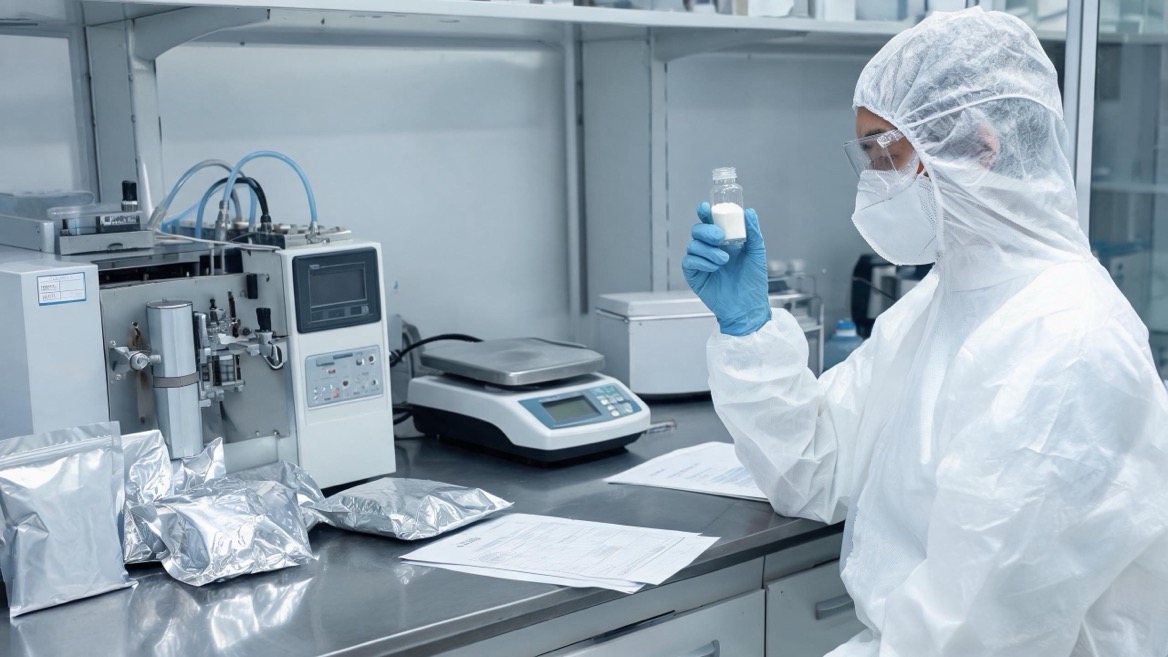
The industry's quiet but serious trap is not only counterfeit material. It is the silent grade substitution problem.
A supplier may initially send a high-purity, freshly produced, well-documented sample that performs well in your formula. After approval, the commercial batch may be supplied from a different production date, purification route, moisture condition, or even a different upstream source. The assay result can still look acceptable, while practical formulation behavior changes.
This is especially important for hygroscopic carbohydrate-type powders, where water content, particle form, impurity distribution, and storage history can influence dissolution behavior, color drift, pH behavior, and stability in a water-based product.
To reduce this risk:
- Include the assay method, moisture limit, appearance standard, microbiological limits, packaging type, and storage condition in the purchase order.
- Require a batch-specific COA and retain sample before shipment.
- State that material substitutions, process-route changes, manufacturing-site changes, or specification changes require prior written notification.
- Request a change-control agreement for recurring purchases.
- Test the first three commercial lots more intensively than later routine lots.
- Avoid approving a supplier based only on a trader's generic COA.
- Confirm whether the manufacturer, exporter, and invoice issuer are the same entity.
This step is often more effective than merely negotiating a lower price.
For finished cosmetics sold in France and the broader EU, the brand or designated Responsible Person must ensure compliance with Regulation (EC) No 1223/2009. The regulation addresses finished cosmetic products, including the need for ingredient identity and composition information in the product documentation framework.
Before a product enters the EU market, the Responsible Person must submit the required product notification through the Cosmetic Products Notification Portal. The product safety assessment, Product Information File, compliant labeling, and responsible-person obligations are separate from merely obtaining a raw-material COA.
Ask the active-ingredient supplier for:
- Batch-specific Certificate of Analysis
- Safety Data Sheet
- Product specification sheet
- Technical data sheet
- CAS number and INCI-related naming support where appropriate
- Manufacturing route and origin statement
- Non-animal-origin or vegan statement, if relevant
- GMO statement, if relevant
- Allergen statement
- Residual-solvent statement
- Heavy-metal specification and test method
- Microbiological specification and test method
- Storage conditions and retest or shelf-life information
- Packaging material specification
- Country of origin
- Certificate of free sale only if relevant to the transaction and available
- ISO, GMP, HACCP, or other quality-system certificates applicable to the site
- Change-control notification commitment
- Transport-condition recommendation
- Use moisture-resistant inner packaging for hygroscopic powders, such as sealed foil bags or suitable barrier containers, combined with validated outer cartons or drums.
- Confirm whether desiccant is compatible with the packaging configuration and whether it is included in the supplier's standard packing.
- Agree on Incoterms clearly. DDP can simplify arrival for small buyers but may obscure the importer-of-record structure; FOB, CIF, CPT, DAP, and DDP each allocate responsibilities differently.
- Review customs classification with a customs broker rather than assuming that a similar carbohydrate ingredient uses the same HS code.
- Request a commercial invoice, packing list, certificate of origin if needed, SDS, and batch COA before cargo departure.
- If the material will be held in a French warehouse, define acceptable temperature and humidity conditions and establish a receiving-inspection procedure.
- Plan sufficient time for third-party testing before the material is released to production.
France offers a sophisticated cosmetic-product ecosystem and an attractive route for brands seeking formulation expertise, premium positioning, local regulatory support, and distribution access. For commercial-scale Sialic Acid Powder, however, buyers should distinguish carefully between research-grade catalogue products, local distributors, finished-product OEM/ODM partners, and direct active-ingredient manufacturers.
A sound procurement model often combines direct access to a transparent fermentation-active supplier with France- or EU-based formulation, testing, and market-entry support. ZHENYIBIO TECHNOLOGY INC is a practical option for brands and buyers seeking flexible communication, cosmetic-active expertise, international supply experience, and deeper OEM/ODM coordination—particularly where smaller initial projects need to grow into repeat commercial orders.
Before selecting any supplier, request a current document package, compare multiple batch COAs, test a production-representative sample, verify manufacturing-site certificates independently, and place written change-control requirements into the supply agreement.
For a tailored Sialic Acid Powder sourcing plan, request a technical consultation with your target assay, required origin route, annual volume forecast, intended formulation type, destination market, desired documentation, and preferred packaging format.
Ask for the certificate number, issuing certification body, certified legal entity, manufacturing-site address, scope, issue date, and expiry date. Then check the certification body's verification platform or contact the issuing body directly. Do not accept a certificate that only covers a sales company when your material is manufactured at a different site.
No. A high assay does not verify microbiological quality, heavy metals, process contaminants, residual solvents, storage stability, animal-origin status, or formula compatibility. Cosmetic suitability requires a broader review of the material specification, batch COA, safety data, origin route, and your own product safety assessment.
The answer depends on your target claims, market positioning, cost structure, regulatory strategy, and supply-chain requirements. Fermentation-derived Neu5Ac can offer a strong balance of purity, repeatability, and non-animal positioning when supported by transparent documentation. Bird's-nest extracts may support a traditional-origin story but may contain a much lower and more variable concentration of sialic acid. Synthetic material may fit laboratory and analytical requirements but should be assessed separately for commercial cosmetic documentation.
There is no universal MOQ. Laboratory suppliers may sell milligram or gram quantities, while bulk producers may quote by kilogram, drum, or project forecast. For a new cosmetic brand, negotiate a staged route: R&D sample, pilot quantity, first commercial order, and annual forecast. Ask whether the MOQ applies to one ingredient, custom packaging, a custom assay specification, or a combined OEM/ODM project.
No. A distributor can simplify local logistics and communication, but the original manufacturer must still be qualified. Ask for the producer's name, manufacturing site, batch traceability, original COA, change-notification policy, and proof that the distributor is authorized to sell the product. The commercial convenience of local supply should not replace technical due diligence.
- [European Commission / EUR-Lex: Regulation (EC) No 1223/2009 on Cosmetic Products] — Official EU legal framework for finished cosmetic products. [eur-lex.europa]
- [Cosmetic Valley] — French cosmetics-sector network connecting companies, research centers, universities, and schools. [cosmetic-360]
- [Merck: N-Acetylneuraminic Acid Product Reference] — Reference listing for synthetic N-Acetylneuraminic Acid, CAS 131-48-6. [merckmillipore]
- [Merck: CMP-Sialic Acid Disodium Salt Reference] — Useful for distinguishing activated CMP-sialic acid from standard Neu5Ac. [merckmillipore]
- [ZHENYIBIO TECHNOLOGY INC: Company Profile] — Company background, cosmetic-active portfolio, GMP-standard factory statement, and global market presence. [zhenyibio]


