


Views: 241 Author: ZHENYIBIO Publish Time: 2026-09-13 Origin: Site
Content Menu
● Why Atopic Dermatitis-Prone Skin Needs Different Hydration
● Urea: A Proven Humectant With Important Formulation Trade-Offs
>> Why Urea May Sting on Compromised Skin
● Silk Amino Acids: A Biomimetic Option for Gentle Hydration
>> How Silk Amino Acids Support Skin Feel and Hydration
>> Why Silk Amino Acids May Fit Sensitive-Skin Concepts
● Silk Amino Acids vs. Urea: Key Differences for Formulators
● A Smarter Hydration System: Beyond One Hero Ingredient
>> Practical Example: A Silk Amino Acid Comfort Cream
● How to Develop a Better Sensitive-Skin Product
>> 1. Define the User and Skin Scenario
>> 2. Select the Hydration Strategy
>> 3. Build Barrier Compatibility
>> 4. Validate Comfort, Not Only Instrumental Results
>> 5. Make Claims That Match the Evidence
● The ZHENYIBIO Formulation Perspective
● FAQ
>> Are silk amino acids suitable for atopic dermatitis-prone skin?
>> Does urea always sting on eczema-prone skin?
>> Can silk amino acids replace urea in every moisturizer?
>> What ingredients pair well with silk amino acids?
>> Should sensitive-skin moisturizers be fragrance-free?
>> How should a moisturizer be applied for dry, eczema-prone skin?
>> Can an OEM or ODM project use both silk amino acids and urea?
For people with atopic dermatitis-prone skin, hydration is not simply about making skin feel softer. It is about supporting a weakened moisture barrier without adding another source of discomfort. Silk amino acids and urea are both valuable hydration ingredients, but they work differently—and that difference matters when skin is dry, inflamed, cracked, or highly reactive.
Urea is a well-established component of the skin's natural moisturizing factor and can improve stratum-corneum hydration and water retention. Yet, especially on compromised skin, some consumers report temporary stinging, burning, or smarting after use. Silk amino acids offer formulators another route: a biomimetic, moisture-binding approach based on small amino-acid components that can support a soft, hydrated skin feel while fitting into gentle, fragrance-free barrier-care concepts.
For international beauty brands, formulators, wholesalers, and private-label buyers, the practical question is not whether one ingredient should replace the other in every formula. The better question is: Which hydration system best matches the user, product format, usage area, and sensory expectations?

Atopic dermatitis is associated with a disrupted skin barrier, increased transepidermal water loss, dryness, itching, visible irritation, and sensitivity to otherwise well-tolerated cosmetic ingredients. The outermost layer of skin needs both water-binding compounds and protective lipids to retain moisture effectively.
One important part of this system is the natural moisturizing factor, often called NMF. NMF is a mixture of water-attracting substances found in the stratum corneum. It includes free amino acids, urea, lactate, and other components that help the skin remain flexible and hydrated.
When the barrier is impaired, the skin may lose water more quickly. It may also react more strongly to cleansing, fragrance, preservatives, acids, temperature changes, rubbing, and certain active ingredients. This is why a moisturizer that performs well on ordinary dry skin may not feel comfortable during an eczema flare.
A successful hydration formula for sensitive, atopic dermatitis-prone skin should aim to do four things:
- Increase water availability in the upper skin layers
- Reduce moisture loss from the surface
- Support a comfortable skin feel during application
- Avoid unnecessary sensitization risks, including strong fragrance and harsh surfactant systems
Moisturizers remain a core component of atopic dermatitis care. Clinical guidance consistently supports regular emollient use, including application after bathing while the skin is still slightly damp. A moisturizer is not a substitute for medical diagnosis or prescribed treatment, but it can be an important daily support product for dry, eczema-prone skin.
Urea has been used in dermatological skin care for decades. It is naturally present in healthy skin as part of NMF and is valued for its strong humectant activity. In lower concentrations, it is typically used to support hydration and barrier function. At higher concentrations, it also becomes keratolytic, helping soften thickened or rough skin.
For body moisturizers designed for dry or rough skin, urea can be a highly effective choice. Research reviews indicate that urea-containing preparations can improve stratum-corneum hydration, reduce transepidermal water loss, and improve water-binding capacity in eczematous skin.
A well-formulated urea moisturizer may help:
- Increase hydration in dry skin
- Improve the feel of rough, scaly areas
- Support moisture retention in the stratum corneum
- Complement barrier lipids, humectants, and occlusive ingredients
- Improve the comfort of dry body areas such as legs, arms, hands, elbows, and feet
Urea is especially relevant when a brand wants to create products for dry, flaky, rough, or thickened skin. It can be effective in creams, lotions, body balms, foot products, hand products, and targeted repair formats.
The experience of stinging is highly individual. It can depend on urea level, pH, total formula composition, damaged-skin severity, the presence of fissures, application site, and the use of other active ingredients.
When the skin barrier is visibly inflamed or broken, even useful humectants can create a transient burning or smarting sensation. Published clinical literature on urea in eczema reports occasional stinging and burning as common adverse effects. In one comparative study involving atopic dry skin, a larger share of participants rated smarting as moderate or severe with a urea-saline cream than with a glycerin cream.
That does not make urea a poor ingredient. It means that formulators should avoid treating it as a universal answer.
The key formulation insight is this: efficacy alone does not determine product success. For eczema-prone consumers, repeat use depends heavily on comfort.
A moisturizer that users stop applying because it stings cannot deliver its intended long-term hydration benefit.
Silk amino acids are small, water-soluble components obtained through the controlled hydrolysis of silk proteins. Depending on the raw material and processing method, silk-derived ingredients may include amino acids and low-molecular-weight peptides associated with fibroin or sericin.
The value of silk amino acids in skin care lies in their relationship to the skin's own moisture-supporting chemistry. Amino acids are central components of NMF, and silk fibroin has an amino-acid profile rich in glycine, alanine, and serine. These components are relevant to the concept of biomimetic hydration: supporting skin with substances that resemble part of its natural water-binding environment.%20115-121.pdf)
Silk amino acids are generally used in cosmetic formulations for their moisture-binding, conditioning, and sensory properties. Their small molecular size and high affinity for water can help support a hydrated, smooth, and less tight-feeling finish.
In formulation terms, they may contribute to:
- Humectant support by helping bind water in the upper skin layers
- A lightweight conditioning film that improves skin feel
- Reduced tackiness when balanced with other humectants
- Improved elegance in daily-use lotions, serums, creams, and cleansers
- A premium, soft-touch sensorial profile for sensitive-skin product lines
Research on silk protein hydrolysates and sericin has reported moisturizing effects in volunteer testing, including increased hydration-related measures and reductions in transepidermal water loss. However, most available evidence concerns silk proteins or hydrolysates broadly rather than large, independent clinical trials specifically evaluating silk amino acids as a treatment for atopic dermatitis.%20115-121.pdf)
This distinction is important. A responsible brand should position silk amino acids as a cosmetic hydration and conditioning ingredient, not as a cure or standalone treatment for atopic dermatitis.
For users who associate strong humectants with discomfort during flare-prone periods, a silk-amino-acid system can give formulators a gentler sensory direction. It is particularly relevant for leave-on products intended for repeated use on dry, reactive-looking skin.
Potential applications include:
- Daily facial moisturizers
- Lightweight body lotions
- Barrier-support creams
- Soothing after-shower emulsions
- Hand creams for frequent washing
- Mild rinse-off cleansers
- Baby-care and family-care products, subject to appropriate safety assessment
- Premium spa, dermocosmetic, and microbiome-conscious skin-care lines
The ingredient itself is not the entire formula. A silk amino acid system performs best when supported by compatible humectants, emollients, barrier lipids, and a low-irritation preservation strategy.
Both ingredients can belong in a modern hydration portfolio. Their value depends on how the final product is designed.
| Formulation factor | Silk amino acids | Urea |
|---|---|---|
| Primary role | Moisture binding, conditioning, soft sensory feel | Strong humectancy; may also soften rough skin |
| Relationship to skin hydration | Amino acids align with components found in natural moisturizing factor | Naturally occurring component of natural moisturizing factor |
| Best-fit product concept | Gentle daily hydration, premium sensory care, barrier-support positioning | Dry-skin repair, roughness care, intensive hydration |
| Potential consumer concern | Requires careful sourcing, preservation, and stability work | May sting or burn on very inflamed, fissured, or highly compromised skin |
| Texture contribution | Can support a silky, elegant, less heavy finish | Depends strongly on concentration and emulsion system |
| Claim direction | Hydrating, skin-conditioning, softening, moisture-supporting | Hydrating, roughness-smoothing, moisture-retaining |
| Clinical positioning | Cosmetic support ingredient; avoid disease-treatment claims | Strong history in dermatological moisturization, but still not a substitute for medical care |
For a sensitive-skin launch, the choice may not be "silk amino acids or urea." A brand may develop several product paths:
- A silk amino acid daily lotion for lightweight, frequent application
- A low-level urea body cream for dry but intact skin
- A urea-free comfort cream for consumers who report smarting during flare-prone periods
- A dual-humectant formula combining carefully selected levels of urea, amino acids, glycerin, panthenol, and barrier lipids
This portfolio approach gives brands room to meet different consumer needs without overstating one ingredient's role.
The most effective moisturizer for atopic dermatitis-prone skin is usually a system, not a single active.
A modern barrier-support formula can combine several functional groups:
| Ingredient group | Formulation purpose | Examples |
|---|---|---|
| Humectants | Attract and hold water | Silk amino acids, glycerin, betaine, sodium PCA, low-level urea |
| Emollients | Improve softness and reduce rough feel | Squalane, caprylic/capric triglyceride, plant-derived esters |
| Occlusives | Limit water evaporation | Petrolatum alternatives, dimethicone, wax systems, selected butters |
| Barrier lipids | Support intercellular lipid organization | Ceramides, cholesterol, fatty acids |
| Soothing support | Improve consumer comfort and product experience | Panthenol, allantoin, colloidal oat derivatives where suitable |
For atopic dermatitis-prone consumers, simplicity is often a strength. A formula should avoid unnecessary fragrance, essential-oil overload, aggressive exfoliating acids, high alcohol content, and excessive active stacking—particularly in leave-on products.
Guidance from allergy and dermatology organizations emphasizes the value of regular use of bland moisturizers and notes that the "best" moisturizer is often the one a person can use consistently.
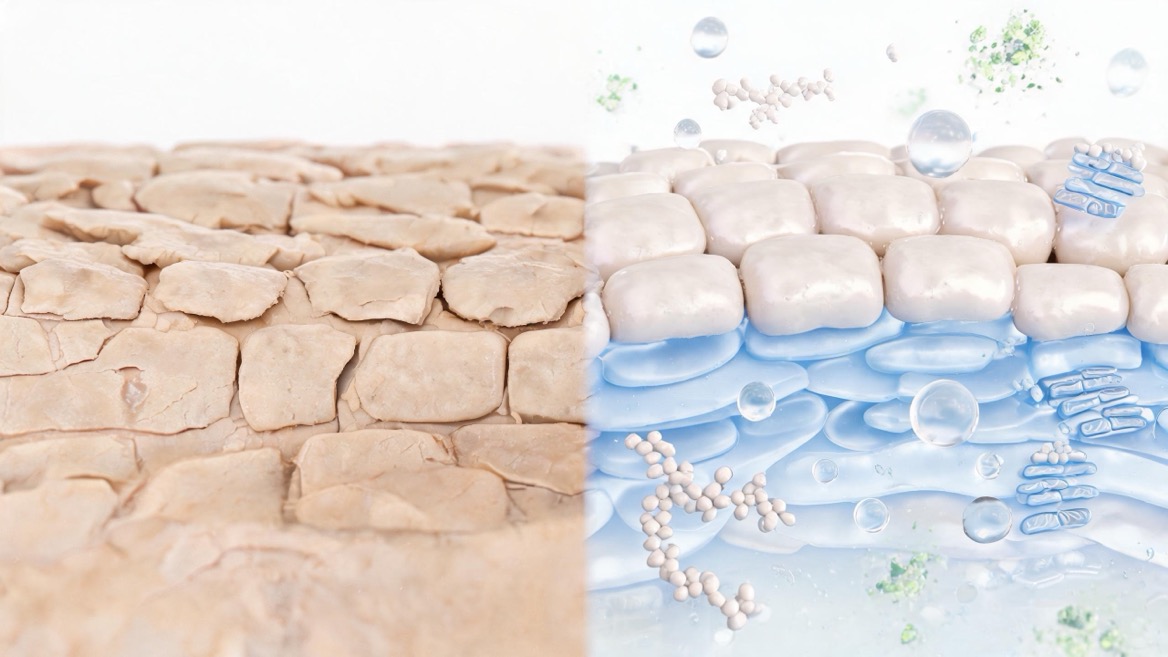
A useful concept for a brand's product-development brief could include:
- Silk amino acids as a key moisture-supporting ingredient
- Glycerin or betaine for additional humectancy
- Ceramide complex, cholesterol, and fatty acids for barrier-oriented positioning
- Squalane or a light ester blend for soft, non-greasy slip
- Panthenol for a comfort-focused story
- Fragrance-free and essential-oil-free design
- A cream or lotion texture selected according to climate and body area
- Patch testing and appropriate stability, challenge, and compatibility testing before launch
The communication should focus on daily hydration, dry-skin comfort, and a pleasant after-feel. Avoid language suggesting that the product treats, cures, prevents, or replaces medical management of atopic dermatitis.
For brand owners and product teams, a disciplined development process is essential.
Clarify whether the product is designed for:
- Mild everyday dryness
- Eczema-prone but non-flaring skin
- Very dry body skin
- Face and neck use
- Children, adults, or family use
- Climate-specific needs, such as cold winters or hot, humid regions
A body cream for rough elbows has different requirements from a facial moisturizer for reactive skin.
Choose the balance between silk amino acids, urea, glycerin, sodium PCA, betaine, or other humectants. If urea is included, assess both concentration and use context.
For skin that may be cracked, freshly shaved, highly inflamed, or exposed to frequent washing, a lower-irritation sensory profile can be more important than maximum humectant intensity.
Pair humectants with emollients and occlusives. Hydration without moisture retention can lead to a short-lived effect, particularly in dry climates or after bathing.
A formula can show improved hydration readings while still failing consumer acceptance because it feels sticky, greasy, warm, itchy, or stingy.
Consumer testing should ask directly about:
- Stinging or burning after application
- Tightness after 30 minutes and after several hours
- Stickiness and transfer to clothing
- Ease of spreading
- Perceived comfort on dry areas
- Willingness to repurchase and use daily
Use claim substantiation that reflects the finished product—not only the ingredient supplier's data. If a product has been tested for hydration, moisture retention, or comfort, communicate those findings precisely and transparently.
At ZHENYIBIO TECHNOLOGY INC, we believe high-performance skin care begins with a better connection between plant-based intelligence, biotechnology, and real consumer experience.
For brands developing hydration products for dry, sensitive, and atopic dermatitis-prone skin, silk amino acids can offer a compelling bridge between traditional material knowledge and modern cosmetic formulation. Their moisture-supporting and skin-conditioning profile can be integrated into thoughtful systems designed around comfort, repeat use, and refined texture.
Our approach is not based on chasing a single trending ingredient. It is built around creating practical, scalable solutions for international beauty brands, private-label projects, wholesalers, and manufacturers.
We support product-development concepts that can include:
- Plant-derived and biotechnology-enabled cosmetic ingredients
- Silk amino acid hydration systems
- Gentle, fragrance-free sensitive-skin product concepts
- Barrier-support cream and lotion development
- Customized OEM and ODM formulation services
- Ingredient selection aligned with target market, product position, and claim strategy
Ready to develop a more comfortable hydration product for sensitive-skin consumers? Contact ZHENYIBIO TECHNOLOGY INC to discuss your OEM or ODM brief, preferred dosage form, target market, ingredient requirements, packaging concept, and product-testing plan.

Silk amino acids may be suitable as a cosmetic moisture-supporting and skin-conditioning ingredient in a carefully designed formula. Suitability depends on the entire product, including preservative system, fragrance status, pH, supporting ingredients, and the individual user's sensitivity. They should not be presented as a medical treatment for atopic dermatitis.
No. Many people tolerate urea-containing moisturizers well, and urea has substantial evidence supporting its moisturization benefits. However, stinging or burning can occur, particularly when skin is inflamed, fissured, or highly compromised. Product concentration and the full formula can influence tolerability.
Not necessarily. Urea and silk amino acids have different functional strengths. Urea is particularly useful for intensive humectancy and rough-skin applications, while silk amino acids are often valuable for gentle hydration, conditioning, and sensory refinement. The best choice depends on the product brief.
Silk amino acids can be paired with humectants such as glycerin, betaine, and sodium PCA; barrier-focused ingredients such as ceramides and fatty acids; and emollients such as squalane or lightweight esters. A balanced system typically produces better moisture retention and user comfort than a single humectant alone.
For consumers with highly reactive or atopic dermatitis-prone skin, fragrance-free formulas are often a practical choice because they reduce one potential source of irritation or contact sensitivity. Product selection should still be individualized, and users with persistent symptoms should seek advice from a qualified healthcare professional.
Apply a suitable moisturizer regularly, especially after bathing or showering while the skin remains slightly damp. Use gentle rubbing rather than aggressive friction, and reapply to dry areas as needed. Medical guidance identifies regular moisturization as a central part of atopic dermatitis care.
Yes. A brand may choose a dual-humectant strategy, provided the formula is developed around intended use, target skin sensitivity, concentration, pH, stability, and consumer comfort. Alternatively, a brand can create separate silk-amino-acid and urea product lines for different skin needs and market segments.
2. [Guidelines of Care for the Management of Atopic Dermatitis]
3. [Management and Treatment of Atopic Dermatitis with Topical Therapies]
5. [American Academy of Dermatology: Atopic Dermatitis Clinical Guideline]
7. [Treatment of Atopic Dermatitis, American Academy of Pediatrics]
8. [Urea: A Comprehensive Review of the Clinical Literature]
9. [A Double-Blind Study Comparing Glycerin and Urea/Sodium Chloride Cream in Atopic Dry Skin]
10. [Moisturizing Efficiency of Silk Protein Hydrolysate: Silk Fibroin]
11. [Silk Sericin as a Moisturizer: An In Vivo Study]
12. [Safety Assessment of Silk Proteins as Used in Cosmetics]


