


Views: 231 Author: ZHENYIBIO Publish Time: 2026-11-06 Origin: Site
Content Menu
● What Does Delivery Reliability Mean for Cosmetic Ingredients?
● 1. Verify Delivery Performance, Not Just Shipping Promises
>> Request Historical On-Time and In-Full Records
>> Define Your Delivery Metrics Before Comparing Suppliers
● 2. Break Cosmetic Ingredient Lead Times Into Verifiable Stages
>> Separate Manufacturing, Testing, and Transportation
>> Examine Variability, Not Only Average Speed
● 3. Check Whether Packaging Protects Botanical Ingredient Quality
>> Match Packaging to the Specific Ingredient
>> Ask About Temperature Excursions
● 4. Review Documentation Before Dispatch
>> Build a Product-Specific Document Checklist
>> Confirm Customs Responsibilities
● 5. Assess Manufacturing Continuity and Change Control
● 6. Use a Weighted Cosmetic Ingredients Supplier Scorecard
● 7. Validate Reliability With a Controlled Trial Order
>> Follow a Five-Step Qualification Process
>> Measure the Hidden Time After Arrival
● 8. Evaluate Exception Handling Before an Emergency
● Turn Delivery Evaluation Into a Clear Purchasing Brief
>> What is the best way to evaluate a cosmetic ingredients supplier's delivery reliability?
>> Is a supplier with the fastest shipping always the best choice?
>> What documents should accompany cosmetic raw materials?
>> How should buyers assess packaging for botanical extracts?
>> How can OEM and ODM buyers reduce delivery uncertainty?
>> Does positive customer feedback prove long-term reliability?
Delivery reliability should be a deciding factor when choosing a cosmetic ingredients supplier. Competitive pricing and promising samples mean little if commercial batches arrive late, damaged, or without the documents needed for release. For brands, wholesalers, and manufacturers sourcing botanical actives, reliable delivery means receiving the right material, in the agreed quantity, with its quality protected.
At ZHENYIBIO TECHNOLOGY INC, our focus combines traditional botanical knowledge with modern bio-fermentation technology. From this manufacturing perspective, we believe procurement teams should evaluate delivery as a complete process—not simply a courier's transit time.
Customer feedback highlighting good packaging, good ingredient quality, and fast logistics identifies three useful purchasing priorities. However, feedback is a starting point, not proof of consistent performance. The stronger approach is to verify those impressions through records, specifications, and a controlled trial order.

A reliable cosmetic raw material supplier delivers more than a shipment. It delivers materials that your receiving and quality teams can accept and release for production.
Evaluate five connected outcomes:
- Timeliness: Arrival within the agreed delivery window.
- Completeness: Correct products, quantities, and pack sizes.
- Quality preservation: Materials remain within agreed specifications.
- Documentation accuracy: Batch identification and shipping records match.
- Recovery capability: Problems trigger clear communication and corrective action.
The most useful principle is production-ready delivery. An ingredient that reaches your warehouse on time but remains quarantined because its batch documents are missing has not fully supported your production schedule.
Distinguish physical receipt from quality release when reviewing supplier performance.
Ask prospective suppliers for recent delivery records covering comparable ingredients, destinations, and shipping methods. Anonymized records are acceptable when customer confidentiality matters.
Useful evidence includes:
- Original confirmed delivery dates.
- Actual arrival dates.
- Ordered and received quantities.
- Reasons for delays or shortages.
- Whether delivery dates changed after order confirmation.
A supplier's experience with small express parcels does not automatically demonstrate competence in handling palletized commercial shipments.
On-time, in-full delivery, commonly called OTIF, can be calculated as:
OTIF = Orders received within the agreed window and in full ÷ Total orders due × 100%.
For illustration, 46 qualifying deliveries out of 50 orders due equal 92% OTIF. This is a calculation example, not an industry benchmark or a ZHENYIBIO performance claim.
Agree on the measurement rules. Does "on time" mean dispatch, port arrival, or warehouse receipt? Are partial shipments failures? Are early deliveries acceptable?
Also retain the original commitment date. Otherwise, repeated schedule revisions can make weak performance look reliable.
A quotation stating "seven-day delivery" is incomplete unless the supplier explains when the clock starts and what the promise includes.
Ask for a timeline covering:
1. Order and specification confirmation.
2. Raw material allocation.
3. Manufacturing or fermentation.
4. Quality testing and batch release.
5. Packaging and export preparation.
6. Carrier collection and international transport.
7. Customs clearance and final delivery.
A material described as "in stock" may still await testing, repacking, or document approval. Request confirmation that stock is released and available for your order.
For customized OEM and ODM projects, distinguish development time from repeat-order lead time. Formula approval, pilot work, and packaging decisions should not disappear inside an optimistic shipping estimate.
Ask for typical lead time and a longer-delay scenario supported by actual order history.
Consider a hypothetical comparison: one supplier averages eight days but occasionally needs eighteen; another usually delivers within ten to twelve days. The second may be easier to plan around, despite its slower average.
Compare similar routes and order types. An average across unrelated destinations can conceal the risks relevant to your business.
Packaging is part of delivery performance, not merely presentation. Cosmetic manufacturing guidance emphasizes protecting raw materials against contamination, mix-ups, and deterioration from unsuitable environmental exposure.
Request the proposed packaging specification before ordering.
| Evaluation area | What to verify |
|---|---|
| Primary container | Compatibility with the ingredient and closure integrity |
| Environmental protection | Suitability for the material's documented storage requirements |
| Secondary packaging | Protection against leakage, impact, and crushing |
| Identification | Product name, batch number, quantity, and storage instructions |
| Receiving condition | Clean, intact containers with legible labels |
Do not assume every botanical extract requires refrigeration, light protection, or the same moisture barrier. Requirements should follow the particular material's specifications and supporting stability information.
For fermentation-derived actives, likewise request product-specific handling guidance rather than relying on the broad description "bio-fermented."
Where a material has defined temperature limits, ask how the shipping arrangement maintains them and whether monitoring is appropriate.
Also establish what happens after an excursion. An intact carton alone does not establish that temperature-sensitive contents remain acceptable.
Receiving decisions should follow documented quality assessment, with testing where necessary—not automatic acceptance or rejection based only on appearance.
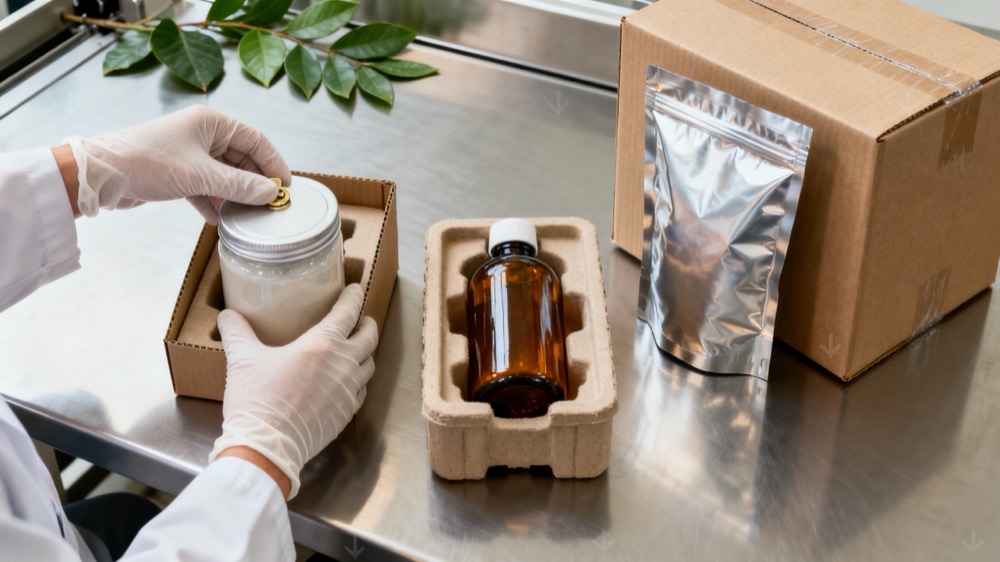
A shipment can move quickly and still become unusable because its paperwork is incomplete or inconsistent.
Depending on the ingredient, destination, and shipment classification, request:
- Batch-specific certificate of analysis, or COA.
- Current technical specification.
- Safety data sheet, where applicable.
- Commercial invoice and packing list.
- Transport document or tracking details.
- Origin or other supporting documents when required.
Check that product descriptions, quantities, and batch identifiers agree across the relevant records.
A COA should correspond to the supplied batch. It does not replace your own supplier qualification or incoming acceptance procedures.
Agree on who prepares export documents, checks import requirements, appoints the customs broker, and resolves questions from authorities.
Incoterms clarify important responsibilities involving transport, costs, customs formalities, and risk transfer. State the selected rule, named place, and edition in the contract.
However, Incoterms do not replace separate provisions on product specifications, late-delivery remedies, or dispute resolution. Those obligations need explicit agreement.
Botanical ingredient sourcing connects agricultural inputs, processing, testing, and logistics. Ask how the supplier handles variability at each stage.
Useful questions include:
- Are critical botanical inputs dependent on one source?
- How are seasonal supply constraints communicated?
- What happens when a batch fails release testing?
- Is backup production capacity available?
- Which changes require customer notification or approval?
For botanical materials, establish the agreed identity, plant part, and relevant quality attributes. For fermentation-derived ingredients, identify the process and finished-material attributes important to your specification.
A substitute source or process may require evaluation before acceptance. Reliable supply should not mean silently changing an ingredient to meet a deadline.
For OEM and ODM projects, agree on change-control responsibilities before moving from development into repeat production.
A scorecard makes supplier comparison more consistent and prevents shipping speed from overshadowing quality.
The following is a suggested purchasing framework, not an industry standard:
| Evaluation category | Suggested weight | Evidence to review |
|---|---|---|
| Delivery consistency | 25% | Order history and date accuracy |
| Quality preservation | 25% | Packaging, specifications, arrival condition |
| Documentation accuracy | 20% | Batch records and shipping documents |
| Supply continuity | 15% | Capacity, sourcing, contingency planning |
| Communication and recovery | 15% | Updates, escalation, corrective actions |
Rate each category from one to five, then multiply the rating by its weight.
Apply mandatory qualification gates separately. Unresolved identity discrepancies, unacceptable quality results, or misleading records should not be offset by an attractive overall score.
Adjust the weights to your risk profile. A critical active with limited substitutes may justify greater emphasis on continuity than a readily available supporting ingredient.
A sample can demonstrate initial suitability, but it rarely tests the complete commercial delivery process.
Use a pilot shipment representative of the intended route, packaging, and order conditions.
1. Approve specifications and packaging before placing the order.
2. Record the original promised dispatch and arrival dates.
3. Check documents before carrier collection.
4. Inspect and assess the material upon receipt.
5. Review deviations before increasing order volume.
Record container condition, label accuracy, quantities, document completeness, and time to quality release.
One successful trial is encouraging, not conclusive. Continue monitoring repeat orders, particularly when volume, season, route, or packaging changes.
Track how long materials wait between warehouse receipt and release for use.
Repeated delays at this stage may reveal missing information, inconsistent labeling, or unresolved specification questions. These problems can remain invisible in a supplier's dispatch statistics.

No supplier controls every transport disruption. The useful distinction is how quickly it detects a problem, explains the impact, and proposes a workable response.
Ask for an anonymized example of a delayed or damaged shipment. Review:
- When the supplier identified the issue.
- When the customer received notice.
- Whether the revised schedule was credible.
- How replacement or alternative transport was handled.
- What corrective action prevented recurrence.
Agree on an escalation contact, notification expectations, and responsibility for additional costs.
"Fast response" should describe a defined process—not merely a promise to answer messages quickly.
At ZHENYIBIO TECHNOLOGY INC, we focus on natural botanical active cosmetic ingredients and bio-fermentation-based solutions for international customers, including OEM and ODM projects.
Our customer feedback emphasizes packaging, ingredient quality, and logistics speed. Buyers should still request order-specific evidence rather than treating positive feedback as a universal delivery guarantee.
Contact our team with your ingredient specification, order volume, destination, required receiving date, and packaging requirements. Request a written lead-time breakdown, document checklist, and proposed shipping arrangement before confirming your order.
For customized projects, include development milestones and approval requirements so that both teams plan against the same schedule.
Combine historical performance records, packaging review, document checks, and a representative trial order. Measure delivery against the original agreed dates, then confirm that received materials pass your acceptance process.
No. Transit speed is only one part of delivery. Manufacturing delays, incomplete quantities, damaged packaging, or missing batch documents can outweigh the benefit of a fast courier service.
Common documents include a batch-specific COA, relevant specifications, invoice, packing list, and transport records. Safety, origin, and additional import documents depend on the ingredient, destination, and applicable requirements.
Compare packaging with the ingredient's documented storage and handling requirements. Review container compatibility, closure integrity, identification, and protection during the intended route. Avoid assuming all extracts need identical packaging.
Approve specifications early, separate development milestones from production lead times, agree on change control, and confirm documentation responsibilities. Use a pilot shipment before scaling up and monitor repeat-order performance.
No. Feedback provides useful context, particularly about arrival condition and service. Stronger qualification also requires comparable delivery records, batch-level evidence, and continued monitoring across multiple orders.
1. U.S. Food and Drug Administration. [Good Manufacturing Practice (GMP) Guidelines/Inspection Checklist for Cosmetics]. Supports the discussion of raw material handling, environmental protection, container identification, testing, and control of nonconforming materials. [fda]
2. International Trade Administration, U.S. Department of Commerce. [Know Your Incoterms]. Explains allocation of shipping, documentation, customs, cost, and risk responsibilities, and the limits of these trade rules. [trade]
3. International Trade Administration, U.S. Department of Commerce. [Shipping Options]. Supports the discussion of protective packing, labeling, export documentation, and freight-forwarder coordination. [trade]
4. International Trade Administration, U.S. Department of Commerce. [Navigate Shipping and Logistics]. Provides supporting context on transportation selection, shipping documents, and customs-related shipment planning. [trade]


