


Views: 222 Author: ZHENYIBIO Publish Time: 2026-05-30 Origin: Site
Content Menu
● How We Evaluate Copper Peptide Suppliers
● Why China Leads in Copper Peptide Manufacturing
● Technical Snapshot: What Matters in Copper Peptide Powder
● Top 10 Copper Peptide Powder Manufacturers in China (2026)
>> 1. ZHENYIBIO TECHNOLOGY INC (Xi'an) – Flexible R&D‑Driven Partner for Small to Mid‑Size Brands
>> 2. Bloomage Biotechnology – Large‑Scale Biotech Group with Active Peptide Portfolio
>> 3. Hangzhou Longshine Bio‑Tech Co., Ltd. – Multi‑Functional Peptide Supplier
>> 4. Changsha Caoquan Technology Co., Ltd. – Plant‑Based Actives and Peptides
>> 5. Changsha Duole Bio Co., Ltd. – Export‑Oriented Bioactive Supplier
>> 6. Flychem – B2B‑Focused Copper Peptide Supplier with Standardized Grades
>> 7. QYHERB (GHK‑Cu Powder Manufacturers, China)
>> 8. Chinese Peptide‑Focused CDMOs (Aggregated Group)
>> 9. Integrated Cosmetic Raw Material Groups with Peptide Lines
>> 10. Regional OEM/ODM‑Backed Raw Material Divisions
● Quick Comparison of Representative Suppliers (Capacity, MOQ, Certifications)
● Buyer's Guide: How to Vet a Copper Peptide Manufacturer in China
>> 2. Deep‑Dive into QC and Documentation
>> 3. Start with Realistic Samples and Pilot Batches
>> 4. Manage Logistics and Cold‑Chain / Storage Risks
>> 5. Typical Pitfalls and How to Avoid Them (Internal "Avoid‑the‑Traps" Insight)
● Common Industry Pain Points and Risk‑Control Tips
● Latest Market Outlook and Data Sources (2025–2026)
● Conclusion and Call to Action
● FAQ: Advanced Procurement Questions for Copper Peptide Powder
Copper peptide (especially GHK‑Cu) has become a core anti‑aging active in global skincare, and China has quickly grown into one of the most important production bases for high‑purity copper peptide powder. For procurement managers who need long‑term, compliant partners, choosing the right Chinese manufacturer directly impacts formulation performance, regulatory clearance, and brand reputation. [zhenyibio]

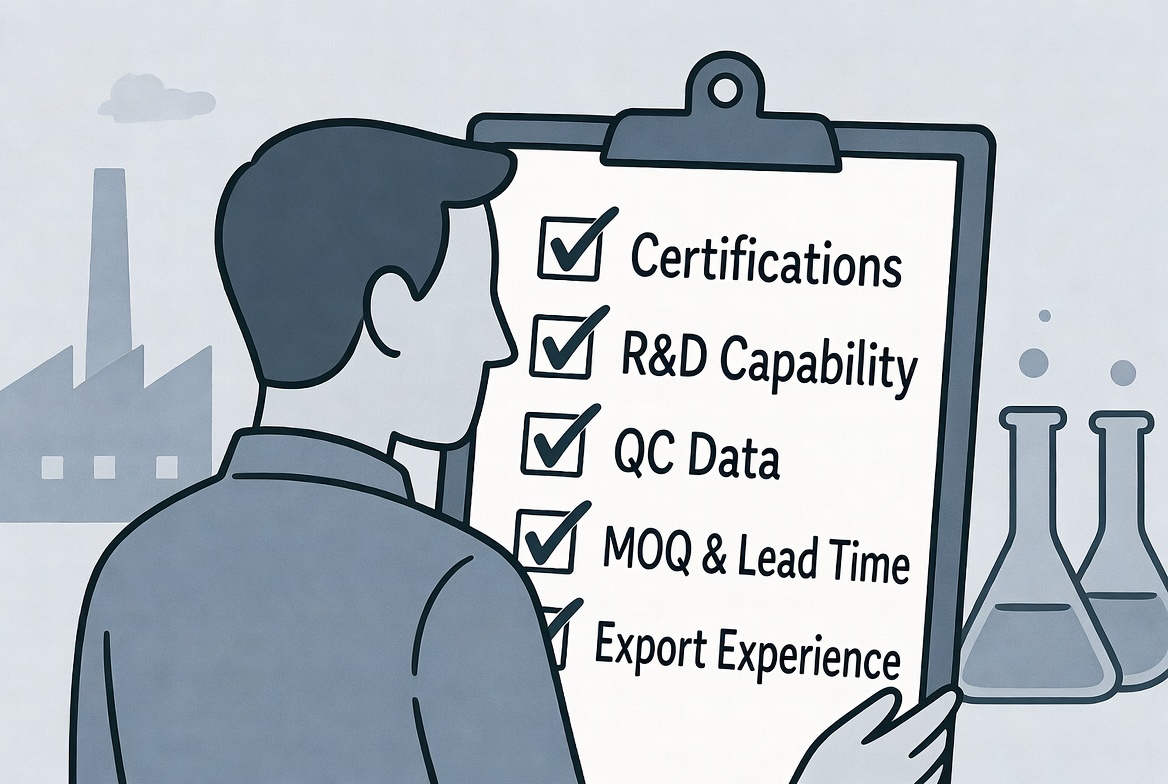
From a professional buyer's perspective, "top" copper peptide powder manufacturers are not just those with large catalogues, but those that combine traceable compliance, reproducible quality, and predictable service. Below is the evaluation framework used in this guide, aligned with E‑E‑A‑T principles. [zhenyibio]
- Factory certifications and audits
We prioritize manufacturers holding ISO9001 or ISO22000 quality systems, GMP‑standard workshops, and where relevant, FDA registration, Halal and Kosher for global market access. For EU‑oriented brands, we look for REACH awareness and support for CE‑relevant documentation on finished formulations. [360iresearch]
- R&D capabilities and application support
Strong suppliers have in‑house peptide chemists, analytical labs (HPLC, LC‑MS), and can support different grades (cosmetic grade, quasi‑pharma grade) with stability data and formulation guidance. We favour factories that can customize concentration (e.g., 5000 ppm, 20000 ppm, 99.8% crystalline powder) and provide formulation‑ready solutions. [flychem]
- Quality control and traceability
Core checkpoints include strict raw‑material sourcing, impurity profile control, heavy‑metal and micro‑limit testing, and batch‑to‑batch CoA with transparent specs (assay, loss on drying, related substances). Availability of validation reports and stability data under different storage conditions is a strong signal of maturity. [qyherb]
- Supply capability and delivery reliability
For B2B manufacturers, available annual capacity, production planning, and lead‑time consistency are as important as price. We look for factories that can handle both small MOQs for new launches and scalable production for fast‑growing brands, without sacrificing QC. [zhenyibio]
- Compliance and global market footprint
Priority is given to suppliers with a proven export record to North America, EU, and East Asia, plus familiarity with cosmetic ingredient regulations in those markets. Membership in local industry associations (e.g., provincial plant extract associations) and participation in trade shows such as PCHi and CPhI also indicates industry recognition. [industrysourcing]
China has built a dense ecosystem around cosmetic actives, combining peptide synthesis, plant extraction, and fermentation technologies at scale. Similar to how Foshan is known for furniture and Shenzhen for electronics, coastal and central R&D hubs like Xi'an, Shanghai, and Guangzhou have become clusters for cosmetic raw materials and functional peptides. [industrysourcing]
Several structural advantages stand out:
- Integrated upstream supply chain
China's mature chemical and biotech base supports affordable access to amino acids, copper salts, and advanced synthesis equipment, which lowers production cost per kilo without necessarily compromising quality. [marketresearchfuture]
- Rapid adoption of bio‑fermentation and AI‑assisted R&D
Many cosmetic ingredient producers now apply bio‑fermentation and plant cell culture to obtain actives in a more sustainable way, while using AI and bioinformatics to design high‑activity molecules and optimize production routes. This is aligned with global clean‑beauty and ESG requirements. [industrysourcing]
- Strong export orientation
With the global GHK‑Cu copper peptide market estimated around USD 370–400 million in 2025–2026 and expected to reach nearly USD 600 million by 2032, Chinese suppliers have aggressively expanded to over 50 countries through distributors and direct OEM/ODM partnerships. [360iresearch]
When screening manufacturers, technical specs for copper peptide (often Copper Tripeptide‑1, GHK‑Cu) matter as much as the brand name. [qyherb]
Key dimensions buyers should focus on:
- Purity and assay
High‑quality cosmetic‑grade copper peptide powder typically offers assay values near 98–99.8% purity in crystalline form. Impurity control (residual solvents, heavy metals) must meet target market standards (e.g., EU cosmetic regulation, US OTC expectations where relevant). [flychem]
- Grade and format
Suppliers may provide:
- Pure crystalline GHK‑Cu powder (e.g., 99.8%) for maximum formulation flexibility. [flychem]
- Pre‑standardized solutions (e.g., 5000 ppm or 20000 ppm) for formulators wanting easier dosing and improved solubility handling. [flychem]
- Safety and environmental compliance
In addition to ISO and GMP, many international brands now ask whether raw‑material plants comply with environmental standards and can support documentation aligned to RoHS‑type heavy‑metal limits and CE‑relevant dossiers for devices that incorporate cosmetic functions. [marketresearchfuture]
- Documentation package
A mature supplier will provide a complete dossier including CoA, MSDS, TDS, manufacturing flow chart, non‑GMO and allergen statements, and in some cases in‑vitro efficacy data on collagen stimulation or antioxidant activity. [qyherb]
Below is a curated list of 10 representative copper peptide powder manufacturers or peptide‑focused cosmetic raw‑material suppliers with export capabilities. The descriptions focus on aspects relevant for B2B procurement rather than consumer marketing. [qyherb]
ZHENYIBIO TECHNOLOGY INC is a high‑tech enterprise dedicated to natural plant active cosmetic raw materials, established in 2008 in the Free Trade Area of Xi'an High‑tech Industrial Development Zone. The company focuses on actives such as peptides, glutathione, hyaluronic acid, polyglutamic acid, asiaticoside, and liposomes, and has been in the cosmetic raw materials field for more than 13 years. [zhenyibio]
Core strengths for copper peptide buyers include:
- GMP‑standard factory with integrated chain from planting base through raw materials to finished cosmetic products, enabling tighter control over sourcing and processing. [zhenyibio]
- Strong quality system and compliance track: ISO9001 (2008 and later 2016/CQC), FDA registration with D‑U‑N‑S number, Halal, Kosher, and ISO22000 approvals, which facilitates export to North America, EU, and Muslim markets. [zhenyibio]
- Export experience to more than 50 countries in Asia, Europe, and the Americas, with long‑term partnerships with distributors, end customers, and research institutes. [zhenyibio]
For copper peptide powder specifically, ZHENYIBIO provides GMP‑certified supply and a standard MOQ as low as 10 g, making it particularly suitable for indie brands, new product validation, and lab‑scale formulation trials. The company positions itself as a one‑stop purchasing service provider and is known for flexible OEM/ODM support, responsive communication, and the ability to adjust packaging and concentration to customer needs rather than forcing large, rigid MOQs. [zhenyibio]
Bloomage Biotechnology is widely recognized for its hyaluronic acid and functional ingredient portfolio and appears as a participant in the global GHK‑Cu copper peptide market. As a large biotech group, its strengths include robust R&D, strong regulatory teams, and established export channels serving major cosmetic OEM/ODMs. [360iresearch]
For procurement managers, Bloomage is more suitable when you are working with high volumes, need consistent global supply, and require multi‑site risk management across different actives within the same group. However, MOQs and pricing structures tend to reflect its positioning as a large enterprise supplier rather than a flexible small‑batch partner. [360iresearch]
Hangzhou Longshine Bio‑Tech appears in global copper peptide market analyses as a Chinese player engaged in GHK‑Cu and related actives. Based in the Yangtze River Delta region, the company benefits from a mature chemical and biotech environment, with access to skilled peptide chemists and export logistics. [360iresearch]
Its portfolio often extends beyond copper peptide to other cosmetic peptides and functional raw materials, making it a viable option for brands that want to consolidate multiple actives under one supplier. Buyers should pay attention to available documentation and whether the company can provide region‑specific regulatory support for the EU and North America. [360iresearch]
Changsha Caoquan Technology participates in the global GHK‑Cu copper peptide market alongside other plant extract and active ingredient producers. Located in a region known for plant extract manufacturing, it typically offers a broad portfolio of plant‑derived actives and selected peptides. [360iresearch]
For buyers who value synergy between copper peptide and botanical anti‑aging complexes, a supplier with roots in plant extracts plus peptide capability can simplify co‑development projects. Pay close attention to their QC documentation on peptide purity and heavy‑metal control, as some plant‑extract‑origin players may be stronger in botanicals than in advanced peptide analytics. [360iresearch]
Changsha Duole Bio is another Chinese company listed in global copper peptide market research. It typically targets overseas buyers with a wide selection of nutraceutical and cosmetic bioactives, including copper peptide. [360iresearch]
Its main advantages often lie in competitive pricing, catalogue breadth, and readiness to work with trading partners. Buyers should verify the depth of in‑house R&D and the stability of long‑term supply if they plan to rely on the company for hero ingredients like copper peptide in flagship products. [360iresearch]
Flychem positions itself explicitly as a B2B copper peptide supplier for cosmetic manufacturers, offering its PeptiCure™ line of copper peptides. PeptiCure™ is available at 5000 ppm, 20000 ppm, and 99.8% blue crystalline powder, which gives formulators clear options depending on whether they prefer ready‑to‑use solutions or high‑purity powder. [flychem]
For procurement, this structured product line simplifies internal specification management and reduces formulation risk when switching from lab scale to production scale. Buyers should still review CoA, batch records, and stability data to ensure the chosen grade meets the brand's positioning and claim strategy. [flychem]
QYHERB lists itself as a GHK‑Cu powder manufacturer and supplier in China with a focus on cosmetic and nutritional applications. The company describes copper peptide's benefits in promoting collagen and elastin synthesis, improving skin firmness, and providing antioxidant and anti‑inflammatory effects. [qyherb]
From a B2B standpoint, QYHERB's strengths include clear technical descriptions, availability of CoA and certificate of analysis data, and positioning in both cosmetic and functional supplement markets. Buyers should discuss grade segregation (cosmetic vs. supplement) and regulatory expectations early to avoid cross‑use of grades with different impurity thresholds. [qyherb]
Several peptide contract development and manufacturing organizations (CDMOs) in China, such as Chinese Peptide Co., CPC Scientific, and other specialized peptide houses, appear in global copper peptide market reports. While many of these focus on pharma or research peptides, some offer cosmetic‑grade GHK‑Cu as part of a broader portfolio. [360iresearch]
These CDMOs are suitable for brands that require high customization, stringent impurity profiling, and possible transition between cosmetic and quasi‑pharma categories over time. However, MOQs and pricing are often higher than those of purely cosmetic‑oriented suppliers, and lead times may be longer due to complex validation procedures. [360iresearch]
China also hosts integrated cosmetic raw‑material groups that combine fermentation‑based actives, peptides, and microbiome‑related ingredients. Many of these have begun to include copper peptide in their portfolios to complement collagen‑boosting and barrier‑repair offerings. [industrysourcing]
For buyers, the main value lies in portfolio synergy and co‑development opportunities (e.g., pairing copper peptide with microbiome actives or plant‑fermented antioxidants). When working with such groups, it is important to ensure that copper peptide is not a minor, low‑priority SKU with limited QC focus. [industrysourcing]
Some Chinese cosmetic OEM/ODM manufacturers operate in‑house raw‑material divisions that also sell copper peptide powder externally. These divisions benefit from close feedback loops between formulation teams and raw‑material production, leading to ingredients optimized for real‑world use in creams, serums, and masks. [zhenyibio]
They are particularly attractive if you are looking for a turnkey solution that combines copper peptide supply with finished‑product OEM/ODM services. Nonetheless, you should review how the raw‑material business is structured contractually, and how IP and exclusivity are managed if your brand relies on differentiated formulations. [zhenyibio]
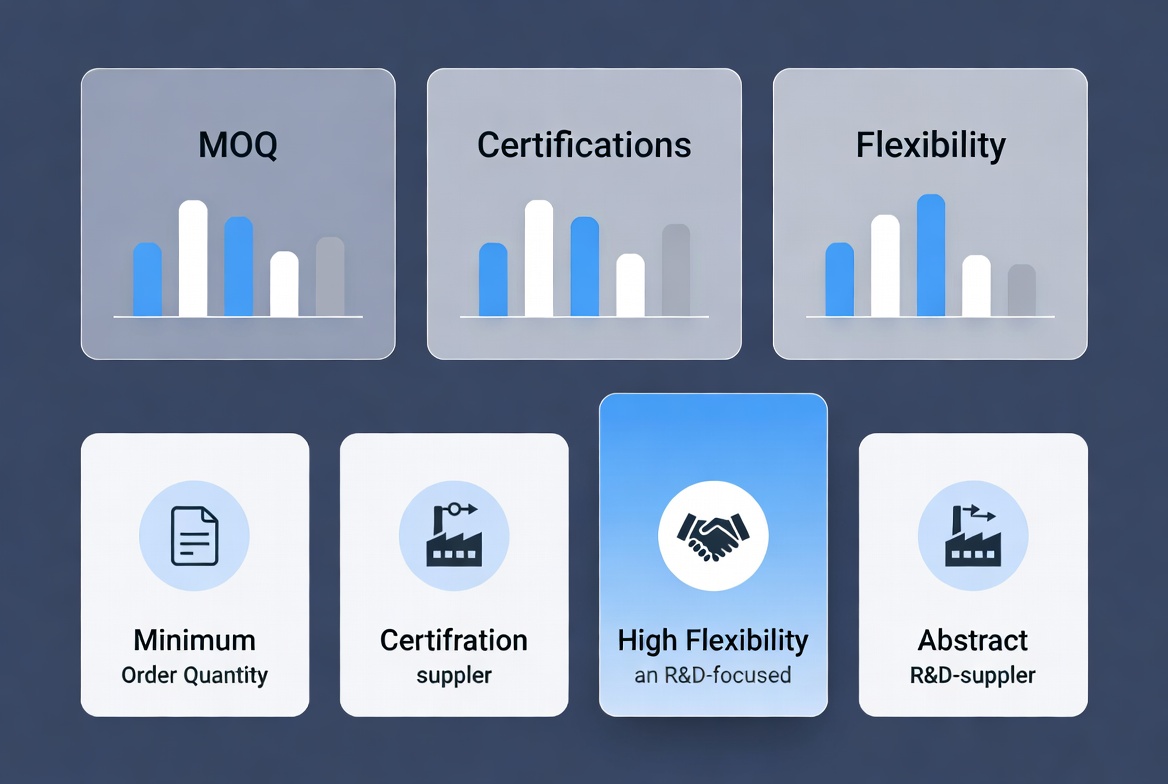
Below is an indicative comparison based on publicly available information and typical patterns for similar Chinese manufacturers. Always confirm exact figures directly with the supplier before finalizing contracts. [flychem]
| Manufacturer / Type | Typical MOQ for Copper Peptide Powder | Certifications / Systems Mentioned | Positioning & Notes |
|---|---|---|---|
| ZHENYIBIO TECHNOLOGY INC | 10 g standard MOQ for copper peptide (zhenyibio) | ISO9001, ISO22000, FDA, Halal, Kosher, GMP‑standard factory (zhenyibio) | High‑flexibility, R&D‑driven, strong for SMEs and custom OEM/ODM (zhenyibio) |
| Flychem (PeptiCure™) | Often kg‑level, plus solution formats (5000 ppm, 20000 ppm) (flychem) | Cosmetic ingredient compliance, global‑ready grades (flychem) | Structured product line, good for brands needing clear grade hierarchy (flychem) |
| QYHERB | Typically several hundred grams to kg, depending on grade (qyherb) | CoA, lab analysis, export experience (qyherb) | Active ingredient supplier for cosmetic and supplement markets (qyherb) |
| Bloomage Biotechnology | Larger MOQs aligned with group scale (360iresearch) | Comprehensive QA systems, global regulatory support (360iresearch) | Best for large volumes and multi‑active sourcing (360iresearch) |
| Hangzhou / Changsha peptide & extract suppliers | Commonly 100 g–1 kg starting MOQ (360iresearch) | ISO‑type systems and export documentation vary by company (360iresearch) | Price‑competitive, broad catalogues; QC depth must be verified case‑by‑case (360iresearch) |
- Request valid, stamped copies of ISO9001/ISO22000 certificates and check whether the issue and expiry dates match the information on the certification body's website. [zhenyibio]
- For markets requiring Halal, Kosher, or FDA‑related registrations, ask for current certificates and confirm whether they cover the specific plant and product category you intend to buy. [zhenyibio]
- Ask for a full technical dossier including CoA, TDS, MSDS, heavy metal profile, microbiological limits, and stability data under typical storage conditions. [flychem]
- For high‑value actives like copper peptide, request HPLC or LC‑MS chromatograms for at least three recent batches to judge batch‑to‑batch consistency, and compare impurity peaks. [qyherb]
- Begin with the supplier's standard MOQ (e.g., 10 g from ZHENYIBIO) to do lab‑scale formulation and stability testing before committing to kg‑level orders. [zhenyibio]
- Run parallel trials with at least two suppliers to compare color, odor, solubility, and performance in your base formulations. [flychem]
- Copper peptide is sensitive to oxidation and pH extremes; ensure the supplier uses appropriate packaging (light‑proof, moisture‑proof) and, where needed, controlled‑temperature shipping. [glimmergoddess]
- Clarify Incoterms, preferred freight forwarders, and typical lead times from PO to dispatch, particularly around Chinese holidays when factory capacity and shipping slots tighten. [360iresearch]
In practice, experienced buyers of copper peptide powder in China regularly run into a few recurring issues:
- Over‑diluted or mislabelled concentration
Some low‑tier suppliers sell "copper peptide" solutions that are significantly below claimed ppm values, or mix in cheaper peptides to reduce cost. Always ask whether the material is pure GHK‑Cu or a blend, and verify with third‑party testing for at least the first batches. [flychem]
- Cosmetic grade vs. research grade confusion
A common internal pitfall is using lab‑grade or research‑grade peptide (with different excipients or solvent residues) for cosmetic mass production, because it appears cheaper. Make sure the grade on the CoA explicitly states cosmetic suitability and that residual solvents align with cosmetic regulations. [flychem]
- "File showing" without real ongoing audits
Some factories rely on historical certifications but have not been audited recently; internally, buyers know that an ISO certificate from years ago with no renewal is a red flag. Always check for the most recent renewal date and, if possible, request a brief description of their internal audit program. [zhenyibio]
- Over‑promising lead times
A pattern often seen but rarely written about is suppliers agreeing to unrealistically short lead times to secure the order, then batching your production with unrelated products, increasing cross‑contamination risk and delay. Seasoned buyers mitigate this by demanding a clear production plan and including delivery milestones and penalties in the purchase contract. [360iresearch]
- Material adulteration or quality drift over time
Once initial trials pass, some buyers see gradual quality drift in subsequent batches. To avoid this, set up a QC protocol to randomly test each lot (assay, heavy metals, micro) and tie payment terms to passing QC. [qyherb]
- Incompatible formulation practices
Downstream brands sometimes combine copper peptide with strong acids or pure vitamin C in the same phase, reducing stability and perceived efficacy. Educate your formulation teams and clients about separating copper peptide from low‑pH actives or applying them at different times of day. [hapipatch]
- Regulatory documentation gaps
For EU or US launches, incomplete dossiers (e.g., missing toxicological summaries or impurity rationales) can delay product registration. Prioritize suppliers who can provide safety‑related documentation proactively and have experience supporting international audits. [zhenyibio]
Recent market research indicates that the global GHK‑Cu copper peptide market size was estimated around USD 370.71 million in 2025 and expected to reach about USD 397.30 million in 2026, with a projected CAGR close to 6.97% through 2032, reaching roughly USD 594.48 million. In parallel, the broader copper peptide‑containing cream market was valued at approximately USD 1.2 billion in 2024 and is forecast to grow from about USD 1.3 billion in 2025 to around USD 2.1 billion by 2033 at a CAGR of roughly 6.4%. [linkedin]
For procurement managers, these figures imply:
- Growing global demand that can strain supply and lead to volatile pricing if your contracts lack clear volume and price locks. [linkedin]
- Increased competition for high‑quality, fully documented copper peptide powder, making early supplier qualification and long‑term agreements more critical. [linkedin]
Authoritative data and external references you can consult or link to in your own content include:
- Global GHK‑Cu copper peptide market intelligence (e.g., 360iResearch). [360iresearch]
- Category‑level cosmetic ingredient trends discussions at trade shows such as PCHi, where bio‑fermentation and sustainable sourcing are highlighted. [industrysourcing]
China's copper peptide powder manufacturing base combines strong peptide chemistry, bio‑fermentation know‑how, and export experience, making it a strategic sourcing destination for global skincare brands. By applying a structured E‑E‑A‑T‑aligned evaluation framework—covering certifications, R&D depth, QC robustness, and delivery reliability—buyers can narrow down the field to a short list of dependable long‑term partners. [industrysourcing]
If you are a brand owner, trader, or OEM/ODM integrator exploring new copper peptide suppliers in China, it can be effective to start with flexible, R&D‑oriented manufacturers such as ZHENYIBIO for pilot projects, while simultaneously benchmarking against larger peptide and biotech groups for future scale‑up. Shortlist two to three candidates, run controlled formulation trials, and then lock in framework agreements that protect both quality and pricing for 2026 and beyond. [linkedin]
1. How can I verify whether a manufacturer's ISO certification is valid and not expired?
Ask for a high‑resolution copy of the ISO certificate and check the certification body's website or public registry using the certificate number to confirm status and expiry date. If the certificate is issued by a lesser‑known body, request evidence of accreditation or consider third‑party on‑site audits. [zhenyibio]
2. What is a realistic MOQ when starting with a new copper peptide supplier?
For R&D and initial launches, some suppliers like ZHENYIBIO can start at 10 g MOO for copper peptide, allowing lab‑scale testing and small pilot runs. Many other Chinese suppliers set the MOQ at 100 g or 1 kg, especially for high‑purity crystalline forms. [qyherb]
3. How do I confirm that the copper peptide I receive is pure GHK‑Cu and not a blend?
Request a detailed CoA with assay methods, impurity profiling, and, ideally, an HPLC or LC‑MS chromatogram. Conduct third‑party lab testing on the first shipments and compare patterns against the supplier's documentation. [qyherb]
4. What are the key formulation incompatibilities I should be aware of when using copper peptide?
Copper peptides should not be layered directly with strong acids (AHAs/BHAs), pure vitamin C (L‑ascorbic acid), or high‑strength retinoids in the same step, as pH and oxidation can destabilize the peptide or increase irritation. A common practice is to use vitamin C in the morning and copper peptide in the evening, or separate by at least a few hours. [hapipatch]
5. How can I design a contract to reduce the risk of quality drift or delayed deliveries?
Include clauses that tie payment to passing QC for each batch, define acceptable variability ranges for key parameters (assay, color, impurity profile), and specify penalties or alternative supply options if delivery dates are missed. It is also prudent to qualify at least two suppliers in advance and keep a small safety stock for hero ingredients like copper peptide powder. [zhenyibio]
- Global GHK‑Cu Copper Peptide Market Intelligence (2025–2032 projections). [360iresearch]
- Copper Peptide Cream Market Trend Overview (2024–2033). [linkedin]
- Cosmetic Ingredient Innovation and Bio‑Fermentation Trends from PCHi Coverage. [industrysourcing]
- GHK‑Cu Powder Product and Technical Descriptions from Representative Chinese Suppliers. [qyherb]
- Formulation Compatibility Insights for Copper Peptides with Other Actives. [hapipatch]


