


Views: 288 Author: ZHENYIBIO Publish Time: 2026-10-22 Origin: Site
Content Menu
● Why Customer Service Matters When Choosing a Cosmetic Ingredients Supplier
● 1. Evaluate Response Quality, Not Just Response Speed
>> Test Whether Answers Resolve Your Questions
>> Confirm Escalation and Time-Zone Coverage
● 2. Assess Technical Support for Botanical and Fermentation-Derived Ingredients
>> Ask Application-Specific Questions
>> Separate Ingredient Evidence From Finished-Product Claims
● 3. Review Documentation Support Before Approving the Supplier
● 4. Check Regulatory Support Without Outsourcing Responsibility
● 5. Examine Quality Complaints and Change-Control Procedures
>> Ask What Happens When a Batch Raises Concerns
>> Discuss Changes Before They Occur
● 6. Evaluate OEM and ODM Support Separately
● 7. Run a Pre-Order Customer Service Stress Test
>> Illustrative Scenario: A Botanical Active Changes Color
● 8. Use a Weighted Supplier Customer Service Scorecard
● 9. Look for Transparent Sustainability Support
● Start Your Supplier Evaluation With a Clear Brief
>> What is the most important customer service quality in a cosmetic ingredients supplier?
>> How quickly should a supplier answer technical inquiries?
>> Which documents should I request before ordering samples?
>> Can a supplier guarantee that an ingredient will work in my formula?
>> How can small buyers assess service before committing to large volumes?
>> Does natural-origin documentation prove an ingredient is safe or sustainable?
Choosing a cosmetic ingredients supplier requires more than comparing prices, purity specifications, and delivery dates. Customer service determines how effectively a supplier helps you solve formulation problems, obtain reliable documentation, manage unexpected changes, and move from samples to commercial production.
For brands, wholesalers, and manufacturers sourcing botanical actives or fermentation-derived ingredients, these capabilities deserve particular attention. A prompt quotation is useful, but it cannot replace knowledgeable technical support or transparent quality communication.
My starting principle is simple: evaluate accountability, not friendliness alone. The right partner explains what it knows, identifies what remains uncertain, and assigns responsibility for the next step.
This guide presents a practical framework for evaluating cosmetic ingredient supplier customer service before placing a significant order.

Ingredient purchasing connects procurement, formulation, quality assurance, regulatory review, and production. Weak communication between these functions creates avoidable uncertainty.
Consider a botanical extract that meets its marker-compound specification but differs noticeably in color from the approved sample. Your team needs more than reassurance. It needs an explanation of acceptable variability, batch-specific results, and possible implications for the finished formula.
A useful supplier coordinates that investigation rather than redirecting every question to another department.
The same principle applies to fermentation-derived actives. Buyers should receive clear explanations of ingredient identity, composition, processing, and supporting evidence—not simply an attractive technology description.
Customer service therefore deserves assessment as an operational capability, not an optional benefit attached to a competitive price.
Send each shortlisted supplier the same realistic inquiry. Include your intended application, destination market, approximate volume, and development timeline.
Ask three specific questions:
- What processing conditions are recommended for this ingredient?
- Which documents are available for technical and regulatory review?
- Who handles a quality concern after delivery?
Compare the answers for accuracy, completeness, and relevance.
A quick acknowledgment followed by an agreed technical response can be more useful than an immediate but unsupported answer. Ask suppliers to distinguish acknowledgment time from investigation or resolution time.
International buyers should know who takes ownership when their account manager is unavailable.
Request a primary contact, backup contact, technical escalation route, and quality escalation route. Clarify working hours and arrangements for urgent issues.
Proposed service targets should be negotiated around your business needs. They are not universal industry standards or promises that every issue can be resolved within a fixed period.
A knowledgeable cosmetic raw material supplier should explain how its recommendations relate to the particular grade being offered.
Depending on the ingredient, ask about:
- Recommended concentration and the basis for that recommendation.
- Solubility, dispersibility, and suitable carriers.
- Suggested pH range and incorporation temperature.
- Compatibility limitations and known formulation challenges.
- Storage conditions and stability information.
"Suitable for skincare" is not an adequate technical answer. Request information relevant to your actual system, such as an acidic serum, emulsion, or rinse-off product.
Where compatibility has not been tested, an honest statement of uncertainty is preferable to an unconditional guarantee.
Ask whether supporting results come from laboratory assays, reconstructed tissue models, instrumental assessments, or human studies.
Then check the tested material, concentration, vehicle, controls, and endpoints. Research on a plant species does not automatically establish equivalent performance for every extract made from that plant.
Likewise, evidence for an ingredient does not automatically substantiate the claims of your finished formulation.
A credible technical contact explains these distinctions and helps your team identify additional testing needs.
Documentation service should be evaluated before payment, not after goods arrive.
Request a sample dossier and have your quality and regulatory teams review it.
| Document or information | What to evaluate |
|---|---|
| Technical data sheet | Product identity, composition, recommended use, and revision date |
| Certificate of analysis | Batch identification, specification limits, results, and test methods |
| Safety data sheet, where applicable | Product identification, relevant hazards, handling guidance, and consistency |
| Ingredient identification | INCI designation and applicable identifiers, with discrepancies explained |
| Supporting declarations | Product-specific statements relevant to your market and claims |
| Traceability information | Connection between supplied material, manufacturing records, and batch documents |
A specification describes acceptance requirements. A certificate of analysis reports information for a particular batch. Ask whether reported values are measured batch results or information derived through another stated approach.
Safety data sheet requirements depend on the substance or mixture and applicable rules. Where an SDS is not required, the supplier should still provide relevant safe-use information.
A supplier should help you understand its ingredient, but "globally compliant" is not a sufficient regulatory explanation.
Ask which markets the documentation addresses, what assumptions apply, and whether any restrictions depend on concentration or intended use.
For U.S. cosmetics, MoCRA requires the responsible person to ensure and maintain records supporting adequate product safety substantiation. An ingredient dossier may contribute to that work, but it does not replace the finished-product assessment.
Similarly, natural-origin documentation has defined limits. ISO 16128 provides a framework for ingredient definitions and related criteria; it does not establish human safety, environmental safety, or compliance with cosmetic regulatory requirements.
Effective customer service makes those boundaries explicit instead of presenting one document as universal approval.
Before ordering, present a hypothetical complaint: an unopened shipment shows unexpected sediment or a different odor.
Ask the supplier to describe:
1. How the complaint is recorded and acknowledged.
2. What photographs, samples, and storage records are needed.
3. Who determines whether the material should remain on hold.
4. How retained samples and batch records are reviewed.
5. How findings and corrective actions are communicated.
6. How replacement, credit, or return decisions are made.
Evaluate the process rather than demanding an automatic admission of fault.
A responsible supplier should investigate fairly, explain evidence, and avoid recommending production use while a significant uncertainty remains unresolved.
Ask how customers are notified of changes to specifications, manufacturing processes, carriers, preservatives, packaging, or production locations.
Define which changes require advance notice and which require your approval. Discuss whether updated samples, documents, or qualification testing will be needed.
For botanical materials, distinguish normal variation within an agreed specification from a substantive product change. This prevents both unnecessary disputes and inappropriate acceptance of meaningful differences.
Ingredient supply, OEM manufacturing, and ODM development involve different responsibilities. Do not assume one service agreement adequately covers all three.
For OEM projects, clarify who controls the formula, approves materials, releases batches, and manages deviations.
For ODM projects, also address development deliverables, customization limits, formula ownership or licensing, exclusivity, and technology transfer.
| Project issue | Question to resolve |
|---|---|
| Development scope | What is included, and what creates an additional charge? |
| Testing | Who commissions, pays for, and reviews each assessment? |
| Ownership | Who owns the formula, data, packaging files, and improvements? |
| Substitutions | Can materials change without written approval? |
| Commercial transition | What must happen before samples become production specifications? |
Strong OEM and ODM customer service turns these issues into written decisions rather than leaving them as verbal expectations.

A controlled evaluation reveals more than a polished presentation.
Use the following sequence with each shortlisted supplier:
1. Submit the same application brief.
2. Request a sample and its associated documentation.
3. Ask one technically demanding follow-up question.
4. Introduce a realistic delivery constraint.
5. Present a hypothetical quality complaint.
6. Request clarification of a document inconsistency.
Record whether answers are consistent across sales, technical, and quality teams.
Do not invent an actual product defect or misrepresent a safety incident. Make clear that complaint scenarios are part of supplier qualification.
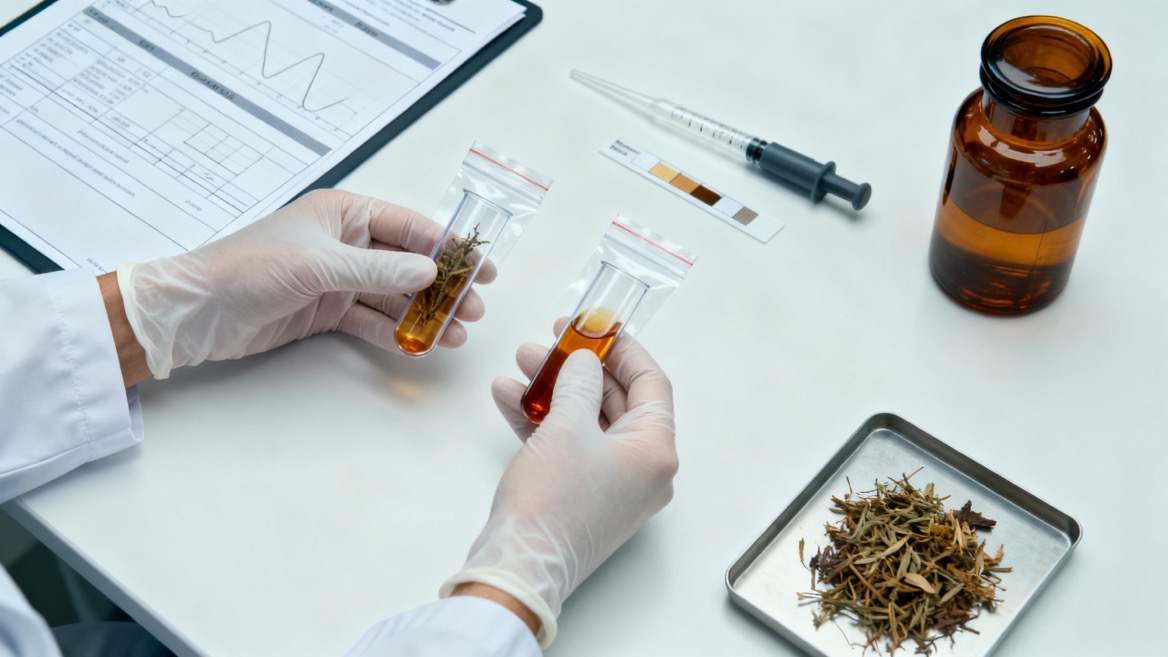
Suppose a serum manufacturer receives a botanical active that appears darker than the qualification sample.
A weak response is: "Natural ingredients vary; please proceed."
A stronger response checks the batch against agreed appearance criteria, reviews analytical results and storage history, and discusses whether comparative formulation testing is appropriate.
The lesson is not that every color difference means failure. It is that a supplier should investigate against defined requirements rather than dismiss the concern.
This is an illustrative evaluation scenario, not a documented customer case.
The following is a proposed purchasing tool, not a published industry benchmark.
| Evaluation category | Suggested weight |
|---|---|
| Technical competence | 25% |
| Documentation accuracy and availability | 20% |
| Complaint handling and quality coordination | 20% |
| Communication and ownership | 15% |
| Delivery transparency and contingency planning | 10% |
| OEM/ODM project coordination | 10% |
Score each category from one to five. Multiply each score by its percentage weight, expressed as a decimal, then add the results for an overall score out of five.
Keep evidence beside every rating: a reviewed dossier, a written technical answer, or an agreed escalation process.
Treat serious integrity concerns as disqualifying regardless of the total score. Examples include altered documents, unexplained batch mismatches, or refusal to investigate a material quality concern.
For natural cosmetic ingredient suppliers, sustainability discussions should be specific enough to verify.
Ask about botanical identity, sourcing region, traceability scope, manufacturing inputs, and the basis for environmental statements.
For fermentation-derived ingredients, request an explanation of relevant feedstocks and processing. Do not assume that fermentation alone proves a lower environmental impact.
Where comparative claims are made, ask what was compared, which lifecycle stages were included, and what evidence supports the conclusion.
Good customer service includes acknowledging missing data. A qualified answer is more valuable than a broad sustainability promise without a defined basis.
ZHENYIBIO TECHNOLOGY INC combines a focus on natural botanical actives with modern biofermentation and offers OEM and ODM services to international customers.
To begin a focused discussion, send your target ingredient or application, destination market, expected volume, development stage, and required documentation. Request a coordinated response covering technical suitability, available evidence, sampling, project responsibilities, and commercial terms.
Evaluate that response using the same criteria applied to every shortlisted supplier. A productive partnership begins with clear questions, verifiable answers, and responsibilities both sides understand.
Ownership. A supplier should assign responsibility, coordinate qualified specialists, and communicate next steps. Friendliness and speed matter, but they cannot compensate for unresolved technical or quality questions.
Agree on targets appropriate to the question. Routine document requests and complex investigations need different timelines. Ask for prompt acknowledgment, a named owner, and a realistic date for the next substantive update.
Start with a technical data sheet, representative certificate of analysis, ingredient identification, and relevant safety information. Add market-specific declarations and evidence requirements based on the intended formulation and destination.
Not without an appropriate basis. Supplier guidance can inform development, but performance and compatibility should be evaluated in the actual formulation, packaging, and intended conditions of use.
Use a paid sample or trial order, review documentation, and test technical communication. Discuss minimum order quantities and future volume expectations openly rather than implying purchase commitments you cannot support.
No. Natural-origin classification, safety substantiation, and environmental assessment answer different questions. Request evidence appropriate to each claim rather than treating one certificate or index as proof of everything.
- U.S. Food and Drug Administration. "Modernization of Cosmetics Regulation Act of 2022 (MoCRA)." Primary source for responsible-person obligations and safety substantiation. [fda]
- U.S. Food and Drug Administration. "Cosmetics & U.S. Law." Regulatory context for cosmetic safety responsibilities. [fda]
- European Chemicals Agency. "Extended Safety Data Sheets." Guidance on safety information, SDS obligations, updates, and downstream-user responsibilities. [echa.europa]
- International Organization for Standardization. "ISO 16128-1:2016—Guidelines on Technical Definitions and Criteria for Natural and Organic Cosmetic Ingredients and Products—Part 1: Definitions for Ingredients." Source for the framework's purpose and limitations. [iso]


