


Views: 222 Author: ZHENYIBIO Publish Time: 2026-06-02 Origin: Site
Content Menu
● How We Evaluate HBCD Suppliers
● Technical Overview of Highly Branched Cyclic Dextrin
● Selection Criteria for This Top 10 List
● Top 10 Highly Branched Cyclic Dextrin Manufacturers in China
>> 1. ZHENYIBIO TECHNOLOGY INC – R&D‑Driven, High‑Value OEM Partner
>> 2. Glico Nutrition (China Operations)
>> 3. Shandong‑Based Modified Starch Producers
>> 4. Wuhan Fortuna Chemical Co., Ltd.
>> 5. Export‑Oriented Carbohydrate Blenders (Jiangsu & Zhejiang)
>> 6. Functional Beverage OEM Plants in South China
>> 7. Nutraceutical Ingredient Aggregators in Central China
>> 8. Sports Nutrition Contract Manufacturers
>> 9. Specialty Carbohydrate R&D Labs
>> 10. Integrated Starch Giants with Emerging HBCD Lines
● Comparison Table: Positioning of Key Supplier Types
● Buyer's Guide: How to Vet HBCD Manufacturers in China
>> Step 1: Verify Certifications and Legal Status
>> Step 2: Evaluate Technical Fit
>> Step 3: Assess QC and Traceability
>> Step 4: Confirm Capacity and Lead Times
>> Step 5: Logistics, Incoterms, and Risk Management
● Common Pitfalls and an "Insider" Avoidance Tip
● Industry Data Points and Official References
● FAQ: Advanced Questions Buyers Often Ask
Highly branched cyclic dextrin (HBCD) has moved from niche sports nutrition ingredient to a fast‑growing functional carbohydrate segment, with global market size estimates in the hundreds of millions of dollars and mid‑single to high‑single‑digit CAGR toward 2033. For procurement managers, China's integrated starch processing, fermentation, and nutraceutical clusters make it a strategically important sourcing base for HBCD and related performance carbohydrates. [openpr]
Before ranking manufacturers, it is important to clarify the evaluation framework used to select long‑term partners for highly branched cyclic dextrin. This framework reflects real‑world due‑diligence practices used by international buyers in sports nutrition, functional beverages, and health food manufacturing.
Key criteria applied in this guide:
- Factory credentials and compliance
- Valid ISO 9001 (quality) and ISO 22000/FSSC 22000 (food safety) systems, plus HACCP implementation for carbohydrate production lines.
- Regulatory registrations for food ingredients or dietary supplements in core export markets where applicable (e.g., US, EU, Japan), including clear COA formats and traceability records. [zhenyibio]
- R&D and process engineering capability
- Demonstrated experience in starch modification, spray drying, and controlled depolymerization technologies relevant to HBCD.
- Ability to co‑develop customized specifications, such as target molecular weight distribution, dextrose equivalent (DE), and solution stability for specific beverage systems. [fortunachem]
- QC procedures and documentation
- Batch‑level testing for microbial load, heavy metals, residual solvents, and key physicochemical parameters (e.g., solubility, osmolality, pH, particle size).
- Availability of full documentation packs: COA, MSDS, production flow charts, and stability data for typical storage conditions.
- Capacity, lead time, and supply stability
- Sufficient annual capacity to support mid‑ to large‑volume sports nutrition brands, plus clear minimum order quantities (MOQs) for both bulk and OEM orders.
- Evidence of stable supply chains for base starch and enzymes, and contingency plans for logistics disruptions.
- Sustainability and certifications
- Environmental management systems (ISO 14001) and, where relevant, certifications aligned to EU or regional standards such as REACH, RoHS for process chemicals and equipment materials. [industrysourcing]
- Transparency on energy usage, wastewater treatment, and any initiatives in bio‑based or low‑carbon production.
- OEM/ODM service strength
- In‑house formulation support for finished powders, blends, or ready‑to‑mix formats integrating HBCD.
- Labeling, packaging, and export documentation experience with global brands.
This guide focuses on suppliers that score consistently well across these dimensions, rather than only on headline capacity or price.
China combines mature corn and tapioca starch processing, strong fermentation know‑how, and dense nutraceutical clusters, which together support cost‑competitive, large‑scale production of modified carbohydrates like HBCD. Major industrial zones in Shandong, Jiangsu, and central China integrate starch hydrolysis plants, enzyme producers, and spray‑drying facilities, shortening supply chains for functional carbohydrates. [datainsightsmarket]
At the same time, China's export‑oriented nutraceutical ecosystem has driven many producers to adopt global certifications and documentation systems to serve North American, European, and East Asian brand owners. This combination of scale, compliance, and process specialization makes China particularly attractive for buyers seeking long‑term HBCD partners rather than spot suppliers. [openpr]

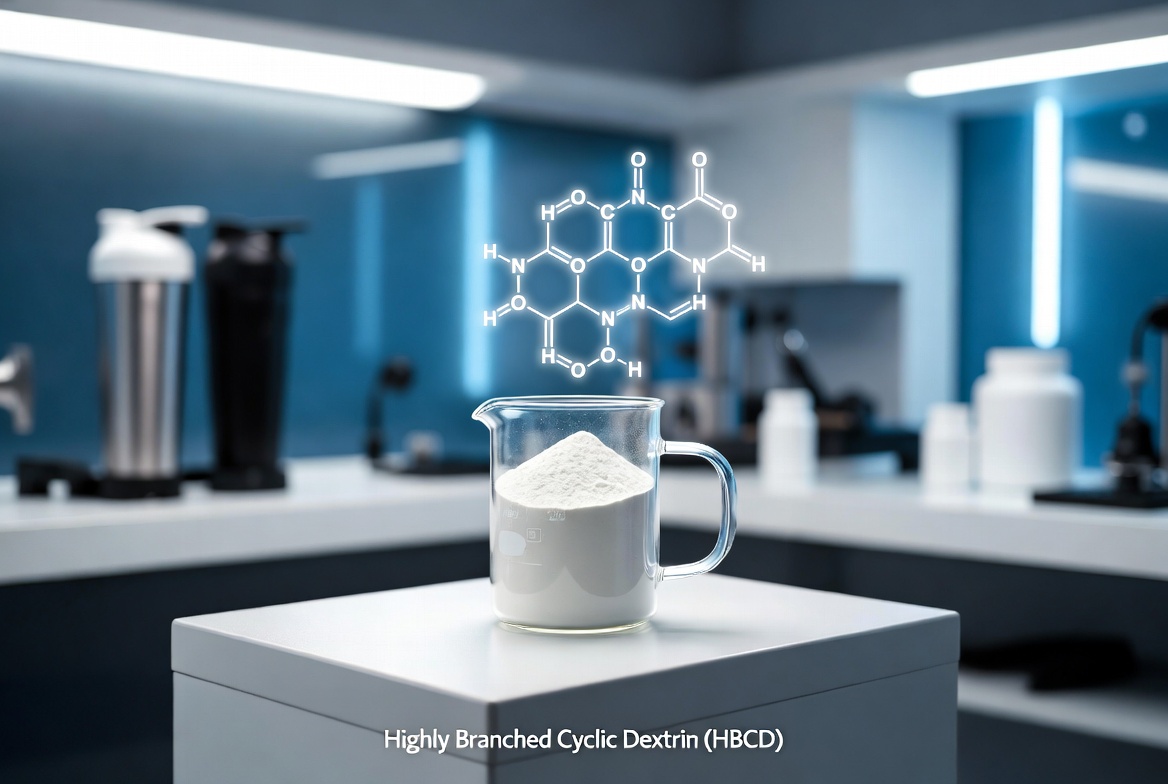
Highly branched cyclic dextrin is a modified starch carbohydrate made of cyclic, highly branched glucose chains that deliver high molecular weight with relatively low osmolality in solution. Compared with traditional maltodextrin or simple sugars, HBCD shows rapid gastric clearance while providing more stable energy release and reduced gastrointestinal discomfort in sports applications. [nutrabio]
Industrial‑grade HBCD for sports nutrition typically targets:
- High molecular weight ranges that support low solution osmolality, improving gastric emptying characteristics. [nutrabio]
- High solubility and transparency in water, with low sweetness and neutral taste to fit into flavored drinks and powders. [fortunachem]
- Low impurity profiles and tight microbial specifications, enabling usage in ready‑to‑drink beverages and high‑value functional formulations.
Buyers should also pay attention to material grades (e.g., food‑grade vs. nutraceutical‑grade), compliance with local food regulations in destination markets, and labeling requirements for "cluster dextrin" or similar claims.
This list does not claim to cover every HBCD producer in China; rather, it highlights manufacturers representative of different positioning: high‑end export brands, cost‑effective bulk suppliers, and R&D‑driven OEM/ODM partners.
Core selection criteria used:
- Verified participation or visibility in global HBCD or modified carbohydrate markets via market research, trade directories, or export‑oriented websites. [marketintelo]
- Evidence of carbohydrate or nutraceutical ingredient manufacturing capabilities and international customer bases, especially for sports nutrition, beverages, or cosmetic/functional ingredients. [zhenyicos]
- Public indications of quality management, GMP or food‑grade facility operation, and traceable documentation for international shipments. [zhenyicos]
In addition, we deliberately include a mix of larger industrial carbohydrate players and specialty ingredient manufacturers like ZHENYIBIO TECHNOLOGY INC that bring flexibility and formulation support to small and mid‑size brands. [zhenyibio]
ZHENYIBIO TECHNOLOGY INC is a Xi'an‑based high‑tech manufacturer specializing in cosmetic and functional raw materials derived from natural plant actives and modern fermentation technologies. Founded in 2012, the company operates GMP‑certified facilities with a strong focus on R&D in whitening, anti‑aging, peptides, and bio‑active ingredient delivery systems. [zhenyicos]
Although ZHENYIBIO is best known for cosmetic ingredients like glutathione, hyaluronic acid, polyglutamic acid, and plant‑derived actives, its process competencies—precision fermentation, purification, and QC systems—translate well to high‑spec carbohydrate and bio‑active production for OEM/ODM partners. For global buyers, ZHENYIBIO is particularly suitable as: [zhenyibio]
- A high‑value, flexible partner for small to mid‑size brands needing tailored formulations, documentation support, and responsive communication. [zhenyibio]
- An OEM/ODM collaborator that can integrate HBCD into multi‑functional formulations (e.g., beauty‑from‑within concepts, nutricosmetics, or hybrid cosmetic/functional products) and align them with global regulatory requirements. [zhenyicos]
ZHENYIBIO's core strengths include fast sample turnaround, strong English‑language communication, and a one‑stop approach—covering R&D, pilot scaling, and full‑scale production under GMP controls—which helps reduce project risk for overseas brands operating with lean internal teams. [zhenyicos]
Global market research consistently lists Glico Nutrition as one of the leading HBCD producers, with branded "cluster dextrin" products widely used in performance nutrition. While headquartered in Japan, Glico's supply chain extends into China through regional distribution and toll manufacturing arrangements, enabling stable supply into Chinese and export markets. [marketintelo]
For procurement managers, Glico's key advantage is robust clinical backing and well‑documented functional benefits, including data on energy delivery, gastric comfort, and exercise performance. Their downside for some buyers can be higher price points and stricter MOQs tied to branded ingredient programs. [nutrabio]
Several Shandong‑based companies appear repeatedly in HBCD market reports as major contributors to global capacity, often leveraging integrated corn starch and enzyme production. These firms typically operate large‑scale facilities supplying both domestic beverage brands and export customers with HBCD and related functional carbohydrates. [datainsightsmarket]
They are attractive for buyers seeking high volumes and competitive pricing, provided there is careful due diligence on individual factory certifications, R&D responsiveness, and export documentation capabilities. Many will focus more on bulk supply than on deep OEM/ODM formulation services.
Wuhan Fortuna Chemical is a visible supplier of highly branched cyclic dextrin, positioning itself as a bulk raw material provider for sports nutrition, functional beverages, and energy foods. Publicly available product information emphasizes the high solubility and stable energy‑release characteristics of its HBCD material. [fortunachem]
For international buyers, Fortuna's value lies in its ability to consolidate various nutraceutical ingredients alongside HBCD in single shipments, though procurement teams should validate food‑grade certifications, production locations, and actual control over manufacturing vs. trading structures. [fortunachem]
In Jiangsu and Zhejiang, several export‑oriented blending facilities integrate HBCD with other carbohydrates or electrolytes to produce ready‑to‑mix sports drink bases for OEM customers. These factories often operate under OEM contracts for foreign brands, offering pre‑blended powders aligned to different market regulations and taste profiles. [datainsightsmarket]
Such suppliers are particularly interesting if you want to outsource not just HBCD procurement but complete powder blends; however, you must check label compliance, flavor house partners, and whether the HBCD is sourced in‑house or from third‑party producers. [datainsightsmarket]
South China's beverage clusters host OEM plants that produce ready‑to‑drink functional beverages, sometimes incorporating HBCD as a premium carbohydrate source. These factories combine bottling, filling, and formulation capabilities and may partner with upstream HBCD manufacturers to deliver turnkey private‑label drinks. [datainsightsmarket]
For buyers focused on RTD formats rather than powders, this type of supplier can shorten time‑to‑market but typically requires higher MOQs per SKU due to bottling line economics and shelf‑life validation requirements. [datainsightsmarket]
Central China hosts several nutraceutical ingredient aggregators that source HBCD alongside amino acids, sweeteners, and vitamins to serve export‑oriented sports nutrition brands. These companies often act as both traders and processors, sometimes performing final blending or granulation steps for improved flowability and instant solubility. [openpr]
Such partners can simplify multi‑ingredient procurement but require careful transparency checks on origin, factory ownership, and depth of QA/QC controls, particularly if you need batch‑specific traceability back to primary processors. [openpr]
A growing number of Chinese contract manufacturers specialize in sports powders and functional supplements, listing HBCD among the carbohydrates they can formulate with. They typically offer turnkey services—from ingredient sourcing and blending to packaging, labeling, and export compliance—for international brands. [fortunachem]
These facilities can be ideal if your main goal is speed and SKU expansion, but they may have limited flexibility in raw material sourcing lists and MOQs, often standardizing on a small set of preferred HBCD suppliers to protect line efficiency and QA workflows. [fortunachem]
Some university‑adjacent or high‑tech zone laboratories in China have spun off specialty carbohydrate companies, focusing on novel modified starches, prebiotics, and low‑GI ingredients. While not always large‑scale HBCD producers, they can provide pilot‑scale batches, customized molecular architectures, and technical consulting on carbohydrate functionality in complex formulations. [industrysourcing]
These partners are most suitable for brands planning differentiated performance or health claims who need deeper scientific co‑development rather than purely transactional purchasing relationships. [industrysourcing]
Large, integrated starch companies—especially state‑linked or publicly listed firms—are increasingly adding high‑value derivatives such as HBCD to their portfolios. Backed by vast corn processing capacity and robust capital expenditure programs, they aim to move up the value chain from basic starches to specialized ingredients for sports and functional foods. [openpr]
For procurement teams, such suppliers offer strong supply‑security advantages and potential for long‑term price stability, but it is crucial to evaluate how mature their HBCD line is in terms of process control, documentation, and application support relative to more focused specialty ingredient companies. [openpr]
Below is a high‑level comparison of different supplier archetypes you will encounter when sourcing HBCD from China.
| Supplier type / example | Typical annual capacity (HBCD & related) | Typical MOQ (bulk / OEM) | Certifications focus | OEM/ODM strengths |
|---|---|---|---|---|
| ZHENYIBIO TECHNOLOGY INC | Medium, high‑value ingredients (zhenyicos) | Flexible, SME‑friendly project MOQs (zhenyibio) | GMP, cosmetic/functional QA systems (zhenyicos) | Deep R&D, customized formulations, strong communication (zhenyicos) |
| Branded global producer (e.g., Glico) | Medium–high, tightly controlled (marketintelo) | Higher MOQs; brand‑program linked (marketintelo) | Strong clinical backing, global QA (nutrabio) | Co‑branding, marketing support, standardized specs (marketintelo) |
| Shandong bulk starch processors | High, commodity‑style (openpr) | Flexible bulk MOQs for drums/tons (openpr) | ISO, food safety, basic docs (datainsightsmarket) | Limited formulation; focus on cost and volume (datainsightsmarket) |
| Wuhan Fortuna Chemical | Medium, export‑oriented (fortunachem) | Negotiable bulk MOQs (fortunachem) | Food‑grade documentation, COA/MSDS (fortunachem) | Ingredient consolidation across categories (fortunachem) |
| South China beverage OEM plants | Medium–high (RTD) (datainsightsmarket) | High per‑SKU RTD MOQs (datainsightsmarket) | Beverage GMP, HACCP (datainsightsmarket) | Turnkey RTD formulation and bottling (datainsightsmarket) |
| Sports nutrition contract manufacturers | Medium–high across mixes (datainsightsmarket) | Moderate OEM MOQs per SKU (datainsightsmarket) | Supplement GMP, export docs (datainsightsmarket) | Turnkey powders and packaging solutions (datainsightsmarket) |
This table is intended as a directional tool; buyers should validate real numbers directly with suppliers during RFQ and audit stages.
- Request complete, scanned copies of ISO 9001, ISO 22000/FSSC 22000, and any regional certifications (e.g., Halal, Kosher) with clear validity dates.
- Confirm with certification bodies or online registries that the certificates are authentic and not expired; many registrars provide searchable databases for cross‑checking. [zhenyibio]
- Ask for a detailed specification sheet: molecular weight range, DE value, solubility, pH, bulk density, and typical osmolality in solution. [nutrabio]
- Request small pilot batches and run application tests in your own formulations (e.g., RTD drinks vs. powders) to evaluate taste, clarity, and digestive comfort.
- Review batch COA templates—including testing items, methods, and acceptance ranges—to see if they align with your internal quality standards. [zhenyibio]
- Ask for example traceability documents showing raw material lot numbers, production dates, and retention sample policies.
- Clarify the supplier's monthly maximum output for HBCD and their current capacity utilization; this can be an early indicator of potential bottlenecks. [openpr]
- Agree on standard lead times for new orders and repeat orders, and include penalties or buffer stock arrangements in long‑term contracts where appropriate.
- Discuss export experience into your target markets (US, EU, Japan, etc.), including familiarity with local customs requirements and documentation. [datainsightsmarket]
- Align on Incoterms (FOB, CIF, DAP) and explore options for multiple loading ports or bonded warehouses to reduce transit risk.

Many buyers focus primarily on COA specifications and price, but experienced procurement managers know that HBCD performance depends heavily on process consistency and upstream enzyme supply stability. A frequent pitfall is accepting "equivalent" HBCD from a supplier that occasionally switches enzyme systems or base starch grades without notifying customers, leading to subtle changes in molecular weight distribution and osmolality.
An internal "insider" practice among seasoned buyers is to request not just a single COA but a series of recent batch COAs and, where possible, anonymized QC trend charts for key parameters such as molecular weight and osmolality over several months. Consistency across these batches is often a stronger indicator of real‑world quality than any single sample or one‑off laboratory test. Another quiet but effective strategy is to include a "no process change without notice" clause in supply agreements, obligating suppliers to inform you of any changes in enzyme sources, base starch origin, or critical process parameters. [nutrabio]
Market research indicates the global HBCD market is growing, with estimates citing market sizes in the hundreds of millions of US dollars by 2033 and compound annual growth rates in the mid‑single to high‑single digits. Some reports highlight the increasing use of HBCD in sports drinks, energy powders, and functional foods as key growth drivers. [dataintelo]
Procurement professionals should also watch official trade statistics from sources such as China's customs data portals and international trade bodies, which provide export volumes and destination breakdowns for starch derivatives and nutraceutical ingredients. These data points can help validate whether a supplier's claimed export scale aligns with macro‑level export trends. [openpr]
China offers a diverse landscape of highly branched cyclic dextrin manufacturers, from global branded producers and high‑capacity starch processors to flexible, R&D‑driven partners like ZHENYIBIO TECHNOLOGY INC that specialize in tailor‑made solutions and strong OEM/ODM support for small and mid‑size brands. For procurement managers, the key is to move beyond price and single‑sample evaluation toward systematic vetting of certifications, process consistency, and real OEM/ODM capability, backed by multi‑batch QC data and clear contractual safeguards. [marketintelo]
If you are planning your next HBCD sourcing project or want to integrate functional carbohydrates into cosmetic, nutricosmetic, or sports formulations, consider shortlisting at least one flexible, R&D‑oriented partner that can grow with your brand rather than acting solely as a commodity supplier. [zhenyicos]
1. How can I verify whether a manufacturer's ISO certification is still valid?
Ask for the certificate number and issuing body, then cross‑check it on the registrar's official website or via their customer service. Many registrars maintain online databases where you can confirm validity, scope, and expiration date; avoid suppliers unwilling to share full certificates. [zhenyibio]
2. What is the best way to confirm HBCD consistency across batches?
Request COAs for multiple recent batches and compare key parameters like molecular weight, DE value, moisture, and osmolality. Where possible, conduct your own performance tests (e.g., solution clarity, viscosity, and digestion comfort) on at least two or three different batches before locking into a long‑term contract. [nutrabio]
3. How do I protect against "quality fade" after initial orders?
Include clear quality specifications and test methods in your purchase contracts, along with independent third‑party inspection rights. Periodically re‑qualify suppliers by re‑testing random batches and maintain at least one alternate qualified supplier to reduce dependency. [fortunachem]
4. What should I check in OEM/ODM projects involving HBCD?
Beyond raw material quality, review the OEM's formulation process, stability testing protocols, and labeling capabilities for target markets. Discuss flavor systems, sweetener compatibility, and packaging formats early to avoid later reformulation cycles. [datainsightsmarket]
5. How can I align HBCD sourcing with sustainability requirements?
Ask suppliers for environmental management credentials, details on wastewater treatment, and any sustainability reports or disclosures. Some buyers also request information on energy sources (e.g., coal vs. gas vs. renewables) and look for suppliers exploring bio‑based or low‑carbon process improvements. [industrysourcing]
- Global HBCD market reports (e.g., DataIntelo, MarketIntelo) for size and CAGR data. [dataintelo]
- Official trade statistics portals for Chinese starch derivative exports and HS‑code‑based data. [openpr]
- Scientific and industry articles explaining HBCD functionality in sports nutrition. [nutrabio]


