


Views: 268 Author: ZHENYIBIO Publish Time: 2026-11-22 Origin: Site
Content Menu
● Dimethylglycine HCl vs. TMG: Key Differences at a Glance
● What Is Dimethylglycine HCl?
>> Why the Hydrochloride Form Matters
>> Betaine Is Not Cocamidopropyl Betaine
● Methyl Donor Performance: Why TMG Has the Clearer Role
>> Does DMG Also Support One-Carbon Metabolism?
>> Why Methylation Does Not Predict Clearer Skin
● Stress Management: Separate Emotional Stress from Cellular Stress
>> DMG and Human Stress-Related Outcomes
● Skin Clarity: What Does the Evidence Actually Support?
>> Betaine and Cleanser Tolerance
>> DMG HCl and Facial Skin Clarity
● An Evidence-to-Claim Framework for Beauty Brands
● Practical OEM and ODM Development: A Five-Step Workflow
>> 1. Define the Product Category and Intended Market
>> 2. Verify Identity and Supplier Documentation
>> 3. Screen the Complete Formulation
>> 4. Select Measurements That Match the Claim
>> 5. Translate Results Without Expanding Them
● Sustainable Sourcing: Compare Documented Processes
● Safety: Keep Topical and Oral Decisions Separate
● Choosing the Better Fit for Your Product
>> Is Dimethylglycine HCl the same as TMG?
>> Which is the better direct methyl donor?
>> Can either ingredient clear acne?
>> Does betaine reduce psychological stress?
>> Can DMG HCl and betaine be combined?
>> Does a higher betaine concentration work better?
Dimethylglycine HCl vs. TMG (Betaine) is more than a comparison between two closely related ingredients. For beauty brands developing products around stress management and skin clarity, it is a question of biochemical function, formulation suitability, and credible evidence.
TMG, also called trimethylglycine or glycine betaine, directly donates a methyl group in a defined homocysteine-remethylation pathway. Dimethylglycine HCl supplies the hydrochloride salt of dimethylglycine, a downstream product of that reaction. They are related, but they are not interchangeable.
My starting point for evaluating either ingredient is straightforward: distinguish what happens in a metabolic pathway from what has actually been demonstrated in people—or in a finished cosmetic.
ForZHENYIBIO TECHNOLOGY INC and its international OEM and ODM partners, that distinction supports more useful ingredient selection and more defensible product positioning.

| Comparison point | Dimethylglycine HCl | TMG / Betaine |
|---|---|---|
| Chemical identity | Hydrochloride salt of N,N-dimethylglycine | N,N,N-trimethylglycine |
| Methyl groups attached to nitrogen | Two | Three |
| Molecular weight | Approximately 139.58 g/mol | Approximately 117.15 g/mol |
| Role in the betaine pathway | Supplies the downstream metabolite DMG | Direct methyl donor through BHMT |
| Relevant cosmetic evidence | Limited direct evidence for facial clarity or stress-related skin benefits | Human evidence for reducing irritation in certain detergent-exposure settings |
| Psychological stress management | Not established by robust clinical evidence | Not established by robust clinical evidence |
| Most defensible development position | Exploratory ingredient requiring application-specific validation | Candidate for hydration- and comfort-focused formulations |
The practical conclusion is not that one ingredient is universally superior. TMG has the clearer direct methyl-donor role and more relevant published topical evidence for cleanser tolerance. Neither has established superiority for treating stress-related breakouts.
Dimethylglycine, commonly abbreviated DMG, is a naturally occurring metabolite involved in one-carbon metabolism. Its hydrochloride form is a specific raw-material identity, not simply another name for betaine.
DMG is produced when betaine transfers a methyl group to homocysteine. It can subsequently be metabolized through pathways leading toward sarcosine and glycine.
The "HCl" designation identifies the salt form supplied. It does not establish stronger biological performance, better skin penetration, or greater clinical efficacy.
For procurement and development teams, the distinction affects:
- Raw-material identification and analytical specifications.
- Active-content calculations.
- Counterion contribution and formulation pH.
- Whether published findings concern the same chemical form.
Evidence involving free DMG or dimethylglycine sodium salt should not automatically be presented as evidence for Dimethylglycine HCl.
Likewise, oral research cannot establish the performance of a topical serum.
TMG contains three methyl groups attached to its nitrogen atom. It is widely discussed for two separate functions: methyl donation and osmotic protection.
As a methyl donor, betaine participates in methionine metabolism, primarily in the liver and kidneys. As an osmolyte, it helps biological systems manage changes in their surrounding water balance.
These functions explain its interest across nutrition and cosmetic development, but they support different types of claims.
Glycine betaine should not be confused with cocamidopropyl betaine, a surfactant used in cleansing products.
Betaine hydrochloride is another distinct material. Buyers should therefore specify the complete ingredient identity rather than ordering a generic "betaine ingredient."
A similar name does not establish equivalent chemistry, safety documentation, or formulation behavior.
The central reaction is:
Betaine + homocysteine → dimethylglycine + methionine
The enzyme betaine-homocysteine methyltransferase, abbreviated BHMT, catalyzes this reaction.
TMG donates one methyl group and becomes DMG. Its three methyl groups do not mean that all three are transferred in this single reaction.
Yes, DMG participates in the broader metabolic network. However, participation downstream is not equivalent to replacing betaine as the direct methyl donor in the BHMT reaction.
That distinction makes "DMG is a stronger version of TMG" an unreliable development premise.
For a narrowly defined comparison of direct methyl donation through BHMT, betaine is the relevant substrate.
Methylation contributes to many biological processes. Nevertheless, a demonstrated biochemical role does not establish that supplementation will reduce acne, improve pigmentation, or relieve psychological stress.
A useful evidence sequence is:
1. Confirm the biochemical mechanism.
2. Establish exposure through the intended delivery route.
3. Demonstrate a relevant biological response.
4. Measure a meaningful human outcome.
5. Verify performance in the finished product.
Skipping these steps turns a plausible mechanism into an unsupported promise.
The word "stress" creates substantial confusion in ingredient marketing.
Psychological stress involves emotional and physiological responses. Osmotic stress concerns water-balance conditions around cells. Oxidative stress concerns an imbalance involving reactive species and protective systems.
These concepts can interact, but they are not interchangeable.
Betaine's osmolyte function provides a rationale for investigating cellular protection and skin comfort.
However, protection in a laboratory stress model does not demonstrate reduced anxiety, normalized cortisol, or fewer stress-related blemishes in consumers.
Claims about emotional resilience require appropriately designed human studies measuring emotional or physiological outcomes.
DMG has been investigated for several health-related applications, but the clinical findings do not justify broad stress-management claims.
A 12-month randomized pilot trial involving 30 patients with progressive multiple sclerosis found no improvement in fatigue, cognition, gait, or disability with the studied oral DMG regimen.
That population is not representative of healthy beauty consumers. The study therefore does not settle every possible application, but it illustrates why broad performance claims require caution.
Neither ingredient should be positioned as a proven anxiety treatment.
"Skin clarity" needs a measurable definition.
It may refer to fewer blemishes, less visible redness, more even-looking tone, or smoother texture. These are different endpoints and require different testing approaches.
Published human studies offer useful, though limited, evidence for betaine in detergent-exposure settings.
In one study involving 21 healthy volunteers, adding betaine reduced irritation reactions associated with the tested surfactants.
Another study involving 28 volunteers found that soaps containing betaine were among the least irritating products tested. However, differences were modest, and increasing betaine concentration did not consistently improve the response.
These findings support further development of comfort-focused cleansing systems. They do not establish acne treatment, pigmentation correction, or a universal concentration-response relationship.
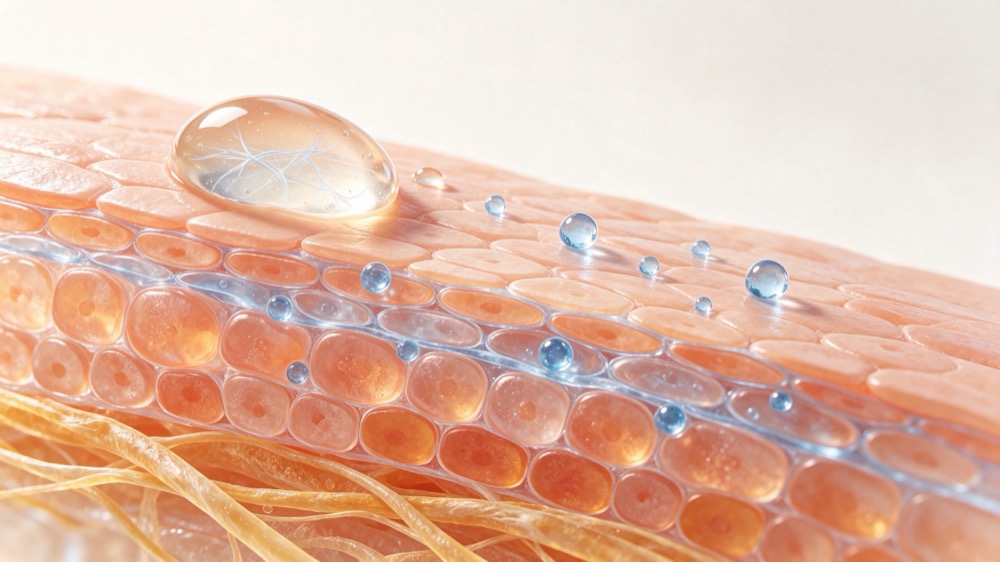
Direct human evidence for Dimethylglycine HCl improving facial blemishes or uneven tone remains insufficient to support confident efficacy claims.
An emerging scalp study should not be stretched beyond its scope. A 24-week trial in 154 men investigated a shampoo containing dimethylglycine sodium salt and caffeine—not DMG HCl alone.
Its hair-related findings cannot establish facial clarity benefits, isolate DMG's individual contribution, or validate another salt form.
From an ingredient-selection perspective, this is an important rule: match the studied identity, delivery system, population, and outcome before transferring a claim.
The most useful comparison is often between proposed claims rather than ingredient names.
| Proposed positioning | Evidence interpretation | Development requirement |
|---|---|---|
| "Supports comfortable cleansing" | Relevant human betaine data exist in specific detergent models | Test the complete cleanser |
| "Improves skin hydration" | Plausible development direction for betaine | Measure hydration in the finished formula |
| "Reduces stress-related breakouts" | Not established for either ingredient | Conduct a suitably designed clinical study |
| "Supports methyl donation" | Established biochemical role for TMG | Keep systemic and topical interpretations separate |
| "DMG HCl clears uneven skin" | Insufficient direct clinical evidence | Generate ingredient- and product-specific data |
My preferred approach is to choose the consumer endpoint first, then select the ingredient and study design.
This prevents a compelling mechanism from becoming the only foundation for the product story.
Decide whether the project is a cleanser, leave-on cosmetic, scalp product, or oral product.
These categories have different exposure patterns, safety requirements, and permissible claims. Cosmetic raw-material suitability does not automatically establish suitability for ingestion.
Request a specification package covering:
- Chemical identity and relevant naming information.
- Assay method and acceptance limits.
- Water content and relevant impurities.
- Microbiological quality, where applicable.
- Storage conditions and shelf-life support.
- Traceable manufacturing and origin information.
For plant-derived or fermentation-related positioning, request documentation for the actual ingredient and manufacturing route.
A supplier's broader biotechnology expertise does not prove that every material is fermentation-derived.
Evaluate appearance, odor, pH, viscosity, compatibility, and stability in the intended packaging.
For DMG HCl, assess the formulation consequences of the hydrochloride form. For betaine, evaluate its contribution within the complete humectant or cleansing system.
Neither ingredient should receive an automatic "compatible" designation without testing.
A hydration study may use corneometry. A barrier-related study may measure transepidermal water loss.
Visible redness can be assessed through standardized photography and suitable instrumental methods. Blemish claims require defined lesion assessments and an appropriate study duration.
Include tolerance monitoring and, where feasible, a matched vehicle control.
If a cleanser improves reported comfort, describe that result. Do not reinterpret it as proof that the ingredient regulates stress hormones.
Finished-product evidence should determine the final wording—not the other way around.
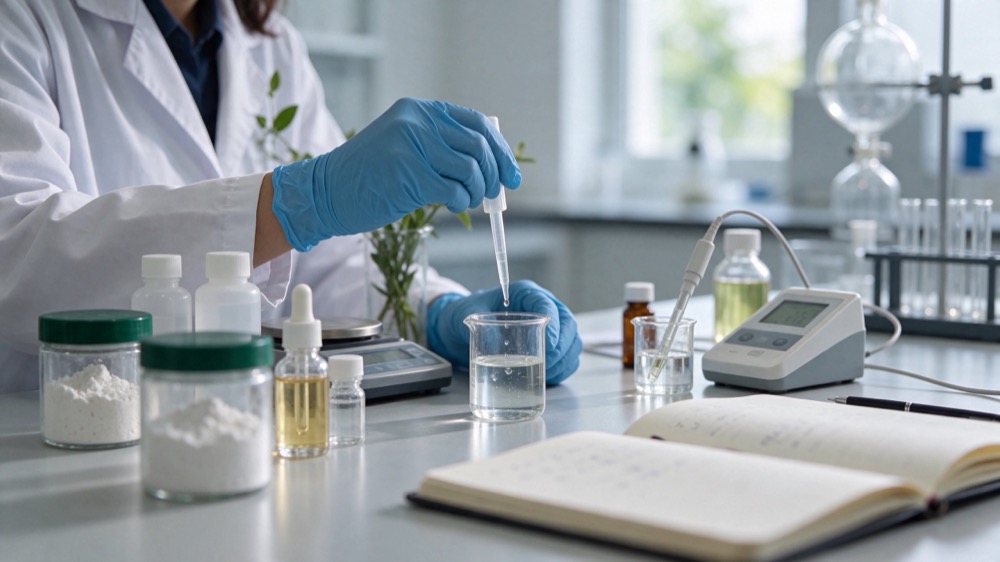
For ZHENYIBIO's plant-active and biotechnology-focused positioning, sustainability is most persuasive when it is specific.
Neither "natural" nor "fermentation-based" automatically establishes lower environmental impact.
Ask suppliers to document feedstock origin, processing requirements, waste handling, and available environmental assessments. Compare equivalent functional performance rather than raw-material price alone.
A material that requires additional processing or produces unstable formulations may create trade-offs elsewhere in the product lifecycle.
The strongest sustainability narrative connects traceable sourcing with a formulation that performs reliably.
Topical tolerability depends on concentration, formulation, exposure, and the intended user population. Evaluate the finished product rather than assuming that a familiar metabolite is suitable in every application.
Oral betaine requires separate consideration. A randomized trial in people with obesity and prediabetes found limited metabolic benefit at the studied high doses and raised concerns about lipid effects.
Prescription betaine labeling also includes specific monitoring requirements for certain patients with homocystinuria.
These findings should not be generalized into alarm about ordinary cosmetic use. They demonstrate why oral dosing and medical suitability require qualified assessment.
This comparison is an ingredient-development discussion, not a supplement prescription.
For direct methyl donation through BHMT, TMG has the clearer established role. For a cleanser or comfort-focused skincare concept, betaine also offers more directly relevant published human evidence.
Dimethylglycine HCl remains a more exploratory choice for facial clarity positioning. It needs stronger application-specific validation rather than borrowed claims from related ingredients.
At ZHENYIBIO TECHNOLOGY INC, traditional botanical knowledge and modern biotechnology provide the context for a disciplined development brief—not a substitute for product testing.
Share your target market, product format, desired consumer benefit, and sourcing requirements with ZHENYIBIO to begin an OEM or ODM discussion centered on appropriate ingredients, documentation, and measurable performance.
No. DMG HCl is the hydrochloride salt of dimethylglycine. TMG is trimethylglycine, also called glycine betaine. They differ chemically and occupy different positions in the betaine metabolic pathway.
TMG is the direct methyl donor in the BHMT-catalyzed conversion of homocysteine to methionine. DMG is produced by that reaction and is not an interchangeable substrate.
Neither ingredient has sufficient direct clinical evidence to be presented here as an established acne treatment. Betaine's cleanser-tolerance evidence does not demonstrate acne clearance.
Its osmolyte function does not establish anxiety relief or psychological stress reduction. Those claims require human studies designed around the specific claimed outcome.
A combined formula can be investigated, but compatibility, tolerability, and incremental benefit need testing. Their metabolic relationship alone does not demonstrate synergy.
Not necessarily. One human soap study found no consistent reduction in irritation with increasing betaine concentration across the tested range. Optimize the complete formula rather than assuming more is better.
1. Craig, S. A. S. "Betaine in Human Nutrition." *The American Journal of Clinical Nutrition*. 2004;80(3):539–549. DOI: 10.1093/ajcn/80.3.539. Review of betaine's osmolyte function, methyl donation, and physiological roles. [pubmed.ncbi.nlm.nih]
2. National Center for Biotechnology Information. *PubChem: N,N-Dimethylglycine Hydrochloride*, Compound ID 75605. Chemical identity, molecular formula, and molecular weight. [pubchem.ncbi.nlm.nih]
3. National Center for Biotechnology Information. *PubChem: Betaine*, Compound ID 247. Chemical identity, synonyms, molecular weight, and metabolic information. [pubchem.ncbi.nlm.nih]
4. Nicander, I., et al. "The Ability of Betaine to Reduce the Irritating Effects of Detergents Assessed Visually, Histologically and by Bioengineering Methods." 2003. PubMed ID: 12535285. Human detergent-exposure study involving 21 healthy participants. [pubmed.ncbi.nlm.nih]
5. Nicander, I., et al. "The Use of Different Concentrations of Betaine as a Reducing Irritation Agent in Soaps Monitored Visually and Non-Invasively." 2003. PubMed ID: 12535284. Human study involving 28 healthy participants, including concentration-response limitations. [pubmed.ncbi.nlm.nih]
6. Wolfsegger, T., Böck, K., Schimetta, W., et al. "N,N-Dimethylglycine in Patients with Progressive Multiple Sclerosis: Result of a Pilot Double-Blind, Placebo, Controlled Randomized Clinical Trial." 2021. Twelve-month pilot trial evaluating oral DMG. [pmc.ncbi.nlm.nih]
7. Celleno, L., et al. "A Novel Approach Against Male Pattern Hair Loss With Topical Dimethylglycine Sodium Salt …" *Journal of Cosmetic Dermatology*. 2025. DOI: 10.1111/jocd.70390. Randomized trial of a dimethylglycine sodium salt- and caffeine-containing shampoo. [onlinelibrary.wiley]
8. "Metabolic Effects of Betaine: A Randomized Clinical Trial …" 2018. PubMed Central ID: PMC6692715. Randomized study in participants with obesity and prediabetes; metabolic outcomes and high-dose supplementation limitations. [pmc.ncbi.nlm.nih]
9. U.S. National Library of Medicine. *DailyMed: CYSTADANE—Betaine Powder, for Solution*. Prescribing information covering medical indications and hypermethioninemia precautions in patients with CBS deficiency. [dailymed.nlm.nih]


