


Views: 232 Author: ZHENYIBIO Publish Time: 2026-07-12 Origin: Site
Content Menu
● Understanding the stability problem in high‑pH anti‑pollution formulas
● Fullerene C60 vs. vitamin C: core differences
● How vitamin C behaves in high‑pH anti‑pollution systems
● How fullerene C60 addresses stability in high‑pH environments
● Anti‑pollution performance: real‑skin context
● Formulation design: when to prioritize fullerene C60 over vitamin C
● Practical formulation strategies from lab experience
● Why high‑pH cleansers and foams benefit most from fullerene C60
● How a specialized plant‑active manufacturer can support this transition
● Example development roadmap for a high‑pH anti‑pollution line
● FAQs
Fullerene C60 and vitamin C both act as powerful antioxidants in skincare, but they behave very differently once you place them inside high‑pH, anti‑pollution formulations. For brands struggling with stability, color change, and performance loss over shelf life, fullerene C60 offers a fundamentally different way to solve the oxidation problem compared with classic vitamin C derivatives. [scielo.isciii]

Formulators working on urban anti‑pollution lines face a specific challenge: combining strong antioxidants with surfactant‑rich, often alkaline or near‑neutral systems such as cleansing foams, rinse‑off masks, or sprayable essences. Reactive antioxidants like ascorbic acid are easily degraded by oxygen, light, metals, and repeated opening of the package, which is why so many "brightening" products darken over time. From a practitioner's view, this instability drives customer complaints, shortens shelf life, and complicates international logistics. [scielo.isciii]
High‑pH environments aggravate this problem. Above mildly acidic conditions, many vitamin C forms undergo faster oxidation, reduce in potency, and can shift formula appearance from clear to yellow or brown. For export‑oriented brands moving goods across climate zones, the risk of arriving with discolored stock at a distributor's warehouse is not just a technical issue—it is a commercial risk that impacts brand trust and inventory cost. [scielo.isciii]

At ingredient‑selection stage, the first decision is conceptual: use a classical, sacrificial antioxidant (vitamin C family) or a regenerative, cage‑like radical sponge (fullerene C60). Understanding this contrast clarifies why the two behave so differently at higher pH. [scirp]
| Aspect | Fullerene C60 | Vitamin C (ascorbic acid & derivatives) |
|---|---|---|
| Core mechanism | Radical sponge, can quench many ROS cycles before inactivation (scielo.isciii) | Sacrificial antioxidant, oxidizes while neutralizing ROS (scielo.isciii) |
| Intrinsic stability | Highly stable carbon cage; less sensitive to pH and temperature once properly dispersed (scirp) | Native ascorbic acid is pH‑ and oxygen‑sensitive; derivatives improve but still limited (scielo.isciii) |
| Ideal pH window | Broad, compatible with many surfactant‑based and higher‑pH systems (with correct carrier) (scirp) | Prefers acidic systems; stability decreases toward neutral and alkaline conditions (scielo.isciii) |
| Color shift risk | Low when dispersion is controlled; less prone to progressive yellowing (scirp) | High, especially for L‑ascorbic acid; solutions darken as they oxidize (scielo.isciii) |
| Anti‑pollution focus | Strong ROS scavenging and support against UV‑ and pollution‑induced oxidative stress (scielo.isciii) | Well‑documented antioxidant and anti‑photoaging benefits (scielo.isciii) |
| Consumer familiarity | Emerging, "next‑gen antioxidant" positioning | Very familiar, strong association with brightening and tone (scielo.isciii) |
From an industry standpoint, vitamin C remains a benchmark for brightening and photo‑protection support, but its formulation window becomes narrow as pH rises, especially when combined with metals, surfactants, and repeated air exposure. Fullerene C60, in contrast, can be engineered into dispersions and delivery systems that retain activity across a wider range of pH and processing conditions. [scirp]
When formulators move from classic serums (pH 3–4) into high‑pH, rinse‑off or sprayable anti‑pollution formats, they usually rely on vitamin C derivatives rather than pure L‑ascorbic acid. Ascorbyl glucoside, magnesium ascorbyl phosphate, and ascorbyl palmitate are designed to improve stability and reduce color drift, but all still participate in sacrificial redox reactions inside the formula. [scielo.isciii]
Key pain points you will see in practice:
- Accelerated oxidation under repeated opening. Every time a consumer opens the bottle, oxygen and micro‑contaminants enter, driving further vitamin C degradation at higher pH. [scielo.isciii]
- Interaction with metals and surfactants. Trace metals from water or pigments can catalyze oxidation; surfactant systems can alter partitioning and further stress the molecule. [scielo.isciii]
- Color and odor drift. As vitamin C oxidizes, the formula tends to darken and sometimes develops off‑odors, which consumers interpret as "product going bad." [scielo.isciii]
- Efficacy loss over shelf life. By the time the product reaches the second half of its usage, the active concentration can drop significantly in poorly protected systems. [scielo.isciii]
Clinical literature still supports vitamin C as a valuable antioxidant and collagen‑support active, particularly in combination with co‑antioxidants and encapsulation. However, the more we push into alkaline, surfactant‑rich, or sprayable anti‑pollution products, the more the formulator has to "fight the chemistry" to keep vitamin C behaving. [onlinelibrary.wiley]
Fullerene C60 is a highly conjugated carbon structure that can accept and release electrons across many cycles, acting more like a radical reservoir than a one‑time antioxidant. In dermal applications, C60 and its derivatives have been reported to scavenge multiple types of reactive oxygen species associated with UV exposure, pollution, and intrinsic aging. [scirp]
From a formulation perspective, three points are especially relevant to high‑pH systems:
1. Robust carbon cage structure
The spherical carbon lattice is inherently resistant to many degradation pathways that quickly affect small, water‑soluble antioxidants. Once properly dispersed or encapsulated, fullerene C60 can maintain its structure under pH conditions that would rapidly degrade unprotected vitamin C. [scirp]
2. Reduced contribution to color drift
Because C60 does not oxidize and fragment in the same way as vitamin C, it contributes less to progressive darkening, especially when paired with appropriate carriers and stabilizers. This supports clear or lightly tinted anti‑pollution formats with better visual stability during long shipping and storage cycles. [scirp]
3. Compatibility with advanced delivery systems
Fullerene is commonly formulated via liposomes, nano‑dispersions, or microencapsulation, technologies that cosmetic R&D teams already use for other actives. This opens the door to high‑pH cleansers, foams, and sprays that claim strong antioxidant support without relying solely on unstable water‑phase antioxidants. [onlinelibrary.wiley]
For brands positioning themselves as "next‑generation anti‑pollution experts", fullerene C60 provides a technical narrative: a stable, regenerable radical scavenger able to function in formats where classical vitamin C struggles. [scirp]
In real urban skin, oxidative stress does not come from a single source. UV radiation, particulate matter (PM2.5), cigarette smoke, ozone, and blue light all generate reactive oxygen species that attack lipids, proteins, and DNA. Clinical and preclinical work on antioxidant blends shows that combining complementary antioxidants and delivery systems can improve collagen support, hydration, and photodamage markers compared with single‑active formulas. [onlinelibrary.wiley]
In anti‑pollution formulas, fullerene C60 and vitamin C address slightly different parts of the story:
- Vitamin C supports collagen synthesis, contributes to brightening, and participates in the skin's endogenous antioxidant recycling network. [onlinelibrary.wiley]
- Fullerene C60 focuses on broad‑spectrum ROS scavenging, especially under UV and pollution exposure, and contributes to a more stable reservoir of antioxidant capacity inside the formulation. [scirp]
As a formulator or brand owner, the practical implication is clear: if the product architecture demands a higher pH (for foaming, cleansing, or specific delivery reasons), relying exclusively on vitamin C for anti‑pollution positioning will always feel like a compromise on shelf‑life stability. Introducing fullerene C60 into the antioxidant system allows you to decouple a large portion of the claimed anti‑pollution performance from the most unstable molecules. [scielo.isciii]
From a formulation‑strategy point of view, vitamin C and fullerene C60 are rarely true substitutes; they are better viewed as different pillars inside an antioxidant architecture. However, there are several cases where fullerene C60 should lead the design, with vitamin C acting in a secondary or encapsulated role. [onlinelibrary.wiley]
You should prioritize fullerene C60 as the main antioxidant driver when:
- Target pH is near‑neutral or slightly alkaline. For example, foaming cleansers, rinse‑off anti‑pollution masks, or micellar formats for heavily polluted environments. [scielo.isciii]
- Long export logistics are non‑negotiable. Products must survive months of shipping and warehousing in varied climates without visible color or odor drift. [zhenyi-cos]
- The product concept stresses visible color stability. Transparent mists, clear gels, or minimal‑pigment emulsions where even mild yellowing is unacceptable. [scielo.isciii]
- Regulatory and claim frameworks require robust stability dossiers. Industrial buyers and multinational clients increasingly demand stability data that is hard to achieve with high free vitamin C loading at high pH. [zhenyi-cos]
In these architectures, vitamin C is often repositioned as:
- A co‑antioxidant in encapsulated or derivative form. [onlinelibrary.wiley]
- A brightening support molecule rather than the central anti‑pollution shield. [scielo.isciii]
Fullerene C60, supported by other stable antioxidants and chelators, becomes the backbone of the protection narrative.
From the vantage point of a formulation partner working with global brands, the most successful anti‑pollution systems combine molecule selection, delivery technology, and process control. In practice, several tactics consistently improve performance when balancing fullerene C60 and vitamin C in higher‑pH products: [zhenyi-cos]
1. Separate functional phases
- Keep fullerene C60 in a dedicated dispersion (for example, in the oil or polymeric phase), away from reactive metal contaminants. [scirp]
- Place vitamin C derivatives in a more controlled microenvironment (encapsulation, liposomes, or specific water phase) to reduce free exposure. [onlinelibrary.wiley]
2. Multi‑layered antioxidant systems
- Combine fullerene C60 with additional stable antioxidants (for example, vitamin E derivatives, niacinamide, or flavonoids) to cover both lipid and aqueous compartments of the stratum corneum. [onlinelibrary.wiley]
- Use chelators and metal‑binding agents to limit catalytic degradation pathways. [scielo.isciii]
3. Process and packaging alignment
- Apply GMP‑level control for oxygen exposure and temperature during production, especially for the vitamin C components. [zhenyi-cos]
- Match packaging (airless pumps, dark containers, barrier liners) to the expected antioxidant load and pH regime. [zhenyi-cos]
These steps reflect what experienced OEM/ODM manufacturers apply every day when converting active‑level concepts into export‑ready bulk, especially for markets with stringent quality expectations and long distribution chains. [zhenyibio]
Among all anti‑pollution formats, high‑pH or surfactant‑rich cleansers are historically the most challenging for vitamin C. The combination of surfactants, repeated daily exposure to water and air, and often transparent packaging turns these systems into a worst‑case scenario for ascorbic acid stability. [scielo.isciii]
Fullerene C60 is especially well suited to upgrade these products because:
- It can be anchored within micellar or vesicular structures that remain stable in the surfactant network. [scirp]
- It supports an anti‑pollution positioning in rinse‑off products, where contact time is short but exposure frequency is high. [scirp]
- It does not depend on a narrow low‑pH window, giving formulators flexibility to optimize foam quality, mildness, and sensory feel. [scirp]
For brands building a complete anti‑pollution line, this creates a coherent narrative: daily high‑pH cleanser or foam supported by fullerene C60, followed by lower‑pH leave‑on treatments where vitamin C can still play a more prominent role.
A manufacturer focusing on natural plant actives combined with modern biotechnologies is well positioned to implement fullerene C60 and hybrid antioxidant systems at scale for global clients. Over the past decade, specialist factories have built dedicated capabilities for functional ingredients, advanced encapsulation, and pH‑sensitive raw material handling, serving brands, wholesalers, and OEM/ODM producers worldwide. [zhenyibio]
In this context, the value for international partners comes from:
- Integrated raw material selection and co‑development. Teams can align plant‑derived antioxidants, fullerene dispersions, and vitamin C derivatives to create differentiated anti‑pollution stories. [zhenyi-cos]
- Formulation and dosage‑form design under one roof. From serums and creams to gels, foams, masks, and lyophilized formats, the same R&D group can tune pH, sensory profile, and antioxidant system simultaneously. [zhenyi-cos]
- OEM/ODM scalability with regulatory support. GMP‑level manufacturing, export documentation, and long‑term batch traceability allow brands to scale from pilot to mass production while preserving the intended antioxidant performance. [zhenyibio]
For many overseas brands, partnering with such a supplier is the fastest route to move from first‑generation vitamin C anti‑pollution concepts into more robust, fullerene‑enabled architectures that tolerate higher pH and more demanding logistics.
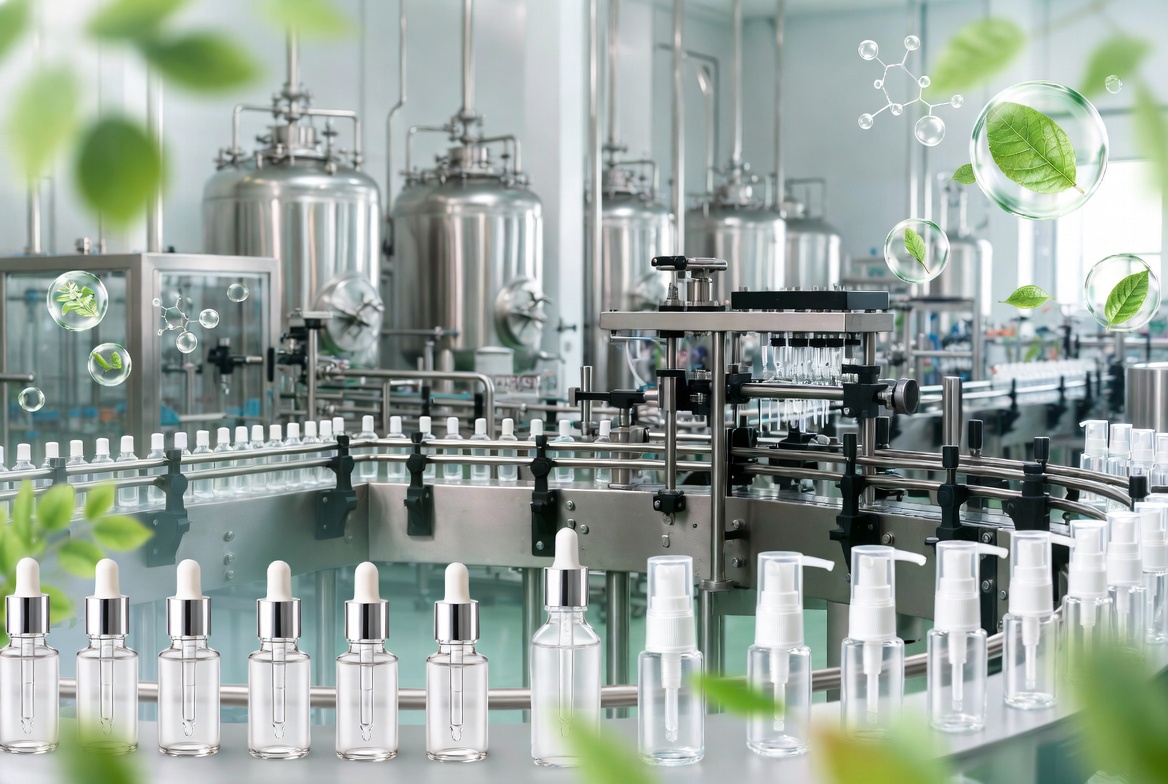
To illustrate how this plays out in practice, consider a brand planning an urban anti‑pollution range targeting oily and combination skin, where cleansing performance and foam quality require a higher pH base. A typical development roadmap with a specialized OEM/ODM partner would include:
1. Requirement discussion
- Define target markets, packaging constraints, key claims (anti‑pollution, anti‑oxidation, brightening), and preferred skin feel. [zhenyi-cos]
2. Solution design
- Propose a cleanser, spray essence, and leave‑on emulsion using fullerene C60 as the main ROS scavenger in high‑pH formats, complemented by plant antioxidants and stable vitamin C derivatives in leave‑on products. [zhenyi-cos]
3. Sample development and stability testing
- Conduct accelerated and real‑time stability studies focusing on color, odor, and active content under different temperature and light conditions, with special emphasis on the high‑pH SKUs. [zhenyi-cos]
4. Scale‑up and packaging optimization
- Adjust process parameters, filling conditions, and packaging (for example, light‑proof tubes or airless pumps) to protect all antioxidant components across the full distribution chain. [zhenyibio]
By following a structured process with a supplier already experienced in pH‑sensitive ingredients, liposome structures, and microencapsulation, brands can significantly reduce time‑to‑market while improving stability outcomes compared with vitamin C‑only formulas. [zhenyi-cos]
1. Can fullerene C60 completely replace vitamin C in brightening products?
Fullerene C60 is excellent for ROS scavenging and anti‑pollution positioning, but it does not replicate all of vitamin C's roles in collagen support and tone correction, so many high‑performance systems still combine both, with C60 as the stability anchor and vitamin C as a targeted brightening co‑active. [onlinelibrary.wiley]
2. Is fullerene C60 suitable for sensitive‑skin anti‑pollution lines?
Formulations using fullerene C60 within well‑designed delivery systems have shown favorable tolerance profiles in cosmetic applications, but final safety depends on the whole formula, so patch testing and clinical evaluation remain essential before large‑scale launch. [onlinelibrary.wiley]
3. How does pH affect vitamin C derivatives compared with L‑ascorbic acid?
Derivatives such as ascorbyl glucoside or magnesium ascorbyl phosphate are more stable than free L‑ascorbic acid, yet they still experience increased degradation and color shift when pH moves closer to neutral, particularly in oxygen‑rich or metal‑containing systems. [scielo.isciii]
4. Which formats benefit most from fullerene C60 in anti‑pollution concepts?
Surfactant‑rich cleansers, rinse‑off masks, and near‑neutral sprays benefit strongly because they are difficult environments for classical antioxidants, making fullerene C60's structural robustness an advantage for long‑term stability. [scirp]
5. What kind of partner should brands look for when developing fullerene‑based anti‑pollution products?
Brands should prioritize manufacturers with established expertise in cosmetic actives, pH‑sensitive ingredient handling, encapsulation or liposome technologies, and documented OEM/ODM capabilities for export markets, ensuring both technical performance and regulatory readiness. [zhenyibio]
1. Castano Amores, C., & Hernandez Benavides, P. J. *Antioxidant actives in the formulation of anti‑aging cosmetic products (Activos antioxidantes en la formulación de productos cosméticos antienvejecimiento).* Ars Pharm. 2018. Available at: [https://scielo.isciii.es/scielo.php?pid=S2340-98942018000200003&script=sci_abstract&tlng=en]
2. Antiaging effects of a skin care formulation containing nanoencapsulated antioxidants: A clinical, in vitro, and ex vivo study. Journal of Cosmetic Dermatology, 2023. Available at: [https://onlinelibrary.wiley.com/doi/10.1111/jocd.15976]
3. Antioxidant activity of cosmetic formulations based on plant‑derived actives. Scientific Research Publishing, 2014. Available at: [https://www.scirp.org/journal/paperinformation?paperid=46893]
4. ZHENYIBIO TECHNOLOGY INC – Company overview and product portfolio. Available at: [https://www.zhenyibio.com/]
5. Zhenyibio – Moisturizing, anti‑aging and functional cosmetic ingredients, OEM & ODM services. Available at: [https://www.zhenyi-cos.com/]
6. Zhenyibio – About us: whitening and lightening ingredient manufacturer, certifications and production capacity. Available at: [https://www.zhenyi-cos.com/about-us]
7. ZHENYIBIO – OEM & ODM customization services for cosmetic ingredients. Available at: [https://www.zhenyi-cos.com/oem-odm]
8. ZHENYIBIO – Cosmetic ingredient OEM partner news and technical insights. Available at: [https://www.zhenyibio.com/news/Cosmetic-Ingredient-OEM-Partner.html]


