


Views: 222 Author: ZHENYIBIO Publish Time: 2026-06-07 Origin: Site
Content Menu
● Understanding the Mature Skin Barrier
● Phytosterols: Restoring the Lipid Bilayer in Mature Skin
>> How Phytosterols Support the Lipid Bilayer
● Silk Fibroin: Structural Protein Support for Aging Barriers
>> How Silk Fibroin Benefits Mature Skin
● Phytosterols vs. Silk Fibroin: Key Differences for Mature Skin Barriers
>> Functional Comparison Table
● Expert Formulator View: When to Choose Each
>> When Phytosterols Are the Hero
● Synergy: Phytosterols + Silk Fibroin in One System
● Industry Trend Insight: Plant Lipids and Bio‑Proteins in Global Anti‑Aging
● Practical Formulation Scenarios for Brand Owners
>> 1. Mature Barrier Rescue Cream (Phytosterol‑Led)
>> 2. Silk Protein Resilience Serum (Silk Fibroin‑Led)
>> 3. Dual‑Phase Treatment: Phytosterol Cream + Silk Mask
● How ZHENYIBIO Supports OEM/ODM Clients
● Actionable Steps for Brand and Product Teams
● Frequently Asked Questions (FAQ)
Phytosterols and silk fibroin both support aging skin, but they work on different layers of the barrier: phytosterols help rebuild the lipid bilayer "mortar", while silk fibroin provides structural protein support and film‑forming protection that enhances resilience and elasticity in mature skin. [pubmed.ncbi.nlm.nih]
In this guide, I will compare phytosterols vs. silk fibroin specifically for mature skin barriers, from both a formulator's perspective and a brand/marketing perspective, and show where a manufacturer like ZHENYIBIO TECHNOLOGY INC can differentiate with plant‑based actives and bio‑fermentation solutions. [zhenyi-cos]
Mature skin (typically 40+) shows reduced lipids, slower cell turnover, and weaker protein structures in the stratum corneum and epidermis. This leads to: [traciemartyn]
- Chronic dryness and tightness
- Increased TEWL (transepidermal water loss)
- Fine lines, dullness, and rough texture
- Heightened sensitivity to acids, retinoids, and pollution
The skin barrier relies on two key "building systems":
- The lipid bilayer (ceramides, cholesterol, fatty acids, phytosterols) acting as waterproof mortar between corneocyte "bricks" [traciemartyn]
- The protein network (keratin, filaggrin, extracellular matrix proteins, and supportive biomaterials such as silk fibroin) that provides structure and elasticity [onlinelibrary.wiley]
A high‑performing anti‑aging formula needs to address both systems rather than focusing only on hydration or only on peptides.
Phytosterols are plant‑derived sterols structurally similar to cholesterol, found in oils such as soy, pumpkin, and other botanical extracts. In cosmetic science, they are used as: [traciemartyn]
- Barrier‑repair lipids
- Anti‑inflammatory agents
- Vegan alternatives to animal cholesterol [traciemartyn]
For mature skin, they are especially valued as cholesterol analogs in barrier‑repair blends.
Research shows that soy phytosterols accelerate barrier recovery after disruption compared to vehicle controls, indicating improved repair of the stratum corneum. In practice, this translates into: [pubmed.ncbi.nlm.nih]
- Replenishing barrier lipids: Phytosterols act as structural sidekicks to ceramides and fatty acids, supporting the 3:1:1 ceramide:cholesterol (or analog):fatty acid ratio commonly used in barrier‑repair systems. [traciemartyn]
- Reducing TEWL: By integrating into the lipid bilayer, phytosterols help reduce water loss and restore a more flexible, less fragile barrier. [pubmed.ncbi.nlm.nih]
- Soothing inflammation: Certain phytosterols (e.g., beta‑sitosterol) exhibit anti‑inflammatory activity, helping to calm redness and irritation common in mature, over‑treated skin. [traciemartyn]
From a formulation standpoint, phytosterols fit well into:
- Barrier creams for post‑procedure or retinoid users
- Rich night creams targeting dry, menopausal skin
- Vegan barrier serums that replace animal cholesterol with plant sterols
For a plant‑active manufacturer like ZHENYIBIO, phytosterols perfectly align with a "botanical lipid intelligence + fermentation" positioning. [chemicalbook]

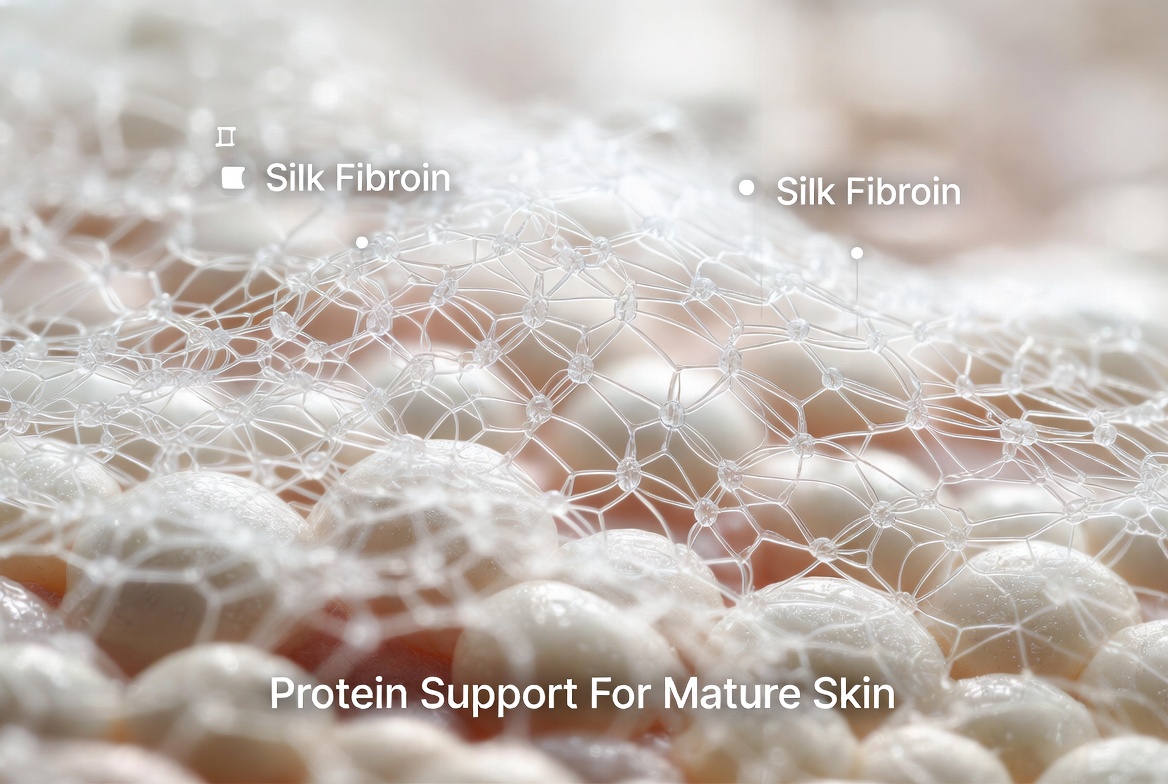
Silk fibroin is the main structural protein in silkworm cocoons, accounting for around 70% of cocoon weight. It is known for: [onlinelibrary.wiley]
- High mechanical strength and toughness
- Biocompatibility, low immunogenicity, and biodegradability
- Ability to form films, fibers, gels, and 3D structures for biomedical and cosmetic applications [ouci.dntb.gov]
Unlike lipids, silk fibroin behaves more like a scaffold or supporting mesh for the skin surface.
In wound healing and skin regeneration research, silk fibroin has been shown to:
- Support cell proliferation and migration, aiding tissue regeneration and repair [onlinelibrary.wiley]
- Provide mechanical stability and a breathable protective layer on the skin [ouci.dntb.gov]
Cosmetically, silk‑derived proteins (fibroin and sericin) show:
- Moisture retention and film‑forming effects that improve softness and smoothness [updatepublishing]
- Antioxidant and anti‑tyrosinase properties that support brightening and protection from oxidative stress [sciencedirect]
- UV‑resistance and defensive properties that can complement sunscreen and antipollution formulas [updatepublishing]
For mature skin, this means silk fibroin can act as:
- A flexible, protein‑rich film that improves texture and reduces roughness
- A supportive scaffold enhancing resilience, especially in thin, photo‑aged skin
- A delivery matrix for other actives due to its biocompatibility and tunable structure [ouci.dntb.gov]
| Dimension | Phytosterols – Lipid Bilayer Focus | Silk Fibroin – Structural Protein Support |
|---|---|---|
| Primary role | Rebuild and stabilize the lipid bilayer | Provide structural, film‑forming protein support |
| Skin target | Intercellular lipids in stratum corneum | Surface and upper epidermis, protein network support |
| Key benefits | Barrier repair, TEWL reduction, anti‑inflammatory effects (pubmed.ncbi.nlm.nih) | Mechanical support, smoothing, regenerative and wound‑healing support (updatepublishing) |
| Best for | Dry, barrier‑impaired, sensitive mature skin | Thin, lax, rough, photo‑damaged skin needing resilience |
| Vegan alignment | Strong (plant‑based cholesterol alternative) (traciemartyn) | Animal‑derived (silkworm); may not fit strict vegan claims (onlinelibrary.wiley) |
| Typical formats | Barrier creams, balms, lipid serums | Serums, masks, bio‑cellulose–like patches, repair essences (updatepublishing) |
Both ingredients are complementary rather than competitors: phytosterols rebuild the "oil phase defense", while silk fibroin strengthens the "protein mesh and surface architecture".
As a formulator looking at mature barrier dysfunction, you prioritize phytosterols when:
1. Primary symptom is dryness and tightness.
The client reports a tight, uncomfortable feel, visible flaking, or post‑acid sensitivity, indicating lipid depletion. [traciemartyn]
2. You need a vegan cholesterol alternative.
For brands committed to vegan or plant‑based positioning, phytosterols deliver cholesterol‑like structural benefits without animal sources. [traciemartyn]
3. You are designing post‑treatment or retinoid support.
Phytosterols pair well with ceramides, squalane, and fatty acids to rebuild the barrier after peeling, lasers, or retinoid irritation. [pubmed.ncbi.nlm.nih]
In these scenarios, a manufacturer like ZHENYIBIO can offer custom phytosterol‑rich complexes combined with fermented humectants or peptides to build differentiated barrier serums and creams. [zhenyi-cos]
You make silk fibroin the central story when:
1. Texture, smoothness, and resilience are primary claims.
Silk fibroin's film‑forming and structural properties are ideal for instant skin feel upgrades and long‑term support. [updatepublishing]
2. You want a "bio‑inspired repair mesh" narrative.
Silk fibroin's background in tissue engineering and wound healing supports a premium "bio‑engineered protein scaffold" story. [onlinelibrary.wiley]
3. You need a delivery/support matrix for multiple actives.
Its tunable structures make it a good carrier for antioxidants, brighteners, and peptides in advanced anti‑aging formats. [ouci.dntb.gov]
Here, an OEM/ODM partner like ZHENYIBIO can position silk fibroin within high‑tech anti‑aging masks, essence pads, or bio‑fermented protein serums tailored to high‑end markets. [chemicalbook]
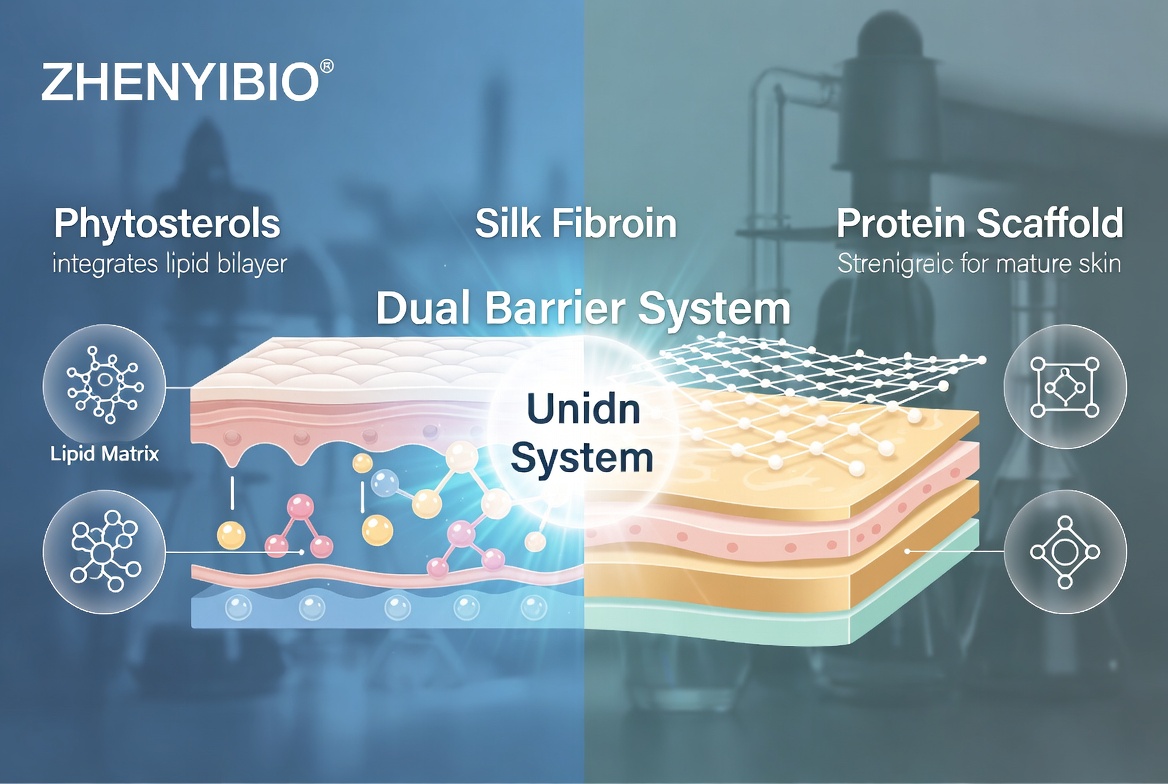
For mature skin, the most compelling direction is not either/or, but both.
A combined system can:
- Use phytosterols to rebuild the lipid matrix, reducing TEWL and sensitivity [pubmed.ncbi.nlm.nih]
- Use silk fibroin to reinforce surface structure, improving elasticity, tactile smoothness, and support for cell renewal [updatepublishing]
From a brand storytelling perspective, this enables claims like:
- "Lipid‑Protein Dual Barrier System for Mature Skin"
- "Phytosterol Lipid Matrix + Silk Protein Scaffold Technology"
A high‑tech plant‑active manufacturer can engineer layered delivery:
- Inner barrier: phytosterol‑rich emulsions for daily use
- Outer scaffold: silk fibroin film‑forming serums, masks, or overnight treatments
This dual approach fits perfectly with ZHENYIBIO's positioning in natural plant actives, modern bio‑fermentation, and global OEM/ODM solutions. [zhenyi-cos]
Recent industry analysis shows a strong move toward plant‑based barrier ingredients (phytosterols, plant oils, and bio‑fermented humectants) and biomaterial‑inspired proteins in skin regeneration. Several trends stand out: [news]
- Barrier‑first anti‑aging: Instead of aggressive actives alone, brands emphasize ceramides, cholesterol/phytosterols, and humectants as a foundation. [traciemartyn]
- Biomaterial language in marketing: Terms like *"protein scaffold," "bio‑engineered silk,"* and *"regenerative matrix"* are increasingly used in premium product lines adopting silk fibroin and related materials. [onlinelibrary.wiley]
- China‑origin plant ingredients: Chinese cosmetic raw material manufacturers are investing heavily in local plant actives and new cosmetic ingredients, reinforcing a "China ingredients" innovation story. [news]
Companies such as ZHENYIBIO, with a background in plant extracts, peptides, and liposome systems, are well placed to combine phytosterols, silk fibroin, and fermentation‑derived actives into integrated anti‑aging barrier platforms for export markets. [chemicalbook]
Core concept: "Lipid Bilayer Recovery for Over‑Treated Skin"
Key design ideas:
- Actives:
- Phytosterols (plant‑derived cholesterol analog)
- Ceramides + fatty acids in a 3:1:1‑inspired ratio [traciemartyn]
- Fermented humectants (e.g., hyaluronic acid, polyglutamic acid) from a high‑tech plant‑active supplier [chemicalbook]
- Claims:
- Reduces tightness and dryness in 1–2 weeks
- Helps restore barrier lipids after acids/retinoids
This fits OEM/ODM clients needing a dermatologist‑style barrier cream with vegan positioning.
Core concept: "Structural Protein Support for Fine Lines"
Key design ideas:
- Actives:
- Silk fibroin as film‑former and support scaffold [onlinelibrary.wiley]
- Antioxidants and brighteners leveraging silk's compatibility and anti‑tyrosinase potential [sciencedirect]
- Claims:
- Promotes smoother, more resilient skin texture
- Enhances skin's recovery response after daily stress
Ideal for premium, sensorially refined serums in Asian and Western markets.
Core concept: "Lipid–Protein Dual Defense Ritual"
- Step 1: Phytosterol barrier cream daily for lipid replenishment
- Step 2: Silk fibroin mask or overnight treatment 1–3 times per week for regenerative support
An OEM/ODM partner can package this as a regimen box, appealing to professional spa, clinic, or DTC anti‑aging brands. [zhenyi-cos]
As a high‑tech manufacturer of natural plant active cosmetic raw materials, ZHENYIBIO offers:
- Full‑chain solutions from plant raw material sourcing to R&D, GMP manufacturing, and global export. [chemicalbook]
- Support for active ingredients including lipids, hyaluronic acid, peptides, and advanced delivery systems such as liposomes and microencapsulation that can enhance both phytosterols and silk fibroin performance. [zhenyi-cos]
- Flexible OEM/ODM services for brands, factories, and distributors: formulation design, dosage form customization (serums, creams, masks, lyophilized powders), and packaging adaptation. [zhenyi-cos]
For brands building a next‑generation mature skin barrier line, ZHENYIBIO can co‑develop:
- Phytosterol‑centered vegan barrier repair systems
- Silk fibroin‑enriched protein scaffold treatments
- Hybrid lipid–protein concepts tailored to regional regulatory and market needs
1. Define your barrier story.
Decide whether you lead with a "lipid bilayer recovery," "protein scaffold repair," or dual lipid–protein narrative for mature skin.
2. Select hero ingredients accordingly.
- Phytosterols for vegan, barrier‑impaired, post‑procedure or retinoid‑sensitive users
- Silk fibroin for texture, resilience, and regenerative support claims
3. Design a portfolio, not just a single SKU.
Combine daily lipid care (creams/lotions) with weekly protein treatments (masks/serums) to create an ecosystem.
4. Partner with a specialized OEM/ODM manufacturer.
Work with ZHENYIBIO to integrate plant actives, fermentation‑derived actives, and modern delivery technologies into a cohesive anti‑aging barrier platform. [chemicalbook]
If you are planning your next anti‑aging launch, you can brief ZHENYIBIO with your target market, claims, and texture, and co‑create a phytosterol vs. silk fibroin strategy aligned with your brand DNA. [zhenyi-cos]
1. Which is better for very dry, tight mature skin: phytosterols or silk fibroin?
For severely dry, tight, and sensitive mature skin, phytosterols are generally more critical because they directly support lipid bilayer restoration and TEWL reduction. Silk fibroin can be layered on top later for structural and sensorial benefits. [updatepublishing]
2. Can phytosterols and silk fibroin be used in the same formula?
Yes, they can be combined to create a lipid–protein barrier system, where phytosterols rebuild intercellular lipids and silk fibroin adds a supportive, film‑forming protein layer. [updatepublishing]
3. Are phytosterols suitable for acne‑prone mature skin?
In balanced formulations, phytosterols can support barrier repair without being inherently comedogenic, especially when paired with lightweight carrier oils and humectants. For acne‑prone mature skin, formulations should still be non‑occlusive and carefully tested. [traciemartyn]
4. Is silk fibroin compatible with sensitive or reactive skin?
Silk fibroin is generally considered biocompatible and low in immunogenicity, with use in wound healing contexts suggesting good tolerance. However, as with all proteins, patch testing is recommended for very reactive skin types. [onlinelibrary.wiley]
5. How can an international brand source phytosterol and silk fibroin solutions for OEM/ODM?
Brands can collaborate with specialized manufacturers like ZHENYIBIO TECHNOLOGY INC, which provide active ingredient sourcing, formulation development, dosage form design, and global export support for barrier‑focused and anti‑aging product lines. [chemicalbook]
1. Alessandrini, F. et al. "In vivo spectrophotometric evaluation of skin barrier recovery after acute barrier damage." *Skin Research and Technology* (2008). [https://pubmed.ncbi.nlm.nih.gov/18528589/] [pubmed.ncbi.nlm.nih]
2. Kato, N. et al. "Potential of silk proteins in cosmetics." *Journal of Scientific Agriculture* (2024). [https://updatepublishing.com/journal/index.php/jsa/article/view/9070] [updatepublishing]
3. ZHENYIBIO TECHNOLOGY INC – OEM & ODM Services. [https://www.zhenyi-cos.com/oem-odm] [zhenyi-cos]
4. ZhenYiBio Technology Inc Company Profile. [https://www.chemicalbook.com/ShowSupplierProductsList1758179/0_EN.htm] [chemicalbook]
5. Tracie Martyn. "11 Essential Skin Barrier Repair Ingredients for Radiance." (2025). [https://www.traciemartyn.com/blogs/news/skin-barrier-repair-ingredients] [traciemartyn]
6. Nisticò, R. et al. "Chromatographic profiling of silk sericin for biomedical and cosmetic applications." *Journal of Chromatography* (2019). [https://www.sciencedirect.com/science/article/abs/pii/S0731708519329590] [sciencedirect]
7. Aramwit, P. et al. "Silk Fibroin: A Promising Tool for Wound Healing and Skin Regeneration." *Journal of Tissue Engineering* (2021). [https://onlinelibrary.wiley.com/doi/10.1155/2021/9069924] [onlinelibrary.wiley]
8. Industry overview of silk fibroin interactions in formulations. [https://ouci.dntb.gov.ua/en/works/lmxYgDj4/] [ouci.dntb.gov]
9. 新华网. "化妆品植物原料花式上新 '中国成分'突围战升级." (2024). [http://www.news.cn/fashion/20240802/2e455b2ad85e45b09bf7883916aa72e9/c.html] [news]


