


Views: 222 Author: ZHENYIBIO Publish Time: 2026-06-09 Origin: Site
Content Menu
● Understanding Malassezia-Induced Scalp Issues
>> Mechanism of Action and Evidence
>> Functional Benefits in Scalp Care
● Natural vs. Synthetic – A Scientist's Perspective
● In-Depth Comparison – Piroctone Olamine vs. Tea Saponin
● Efficacy for Malassezia-Induced Dandruff – What Does the Data Say?
>> Evidence for Piroctone Olamine
>> Evidence for Tea-Based Natural Actives
● Safety, Tolerability, and Long-Term Use
● Formulation Strategies – How R&D Teams Actually Use These Actives
>> Typical Formulation Approaches
● ZHENYIBIO's Perspective – Bridging Traditional Plant Wisdom and Modern Biotech
● Practical Decision Framework – Which Active Should Your Brand Choose?
>> Key Questions for Brand Owners and Product Managers
● Step-by-Step – Designing a Scalp-Care Line with ZHENYIBIO
● Call to Action – Partner with ZHENYIBIO for Next-Generation Scalp Solutions
● FAQs – Piroctone Olamine vs. Tea Saponin for Malassezia-Induced Scalp Issues
Piroctone Olamine and tea saponin both target Malassezia-related scalp issues, but they sit on opposite ends of the natural–synthetic spectrum in terms of origin, mechanism, and formulation strategy. For brands positioning themselves as science-backed yet plant-forward, combining these two approaches strategically can unlock high-performance, low-irritation scalp solutions. [pubmed.ncbi.nlm.nih]
From an experienced perspective, "Piroctone Olamine vs. Tea Saponin" is more than a technical comparison; it represents a strategic decision between synthetic and natural routes to control Malassezia-triggered dandruff, itch, and flaking. For global OEM/ODM partners, this choice will shape your product claims, regulatory pathway, and long-term brand positioning in the scalp-care segment. [fondhaircare]
Malassezia is a lipid-dependent yeast that lives naturally on human scalp skin, but overgrowth can trigger dandruff, seborrheic dermatitis, and related itch and inflammation. When the scalp microbiome loses balance, Malassezia metabolizes sebum lipids and releases byproducts that irritate the skin barrier, leading to visible flakes and discomfort. [ijnrd]
Key clinical features often linked to Malassezia:
- Oily yet flaky scalp
- Persistent white or yellowish scales
- Itching and burning sensations
- Seasonal worsening (often in winter)
Anti-dandruff actives like piroctone olamine and plant-derived surfactants such as tea saponin approach this problem from different angles: one directly targets fungal proliferation, the other supports cleansing and barrier-friendly formulas that help rebalance the ecosystem. [pubmed.ncbi.nlm.nih]
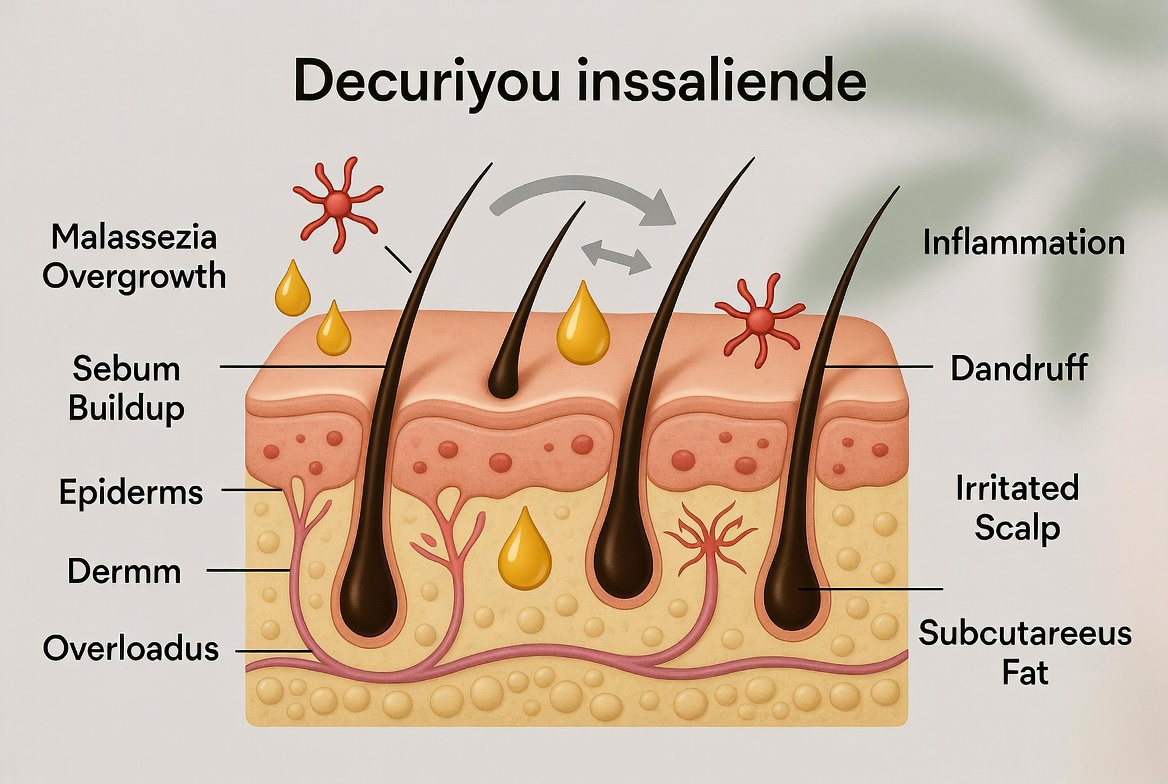
Piroctone olamine (also known as octopirox) is a synthetic antifungal active widely used in anti-dandruff shampoos and scalp treatments. It acts by disrupting the energy metabolism of Malassezia species, reducing yeast proliferation and improving clinical signs of dandruff. [ijnrd]
- Antifungal activity: Piroctone olamine interferes with fungal cellular respiration and membrane function, leading to reduced Malassezia viability. [ijnrd]
- Clinical efficacy: Studies show that shampoos containing piroctone olamine, alone or combined with other actives, significantly reduce dandruff severity and scaling. [semanticscholar]
- Comparative performance: In head-to-head trials, piroctone olamine combinations (e.g., with salicylic acid or climbazole) performed comparably to or better than zinc pyrithione at clinically relevant concentrations. [semanticscholar]
One study reported that a non-coal tar shampoo containing 0.75% piroctone olamine and 2% salicylic acid achieved a greater reduction in dandruff than a coal tar reference, highlighting its modern safety and cosmetic appeal. Another review notes that a piroctone olamine–climbazole combination at around 1% total active can match the efficacy of 1% zinc pyrithione. [ijnrd]
Tea saponin refers to natural saponins extracted from tea seeds or tea-related plant materials, functioning as mild surfactants and bioactive compounds. As surface-active glycosides, they help solubilize sebum and impurities while offering potential anti-inflammatory and microbiome-friendly benefits. [getthatched]
- Natural cleansing: Tea saponin can replace or partially replace harsher synthetic surfactants, supporting "sulfate-free" or "plant-based" positioning while maintaining foam and cleansing performance. [fondhaircare]
- Scalp comfort: Plant saponins are often perceived as gentler on the skin barrier, making them attractive for sensitive scalp or long-term use concepts. [getthatched]
- Synergy with botanicals: Tea saponin sits well in formulas that include tea tree, rosemary, or green tea extracts, building a coherent natural anti-dandruff narrative for consumers. [fondhaircare]
Unlike piroctone olamine, tea saponin is not a classic antifungal drug-like active; its anti-Malassezia impact is mostly indirect, via improved cleansing, lipid control, and support for other plant antimicrobials in the formula. [ijnrd]
From an industry scientist and formulator's standpoint, the choice between natural and synthetic is rarely binary; performance, regulatory constraints, and brand story all matter. Synthetic actives like piroctone olamine deliver highly predictable antifungal outcomes, while natural ingredients like tea saponin enhance sensory profile, marketing value, and perceived gentleness. [webmd]
Key technical trade-offs:
- Synthetic antifungals
- Pros: Strong, targeted antifungal effect; robust clinical data; established usage levels. [pubmed.ncbi.nlm.nih]
- Cons: Regulatory scrutiny, "chemical" perception, potential incompatibility with ultra-clean label concepts. [webmd]
- Natural cleansing actives
- Pros: Plant-based origin, milder image, compatibility with sulfate-free and eco-conscious claims. [getthatched]
- Cons: Indirect anti-Malassezia activity, more variability in raw material quality, and less standardized clinical data. [fondhaircare]
For brands targeting dermatologist-trusted performance, a piroctone-olamine-centered formula often wins. For brands leading with botanical, minimalist, or "skinimalist" claims, tea saponin and other plant actives become the core narrative, sometimes supported by low-level synthetics or alternative approaches. [webmd]
| Dimension | Piroctone Olamine | Tea Saponin |
|---|---|---|
| Origin | Fully synthetic antifungal active (ijnrd) | Natural plant saponin from tea-related sources (fondhaircare) |
| Primary function | Direct anti-Malassezia antifungal control (pubmed.ncbi.nlm.nih) | Mild surfactant, cleansing and sebum control, supports scalp comfort (fondhaircare) |
| Mode of action | Disrupts fungal energy metabolism and membrane integrity (ijnrd) | Reduces surface lipids and buildup, supports other actives; indirect microbiome support (fondhaircare) |
| Evidence base | Multiple clinical studies and reviews on dandruff reduction (pubmed.ncbi.nlm.nih) | Limited direct Malassezia data; supported by broader plant-based scalp-care research (fondhaircare) |
| Typical usage level | Around 0.3–0.75% in shampoos, often with co-actives (pubmed.ncbi.nlm.nih) | Varies with extract strength; used as part of total surfactant system (fondhaircare) |
| Claim positioning | "Clinically proven anti-dandruff", "antifungal efficacy" (pubmed.ncbi.nlm.nih) | "Plant-based surfactant", "natural scalp cleansing", "sulfate-free" (fondhaircare) |
| Sensory & foam | Depends on surfactant system; active itself not a foamer (pubmed.ncbi.nlm.nih) | Naturally foaming, supports creamy or light foam textures (fondhaircare) |
| Regulatory perception | Well-established cosmetic active with defined safety margins (ijnrd) | Generally aligns with clean-label / natural trends; still subject to cosmetic safety review (fondhaircare) |
| Ideal for | Medicated, dermocosmetic, or high-performance anti-dandruff lines (pubmed.ncbi.nlm.nih) | Natural, green, or eco-conscious scalp and hair-care portfolios (fondhaircare) |

As a content strategist working with formulators, I always look first at hard data when comparing actives for Malassezia-driven conditions. [pubmed.ncbi.nlm.nih]
- Controlled studies show that shampoos containing piroctone olamine significantly reduce dandruff scores and scalp scaling compared with baselines. [semanticscholar]
- In comparisons against zinc pyrithione and coal tar, piroctone olamine formulations (often with salicylic acid) achieved comparable or superior dandruff reduction, with a more modern cosmetic profile. [pubmed.ncbi.nlm.nih]
- Reviews summarize that synthetic antifungals, including piroctone olamine, typically reach lower MIC (minimum inhibitory concentration) values against Malassezia than many herbal alternatives, indicating higher intrinsic potency. [ijnrd]
The literature more often discusses tea tree oil, rosemary, and other herbs rather than tea saponin itself, but they share a broader "natural anti-dandruff" context. [getthatched]
- Studies note that herbal ingredients like tea tree oil, neem, and other botanicals have anti-Malassezia activity but tend to require higher MICs than synthetic actives. [ijnrd]
- Natural shampoos with tea-derived ingredients show good in vitro anti-pityrosporum activity, but are typically not superior to synthetic-based formulas in direct MIC or zone-of-inhibition comparisons. [ijnrd]
- Consumer and expert content emphasizes that natural blends can improve scalp comfort and reduce long-term irritation, which indirectly benefits chronic dandruff sufferers. [webmd]
For OEM/ODM decisions, this translates to a clear message: if you need strong, measurable Malassezia suppression, piroctone olamine is the anchor active. Tea saponin plays more of a supporting structural and marketing role in the formula rather than acting as a stand-alone antifungal hero. [fondhaircare]
From a UX and compliance angle, safety is as critical as efficacy.
- Piroctone Olamine
- Well-studied with an established safety profile in rinse-off products at typical concentrations. [pubmed.ncbi.nlm.nih]
- Generally well tolerated, though as with most actives, overconcentration or leave-on misuse can increase irritation risk, especially on compromised scalp barriers. [ijnrd]
- Tea Saponin and Plant Surfactants
- Naturally derived, often perceived as gentler, and favored for long-term routine use in sensitive or dry scalp consumers. [getthatched]
- Still require safety and irritation testing, as some plant saponins can be too stripping at high levels; balance with conditioning agents is essential for pleasant UX. [webmd]
A hybrid approach—synthetic antifungal plus natural surfactant and soothing plant extracts—can deliver clinical performance with cosmetic elegance, which is where advanced manufacturers like ZHENYIBIO tend to focus. [zhenyi-cos]
From an industry practitioner's point of view, the question is not only "which is better" but "how do we integrate each active into scalable, regulatory-compliant, marketable formulas." [chemicalbook]
1. Clinical anti-dandruff shampoo (synthetic-forward)
- Core actives: Piroctone olamine ± climbazole or salicylic acid. [semanticscholar]
- Surfactant system: Mild synthetics plus co-surfactants for high foam and good cleansing.
- Claims: "Clinically proven anti-dandruff," "controls Malassezia," "reduces flakes and itch."
2. Natural scalp-balancing shampoo (botanical-forward)
- Core actives: Tea saponin as a primary surfactant, plus tea tree oil, rosemary, or green tea extracts. [fondhaircare]
- Claims: "Sulfate-free," "plant-based surfactants," "scalp microbiome-friendly."
3. Hybrid dermo-botanical concept (balanced strategy)
- Core actives: Piroctone olamine at a moderate level, supported by tea saponin, plant oils, and humectants. [zhenyibio]
- Claims: "Dermatologist-inspired formula with natural support," "science-backed + botanical care."
ZHENYIBIO, with its focus on natural plant actives and modern cosmetic raw materials, is structurally well-positioned to develop such hybrid concepts—from raw material to finished OEM/ODM product. [zhenyi-cos]
ZHENYIBIO TECHNOLOGY INC is a high-tech enterprise dedicated to natural plant active cosmetic raw materials, with more than a decade of experience in R&D and GMP-standard manufacturing. The company integrates a professional raw-material planting base with an advanced factory to deliver consistent, scalable cosmetic ingredients and finished product solutions. [chemicalbook]
As an OEM/ODM partner, ZHENYIBIO offers:
- Active raw materials: Including glutathione, hyaluronic acid, peptides, asiaticoside, liposomes and other cosmetic-grade actives suitable for advanced scalp formulations. [zhenyi-cos]
- Flexible customization: From raw material selection and dosage-form development to packaging adaptation for international brands, factories, and distributors. [zhenyi-cos]
- Global-ready quality: Cosmetic and ultra-pure grades, backed by robust quality systems and experience in export markets. [zhenyibio]
In practice, this means ZHENYIBIO can help partners design piroctone-olamine-centered dermocosmetic lines, tea-saponin-based natural concepts, or hybrid solutions that align with specific regional regulatory and marketing requirements. [chemicalbook]
Ask these questions before deciding on Piroctone Olamine vs. Tea Saponin as your primary talking point:
1. What is your primary brand promise?
- Clinical performance, dermatologist approval, and fast results → Piroctone Olamine-led formula.
- Natural, eco-conscious, or minimalist story → Tea saponin-focused or hybrid strategy.
2. Which markets are you targeting?
- Markets with strong demand for pharmacy-style anti-dandruff products tend to favor synthetic antifungals with clinical data. [pubmed.ncbi.nlm.nih]
- Markets with high interest in organic and "green beauty" may respond better to plant-based systems. [getthatched]
3. What format do you need?
- Rinse-off scalp cleansers: Piroctone olamine plus a carefully constructed surfactant system works very well. [pubmed.ncbi.nlm.nih]
- Mild daily shampoo or co-wash: Tea saponin and other plant surfactants help sustain long-term use and comfort. [fondhaircare]
4. How important are label and marketing claims?
- "Anti-dandruff shampoo with piroctone olamine" resonates with consumers seeking fast, visible results.
- "Sulfate-free, plant-based scalp care with tea saponin" appeals to ingredient-conscious buyers. [getthatched]
From a content strategist and UX viewpoint, breaking down the OEM/ODM journey into clear steps helps B2B readers visualize collaboration.
1. Define the product vision
- Clarify whether your hero story is clinical anti-dandruff, natural scalp wellness, or a hybrid narrative.
- Set target regions, price position, and desired label claims.
2. Select your hero actives
- Choose piroctone olamine for primary antifungal performance and add co-actives (e.g., salicylic acid, soothing botanicals) as needed. [pubmed.ncbi.nlm.nih]
- Or choose tea saponin as your main surfactant and support it with tea tree, rosemary, or green tea extracts to reinforce natural positioning. [fondhaircare]
3. Co-create the formulation blueprint with ZHENYIBIO
- Engage ZHENYIBIO's R&D team to optimize concentration, surfactant blends, and conditioning system based on your market needs. [zhenyibio]
- Align on stability, micro, and performance testing plans.
4. Prototype, test, and refine
- Run organoleptic, safety, and efficacy evaluations, including consumer or clinical testing where needed.
- Iterate on foam, fragrance, and after-feel to ensure an excellent user experience that supports repeat purchase.
5. Scale-up and launch
- Move to GMP production, packaging adaptation, and regulatory documentation, leveraging ZHENYIBIO's experience with export markets. [chemicalbook]
- Support launch with educational content explaining why you chose piroctone olamine, tea saponin, or their combination.
If your brand is evaluating Piroctone Olamine vs. Tea Saponin for Malassezia-related scalp issues, you do not need to choose in isolation. ZHENYIBIO's integrated R&D and OEM/ODM capabilities allow you to co-create scalp-care products that balance clinical efficacy, plant-based positioning, and regulatory readiness. [zhenyibio]
Whether you are building a dermatologist-endorsed anti-dandruff range, a natural scalp-care line, or a hybrid portfolio, ZHENYIBIO can support you from active material sourcing to finished formula scale-up. Reach out to explore customized solutions that match your brand's identity and your market's evolving expectations. [zhenyi-cos]
Q1: Is piroctone olamine safe for long-term use in anti-dandruff shampoos?
A1: At typical cosmetic usage levels, piroctone olamine has a well-established safety profile in rinse-off formulations and is widely used in commercial anti-dandruff products. [pubmed.ncbi.nlm.nih]
Q2: Can tea saponin alone fully replace synthetic antifungals for severe dandruff?
A2: Tea saponin can support scalp health and cleansing, but current data suggests that synthetic antifungals like piroctone olamine remain more potent against Malassezia in severe cases, so a hybrid approach is often recommended for performance-focused products. [fondhaircare]
Q3: Are natural anti-dandruff formulas always gentler than synthetic ones?
A3: Not necessarily; some natural actives can be irritating at high levels, while well-formulated synthetic systems can be very mild, so overall formulation design and testing matter more than origin alone. [webmd]
Q4: How can a brand communicate both science and naturalness in one scalp-care line?
A4: Many brands highlight a clinically studied synthetic active such as piroctone olamine, then emphasize natural surfactants, oils, and extracts that support scalp comfort and sustainability, creating a balanced narrative. [getthatched]
Q5: Why collaborate with an OEM/ODM partner like ZHENYIBIO for anti-dandruff projects?
A5: ZHENYIBIO combines expertise in natural plant actives, modern cosmetic raw materials, and GMP manufacturing, making it easier to design, test, and scale scalp-care products tailored to your target markets and claims. [chemicalbook]
1. "The antidandruff efficacy of a shampoo containing piroctone olamine and salicylic acid." *PubMed* – clinical evaluation of piroctone olamine-based shampoo. [https://pubmed.ncbi.nlm.nih.gov/18503415/] [pubmed.ncbi.nlm.nih]
2. "REVIEW ON EFFICACY AND SAFETY OF NATURAL AND SYNTHETIC ANTI-DANDRUFF AGENTS." *IJNRD* – overview of synthetic vs herbal anti-dandruff actives and MIC/ZOI data. [https://www.ijnrd.org/papers/IJNRD2206017.pdf] [ijnrd]
3. Rastegar et al. "A Comparison of Clinical Efficacy between a Basic Shampoo and Shampoos Containing Climbazole and Piroctone Olamine." *International Journal of…* – comparative clinical performance data. [semanticscholar]
4. "Organic, Plant-Based vs. Synthetic Ingredients: Why Going Natural Is Better for Your Hair and Scalp." – discussion of plant-based hair and scalp ingredients and their benefits. [https://fondhaircare.com/organic-plant-based-vs-synthetic-ingredients-why-going-natural-is-better-for-your-hair-and-scalp/] [fondhaircare]
5. "The Science of Hair Growth: Natural Ingredients vs. Synthetic Solution." – explanation of how natural and synthetic ingredients work in hair and scalp care. [https://getthatched.com/blogs/hair-growth/the-science-of-hair-growth-natural-ingredients-vs-synthetic-solutions] [getthatched]
6. "Ingredients to Help Natural Hair Thrive." *WebMD* – dermatology-informed overview of natural and synthetic hair-care ingredients. [https://www.webmd.com/beauty/features/ingredients-for-natural-hair] [webmd]
7. "Zhenyibio Technology Inc Product Catalog." – company profile and focus on cosmetic raw materials and plant actives. [https://www.chemicalbook.com/ShowSupplierProductsList1758179/0_EN.htm] [chemicalbook]
8. "OEM ODM – Zhenyibio." – description of ZHENYIBIO's OEM/ODM services and active ingredient offerings. [https://www.zhenyi-cos.com/oem-odm] [zhenyi-cos]
9. "Piroctone Olamine Supplier & Manufacturer – Zhenyi Cosmetics." – overview of Zhenyi's piroctone olamine supply capabilities. [https://www.zhenyibio.com/ko/piroctone-olamine.html] [zhenyibio]


