


Views: 222 Author: ZHENYIBIO Publish Time: 2026-06-06 Origin: Site
Content Menu
● Yeast Beta-Glucan vs. Silk Peptide: Why This Comparison Matters
● Mechanisms of Immunomodulation and Barrier Repair
>> Yeast Beta-Glucan Mechanism
● Head-to-Head: Which Is Faster for Chemically Compromised Skin?
>> Evidence Favouring Yeast Beta-Glucan for Speed
>> Evidence Positioning Silk Peptide
● Practical Formulation Considerations for OEM/ODM Projects
>> When to Prioritize Yeast Beta-Glucan
>> When to Prioritize Silk Peptide
● From the Lab Bench: Expert Perspective on Recovery Speed
● Case Snapshot: Post-Chemical Peel Recovery Concept
● Technical Comparison Table: Yeast Beta-Glucan vs. Silk Peptide
● Implementation Guide for Brands and Formulators
● When Yeast Beta-Glucan and Silk Peptide Work Best Together
● FAQs
Yeast beta-glucan and silk peptide are both powerful immunomodulators for chemically compromised skin, but they support recovery through different pathways and timelines. Based on current evidence, yeast beta-glucan tends to deliver faster barrier relief and wound-healing signals, while silk peptide excels in longer-term barrier rebuilding, texture refinement and sensory elegance in finished formulas. [thaiscience]
When skin is chemically compromised by peels, high-dose retinoids, surfactant overuse or salon treatments, formulators need fast-acting, low-irritation immunomodulators that calm inflammation without slowing regeneration. Yeast beta-glucan and silk peptide have both moved from "nice-to-have" actives to strategic barrier-repair tools in professional and OTC dermocosmetics. [pubmed.ncbi.nlm.nih]
For a high-tech manufacturer like ZHENYIBIO TECHNOLOGY INC, which combines traditional botanical wisdom with modern biofermentation, this comparison is not academic; it directly shapes OEM/ODM recovery lines, post-procedure kits and sensitive-skin ranges for global brand owners and private-label partners. [made-in-china]

Yeast beta-glucan is a high-molecular-weight polysaccharide derived from the cell walls of baker's yeast and other microorganisms, typically featuring β-(1,3) and β-(1,6) linkages. It is classified as a biological response modifier, meaning it can modulate innate immune responses and enhance skin's resilience against stressors. [onlinelibrary.wiley]
Key skin-relevant properties:
- Immunomodulatory: Activates Langerhans cells and keratinocytes, supporting more efficient wound healing and defense. [onlinelibrary.wiley]
- Barrier-supportive: Improves transepidermal water loss (TEWL) recovery and enhances stratum corneum renewal. [alibaba]
- Antioxidant & anti-inflammatory: Protects against UV-induced oxidative stress and detergent damage. [thaiscience]
- Film-forming moisturizer: Creates a flexible, humectant film that boosts skin hydration and comfort. [onlinelibrary.wiley]
A review of cereal- and microbe-derived beta-glucans highlights antioxidant, anti-wrinkle, anti-UV, wound-healing and moisturizing benefits, all of which are critical for compromised skin care concepts. [onlinelibrary.wiley]
Silk peptide (often hydrolyzed silk or bioactive silk fragments) is a low– to mid–molecular weight peptide fraction derived from silk fibroin, designed for strong affinity to keratin and high sensory appeal. Newer "activated silk" peptide technologies show bioactive behavior beyond conditioning, influencing barrier proteins and inflammation. [linkedin]
Key skin-relevant properties:
- Barrier protein upregulation: Certain silk-derived peptides can boost claudin-1, a tight-junction protein that improves barrier integrity and reduces TEWL. [linkedin]
- Anti-inflammatory & antioxidant: Clinical marketing data for bioactive silk peptides cites soothing and barrier-repair benefits, along with antioxidant support. [linkedin]
- Texturizing and sensorial: Provides a smooth, silky film that improves spreadability, slip and perceived luxury in finished formulations.
- Support for elasticity and glow: Peptide signaling can help maintain collagen synthesis and visible radiance over time. [linkedin]
While the peer-reviewed data set for silk peptides is smaller than for beta-glucan, emerging clinical communication around barrier repair and claudin-1 upregulation is driving strong interest in high-end barrier-restoring formulations. [linkedin]
From both a formulator and clinician perspective, mechanism often predicts how quickly a compromised skin barrier will recover.
- Immune-cell activation: Yeast beta-glucan engages pattern-recognition receptors on Langerhans cells and keratinocytes, enhancing non-specific immune defense and wound healing. [pubmed.ncbi.nlm.nih]
- Barrier renewal: Clinical work with water-soluble carboxymethyl-glucan shows enhanced stratum corneum renewal and protection against detergent and UV-A challenges. [pubmed.ncbi.nlm.nih]
- Surface signaling, not deep penetration: Ex vivo studies on beta-glucan penetration report that even when large molecules remain confined to the stratum corneum and upper epidermis, they still accelerate TEWL recovery and increase key barrier proteins such as filaggrin. [alibaba]
One investigation cited improved TEWL recovery by over 30% and reduced erythema in human volunteers treated with beta-glucan, despite limited dermal penetration, underlining that surface receptor engagement is enough to trigger repair cascades. [alibaba]
- Tight junction enhancement: Bioactive silk peptides have been shown (in marketing and technical communications) to increase claudin-1 levels, reinforcing tight junctions that reduce water loss and improve barrier resilience. [linkedin]
- Anti-inflammatory signaling: Such peptides are positioned as soothing barrier boosters, supporting reduced redness and improved comfort in compromised skin contexts. [linkedin]
- Structural support: By supporting collagen and elastic network maintenance, silk peptides contribute to longer-term texture smoothing and anti-aging outcomes rather than pure acute rescue. [linkedin]
In practical terms, beta-glucan behaves like an immune "coach" that quickly organizes repair efforts at the surface, while silk peptide acts more like a structural "architect", upgrading junctions and matrix quality over weeks.
For post-peel, over-exfoliated or surfactant-damaged skin, "faster recovery" usually means quicker TEWL normalization, reduced erythema and less subjective discomfort.
- A classic CM-glucan study showed accelerated wound healing, enhanced keratinocyte growth and strong protection against detergent and UV-A damage in human volunteers. [pubmed.ncbi.nlm.nih]
- Cosmetic research on yeast and cereal beta-glucans points to meaningful improvements in hydration, barrier repair and wrinkle parameters within 4–8 weeks, with some TEWL and redness benefits visible earlier in controlled trials. [thaiscience]
- A review on beta-glucans emphasizes their role as non-specific immune stimulators for stressed skin, directly addressing inflammation and repair in compromised conditions. [onlinelibrary.wiley]
These properties make yeast beta-glucan a go-to first-line active when the brand promise is "post-treatment calming" or "barrier reset in days, not weeks".
- Bioactive silk peptide platforms emphasize data on claudin-1 upregulation, TEWL reduction and improved moisture and elasticity, pointing to robust barrier reinforcement over time. [linkedin]
- Claims typically group benefits such as anti-inflammatory, barrier repair, hydration and anti-aging, making silk peptides ideal in formulas where sensory luxury and long-term barrier optimization are as important as initial calming. [linkedin]
In an apples-to-apples comparison under chemically compromised conditions, the available evidence still tilts toward yeast beta-glucan as the faster, more clinically documented immunomodulator for acute recovery, with silk peptide playing a complementary role in sustained barrier optimization and feel.
From an OEM/ODM perspective, the choice is rarely "either–or". It is about designing the right recovery architecture across a routine or product line.
- Post-chemical peel or laser recovery lines.
- Daily rescue serums for over-exfoliated, retinoid-irritated or sensitized skin.
- Barrier-repair cleansers or masks for SLS/SLES-induced dryness and erythema. [thaiscience]
Formulation tips:
- Use mid-weight, water-soluble beta-glucan fractions compatible with aqueous serums, gels and toner essences. [onlinelibrary.wiley]
- Combine with humectants (hyaluronic acid, glycerin) and barrier lipids (ceramides, squalane) to build a multi-layer recovery system. [onlinelibrary.wiley]
- Avoid aggressive preservatives and high fragrance loads that may counteract its soothing positioning.
- Premium moisturizers and sleep masks where texture and luxury feel are critical purchase drivers.
- Long-term barrier-strengthening products for urban stress, pollution and daily low-grade irritation. [linkedin]
- Hybrid anti-aging/barrier lines where elasticity, glow and fine-line reduction are core claims.
Formulation tips:
- Use appropriate peptide-compatible pH and avoid heavy-metal contaminants that could destabilize peptide chains.
- Position silk peptide as a hero active in marketing for sensorially driven ranges while backing up claims with barrier and elasticity data from supplier studies. [linkedin]
As a manufacturer with strong biofermentation and plant-active platforms, ZHENYIBIO can further differentiate by pairing yeast beta-glucan or silk peptide with botanical immunomodulators (e.g., asiaticoside, centella actives) for synergistic recovery stories. [zhenyi-cos]
Speaking from an industry R&D and clinical-alignment point of view, three factors tend to decide "faster recovery" for compromised skin:
1. Onset of action
- Yeast beta-glucan's receptor-level signaling and film-forming moisture support can deliver noticeable comfort and TEWL improvement within days in controlled settings. [alibaba]
- Silk peptide's structural optimizations around tight junctions and matrix integrity usually manifest over longer evaluation windows. [linkedin]
2. Tolerance on sensitized skin
- Beta-glucan studies report excellent tolerability with reduced stinging versus placebo in some setups. [alibaba]
- Bioactive silk peptides are also presented as well tolerated; however, data sets are often smaller and tied to specific proprietary materials. [linkedin]
3. Compatibility with clinical procedures
- Because beta-glucan is water-soluble, film-forming and inherently soothing, dermatologists frequently recommend beta-glucan–containing products post-procedure. [onlinelibrary.wiley]
- Silk peptide–rich creams may follow as a second-step product, once the acute inflammation is controlled and patients seek texture, comfort and "cosmetic elegance".
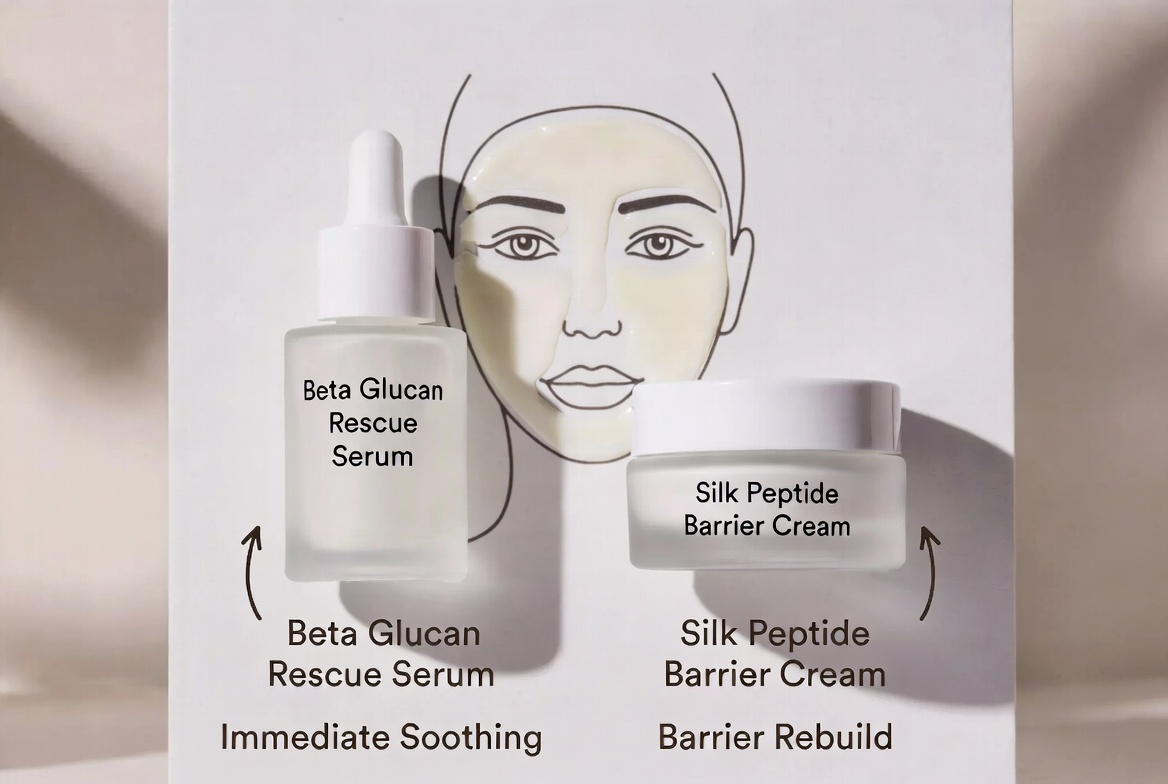
In daily practice, many experts effectively stack the two: beta-glucan for immediate immunomodulation and barrier rescue; silk peptide for mid– to long-term structural and sensorial enhancement.
To illustrate how a global brand might use both actives in partnership with a high-tech supplier like ZHENYIBIO:
- Step 1 – Immediate Rescue Serum
- Core actives: Yeast beta-glucan, low-molecular hyaluronic acid, panthenol, centella extract. [thaiscience]
- Positioning: "48-hour barrier comfort," "rapid TEWL recovery," "post-peel compatible."
- Step 2 – Barrier Rebuild Cream
- Core actives: Silk peptide, ceramides, cholesterol, fatty acids, niacinamide. [linkedin]
- Positioning: "Barrier strengthening," "tight junction optimizer," "silk-touch finish."
This two-step roadmap allows OEM/ODM partners to offer both fast observable relief and lasting barrier resilience, with clear differentiation across SKUs.
| Dimension | Yeast Beta-Glucan | Silk Peptide |
|---|---|---|
| Core origin | Polysaccharide from yeast cell walls (pubmed.ncbi.nlm.nih) | Peptide fraction derived from silk fibroin (linkedin) |
| Primary role | Biological response modifier, wound-healing supporter (pubmed.ncbi.nlm.nih) | Barrier and texture optimizer, bioactive peptide (linkedin) |
| Immunomodulation | Activates innate immune cells (Langerhans, keratinocytes) (pubmed.ncbi.nlm.nih) | Anti-inflammatory signaling and barrier support (linkedin) |
| Barrier recovery speed | Fast TEWL and erythema improvements in stressed skin models (alibaba) | Progressive TEWL reduction via claudin-1 and structural support (linkedin) |
| Evidence base | Multiple peer-reviewed cosmetic and dermatologic studies (thaiscience) | Emerging bioactive silk data, strong supplier clinical dossiers (linkedin) |
| Key claims | Soothing, barrier repair, antioxidant, anti-wrinkle, moisturizing (thaiscience) | Barrier reinforcement, hydration, elasticity, glow, anti-aging (linkedin) |
| Ideal use cases | Post-treatment recovery, sensitive-skin rescue, repair serums (thaiscience) | Premium creams, long-term barrier care, luxury textures (linkedin) |
| Formulation form | Water-soluble, works well in gels, serums, essences (thaiscience) | Peptide-compatible emulsions, creams, masks (linkedin) |
To turn this science into commercially successful products, OEM/ODM partners can follow a three-step blueprint:
1. Define the primary recovery promise
- If the hero promise is "fast recovery after chemical stress", lead with yeast beta-glucan.
- If the promise is "silky barrier perfection and anti-aging", emphasize silk peptide and use beta-glucan as a supporting actor.
2. Design a layered recovery system
- Pair immunomodulators with lipids, humectants and antioxidants known to support barrier function and oxidative stress protection. [pubmed.ncbi.nlm.nih]
- Build a full routine (cleanser–serum–cream–mask) instead of a single product to maximize both efficacy and revenue per user.
3. Translate technical data into clear, compliant claims
- Anchor claims in verifiable endpoints: TEWL, redness, stratum corneum renewal, claudin-1 or elasticity. [onlinelibrary.wiley]
- Use consumer language such as "calms visible redness in days" or "silk-powered barrier strength", then support it with ingredient stories and clinical numbers where permitted.
As a high-tech manufacturer with an experienced R&D team and a GMP factory, ZHENYIBIO TECHNOLOGY INC can help international brands move from raw material selection to full-launch recovery solutions, including ingredient customization and turnkey OEM/ODM development. [made-in-china]
For many global markets, especially in premium dermocosmetics, the highest-performing formulations do not choose sides. They combine:
- Yeast beta-glucan for rapid, non-irritating immunomodulation and wound-support. [onlinelibrary.wiley]
- Silk peptide for luxury feel, barrier protein optimization and anti-aging synergy. [linkedin]
This dual approach delivers both short-term relief and long-term transformation, supporting repeat purchase, stronger brand storytelling and higher average selling prices.
For brands sourcing from ZHENYIBIO, combining these actives with botanical extracts, hyaluronic acid and other functional peptides can create differentiated "next-generation barrier recovery" platforms for global distribution. [zhenyi-cos]
1. Is yeast beta-glucan safe for very sensitive, chemically compromised skin?
Yes. Studies on modified yeast beta-glucan show good tolerability, reduced irritation from detergents and UV, and improved renewal in stressed skin, making it suitable for sensitive and post-procedure applications. [thaiscience]
2. Can silk peptide replace ceramides in barrier-repair formulas?
Silk peptide supports barrier function via tight junction and matrix effects, but it does not directly replace the lipid role of ceramides; the best barrier formulas typically combine peptides with ceramides, cholesterol and fatty acids. [onlinelibrary.wiley]
3. Which ingredient gives faster visible redness reduction after a peel?
Available data suggests yeast beta-glucan, with its rapid effect on TEWL recovery and anti-inflammatory signaling, is more strongly documented for early-phase calming of redness after chemical or surfactant challenges. [alibaba]
4. Are there regulatory or safety concerns when using these actives at higher levels?
Both yeast beta-glucan and silk peptides are generally considered safe at typical cosmetic-use levels, but formulators should always follow regional cosmetic regulations and supplier safety data sheets for recommended inclusion rates and testing. [pubmed.ncbi.nlm.nih]
5. How can ZHENYIBIO support brand owners working with these ingredients?
ZHENYIBIO provides stable bulk supply of functional actives, R&D support for yeast-derived ingredients and peptides, and OEM/ODM services from raw materials to finished cosmetic products, helping brands accelerate development of barrier-repair lines for global markets. [made-in-china]
1. Thai Journal of Pharmaceutical Sciences. "Beta-glucan extract from yeast waste as a cosmeceutical ingredient: antioxidant, moisture retention and skin regeneration properties." [Link] [thaiscience]
2. Alibaba Product Insights. "Is the 'mushroom skincare' boom backed by beta-glucan penetration studies?" [Link] [alibaba]
3. Made-in-China. "Zhenyibio Technology Inc – Company Profile." [Link] [made-in-china]
4. PubMed. Krystyna Braulik et al. "Improving skin function with CM-glucan, a biological response modifier." [Link] [pubmed.ncbi.nlm.nih]
5. Wiley Online Library. "Anti-Wrinkle Therapy: Significant New Findings in the Non-Invasive Cosmetic Treatment of Skin Wrinkles with Beta-Glucan." [Link] [onlinelibrary.wiley]
6. Phytotherapy Research (Wiley). "Skin Health Promotion Effects of Natural Beta-Glucan Derived from Cereals and Microorganisms: A Review." [Link] [onlinelibrary.wiley]
7. ZHENYIBIO Technology Inc Official Site. "Moisturizing, anti-aging, cosmetic peptide manufacturer and OEM & ODM services." [Link] [zhenyi-cos]
8. LinkedIn. Evolved By Nature. "Restore Skin Barrier with Activated Silk 33B-α." [Link] [linkedin]


