


Views: 231 Author: ZHENYIBIO Publish Time: 2026-11-27 Origin: Site
Content Menu
● Sialic Acid vs. Bird's Nest Extract: The Essential Differences
● What Is Standardized Sialic Acid Powder?
>> A Defined Compound With a Measurable Specification
>> Fermentation Is a Manufacturing Route, Not a Complete Claim
● What Is Bird's Nest Extract?
>> A Traditional Ingredient With a Complex Composition
>> Hydrolysis and Standardization Change the Comparison
● Clinical Evidence: What Do Human Studies Actually Show?
>> Bird's Nest Extract Has Product-Specific Wrinkle Data
>> Oral Neu5Ac Has Emerging Human Evidence
>> Neither Study Establishes Superiority
● Standardization: Compare What the Laboratory Actually Measures
>> Free Sialic Acid and Total Sialic Acid Are Different Results
>> One Marker Does Not Describe the Entire Extract
● Practical Cost Comparison: Calculate Cost per Verified Active
● Formulation Performance: Test the Finished Product
>> Clear Drinks, Capsules, and Powder Sachets
>> Do Not Transfer Ingredient Specifications to Shelf-Life Claims
● Safety, Regulatory Status, and Sustainability
>> Cosmetic Suitability Does Not Establish Food Suitability
>> Different Materials Require Different Risk Controls
>> Sustainability Requires Evidence
● An OEM/ODM Qualification Workflow for Premium Beauty Nutrition
● Build Your Next Edible Beauty Concept With ZHENYIBIO
>> Is Sialic Acid the Same as Bird's Nest Extract?
>> Is Standardized Sialic Acid Powder Better for Edible Beauty?
>> Can Bird's Nest Extract Also Be Standardized?
>> Is Fermentation-Derived Sialic Acid Vegan?
>> What Daily Dose Should a Beauty Brand Use?
>> Can These Ingredients Guarantee Wrinkle Reduction?
Sialic acid vs. bird's nest extract is more than a choice between modern biotechnology and traditional luxury. For high-end edible beauty brands, it is a decision about ingredient identity, measurable composition, clinical relevance, formulation flexibility, and supply-chain transparency.
A standardized sialic acid powder offers precise control over a defined compound. Bird's nest extract provides a more complex, animal-derived ingredient with established cultural recognition. Neither is automatically more effective, safer, or more sustainable.
At ZHENYIBIO TECHNOLOGY INC, our philosophy connects traditional ingredient knowledge with modern biotechnology. From this development perspective, we believe premium positioning should begin with a practical question: what can the finished product consistently deliver—and substantiate?

The most important distinction is chemical identity versus ingredient complexity. Sialic acid describes a family of compounds; commercial specifications often focus on N-acetylneuraminic acid, also called Neu5Ac. Bird's nest extract is a mixture containing proteins, carbohydrates, and other constituents, including sialic acid.
| Comparison factor | Standardized sialic acid powder | Bird's nest extract |
|---|---|---|
| Ingredient identity | A defined compound, usually Neu5Ac | A complex extract from edible swiftlet nests |
| Production route | May involve fermentation, synthesis, or extraction | Cleaning, extraction, and sometimes enzymatic hydrolysis |
| Composition control | Defined assay and impurity specifications | Depends on source, processing, carriers, and standardization |
| Brand positioning | Precision-led beauty nutrition | Heritage-led luxury nutrition |
| Animal origin | Depends on production inputs and processing | Animal-derived |
| Main purchasing challenge | Verifying identity, purity, and market eligibility | Verifying authenticity, composition, safety, and consistency |
| Clinical interpretation | Requires evidence relevant to the specific compound and dose | Requires evidence relevant to the specific extract |
| Best strategic fit | Products prioritizing measurable ingredient delivery | Products prioritizing authentic bird's nest identity |
Importantly, "powder" and "extract" are not opposites. Bird's nest extracts can also be dried powders and standardized to a sialic acid marker. "Raw extract" should therefore describe an insufficiently characterized material—not every bird's nest ingredient.
Neu5Ac is a member of the sialic acid family and occurs in biological glycoconjugates, including glycoproteins and glycolipids.
For procurement teams, however, biological relevance is only the starting point. A commercial ingredient needs a documented identity, assay, manufacturing route, impurity profile, and intended food use.
A standardized sialic acid powder should specify:
- Neu5Ac identity and assay.
- Whether results use an as-is or dry-weight basis.
- Moisture and related substances.
- Microbiological and contaminant limits.
- Analytical methods and batch traceability.
A high assay can simplify dose calculations. It does not, by itself, establish superior absorption or better skin outcomes.
Fermentation-derived positioning can appeal to brands seeking alternatives to animal extraction. Nevertheless, "fermented" does not automatically mean vegan, environmentally superior, or permitted in every market.
Buyers should examine feedstocks, processing aids, purification steps, and relevant declarations. Likewise, a compound made using plant-derived fermentation feedstocks should not automatically be marketed as a botanical extract.
For a company working across botanical actives and biotechnology, preserving these distinctions builds credibility.
Edible bird's nest comes from the salivary secretions of certain swiftlets. Its composition varies with biological source, geography, harvesting conditions, and processing.
Published literature commonly reports sialic acid at approximately 8–12% of dry edible nest weight. That range must not be applied indiscriminately to commercial extracts, beverages, or carrier-containing powders.
Extraction and dilution can substantially change the composition of the purchased ingredient. A supplier's finished specification matters more than a general description of whole nests.
Enzymatic processing can modify the nest's protein-rich matrix. Drying and carrier addition can further alter the concentration delivered per gram.
Consequently, buyers should distinguish among:
1. Cleaned edible nest material.
2. Aqueous bird's nest extract.
3. Enzymatically hydrolyzed extract.
4. Carrier-containing extract powder.
5. Extract standardized to a declared marker.
These are not interchangeable materials. A standardized hydrolyzed extract may offer considerably better consistency than an uncharacterized "premium raw extract."
A randomized, double-blind, placebo-controlled study published in 2022 evaluated a bird's nest preparation over 12 weeks. Its per-protocol analysis included 86 women aged 40–60.
The investigators reported improvements in measured wrinkle parameters. However, skin moisture and elasticity did not show statistically significant advantages over placebo in the paper's conclusion.
The tested ingredient was an enzymatically treated, standardized preparation—not an unspecified raw extract. The research also involved industry funding and author affiliations, which deserve consideration when weighing the evidence.
The useful conclusion is narrow: this preparation produced encouraging wrinkle findings under the study conditions. It does not validate every bird's nest product or prove that sialic acid alone caused the results.
A 2026 randomized, double-blind, placebo-controlled trial reported results from 55 Chinese women who completed 84 days of supplementation. The intervention supplied 120 mg daily of Neu5Ac.
The study reported favorable between-group findings for selected pigmentation measurements and hydration change. However, the hydration result reflected a modest increase in the active group against a decline in placebo.
Several clinically scored outcomes, including crow's feet and under-eye wrinkles, did not show statistically significant between-group differences. Ultrasound-based dermal findings were also inconclusive.
This is promising preliminary evidence, not proof of universal anti-aging efficacy. The small sample, restricted population, study duration, and absence of independent replication limit broad claims.
These trials tested different ingredients, populations, doses, and endpoints. Comparing them cannot establish that standardized Neu5Ac works better than bird's nest extract—or the reverse.
Our interpretation is straightforward: match the proposed claim to the actual tested preparation, rather than borrowing the strongest result from either ingredient category.
In bird's nest, sialic acid can occur within larger glycoconjugates. Analytical preparation may release bound material before measurement.
A free-Neu5Ac assay and a total-sialic-acid assay after hydrolysis therefore answer different questions.
Before comparing certificates of analysis, ask:
- Was hydrolysis performed?
- What chemical species does the method quantify?
- Was the method validated for this ingredient matrix?
- Does the result include carrier dilution?
- Are the reporting bases equivalent?
A number without its method can create misleading comparisons.
Sialic acid is a useful marker, but it cannot fully characterize bird's nest extract. Protein composition, processing conditions, and other matrix components may also matter.
Conversely, matching a total-sialic-acid value does not make purified Neu5Ac biologically equivalent to an extract.
This distinction separates reliable specification management from unsupported efficacy assumptions.

Price per kilogram rarely tells the complete purchasing story.
Consider a hypothetical formulation target of 10 mg measured Neu5Ac per serving. This is an arithmetic example, not a recommended intake or an established effective dose.
| Hypothetical ingredient | Declared assay | Material needed |
|---|---|---|
| Standardized Neu5Ac powder | 98% | Approximately 10.2 mg |
| Extract powder | 10% | 100 mg |
| Diluted extract powder | 1% | 1,000 mg |
The calculation is:
Ingredient required = target compound quantity ÷ assay fraction.
This reveals the space required in a capsule or sachet. It also supports a more useful commercial comparison:
Cost per verified active = ingredient cost ÷ verified active fraction.
However, this approach measures compositional economics—not clinical equivalence. A bird's nest formula may be purchased for its complete ingredient identity, not solely its Neu5Ac content.
Include testing costs, processing losses, packaging, and expected stability when evaluating total formulation cost.
A defined compound can simplify ingredient mass calculations. A complex extract adds matrix-related variables that require evaluation.
Nevertheless, neither format should be assumed to dissolve perfectly or remain stable in every formula.
For edible beauty drinks, assess:
- Appearance, clarity, and sedimentation.
- Taste and odor.
- Compatibility with the intended pH.
- Interaction with other ingredients.
- Effects of processing and storage.
- Marker retention throughout shelf life.
For capsules and sachets, add flowability, blending uniformity, moisture sensitivity, and packaging performance to the development plan.
A supplier's certificate describes the material tested at a particular stage. It does not prove that a beverage retains its declared composition after processing and storage.
Premium brands should establish finished-product acceptance criteria and verify them using suitable methods. Pilot batches are particularly useful before committing to commercial packaging.
An ingredient sold for topical applications should not automatically enter an ingestible product.
Market eligibility depends on jurisdiction, ingredient identity, production route, specifications, use level, and target population.
For example, a European safety assessment addressed a specified synthetic N-acetyl-D-neuraminic acid under proposed conditions of use. That assessment is not a blanket endorsement of every fermentation-derived powder or every intended population.
A clinical trial dose likewise does not establish a universally permitted daily intake.
Bird's nest procurement should address authenticity, allergenic potential, microbiological quality, and relevant contaminants, including nitrite-related concerns.
Neu5Ac procurement should address manufacturing-route-specific impurities, residual processing materials, and microbiological quality.
Neither "natural" nor "high purity" replaces a complete safety dossier.
Fermentation may reduce reliance on animal harvesting, but environmental performance also depends on feedstocks, energy, water, purification, and waste management.
Bird's nest sustainability requires scrutiny of sourcing and harvesting practices.
Avoid categorical environmental claims without a defined comparison and supporting evidence. Traceability is a stronger starting point than an unsupported "eco-friendly" label.
For brands, wholesalers, and manufacturers, we recommend a structured development brief:
1. Define the target market, consumer group, format, and intended claims.
2. Confirm food-use eligibility for the exact ingredient.
3. Obtain the specification, manufacturing summary, and safety documentation.
4. Compare multiple batches using equivalent analytical methods.
5. Calculate ingredient delivery and full formulation cost.
6. Test pilot batches for sensory performance and stability.
7. Review finished-product labeling and claim substantiation before launch.
For heritage-led positioning, select a traceable, appropriately standardized bird's nest preparation.
For precision-led positioning, prioritize a well-characterized Neu5Ac ingredient.
A combined formula is another development option, but combining ingredients does not establish synergy. Any enhanced-benefit claim needs its own support.
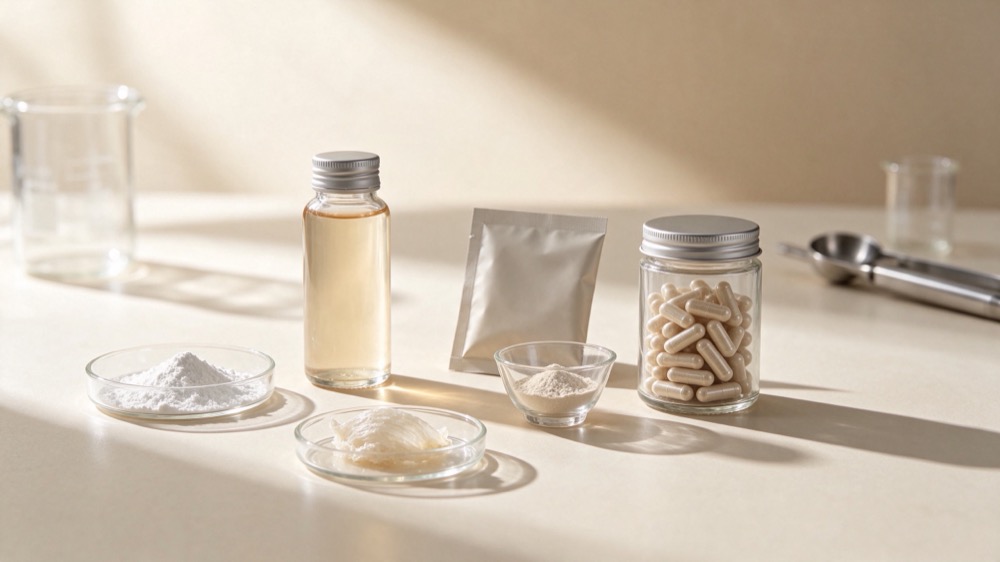
At ZHENYIBIO, our commitment to traditional ingredient knowledge and modern biotechnology supports a specification-first development approach.
Contact ZHENYIBIO TECHNOLOGY INC with your target market, preferred format, ingredient priorities, and expected order volume to discuss OEM/ODM feasibility. Request documentation for the proposed food-use ingredient, then establish a sampling, testing, and regulatory-review plan before commercial production.
No. Sialic acid is a compound family, while bird's nest extract is a complex ingredient that can contain sialic acid alongside proteins and other constituents.
It can be better suited to precise ingredient delivery and compact formulations. That does not establish better clinical performance. The right choice depends on product positioning, evidence, specifications, and market requirements.
Yes. An extract can be standardized to a declared sialic acid level. Buyers should still review analytical methods, carriers, authenticity, and broader composition.
Potentially, but verification is necessary. Review feedstocks, fermentation media, processing aids, and supplier declarations before making vegan claims.
There is no universal dose established by this comparison. Determine use levels through jurisdiction-specific requirements, safety assessment, and evidence relevant to the exact ingredient and intended population.
No. Available human findings are preparation-specific and limited. Individual outcomes vary, and finished-product claims must not exceed the supporting evidence.
1. Kim, H. M., et al. "Anti-Wrinkle Efficacy of Edible Bird's Nest Extract: A Randomized, Double-Blind, Placebo-Controlled, Comparative Study." *Frontiers in Pharmacology*, 2022, 13:843469. DOI: 10.3389/fphar.2022.843469. Supports the discussion of the standardized bird's nest preparation, trial design, wrinkle findings, limitations, and funding disclosures. [pmc.ncbi.nlm.nih]
2. Lin, Z., et al. "Oral N-Acetylneuraminic Acid Promotes Spot Brightening and Enhances Hydration and Elasticity: A Randomized, Double-Blind, Placebo-Controlled Clinical Trial." *Cosmetics*, 2026, 13(3):152. DOI: 10.3390/cosmetics13030152. Supports the Neu5Ac trial details and the distinction between favorable results and nonsignificant endpoints. [mdpi]
3. European Food Safety Authority, NDA Panel. "Safety of Synthetic N-Acetyl-D-Neuraminic Acid as a Novel Food Pursuant to Regulation (EC) No 258/97." *EFSA Journal*, 2017, 15(7):4918. DOI: 10.2903/j.efsa.2017.4918. Supports the discussion of ingredient-specific safety assessment and conditions of use. [efsa.europa]
4. "Edible Bird's Nest: Culture, Science, and Beyond: A Narrative Review." *Journal of Ethnic Foods*, 2026. DOI: 10.1186/s42779-026-00314-9. Supports the discussion of composition, reported dry-nest sialic acid ranges, variability, and limitations of human evidence. [link.springer]
5. "Editorial: Edible Bird's Nest—Chemical Composition and Potential Health Efficacy and Risks." *Frontiers in Pharmacology*, 2022, 12:819461. DOI: 10.3389/fphar.2021.819461. Supports the discussion of geographical and processing variation, contaminants, and the need for ingredient characterization. [frontiersin]
6. UK Food Standards Agency. "Applying for Novel Food Authorisation." Updated November 2026. Provides regulatory context on demonstrating safety for intended uses and preparing a market-specific authorization dossier. [gov]


