


Views: 218 Author: ZHENYIBIO Publish Time: 2026-11-26 Origin: Site
Content Menu
● 1. Define What You Need Before Comparing Cosmetic Ingredients Suppliers
>> Distinguish Manufacturers From Distributors
● 2. Verify Ingredient Identity and Batch Consistency
>> What to Check for Botanical Actives
>> What to Check for Biofermented Ingredients
● 3. Request a Complete Cosmetic Ingredient Documentation Package
● 4. Assess Manufacturing Controls, Not Just Certificates
● 5. Check Destination-Market Requirements Before Ordering
>> European Union: A Database Entry Is Not Approval
>> United States: Separate Ingredients From Finished-Product Obligations
● 6. Evaluate Scientific Evidence at the Intended Use Level
● 7. Qualify Samples Through a Three-Stage Approval Process
>> Stage One: Technical Screening
>> Stage Two: Formulation and Pilot Evaluation
>> Stage Three: First Commercial Delivery
● 8. Stress-Test International Supply Reliability
>> Separate the Parts of Lead Time
● 9. Compare Total Cost and Use a Supplier Scorecard
● 10. Clarify Sustainability and OEM/ODM Responsibilities
● Build Your Next Sourcing Project Around Verifiable Requirements
>> What documents should I request from a cosmetic ingredients supplier?
>> How can I assess a botanical ingredient supplier?
>> Does an INCI name mean an ingredient is approved internationally?
>> Should I choose the lowest-priced supplier?
>> What should an OEM/ODM agreement cover?
>> Can fermentation replace safety and efficacy testing?
Choosing a cosmetic ingredients supplier means choosing more than a raw material. You are selecting a partner whose quality controls, technical documentation, and delivery performance will influence every batch you manufacture. For international brands, wholesalers, and manufacturers, an attractive sample or competitive quotation is only the beginning.
My recommendation is to evaluate suppliers in the order that protects your business: ingredient identity, manufacturing consistency, regulatory support, formulation performance, and supply continuity. Negotiate price after those requirements are clear.
This guide explains how to assess cosmetic raw material suppliers, with particular attention to botanical actives, biofermented ingredients, and OEM/ODM partnerships.

A useful supplier comparison starts with a precise purchasing brief. Without one, two quotations may describe materials with similar names but different compositions.
Document the following:
- Target markets and intended cosmetic applications.
- Required ingredient identity, composition, and active concentration.
- Annual demand, initial order quantity, and forecast variability.
- Required documentation, testing, and claim support.
- Acceptable lead time and remaining shelf life at delivery.
- Packaging, storage, and transportation requirements.
- Whether you need ingredients alone or OEM/ODM development.
For example, "botanical brightening ingredient" is not a purchasing specification. A more useful brief identifies the botanical species, plant part, extraction method, carrier, marker compound, and intended formulation.
Ask who manufactures the material, who releases each batch, and who handles technical investigations.
A distributor can provide valuable local inventory and service. A manufacturer may offer more direct process knowledge and customization. Neither model automatically guarantees reliability.
What matters is whether the supplier can identify the manufacturing site, maintain traceability, and obtain timely answers when something changes.
The first technical question is simple: will the commercial shipment match the material your laboratory approved?
For natural cosmetic ingredients, request a specification that goes beyond appearance and a general description.
Ask for:
- Botanical name and plant part.
- Source region and traceability approach.
- Extraction solvent and processing information.
- Carrier, preservative, and other added components.
- Marker compounds and applicable assay methods.
- Relevant microbial and chemical contaminant limits.
Set contaminant testing according to the ingredient's risk profile and destination requirements. A single generic panel is not equally appropriate for every extract.
Natural variation also needs boundaries. Agree on acceptable color, odor, solubility, and analytical ranges rather than accepting "normal botanical variation" without limits.
For a biofermented cosmetic ingredient supplier, ask what the delivered material actually contains: a filtrate, lysate, purified metabolite, or another preparation.
Discuss feedstock controls, process consistency, downstream purification, and relevant residual impurities. Where strain details are proprietary, request enough controlled technical information to assess identity and safety.
Fermentation is a manufacturing method—not automatic proof of superior efficacy, safety, or sustainability.
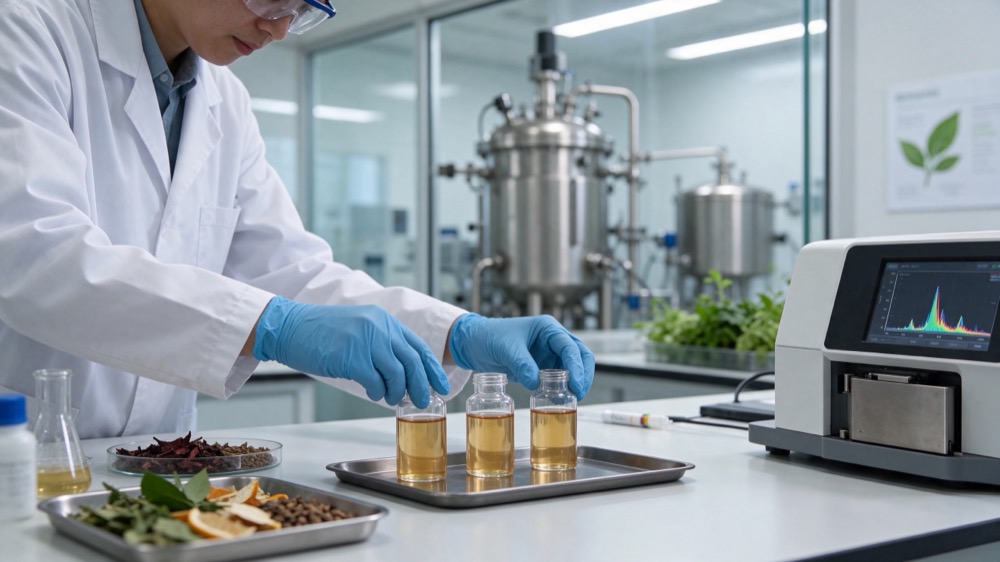
A dependable supplier should provide a coherent technical package before commercial approval.
| Document | What it should help you verify |
|---|---|
| Technical data sheet | Composition, properties, applications, and processing guidance |
| Product specification | Agreed acceptance limits and relevant methods |
| Batch-specific certificate of analysis | Results for the actual supplied lot |
| Safety data sheet | Hazard communication, handling, and storage information |
| Composition statement | Carriers, preservatives, and other constituents |
| Safety information | Evidence supporting an appropriate safety assessment |
| Stability information | Recommended storage and shelf-life basis |
| Traceability records | Connection between supplied lots and production records |
A certificate of analysis should connect the lot number to meaningful results and acceptance criteria. Ask which properties are tested on every batch and which follow a justified periodic testing program.
Review several recent commercial lots where available. One attractive certificate cannot demonstrate long-term consistency.
The safety data sheet serves a different purpose. It does not replace cosmetic safety assessment, efficacy evidence, or formulation compatibility testing.
Certificates are useful starting points, but their scope matters.
Check the legal entity, manufacturing address, covered activities, issuing body, and validity. A certificate associated with one location should not be treated as proof for every site or product.
For cosmetic ingredient manufacturers, investigate ingredient-specific good manufacturing practice expectations, such as the EFfCI framework. ISO 22716 is relevant to cosmetic product manufacturing, but it should not replace scrutiny of raw material controls.
During qualification, examine:
- Incoming material approval.
- Cleaning and contamination prevention.
- Water quality where applicable.
- Equipment maintenance and calibration.
- Laboratory methods and batch release.
- Deviation investigations and corrective actions.
- Retained samples and complaint handling.
One revealing question is: "What happens when a batch fails specification?"
Look for a documented process for quarantine, investigation, disposition, and prevention—not an assurance that failures never happen.
International supply requires market-specific review. No supplier statement can guarantee that an ingredient is suitable for every country, concentration, application, or claim.
The European Commission states that an ingredient's appearance in CosIng does not mean it is approved for cosmetic use.
Evaluate the applicable Cosmetics Regulation and its annexes, including relevant restrictions and conditions. Obtain the composition and safety information needed by the responsible person and safety assessor.
An ingredient name alone does not establish finished-product compliance.
Under MoCRA, responsible persons must maintain records supporting adequate safety substantiation of cosmetic products. Facility registration and product listing requirements also apply where required, with exemptions.
These obligations should not be confused with ingredient approval or applied indiscriminately to every upstream supplier.
Your ingredient supplier should support the information needed for your assessment. Responsibility for a finished product cannot simply be transferred through a supplier declaration.
For other destinations, have qualified regulatory specialists review local requirements before commercial commitment.
A scientific-looking presentation is not necessarily strong evidence.
Ask suppliers to distinguish between traditional use, published ingredient research, laboratory testing, and finished-formulation studies.
| Evidence type | What it may support | Important limitation |
|---|---|---|
| Traditional use | Historical context and research direction | Does not independently establish modern claims |
| Laboratory assays | Mechanistic plausibility | Does not establish visible human results |
| Ingredient human studies | Performance under tested conditions | May not transfer to a different formulation |
| Finished-product studies | Claims for the tested product | Depends on design and relevance |
Request the tested material's composition, concentration, study method, sample size, duration, and comparison conditions.
Pay particular attention to concentration. A study on a concentrated active cannot automatically substantiate claims for a diluted commercial blend.
For botanical and fermented actives, evidence becomes more useful when it connects an identified material, controlled composition, relevant use level, and clearly defined outcome.
A sample that performs well in one laboratory beaker has not yet demonstrated commercial suitability.
Use the following proposed qualification process.
Check identity, appearance, odor, solubility, and relevant analytical properties. Confirm that the sample represents the commercial grade being quoted.
Assess the ingredient in your intended formula and manufacturing process.
Investigate relevant factors such as:
- pH and temperature exposure.
- Mixing order and processing time.
- Color, odor, viscosity, and precipitation.
- Compatibility with preservatives and packaging.
- Appropriate stability and microbiological testing.
Verify the delivered lot against agreed requirements before unrestricted production use.
Where practical, compare multiple lots during qualification. The purpose is to evaluate reproducibility, not merely approve one successful sample.
Document approval decisions so purchasing, quality, and production teams work from the same specification.
Ask a prospective cosmetic ingredients supplier to explain a disruption scenario, not just quote a standard lead time.
For example: "If a key botanical harvest is delayed while our demand increases, what happens to our next three orders?"
A useful answer should address raw material exposure, inventory, capacity, allocation, and communication.
Request separate estimates for:
1. Production scheduling and manufacturing.
2. Quality testing and release.
3. Export preparation.
4. Transportation.
5. Customs clearance and final delivery.
Also agree on minimum remaining shelf life at receipt, shipment-document responsibilities, and handling of temperature excursions where relevant.
Specify the chosen Incoterms rule, named place, and version in the contract. Address payment, product acceptance, quality disputes, and remedies separately.
For critical ingredients, qualify an alternative source where feasible. Similar ingredient names do not guarantee interchangeability, so substitutions still require technical review.
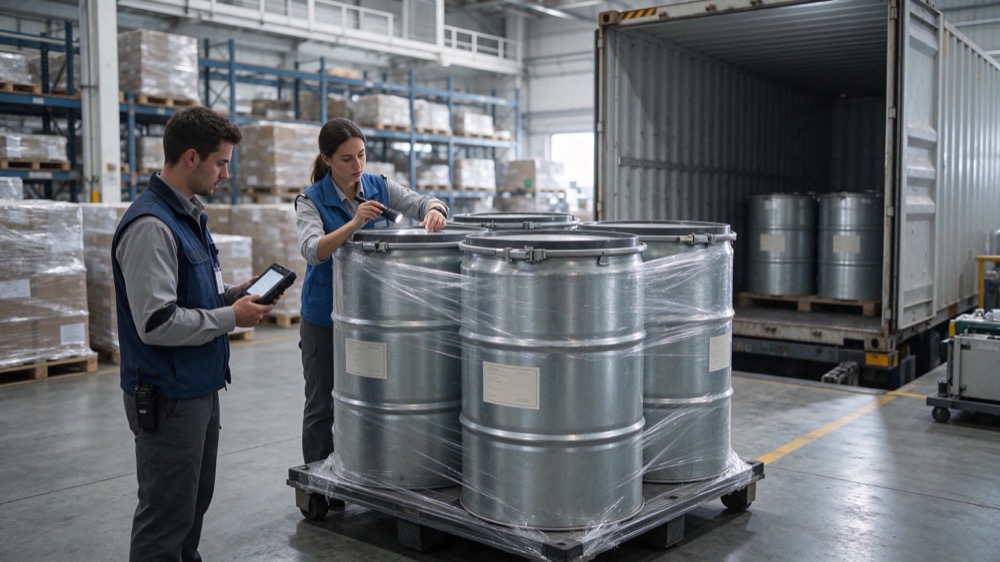
Price per kilogram can conceal differences in active content, usable yield, testing costs, and delivery risk.
Compare the total cost of obtaining usable material:
- Ingredient price and applicable logistics costs.
- Receiving inspection and verification testing.
- Formulation adjustments or processing losses.
- Inventory carrying costs and potential expiry.
- Disruption, rejection, and replacement exposure.
For example, a cheaper blend may be less economical if it requires a substantially higher dosage. Any comparison must still account for composition and performance, not concentration alone.
The following is a proposed internal scorecard, not an industry standard:
| Evaluation area | Suggested weight |
|---|---|
| Identity and batch consistency | 25% |
| Manufacturing quality controls | 20% |
| Regulatory and safety documentation | 20% |
| Supply continuity and logistics | 15% |
| Technical support | 10% |
| Total purchasing cost | 10% |
Define mandatory approval gates first. Missing traceability or unacceptable safety information should not be offset by a low price.
For a sustainable cosmetic ingredients supplier, ask what each environmental claim means and how it is supported.
Request relevant information on feedstock origin, traceability, solvent management, resource use, waste handling, and the scope of any certification.
Do not assume "plant-derived," "natural," or "fermented" establishes a lower environmental impact. Comparative claims need a stated basis.
For OEM/ODM projects, additionally clarify:
- Formula ownership and confidentiality.
- Development milestones and approval criteria.
- Responsibility for testing and regulatory work.
- Permitted ingredient substitutions.
- Scale-up acceptance and packaging compatibility.
- Change notification and commercial handover.
Put these responsibilities in writing before development begins.
ZHENYIBIO TECHNOLOGY INC focuses on natural plant-active cosmetic ingredients, combining traditional botanical knowledge with modern biofermentation technology and offering OEM/ODM services for international customers.
To begin a focused sourcing discussion, send ZHENYIBIO your target markets, intended application, required specifications, forecast volume, and documentation checklist. Request the applicable technical package and representative samples for evaluation before placing a commercial order.
A reliable partnership starts with clearly defined requirements—and develops through consistent evidence, communication, and delivery.
Start with the specification, batch-specific certificate of analysis, technical data sheet, safety data sheet, composition statement, and relevant safety information. Add market-specific documents according to your application.
Verify botanical identity, plant part, composition, processing, traceability, and relevant contaminant controls. Then evaluate consistency across commercial lots and performance in your formulation.
No. Ingredient naming and regulatory permission are different matters. Assess the intended use against each destination market's requirements.
Not automatically. Compare usable performance, documentation, quality controls, delivery risk, and total landed cost. Establish minimum technical requirements before comparing price.
It should define development scope, formula ownership, confidentiality, testing responsibilities, approval milestones, substitutions, change control, and commercial acceptance.
No. Evaluate the identity, composition, impurities, safety information, and performance evidence of the actual supplied ingredient, regardless of its manufacturing method.
1. U.S. Food and Drug Administration. "Good Manufacturing Practice (GMP) Guidelines/Inspection Checklist for Cosmetics." Guidance covering raw materials, production, laboratory controls, and records. [fda]
2. U.S. Food and Drug Administration. "Modernization of Cosmetics Regulation Act of 2022 (MoCRA)." Information on safety substantiation, facility registration, and product listing. [fda]
3. U.S. Food and Drug Administration. "Registration & Listing of Cosmetic Product Facilities and Products." Requirements and exemption information. [fda]
4. European Commission. "Cosmetic Ingredient Database." Explanation of CosIng's informational status and the distinction between database inclusion and authorization. [single-market-economy.ec.europa]
5. European Commission. "Cosmetic Products—Harmonised Standards." Reference to EN ISO 22716:2007 under the cosmetics regulatory framework. [single-market-economy.ec.europa]
6. U.S. Food and Drug Administration. "Good Manufacturing Practices for Cosmetic Products Listening Session." Stakeholder discussion of manufacturing controls and the EFfCI cosmetic ingredient certification framework. [fda]


