


Views: 282 Author: ZHENYIBIO Publish Time: 2026-08-15 Origin: Site
Content Menu
● Quick Comparison: Sialic Acid vs. Vitamin C
● Why Sensitive Epidermis Requires a Different Brightening Strategy
● Sialic Acid: A Glycan-Based Route to Brighter-Looking Skin
>> How Sialic Acid May Support Brightening
>> The Sensitive-Skin Opportunity
● Vitamin C: Antioxidant Brightening Through Acid-Based Reduction
>> How Vitamin C Supports a More Even Tone
>> Why Pure Vitamin C Can Challenge Sensitive Skin
● Mechanism Matters: Glycan-Based Brightening vs. Acid-Based Reduction
● Formulation Guidance for Sensitive-Skin Products
>> A Practical Development Framework
● Can Sialic Acid and Vitamin C Be Used Together?
● The Best Brightening Formula Is the One Consumers Can Keep Using
● FAQ
>> Is sialic acid better than vitamin C for sensitive skin?
>> Does sialic acid brighten skin?
>> Can sensitive skin use vitamin C every day?
>> Which form of vitamin C is best for a sensitive-skin serum?
>> Can sialic acid replace vitamin C in a brightening product?
>> Can sialic acid and vitamin C be combined?
For formulators developing brightening products for reactive skin, the central question is no longer simply which active "works." It is which active can improve visible dullness and uneven tone while respecting a compromised or easily irritated epidermis. Sialic acid vs. vitamin C is therefore a meaningful formulation comparison: one is a glycan-associated ingredient with emerging barrier-oriented potential, while the other is an extensively studied antioxidant whose performance and tolerance depend heavily on its chemical form, concentration, pH, and delivery system.
At ZHENYIBIO TECHNOLOGY INC, we view sensitive-skin brightening as a formulation-design challenge—not a concentration race. Brands, contract manufacturers, and product developers should evaluate sialic acid and vitamin C according to biological pathway, stability, consumer tolerance, claim substantiation, and compatibility with the final formula.

| Evaluation Area | Sialic Acid | Vitamin C |
|---|---|---|
| Primary identity | Naturally occurring acidic sugar, commonly N-acetylneuraminic acid | Antioxidant ingredient; L-ascorbic acid is the pure active form |
| Brightening approach | Supports reduced melanogenesis and may influence tyrosinase activity and melanosome processes | Reduces oxidative stress and interferes with melanin-forming reactions |
| Sensitive-skin positioning | Promising for gentle, barrier-conscious brightening concepts | Highly effective but irritation risk can increase with low pH and high active load |
| Formulation pH | Potentially more flexible, depending on grade and system | Pure L-ascorbic acid typically requires an acidic environment for stability and delivery |
| Stability challenge | Requires validation in the selected vehicle and packaging | Oxidation, discoloration, odor shift, and potency loss are key risks |
| Evidence maturity | Emerging, with growing in vitro, 3D-skin, and early clinical interest | Broad scientific and dermatological literature |
| Best-fit product concept | Barrier-brightening serum, recovery essence, post-stress skincare | Antioxidant day serum, discoloration serum, photoaging-focused treatment |
The practical distinction is clear: vitamin C is the established benchmark for antioxidant brightening, while sialic acid offers a newer route for brands seeking a softer, glycan-inspired brightening story for sensitive epidermis.
Sensitive skin is not a single skin type. It can describe skin with a weakened moisture barrier, visible redness, heightened sensory response, post-procedure vulnerability, or recurring intolerance to traditional treatment products.
In product development, uneven tone and sensitivity often coexist. Inflammation, ultraviolet exposure, pollution, friction, and barrier disruption may all contribute to a cycle of dullness, redness, and post-inflammatory marks. A brightening active that produces immediate stinging may undermine the long-term consumer experience—even if it has strong laboratory performance.
This is why a modern sensitive-skin brightening formula should aim to do four things:
- Control oxidative stress
- Reduce pathways associated with excess pigment production
- Maintain hydration and barrier comfort
- Deliver visible benefits without provoking avoidable irritation
Vitamin C can strongly address the first two objectives. Sialic acid may be especially relevant to the final two, while also contributing to the pigment-control discussion.
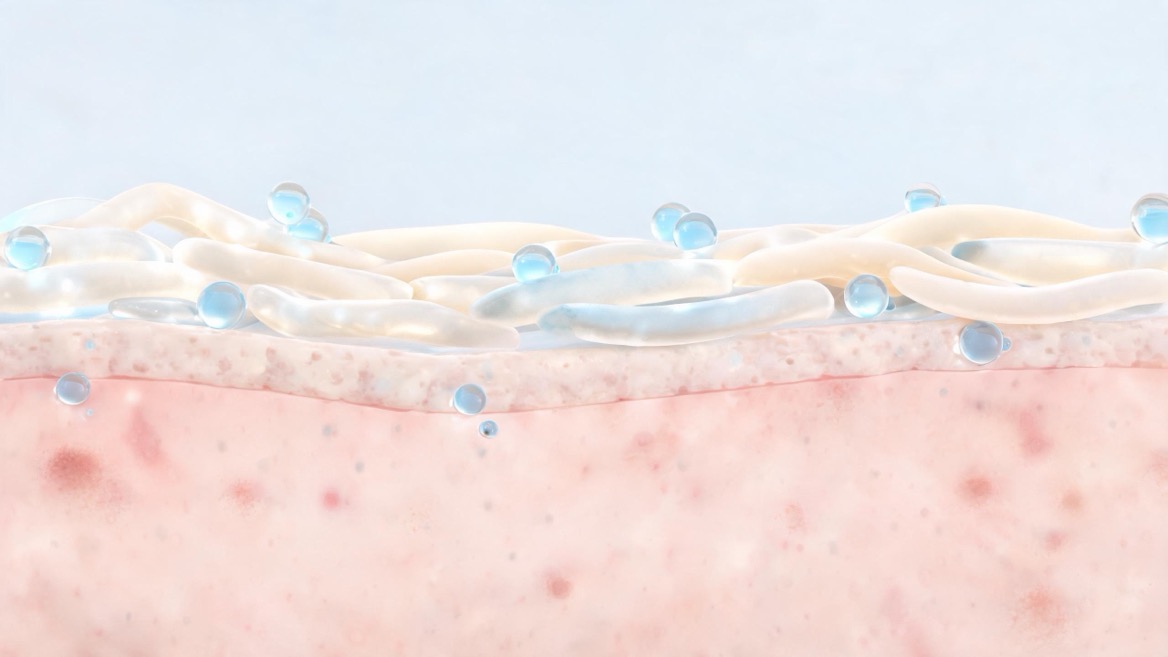
Sialic acid is a family of naturally occurring monosaccharides found at the outer ends of glycans on cell surfaces and biological molecules. In cosmetic communication, it is often associated with bird's-nest-derived or biotechnologically produced N-acetylneuraminic acid. For responsible global product development, fermentation-based sourcing provides an appealing route for consistent quality, traceability, and scalable supply.
The emerging case for sialic acid brightening is not based on aggressive exfoliation. Instead, it is connected with biological pathways relevant to pigment formation, skin-surface interactions, and barrier-oriented care.
Research has indicated that sialic acid may:
- Influence tyrosinase activity, a central enzyme in melanin synthesis
- Support lower melanin production in experimental skin models
- Help improve visible radiance when used in suitable delivery systems
- Contribute to hydration- and barrier-focused product positioning
- Pair naturally with calming, moisturizing, and fermentation-inspired ingredients
A 56-day evaluation of a sialic-acid-loaded nanoliposome cream reported improvements in skin-lightness-related parameters, transepidermal water loss, and wrinkle length. The same research found stronger melanin-reduction performance from the encapsulated system than free sialic acid at an equivalent dose. This does not mean every sialic acid formula will deliver identical results. It does show why delivery technology, formula architecture, and finished-product testing matter.
For an ingredient buyer or brand owner, the appeal of sialic acid lies in the multifunctional formulation narrative. Instead of framing brightening as a harsh correction step, it can be positioned as part of a more complete skin-comfort program.
Potential applications include:
- Daily radiance serums for reactive skin
- Hydrating essences for dull, dehydrated complexions
- Recovery products designed for stressed urban skin
- Tone-evening creams for consumers who avoid strong acids
- Hybrid formulas combining brightening, hydration, and visible-barrier support
However, formulators should avoid overstating the category. Sialic acid is still an emerging cosmetic brightening active compared with vitamin C. Ingredient efficacy should be confirmed through stability screening, compatibility testing, instrumental analysis, and appropriate human-use evaluation.
Vitamin C remains one of the most recognized ingredients in brightening and anti-photoaging skincare. Its popularity comes from a well-established scientific rationale: it helps neutralize reactive oxygen species, supports collagen-related pathways, and can help improve the appearance of uneven pigmentation.
The most direct comparison in sialic acid vs. vitamin C for sensitive skin usually concerns L-ascorbic acid, also called pure vitamin C. It is powerful, but difficult to formulate well.
Vitamin C's brightening performance is linked to several mechanisms:
- Antioxidant activity against environmental oxidative stress
- Interaction with melanin-production pathways
- Support for a more luminous visual appearance
- Potential support for skin exposed to ultraviolet radiation and pollution
- Synergy with vitamin E, ferulic acid, sunscreen, and other antioxidants
Topical vitamin C has a substantial research base in dermatology and cosmetic science. Reviews commonly note that biologically meaningful delivery often requires carefully controlled concentrations, while pure L-ascorbic acid above 20% may not provide proportional benefit and may increase the chance of irritation.
The main formulation issue is not that vitamin C is inherently unsuitable for sensitive skin. It is that effective pure vitamin C systems often operate at low pH. That acidic environment may create stinging, warmth, redness, or dryness in consumers with a disrupted barrier.
Reported tolerance issues are more likely when a formula combines:
- High L-ascorbic acid concentration
- Very low pH
- Frequent application from day one
- Additional exfoliating acids or retinoids
- Alcohol-heavy or fragrance-heavy systems
- Use on skin that is already inflamed or over-exfoliated
Dermatology literature describes stinging, erythema, and dryness as possible, though generally uncommon, reactions to topical vitamin C. A recent multidisciplinary review further notes that sensitive consumers may be better served by lower-pH stress reduction strategies, stabilized derivatives, encapsulation, or formulations designed closer to skin-compatible pH ranges.
The phrase glycan-based brightening describes the opportunity presented by sialic acid as a biologically familiar sugar-derived ingredient. Its appeal is linked to its role in glycoconjugates and its potential relevance to pigmentation, hydration, and skin-surface biology.
By contrast, acid-based reduction describes the classic L-ascorbic acid approach. Vitamin C is a reducing agent and antioxidant. It can help limit oxidative reactions involved in visible discoloration, but the formulation conditions needed to preserve its performance can create tolerance trade-offs.
| Formulation Question | Sialic Acid Approach | Pure Vitamin C Approach |
|---|---|---|
| How is brightening framed? | Gentle radiance, tone support, barrier-conscious care | Antioxidant defense, visible discoloration care, radiance |
| Is low pH essential? | Not necessarily; validate by formula | Often important for L-ascorbic acid delivery |
| Does packaging matter? | Yes, especially for moisture and active protection | Critically important because oxidation is a major concern |
| Can it suit minimalist formulas? | Yes, especially water-based and hydration-focused systems | Yes, but pH, chelation, oxygen exposure, and color stability require careful control |
| Is it ideal as a single hero active? | Potentially, but claims need strong finished-product evidence | Yes, with mature consumer recognition and validation |
A successful sensitive-skin brightening product is built around the complete system, not just the headline ingredient.
Sialic acid may be the stronger lead active when a brand wants to develop:
- A non-exfoliating brightening serum
- A hydration-first daily essence
- A gentle tone-care product for consumers who report frequent stinging
- A fermented biotechnology story with premium positioning
- A multi-benefit formula focused on radiance, comfort, and visible skin quality
For a product based on sialic acid, pair the active with ingredients that reinforce comfort and water balance, such as humectants, skin-identical lipids, soothing botanical fractions, or carefully selected postbiotics. The final formula should be tested for pH stability, active integrity, color, odor, viscosity, microbial robustness, and compatibility with the chosen package.
Vitamin C remains a compelling choice when the brand needs:
- Strong consumer recognition
- A daily antioxidant product concept
- A visible-radiance claim supported by a familiar active
- A formula targeting photoexposed, dull, or uneven-looking skin
- Compatibility with a broader antioxidant strategy
For sensitive epidermis, do not assume that "more vitamin C" produces a better product. Consider a lower concentration of L-ascorbic acid, a stabilized vitamin C derivative, or an encapsulated system. Build in a gradual-use protocol and evaluate the formula with a sensitive-skin panel where possible.
Before commercial launch, product teams should follow a disciplined pathway:
1. Define the consumer tolerance profile. Identify whether the formula targets occasional sensitivity, dryness-related discomfort, post-acne marks, or a dermatologist-inspired minimal routine.
2. Select the active format. Choose free sialic acid, an encapsulated sialic acid system, pure L-ascorbic acid, or an appropriate vitamin C derivative.
3. Design the support system. Match the active with humectants, antioxidants, chelators, emulsifiers, preservatives, and calming ingredients that are compatible with the intended pH.
4. Run accelerated and real-time stability tests. Track active content, appearance, odor, pH, viscosity, and package interaction.
5. Validate finished-product performance. Use suitable instrumental methods and controlled consumer studies. Avoid transferring raw-material claims directly to a finished serum or cream.
6. Create responsible usage instructions. Recommend sunscreen during daytime use and advise consumers to introduce potent antioxidant products gradually.

Yes, but the pairing requires formulation discipline. A dual-active formula can combine vitamin C's established antioxidant story with sialic acid's emerging gentle-brightening and hydration-support potential.
The main challenge is maintaining the vitamin C form under conditions that do not compromise the rest of the formula. Pure L-ascorbic acid may be harder to combine with pH-sensitive ingredients. A vitamin C derivative or a dual-chamber packaging system may offer more flexibility.
For many brands, the smarter commercial strategy is not necessarily to place both actives in one high-load serum. It may be to create a two-step routine:
- Morning: antioxidant vitamin C product plus broad-spectrum sunscreen
- Evening: sialic acid hydration-and-radiance serum or cream
This approach separates compatibility risks, allows clearer consumer education, and creates an opportunity for regimen-based product development.
From an ingredient-development perspective, visible brightening is cumulative. A consumer who stops using a product because it stings, oxidizes quickly, pills under sunscreen, or conflicts with their routine will not realize its potential benefits.
That is why sialic acid deserves attention. It opens a conversation beyond "strongest active wins." It allows brands to explore a gentler model of radiance care—one that recognizes the link between comfort, hydration, consistent use, and long-term appearance.
Vitamin C should not be dismissed. It remains an important reference active with deep scientific support. But for a sensitive-skin range, the question is not whether vitamin C works. The question is whether the selected vitamin C form, concentration, pH, vehicle, packaging, and routine guidance work together for the intended consumer.
For a next-generation sensitive-skin brightening range, choose sialic acid when barrier comfort is central, choose vitamin C when antioxidant authority is primary, or develop a carefully validated regimen that uses both.
ZHENYIBIO TECHNOLOGY INC supports global beauty brands, manufacturers, and distributors with plant-active innovation, biofermentation expertise, customized formulation development, and OEM/ODM solutions. Contact our team to discuss a sensitive-skin brightening concept built around sialic acid, vitamin C derivatives, or a customized multi-active system.
Not universally. Sialic acid may be attractive for gentle, hydration-oriented brightening concepts, while vitamin C has stronger historical scientific recognition. Pure L-ascorbic acid can be challenging for some sensitive consumers because of its acidic formulation environment.
Emerging research suggests that sialic acid may help influence tyrosinase activity and melanin-related pathways. Its visible brightening performance depends on concentration, delivery system, formula design, and consistent use.
Many people can, but tolerance differs. Sensitive consumers may benefit from lower-strength formulas, stabilized derivatives, less acidic systems, gradual introduction, and a barrier-supportive moisturizer.
There is no universal answer. L-ascorbic acid has the deepest research history, while derivatives and encapsulated forms may offer improved formulation flexibility and consumer comfort. The best choice depends on the target claim and finished-formula testing.
Sialic acid can be used as an alternative hero ingredient for a gentler radiance concept, but it should not be treated as a direct one-to-one replacement. The two ingredients have different evidence maturity, mechanisms, and formulation requirements.
Yes. The combination may be developed in one formula, in separate routine steps, or through specialized packaging. Compatibility, pH, active stability, and finished-product testing are essential.
1. Al-Niaimi F, Chiang NYZ. [Topical Vitamin C and the Skin: Mechanisms of Action and Clinical Applications]. *Journal of Clinical and Aesthetic Dermatology*. 2017.
2. Pullar JM, Carr AC, Vissers MCM. [The Roles of Vitamin C in Skin Health]. *Nutrients*. 2017.
3. Telang PS. [Vitamin C in Dermatology]. *Indian Dermatology Online Journal*. 2013.
5. Addor FAS et al. [Multidisciplinary Consensus on the Benefits of Topical Vitamin C]. 2025.
6. Bowe W et al. [Clinical Evaluation of an Antioxidant Formulation Featuring Vitamin C, Astaxanthin, and Fermented Turmeric]. *Journal of Cosmetic Dermatology*. 2024.
7. [Soyasaponin-I Attenuates Melanogenesis Through ERK Activation and PKA/CREB Suppression]. *PubMed*. 2025.


