


Views: 220 Author: ZHENYIBIO Publish Time: 2026-08-27 Origin: Site
Content Menu
● Silk Peptide vs. Sialic Acid at a Glance
● Why Surface Smoothness Changes Light Reflection
>> How Silk Peptide Supports an Optical Glow
>> Silk Peptide Is Not a Direct Whitening Active
● How Sialic Acid Supports Biological Brightening
>> The Melanin Pathway in Practical Terms
>> A More Responsible Brightening Position
● The Central Difference: Optical Radiance vs. Tone Correction
● Formulation Guidance for Silk Peptide
>> Practical Development Notes
● Formulation Guidance for Sialic Acid
>> Build a More Complete Brightening System
● Expert Evaluation Framework for Buyers
>> Ask These Questions Before Selecting an Active
● Can Silk Peptide and Sialic Acid Be Used Together?
● FAQ
>> What is the main difference between silk peptide and sialic acid in skincare?
>> Does silk peptide make skin lighter?
>> How long does sialic acid take to show brightening results?
>> Can silk peptide be used in a brightening serum?
>> Is silk peptide suitable for sensitive-skin products?
>> What testing supports a brightening claim for a finished product?
>> Why should a brightening formula include sun-protection guidance?
Silk peptide and sialic acid address "radiance" through two fundamentally different routes. Silk peptide enhances the immediate appearance of glow by improving skin-surface smoothness, hydration, and film uniformity, while sialic acid is positioned as a longer-term biological brightening active that may help regulate melanin formation.
For formulators, brand owners, and private-label buyers, the choice is not simply silk peptide or sialic acid. It is a decision between an ingredient that supports instant optical refinement and one designed to support pigment-pathway management over repeated use. A well-designed serum, lotion, mask, or hybrid brightening product may use both—provided the claims, delivery system, stability plan, and testing strategy are appropriate.

| Comparison Point | Silk Peptide | Sialic Acid |
|---|---|---|
| Primary skin benefit | Surface smoothing, moisture retention, soft-touch feel, visual glow | Brightening support through melanin-pathway modulation |
| Main route to radiance | Improves how light reflects from the outer skin surface | Targets biological processes related to visible uneven tone |
| Consumer-visible timing | Often immediate or short-term after application | Typically requires consistent, long-term use and substantiation |
| Best product formats | Hydrating serum, essence, cream, mask, primer, makeup-skincare hybrid | Brightening serum, spot-care product, tone-correcting lotion, treatment mask |
| Sensory contribution | Silky slip, conditioned feel, reduced roughness perception | Usually dependent on the overall formulation base |
| Ideal claims territory | "Smoother-looking," "soft-focus glow," "hydrated radiance," "improved skin feel" | "Helps improve the look of uneven tone," "supports clearer-looking skin," "enhances visible brightness" |
| Key formulation priority | Molecular profile, solubility, film formation, anti-stickiness balance | Stability, delivery, concentration, compatible pH, efficacy validation |
| Evidence interpretation | Strongest case for cosmetic surface conditioning and hydration support | Mechanistic evidence may be promising, but finished-formula human testing remains essential |
The most important distinction is simple: silk peptide changes the optical quality of the surface, while sialic acid is intended to influence the biological contributors to visible pigmentation.
Healthy-looking skin does not reflect light like a mirror. It creates a controlled mix of reflection, scattering, and absorption. When the stratum corneum is dry, uneven, or covered with irregular corneocyte edges, incoming light scatters in many directions. The face can appear dull, rough, or less luminous—even when the underlying skin tone is relatively even.
Silk peptide can help a formula improve this visual condition by supporting a smoother-feeling, better-hydrated surface.
Silk-derived materials are rich in amino acids such as glycine, alanine, and serine. In cosmetic systems, hydrolyzed silk proteins and silk-fibroin-derived materials are valued for their film-forming, moisture-supporting, and sensorial properties.
When used in a well-balanced water-based formula, silk peptide may contribute to:
- A more even surface feel, helping skin feel less rough after application
- A lightweight protective film, which can improve perceived softness and reduce the look of dryness
- Improved moisture retention, supporting a more supple appearance
- Better formula spreadability, especially in essences, serums, masks, and lightweight emulsions
- A refined makeup base, helping complexion products spread more evenly over dehydrated-looking skin
The visual result is often described as a soft-focus radiance effect. This is not the same as reducing melanin. Instead, it helps make the skin surface appear more continuous, allowing light to reflect in a more uniform way.
This distinction matters for responsible product development. Silk peptide should not be positioned as a direct replacement for a tyrosinase inhibitor or a melanin-regulating active.
Its main value is surface-level radiance engineering:
1. Improve hydration perception.
2. Reduce the appearance of rough texture.
3. Create a smoother-feeling film.
4. Help skin look more luminous under ambient light.
For brands targeting consumers who want an immediate "glow after one use," silk peptide can provide a compelling sensory and visual story. It is especially useful when paired with humectants such as glycerin, sodium hyaluronate, betaine, or plant-derived polysaccharides.
Sialic acid usually refers to a family of acidic sugars found on cell-surface glycoconjugates. In cosmetic discussions, N-acetylneuraminic acid (Neu5Ac) is often the relevant ingredient form.
Unlike silk peptide, sialic acid is not primarily selected for surface film formation. Its value proposition is connected to biological pathways associated with skin tone, including melanogenesis.
Melanin is produced in melanocytes and transferred to surrounding keratinocytes. It performs important protective functions, especially in response to ultraviolet exposure. However, uneven melanin distribution or excess local pigment can contribute to the visible appearance of dark spots, post-inflammatory marks, and uneven tone.
Melanogenesis is regulated through multiple signals. One important enzyme is tyrosinase, which participates in key steps of melanin production. Other relevant components include MITF, TYRP1, TYRP2, inflammatory mediators, oxidative stress, and melanosome transfer.
Research on Neu5Ac has reported anti-melanogenic activity in laboratory settings, including inhibition of tyrosinase activity and reduced melanin-related responses in cell-based models. However, formulators and marketers should distinguish clearly between:
- Cell or enzyme data
- Ex vivo skin data
- Human instrumental testing
- Consumer perception data
- Finished-product performance
A raw-material mechanism may be useful, but it is not automatically a substantiated finished-product claim.
For sialic acid, stronger commercial language is usually based on visible skin-tone outcomes rather than absolute "whitening" promises. Depending on local regulations and supporting studies, brands may use claim directions such as:
- "Helps improve the appearance of uneven skin tone"
- "Supports a more luminous-looking complexion"
- "Helps reduce the visible appearance of dullness"
- "Promotes clearer-looking, more even-toned skin"
- "Supports the appearance of spot-free radiance"
Avoid presenting biological brightening as instant. Pigment-related improvement normally depends on repeated application, sun-protection habits, skin turnover, formula delivery, and the consumer's individual skin condition.
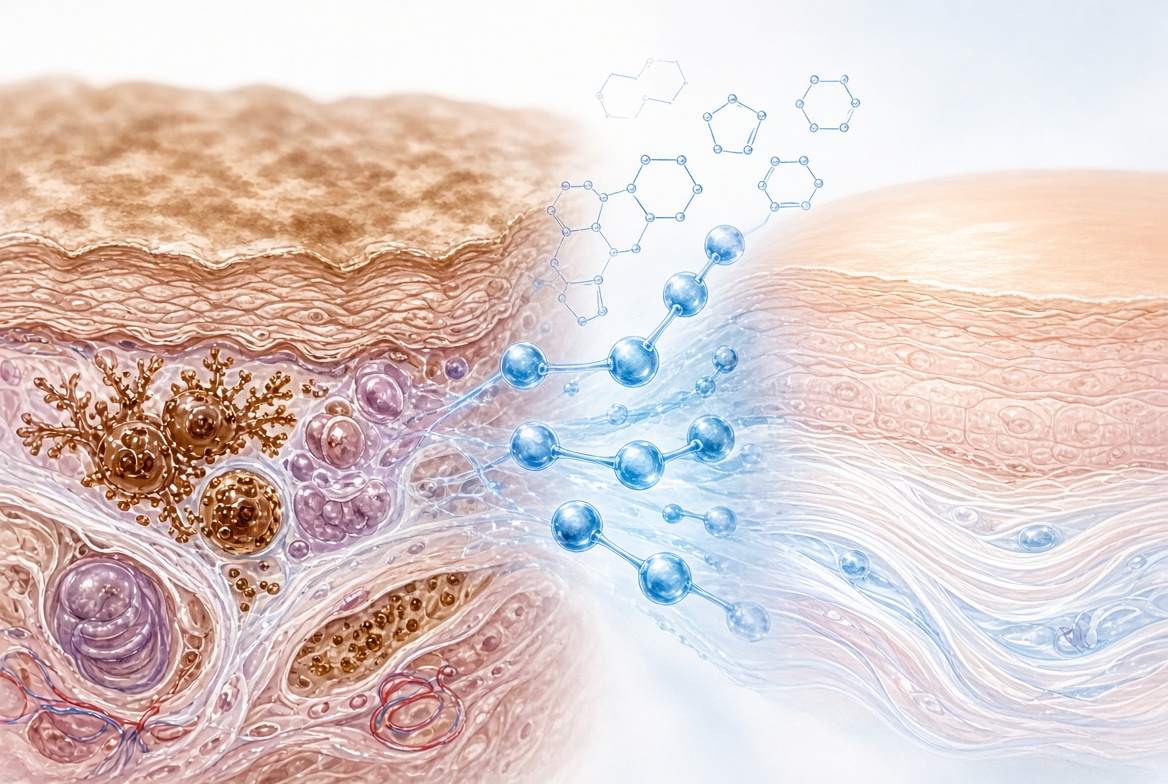
A useful way to explain the comparison to product-development teams is through the difference between light behavior and pigment biology.
| Question | Silk Peptide Answer | Sialic Acid Answer |
|---|---|---|
| Why does skin look dull today? | Dehydration, roughness, uneven surface texture, poor light reflection | May be relevant if dullness is linked to uneven tone or pigment accumulation |
| What does the ingredient improve first? | Skin feel, moisture-associated plumpness, smoothness, immediate radiance | Biological pathways associated with pigmentation regulation |
| Is the effect expected immediately? | Often yes, especially in leave-on hydrating formats | Usually no; assessment should be based on a defined usage period |
| What should testing measure? | Hydration, roughness, gloss, skin feel, visual texture | Melanin index, skin brightness, colorimetric measurements, spot appearance, consumer feedback |
| Which claim is more suitable? | "Silky-smooth glow" | "More even-looking tone" |
In a competitive beauty market, these differences can create a better product story. A brand does not need to overpromise one ingredient. It can explain that radiance has multiple dimensions: surface smoothness, hydration, light reflection, pigment balance, and protection from environmental stressors.
Silk peptide or silk fibroin materials are particularly relevant in water-based formulations. ZHENYIBIO's silk fibroin specifications identify a recommended pH range of 4.5–6.5 for formulation work and advise avoiding temperatures above 80°C and strong oxidants. The ingredient is positioned for leave-on usage at approximately 0.5%–5%, depending on the finished product format and sensory target.
- Hydrating glow serum
- Barrier-comfort essence
- Brightening preparation lotion
- Overnight gel-cream
- Sheet-mask essence
- Makeup-prep serum
- Soft-focus primer with skincare benefits
- Sensitive-skin moisture concentrate
Control molecular profile. The molecular-weight distribution influences deposition, sensorial performance, and the final film on skin. Buyers should ask suppliers for technical documentation rather than choosing solely on a broad "silk peptide" label.
Avoid excessive tack. A high level of humectants, polymers, and protein-derived solids can create stickiness. Sensory panels should assess dry-down time, residue, pilling, and compatibility with sunscreen or foundation.
Protect formula stability. Strong oxidants may compromise silk-derived protein systems. Build compatibility testing into the development timeline.
Use the right claim language. The strongest finished-product story is often "hydration-supported glow" or "silky smooth radiance," not a biological pigmentation claim.
Sialic acid requires a different product-development mindset. The focus should be stability, delivery, efficacy testing, and realistic claim boundaries.
- Daily tone-refining serum
- Dark-spot support treatment
- Post-blemish care essence
- Brightening ampoule
- Night renewal emulsion
- Multi-pathway radiance serum
- Tone-evening mask concentrate
Sialic acid may work best as part of a broader brightening architecture rather than as a single-hero active. A practical system can include:
1. A pigment-pathway active, such as sialic acid, selected based on supported mechanism and compatibility.
2. An antioxidant component, especially a stable botanical or fermentation-derived antioxidant.
3. A barrier-supporting system, because irritation can worsen the visible appearance of uneven tone.
4. A suitable delivery strategy, such as encapsulation or a carefully designed emulsion system where appropriate.
5. Daily UV-protection messaging, because ultraviolet exposure remains a major driver of visible hyperpigmentation.
Natural compounds may influence melanogenesis through tyrosinase inhibition, redox regulation, melanosome dynamics, and signaling pathways involving MITF and cAMP-related mechanisms. Yet research also shows that pigment biology is context-dependent, reinforcing the need for formula-specific validation rather than broad assumptions.
As an ingredient manufacturer working with international OEM and ODM customers, the most valuable support is not simply offering a raw material. It is helping buyers choose the right evidence pathway before launch.
- Is the target claim instant radiance, long-term tone refinement, or both?
- Is the formula designed for a serum, cream, mask, cleanser, or makeup hybrid?
- Does the brand need instrumental proof of hydration, brightness, or melanin-index change?
- Is the target market sensitive to "whitening" terminology?
- Does the product include a sunscreen recommendation or a coordinated daytime regimen?
- Has the finished formula been tested for irritation, compatibility, stability, and consumer use?
For a silk peptide product, evaluate:
- Corneometry for hydration
- Visual dryness and roughness scoring
- Skin gloss or light-reflection assessment
- Expert sensory panel feedback
- Makeup compatibility and pilling assessment
For a sialic acid brightening product, evaluate:
- Colorimetry, including L* value changes
- Melanin index where appropriate
- Digital image analysis of visible spots
- Clinical grading of overall tone evenness
- Consumer assessment after a defined application period
- Patch testing and stability testing
This evidence-first workflow helps a brand move from an ingredient story to a product story that buyers can understand and trust.
Yes. The two ingredients can be complementary when the formula is designed to deliver both instant optical refinement and longer-term visible tone support.
A strong positioning example is:
> "A dual-radiance serum that smooths the look of dry, uneven texture for an immediate silk-like glow while supporting a clearer, more even-looking complexion with continued use."
In this concept, silk peptide creates the first-use experience. Sialic acid provides the longer-horizon brightening narrative. Botanical antioxidants, fermented extracts, and a mild barrier-support system can strengthen the overall concept.
For ZHENYIBIO TECHNOLOGY INC, this type of combination aligns well with a formulation approach that integrates natural active materials, biotechnology, controlled quality specifications, and customized OEM/ODM development. The right commercial advantage comes from matching the ingredient system to a specific market need—not from treating every radiance claim as identical.
Choose silk peptide when the priority is a refined surface feel, hydration-supported luminosity, elegant sensorial performance, and immediate visible smoothness.
Choose sialic acid when the priority is a more biological brightening narrative focused on the visible appearance of uneven tone over time.
Choose a silk peptide plus sialic acid system when your brand wants to bridge immediate "glass-skin" radiance with a longer-term tone-evening routine.
ZHENYIBIO TECHNOLOGY INC can support OEM and ODM teams with customized active combinations, botanical-fermentation concepts, formulation compatibility guidance, and quality documentation. Contact our technical team to develop a targeted radiance formula for your brand, market, claim direction, and product format.
Silk peptide mainly supports a smoother, more hydrated-looking surface that can improve visible light reflection. Sialic acid is used for its potential role in biological pathways connected to melanin formation and visible skin-tone evenness.
Silk peptide is better described as a radiance and surface-conditioning ingredient. It may help skin look smoother and more luminous, but it should not be positioned as a direct melanin-reducing active.
The answer depends on the formula, concentration, delivery system, consumer skin condition, use consistency, and exposure to ultraviolet light. Brands should set expectations based on finished-product testing rather than raw-material data alone.
Yes. Silk peptide can improve the sensory profile and immediate glow of a brightening serum. It may be paired with ingredients selected for visible tone-evening benefits.
Silk-derived proteins are commonly used in gentle, moisture-focused cosmetic systems. However, the safety of a finished product depends on the entire formula, including preservatives, fragrance, pH, concentration, and user-specific sensitivities. Patch testing remains advisable.
Useful methods include melanin-index measurement, colorimetry, photography-based spot analysis, trained clinical grading, consumer perception studies, stability testing, and irritation testing.
Ultraviolet exposure can activate melanogenesis and worsen visible uneven tone. A brightening routine is more coherent when paired with daily broad-spectrum sun protection.
1. Hong, S., Lim, H., & Kim, D.-H. "Biological Roles of Melanin and Natural Product-Derived Approaches for Its Modulation." *International Journal of Molecular Sciences*, 2026. [Read the article]
2. Zhu et al. "Oral N-Acetylneuraminic Acid Promotes Spot Brightening." *Cosmetics*, 2026. [Read the article]
3. ZHENYIBIO TECHNOLOGY INC. "Silk Fibroin Supplier & Manufacturer." Technical product information, specifications, formulation guidance, and quality parameters. [View the product page]
4. Yan, Z. et al. "Advances in Nanotechnology-Based Topical Delivery." *PMC*, 2026. Discussion of topical ingredient safety assessment and cosmetic regulatory considerations. [Read the article]
5. Martínez-Gutiérrez, A. "A Multifaceted and Holistic Protocol for the Treatment of Hyperpigmentation." *IntechOpen*, 2026. [Read the chapter]
6. Yang, N. et al. "Plant-Derived Extracellular Vesicles in Facial Aesthetics." *Exploration of Cell Therapy*, 2025. [Read the article]


