


Views: 257 Author: ZHENYIBIO Publish Time: 2026-10-28 Origin: Site
Content Menu
● Why Cosmetic Ingredient Suppliers Set Minimum Order Quantities
● Calculate Your Real Ingredient Requirement Before Negotiating
>> Convert Your Launch Plan Into Kilograms
>> Separate Purchasing Budget From Total Launch Budget
● Compare Total Cost, Not Just Price per Kilogram
● Six Ways to Negotiate a High Cosmetic Ingredient MOQ
>> 1. Request a Paid Pilot Order
>> 2. Ask About Existing Stock and Standard Grades
>> 3. Propose Scheduled Deliveries
>> 4. Ask Whether Mixed Orders Qualify
>> 5. Explore Qualified Distribution
>> 6. Coordinate Demand Through Your Manufacturing Partner
● Protect Botanical and Fermentation Ingredient Quality
>> Compare Specifications, Not Marketing Names
>> Request Documentation Before Committing
● Check Whether You Can Use the MOQ Before Expiry
● Do Not Reformulate Solely to Consume Excess Inventory
● Use a Stage-Gated Purchasing Plan
● Send a Negotiation Request Suppliers Can Evaluate
● Build a Right-Sized Ingredient Sourcing Plan With ZHENYIBIO
>> Can buyers negotiate a cosmetic ingredient supplier's MOQ?
>> Is paying more per kilogram sensible for a smaller order?
>> Can ingredient samples be used for commercial production?
>> Does the same ingredient name mean two suppliers offer equivalent materials?
>> Does a natural ingredient automatically qualify for organic certification?
>> When should a buyer reject an MOQ proposal?
When a cosmetic ingredient supplier's MOQ exceeds your budget, do not immediately accept the financial strain or abandon the ingredient. First, calculate how much material your launch actually needs. Then ask about smaller stock quantities, paid pilot orders, scheduled deliveries, or qualified distribution channels. Compare the total cost of each option—not just the price per kilogram.
For brands developing botanical skincare or fermentation-based formulations, the challenge is especially important. An attractive bulk price can become expensive when unused ingredients tie up cash or expire before production.
My procurement recommendation is straightforward: prioritize usable value over purchasing volume. The right agreement should support formulation quality, realistic demand, and your next production milestone.

A minimum order quantity, or MOQ, is the smallest quantity a supplier agrees to sell under specified commercial conditions. However, not every minimum reflects the same constraint.
Before negotiating, identify what the quotation actually requires.
| Minimum type | What it means | What buyers should ask |
|---|---|---|
| Manufacturing minimum | Quantity needed for a production run | Is an existing production lot available? |
| Packaging minimum | Smallest standard drum, bag, or container | Can smaller packs be supplied safely? |
| Order-value minimum | Minimum invoice amount | Can different eligible ingredients share one order? |
| Custom-development minimum | Commitment for a tailored specification | Would a standard grade meet the application? |
For botanical extracts and fermentation-derived ingredients, production economics may involve processing, purification, testing, and packaging. Smaller orders do not necessarily reduce those costs proportionally.
Nevertheless, a manufacturer's production minimum is not automatically the smallest quantity available through every sales channel. Ask where flexibility exists before requesting a discount.
A useful negotiation begins with a credible requirement—not simply "your MOQ is too high."
Use this calculation:
Ingredient requirement = finished-product batch weight × ingredient inclusion rate.
Consider an illustrative serum launch:
- Planned production: 5,000 bottles.
- Net fill weight: 30 grams per bottle.
- Total finished-product weight: 150 kilograms.
- Ingredient inclusion rate: 2%.
- Theoretical ingredient requirement: 3 kilograms.
This calculation excludes filling losses, development samples, retained samples, and manufacturing allowances. Your production team should determine those additional quantities.
If the supplier's MOQ is 25 kilograms, the commercial question becomes clear: why purchase more than eight times the theoretical first-batch requirement?
Before accepting that quantity, identify realistic additional production that could consume the balance.
Your ingredient allowance should leave room for:
- Freight, insurance, duties, and customs handling.
- Formulation development and relevant testing.
- Packaging and filling.
- Storage and inventory management.
- Cash reserves for replenishment.
A purchase is not affordable merely because the ingredient invoice fits the budget.
A higher unit price can produce a lower-risk purchasing decision.
The following hypothetical comparison illustrates the difference. These figures are planning assumptions, not supplier quotations or market averages.
| Cost item | Bulk purchase | Smaller purchase |
|---|---|---|
| Quantity | 25 kg | 5 kg |
| Ingredient price | $80/kg | $110/kg |
| Ingredient invoice | $2,000 | $550 |
| Assumed freight and handling | $250 | $100 |
| Initial cash outlay | $2,250 | $650 |
| Expected use within the planning period | 5 kg | 5 kg |
| Cost per expected kilogram consumed | $450 | $130 |
The bulk option leaves 20 kilograms available for future production. That inventory may retain value if demand materializes and the material remains suitable.
However, if the business cannot reasonably consume it, the lower quoted price offers little practical advantage.
My preferred decision question is: "How much cash must we commit to obtain the quantity we can confidently use?"
Ask whether the supplier can provide a commercially usable pilot quantity at a higher unit price.
Explain your application, required quantity, testing schedule, and potential reorder timing. A specific proposal gives the supplier something operationally meaningful to evaluate.
Confirm whether pilot material matches the intended commercial grade. A development sample should not be assumed suitable for saleable production without appropriate verification.

Custom specifications can narrow purchasing flexibility.
Ask whether an existing botanical extract, standard active concentration, or established fermentation-derived grade could meet your formulation requirements.
Evaluate alternatives technically before switching. A similar ingredient name does not establish equivalent composition or performance.
A blanket order with scheduled releases may reduce the amount physically delivered at once.
However, distinguish delivery flexibility from financial flexibility. The supplier may still require payment or a binding commitment for the full quantity.
Clarify:
- Deposit and payment milestones.
- Inventory ownership.
- Storage conditions and charges.
- Minimum remaining shelf life at each release.
- Cancellation terms and responsibility for unused stock.
If the restriction is a minimum invoice value, combining eligible ingredients may help.
If the restriction is a production minimum for one ingredient, adding unrelated products may not solve it.
Only combine materials already supported by your development plan. Buying unnecessary ingredients simply converts one inventory problem into several.
Ask the manufacturer whether it supplies a distributor that offers smaller packs.
Verify the material's origin, grade, batch traceability, storage history, and documentation. If repackaging occurs, establish who controls it and how contamination risks are managed.
A smaller quantity is useful only when its quality remains dependable.
An OEM or ODM partner may already purchase the required ingredient or use a compatible standard grade across projects.
Ask whether sourcing can be consolidated without compromising your specification.
Confirm purchasing responsibility, ownership of remaining stock, permitted substitutions, and access to relevant batch records.
A low-MOQ cosmetic ingredient supplier is not automatically the best supplier. Commercial flexibility must be assessed alongside technical suitability.
For botanical actives, review:
- Botanical identity and plant part.
- Extraction medium and carrier.
- Standardized marker content, where applicable.
- Preservatives and full ingredient composition.
- Relevant contaminant and microbiological specifications.
For fermentation-derived materials, request information appropriate to the ingredient, such as identity, composition, assay method, residual components, and handling conditions.
Two products described as the same "extract" may contain different carriers or active concentrations. Those differences can change dosage, compatibility, and cost in the finished formula.
A practical qualification package may include:
- Technical data sheet and specification.
- Representative certificate of analysis during evaluation.
- Batch-specific certificate of analysis before release.
- Safety data sheet, where applicable.
- Storage instructions and shelf-life information.
- Relevant safety and performance evidence.
- Certification documentation when required by the project.
Documentation supports evaluation; it does not automatically establish finished-product safety or substantiate every marketing claim.
For the United States, the responsible person must maintain adequate safety-substantiation records for the cosmetic product. Ingredient documentation contributes to that assessment but does not replace it.
Shelf life turns a purchasing decision into a time-sensitive inventory decision.
Consider another hypothetical example:
- MOQ: 25 kilograms.
- Expected consumption: 1 kilogram monthly.
- Confirmed remaining shelf life upon receipt: 18 months.
At that consumption rate, 7 kilograms would remain after 18 months, assuming constant demand and no other losses.
Do not solve that mismatch by assuming the expiry date can be extended.
Ask the supplier to explain:
1. Whether the stated date is an expiry date or a retest date.
2. How storage and opened-container handling affect suitability.
3. Whether supporting stability information is available.
4. How much remaining shelf life is guaranteed at dispatch or delivery.
Avoid applying one universal shelf-life assumption to all botanical or fermentation ingredients.
Increasing an active's dosage may appear to make a large MOQ easier to absorb. It can also create unnecessary formulation and assessment work.
A dosage change may affect appearance, odor, viscosity, preservation, compatibility, and the evidence supporting product claims.
Likewise, introducing the ingredient into several products only to reduce stock can multiply development costs.
Evaluate a higher-concentration grade carefully. It may reduce the kilograms needed, but savings depend on usable active content, recommended dosage, solubility, and formulation performance—not concentration alone.
The formula should serve the product brief. Inventory should not dictate the formula.
For early-stage brands, I recommend linking each purchasing commitment to a specific evidence milestone.
| Stage | Main objective | Appropriate purchasing focus |
|---|---|---|
| Feasibility | Confirm formulation compatibility | Evaluation samples |
| Development | Assess performance and relevant stability | Small development quantities |
| Pilot production | Check manufacturing behavior | Documented pilot material |
| Initial launch | Supply realistic near-term demand | Commercial quantity aligned with forecast |
| Expansion | Support demonstrated repeat demand | Larger orders or scheduled supply |
Before moving between stages, record what has been confirmed and what remains uncertain.
This prevents an optimistic sales forecast from becoming the sole justification for a large purchase. It also gives suppliers a clearer picture of your potential growth without presenting uncommitted forecasts as guaranteed orders.
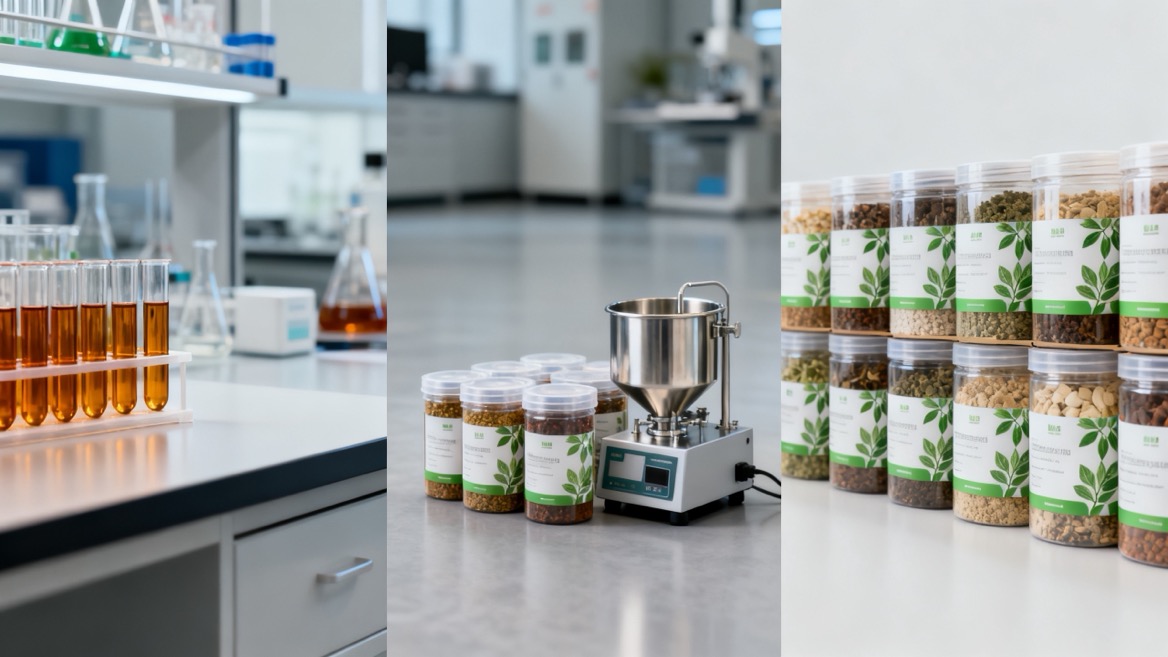
A concise, technically specific message is more productive than a general request for "your lowest MOQ."
> We are developing a botanical skincare product for [market]. Our planned first batch requires approximately [quantity] of [ingredient and grade], including our manufacturing allowance.
> Your quoted MOQ exceeds our current requirement. Could you quote a paid pilot quantity, smaller stock pack, standard-grade alternative, or supply through a qualified distributor?
> Please include available quantities, specifications, documentation, remaining shelf life, lead time, payment terms, and freight assumptions.
> Our next purchasing decision will follow formulation approval and pilot results. Any future forecast is indicative rather than a binding commitment.
This approach communicates seriousness while keeping your financial exposure explicit.
ZHENYIBIO TECHNOLOGY INC focuses on natural plant-active cosmetic ingredients, combining traditional botanical knowledge with modern bio-fermentation technology and providing OEM and ODM services for international customers.
When discussing a project, provide your target market, ingredient function, dosage, first-batch size, documentation needs, and purchasing budget.
Ask the team to assess suitable standard ingredients, development requirements, and available commercial arrangements. Minimum quantities and flexibility should be confirmed for the specific material and project.
Contact ZHENYIBIO with your formulation brief and first-order requirement to request a technically informed quotation—not simply a bulk-price comparison.
Sometimes. Flexibility depends on whether the minimum comes from production, packaging, invoice value, or customization. Ask which constraint applies before proposing alternatives.
Yes, when it reduces total cash exposure, unused inventory, or expiry risk. Compare landed costs and expected consumption rather than unit prices alone.
Do not assume so. Confirm permitted use, commercial-grade equivalence, traceability, documentation, and suitability with the supplier and your manufacturing team.
No. Compare composition, carriers, preservatives, active content, specifications, and relevant performance evidence before treating materials as interchangeable.
No. Natural origin and organic certification are different considerations. COSMOS distinguishes approved non-organic raw materials from certified raw materials containing organic content; verify the specific material's current status.
Reject or postpone it when the commitment exceeds realistic consumption, undermines essential testing budgets, or comes without adequate quality documentation and clear commercial terms.
- U.S. Food and Drug Administration. [Modernization of Cosmetics Regulation Act of 2022 (MoCRA)]. Authoritative basis for the discussion of responsible-person obligations and cosmetic safety substantiation. [fda]
- Lotioncrafter. [Licorice Root Extract: Product Information, Technical Documentation, and Formulation Guidance]. Product-level example illustrating why carrier systems, preservatives, specifications, and usage guidance matter when comparing botanical ingredients. Not a quotation or specification for ZHENYIBIO materials. [lotioncrafter]
- COSMOS-standard AISBL. [COSMOS APPROVED Raw Materials Without Organic Content]. Basis for distinguishing approval of non-organic raw materials from organic-content certification and checking documentary status. [cosmos-standard]
- COSMOS-standard AISBL. [COSMOS CERTIFIED Raw Materials With Organic Content]. Basis for explaining the separate certified-raw-material category. [cosmos-standard]


