


Views: 212 Author: ZHENYIBIO Publish Time: 2026-08-29 Origin: Site
Content Menu
● Capryloyl Salicylic Acid vs. Glycolic Acid at a Glance
● What Is Capryloyl Salicylic Acid?
>> Why Its Lipophilic Nature Matters
>> What LHA Can Support in Finished Products
>> The Importance of pH and Free Acid
● Deep Pore Penetration: What Does It Really Mean?
>> Capryloyl Salicylic Acid and Pore-Focused Care
>> Glycolic Acid and Surface Renewal
● Lipid Barrier Compatibility: The Critical Formulation Question
>> Why Glycolic Acid Can Feel More Intense
>> Why LHA Supports a Barrier-Aware Product Story
● Clinical Perspective: LHA vs. Glycolic Acid Peels
● Formulation Guide for Brand Owners
>> Choose Capryloyl Salicylic Acid When
>> Consider a Dual-Acid Strategy
● Practical Use and Product-Development Checklist
>> Is Capryloyl Salicylic Acid the same as Salicylic Acid?
>> Is Capryloyl Salicylic Acid better than Glycolic Acid for pores?
>> Can Glycolic Acid damage the skin barrier?
>> Can LHA and Glycolic Acid be used together?
>> Which acid is better for sensitive skin?
>> Should an exfoliating product include sun-protection advice?
>> What product formats work best for Capryloyl Salicylic Acid?
For brands developing modern exfoliating skincare, the choice between Capryloyl Salicylic Acid and Glycolic Acid is not simply a choice between two acids. It is a formulation decision that affects product positioning, consumer tolerance, pore-clearing performance, barrier comfort, usage frequency, and long-term repurchase potential.
At ZHENYIBIO TECHNOLOGY INC, we work from a practical ingredient-development perspective: an active is only valuable when it can deliver measurable benefits within a stable, safe, sensorially appealing, and market-ready formula. As global consumers increasingly seek smoother texture, clearer pores, brighter tone, and visible renewal without excessive dryness or peeling, Capryloyl Salicylic Acid—also widely recognized as LHA—has become an important option for gentler exfoliation systems.
This article compares Capryloyl Salicylic Acid vs. Glycolic Acid across skin affinity, exfoliation behavior, pore performance, lipid-barrier compatibility, formulation strategy, and product-development applications. For OEM and ODM buyers, the goal is not to declare one ingredient universally "better." The goal is to identify which active, delivery system, and product format best match the intended user, claim direction, and commercial positioning.

Capryloyl Salicylic Acid and Glycolic Acid are both used to support skin renewal. However, they operate differently because of their molecular structures, solubility profiles, and interactions with the skin surface.
Glycolic Acid is an alpha-hydroxy acid, or AHA. It is water-soluble and known for surface exfoliation, texture refinement, brightening support, and visible skin-smoothing benefits. Because it has a very small molecular structure, Glycolic Acid can move efficiently through the upper layers of the skin when formulated at an appropriate concentration and pH.
Capryloyl Salicylic Acid is a lipophilic derivative of Salicylic Acid. The term "lipophilic" means it has a stronger affinity for oils and skin lipids. This makes it particularly relevant for formulas designed around congested pores, uneven texture, oily or combination skin, and consumers who want exfoliation with a more gradual sensory profile.
| Feature | Capryloyl Salicylic Acid (LHA) | Glycolic Acid (GA) |
|---|---|---|
| Acid category | Lipophilic salicylic-acid derivative | Alpha-hydroxy acid |
| Solubility tendency | Oil affinity / lipophilic behavior | Water-soluble |
| Primary exfoliation focus | Pore area, skin surface renewal, refined texture | Surface renewal, radiance, texture smoothing |
| Typical consumer perception | Slow, controlled, comfort-oriented exfoliation | Noticeable resurfacing and brightening action |
| Best-fit skin concerns | Congestion, enlarged-looking pores, oily-combination skin, rough texture | Dullness, uneven tone, fine surface lines, roughness |
| Formulation challenge | Solubility, dispersion, crystallization control | pH control, free-acid management, irritation mitigation |
| Barrier strategy | Often paired with lipids and soothing actives | Requires careful dose, pH, frequency, and sun-care guidance |
The central difference is simple: Glycolic Acid is often selected for visible surface renewal, while Capryloyl Salicylic Acid is often selected for gradual pore-focused exfoliation and a more lipid-compatible product story.
Capryloyl Salicylic Acid is the INCI name for a derivative created by attaching a fatty chain to Salicylic Acid. This structural change increases its affinity for oil-rich environments, including sebum and the lipid environment around the stratum corneum.
In professional product development discussions, Capryloyl Salicylic Acid is often described as LHA. It is especially valued in premium skincare categories because it can support a "micro-exfoliation" concept: a more progressive, controlled renewal approach rather than an aggressively peeling experience.
The European cosmetic ingredient inventory identifies Capryloyl Salicylic Acid with a skin-conditioning function. This is relevant because it reinforces a key positioning distinction: LHA is not only discussed as an exfoliating active but also as a component in sophisticated skin-conditioning systems.
The skin's outer protective layer contains a structured mixture of ceramides, cholesterol, and fatty acids. These lipids help regulate moisture loss and protect the skin from environmental stressors. When exfoliating products are poorly balanced, they may contribute to visible dryness, stinging, flaking, or a tight after-feel.
Capryloyl Salicylic Acid's oil affinity gives formulators a useful direction for pore-care products. It can be incorporated into systems that target oily zones, clogged-feeling pores, and rough skin texture while also being paired with barrier-support ingredients.
This does not mean that LHA is automatically non-irritating or suitable for every person at every dose. Formula design still determines the final consumer experience. Concentration, vehicle, pH, emulsifier system, use frequency, preservative system, fragrance level, and companion actives all matter.
Depending on product design and local claim substantiation, Capryloyl Salicylic Acid may support products positioned around:
- Smoother-looking skin texture
- Refined-looking pores
- More even skin surface appearance
- Reduced appearance of congestion
- Improved makeup application on rough areas
- Clearer-looking oily or combination skin
- Gentle exfoliation for daily or alternating-night routines
- Post-cleansing treatment for urban, pollution-exposed skin
For brand owners, its commercial advantage is that it can connect the language of exfoliation with the language of comfort, skin balance, and barrier-aware care.
Glycolic Acid is one of the most established AHAs in cosmetic science. It is widely used in lotions, toners, serums, masks, peel pads, body treatments, scalp products, and professional peel systems.
Because Glycolic Acid has a small molecular size and is water-soluble, it is often chosen when a product needs to communicate visible resurfacing, brighter-looking skin, improved softness, or enhanced skin texture. It can be especially compelling in products developed for dullness, uneven-looking tone, roughness, and the visible effects of accumulated dead skin cells.
The U.S. Food and Drug Administration notes that AHA-containing cosmetic products are marketed for benefits such as smoothing fine lines and surface wrinkles, improving skin texture and tone, cleansing pores, and improving overall skin condition.
When evaluating a Glycolic Acid formula, the percentage on the label does not provide the complete picture. The final pH influences how much acid is present in its active, unneutralized form. This affects both performance and tolerance.
For example, a 7% Glycolic Acid serum at one pH may feel and perform differently from another product with the same nominal acid percentage but a different pH, solvent system, or buffering strategy.
This is why serious OEM and ODM development should never rely on a single ingredient percentage alone. A stronger formula is not necessarily a better formula. The best product is one that balances:
- Target user sensitivity
- Desired visible result
- Frequency of intended use
- Formula pH
- Free-acid level
- Companion humectants and emollients
- Packaging compatibility
- Consumer instructions and sun-care communication
Clinical research has shown that Glycolic Acid at pH 4 can influence skin biology in formulations tested at 8%, 10%, 15%, and 25% concentrations. However, laboratory findings and professional-use protocols should not be translated directly into consumer product claims without product-specific testing.
"Deep pore penetration" is a powerful marketing phrase, but it should be explained carefully. Pores are follicular openings, not empty channels that can simply be "cleaned out" by any acid. Their appearance is influenced by sebum, dead-cell accumulation, hair follicle structure, skin elasticity, inflammation, and optical texture.
A more accurate formulation discussion focuses on skin affinity, delivery vehicle, keratinocyte turnover, sebum-associated environments, and surface desquamation.
Because Capryloyl Salicylic Acid is lipophilic, it is often selected for products intended to work in oil-prone areas. This makes it a strategic ingredient for formulations targeting the T-zone, enlarged-looking pores, rough texture, and recurrent congestion.
In a practical development setting, LHA is rarely used as a standalone miracle ingredient. Better outcomes usually come from a complete pore-care system that may include:
- Capryloyl Salicylic Acid for controlled exfoliation
- Niacinamide for a balanced skin-conditioning story
- Zinc PCA for sebum-prone product positioning
- Panthenol, beta-glucan, or ectoin for comfort support
- Ceramide-compatible lipid systems for barrier-conscious care
- Lightweight esters or gel-cream textures for oily skin users
This type of formula can deliver a more complete user experience than a high-acid product that creates immediate tingling but weak long-term compliance.
Glycolic Acid is generally more strongly associated with surface renewal. It can help loosen the cohesion of dead cells in the outermost skin layer, which can improve the visual smoothness and brightness of the skin.
For consumers whose main concern is dullness rather than congestion, Glycolic Acid may provide a more obvious "freshly resurfaced" effect. It is frequently used in brightening toners, overnight renewal serums, body lotions for roughness, and professional-style at-home peel products.
However, surface renewal is not the same as pore-specific care. Glycolic Acid can contribute to a clearer-looking skin surface and may support a pore-refining appearance, but its water-soluble character gives it a different formulation profile from a lipophilic exfoliating active such as LHA.
The phrase "without disrupting the lipid barrier" should be used responsibly. No exfoliating ingredient can guarantee zero barrier impact under every condition. Overuse, excessive concentration, low pH, poor pairing with other strong actives, compromised skin, and consumer misuse can all create tolerance issues.
A better and more credible promise is this: a well-designed exfoliating formula can be developed to support renewal while minimizing unnecessary barrier stress.
Glycolic Acid can be highly effective, but that effectiveness requires disciplined formula development. A 2024 study using reconstructed human epidermis examined Glycolic Acid-induced disruption of epidermal homeostasis in a model designed to mimic superficial peeling and barrier damage after acid stripping.
This does not mean all Glycolic Acid products damage the skin barrier. It means dose, pH, contact time, and formula architecture must be controlled. Glycolic Acid is particularly likely to require careful consumer education when it is used in frequent leave-on products.
The FDA advises that topical cosmetic products containing AHAs should communicate sun-sensitivity precautions. It states that products containing Glycolic Acid or Lactic Acid are considered safe for consumers under the reviewed conditions when AHA concentration is 10% or less, final pH is 3.5 or above, and the product includes skin-protection measures or directions for daily sun protection.
Capryloyl Salicylic Acid is often attractive to formulators because it can fit more naturally into an oil-compatible, low-irritation product concept. Its gradual exfoliation profile may be particularly suitable for users who dislike the obvious sting, flaking, or redness sometimes associated with stronger AHA products.
Still, responsible brands should avoid presenting LHA as automatically "barrier safe." A 2024 reassessment by the Cosmetic Ingredient Review Expert Panel concluded that the available data were insufficient to determine the safety of Capryloyl Salicylic Acid under intended cosmetic-use conditions.
For manufacturers, this is an important reminder: ingredient popularity is not a substitute for a complete safety dossier. Brands should evaluate raw-material specifications, impurities, toxicological data, exposure levels, finished-product stability, preservative compatibility, challenge testing, and human tolerance testing before launch.
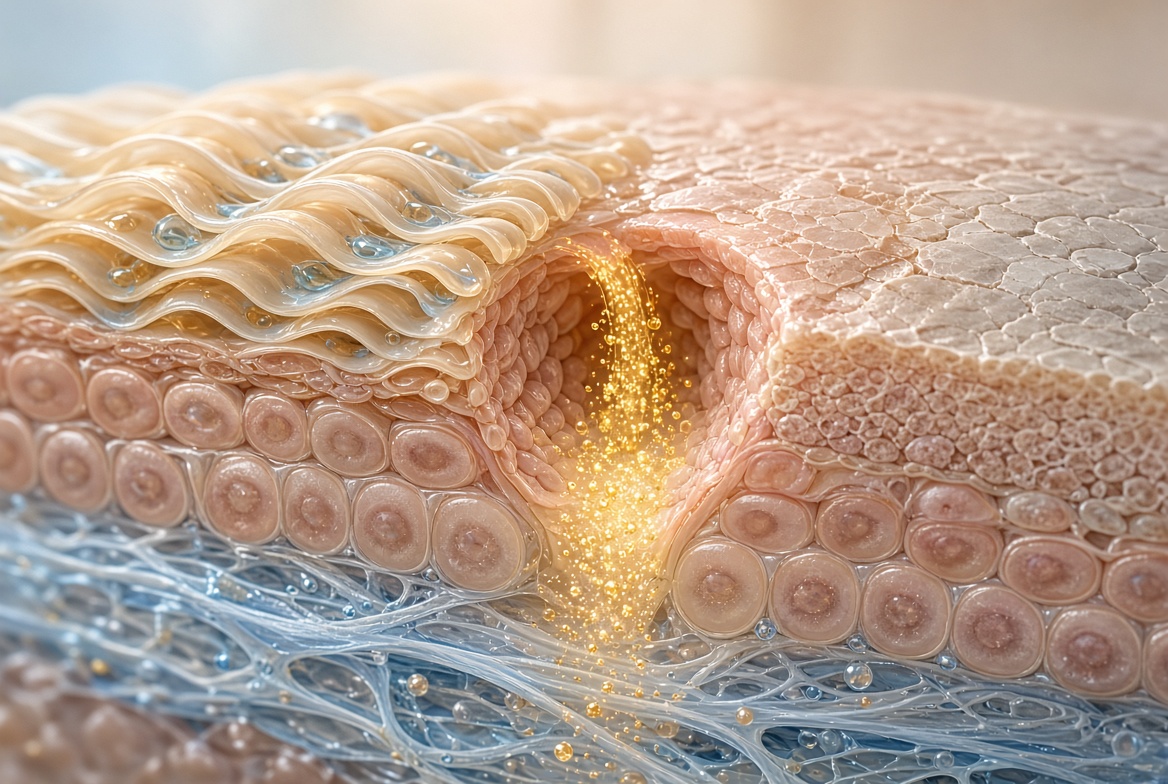
One frequently cited split-face study compared Capryloyl Salicylic Acid peels with Glycolic Acid peels among women with mild-to-moderate hyperpigmentation and fine lines. Of the 44 volunteers who completed the 12-week study, 41% of the LHA-treated group and 30% of the Glycolic Acid-treated group showed significant improvement in fine lines and wrinkles from baseline. For hyperpigmentation, the figures were 46% for LHA and 34% for Glycolic Acid. The difference between groups was not statistically significant.
The study concluded that 5% to 10% LHA peels were generally safe and as effective as 20% to 50% Glycolic Acid peels for the evaluated concerns.
This is commercially meaningful, but it should not be overstated. The study involved a specific peel format, defined concentrations, a limited sample size, and a particular participant profile. It does not prove that every LHA leave-on serum will outperform every Glycolic Acid toner.
The strongest conclusion is more balanced: LHA may offer a compelling route to visible renewal in formulas designed for gradual exfoliation and improved tolerance.
Choosing the right exfoliating active begins with the intended consumer and finished-product experience.
Capryloyl Salicylic Acid may be the better starting point when the product concept emphasizes:
- Oily, combination, or congestion-prone skin
- Pore appearance and uneven texture
- Gentle daily or alternate-day exfoliation
- Premium "skin cycling" routines
- Barrier-conscious acne-prone skincare
- Lightweight gel creams, emulsions, or targeted pore serums
- A mature-skin product that combines texture refinement with comfort
A useful example is a nighttime pore-refining gel-cream combining LHA, niacinamide, panthenol, a low-level humectant system, and barrier-support lipids. This format can serve consumers who want clearer-looking pores but do not tolerate aggressive peel pads.
Glycolic Acid may be the stronger fit when the formula focuses on:
- Dull, rough, or uneven-looking skin
- Visible surface smoothness
- Brightening-oriented routines
- Body care for rough-feeling areas
- Professional-inspired renewal products
- Texture-focused toner pads or overnight treatments
- Mature-skin products centered on radiance and fine surface lines
A practical example is an 8% buffered Glycolic Acid body lotion designed for rough-feeling arms or legs. The formula should include humectants, emollients, clear use instructions, and appropriate sun-care guidance.
For some brands, the best answer is not Capryloyl Salicylic Acid vs. Glycolic Acid. It is a carefully balanced combination.
A dual-acid formula can pair surface renewal with pore-focused support. However, this route requires strong formulation discipline. Compatibility testing, pH management, stability evaluation, consumer tolerance assessment, and claim substantiation are essential.
Avoid simply combining multiple acids to create a stronger marketing message. The better strategy is to create a purposeful acid architecture with a defined user profile and a clear reason for every active.
Before finalizing an LHA or Glycolic Acid product, brands should complete the following process:
1. Define the primary concern: pore congestion, dullness, uneven texture, fine lines, oiliness, or body roughness.
2. Identify the target user: sensitive skin, oily skin, mature skin, blemish-prone skin, or experienced exfoliant users.
3. Select the active system: LHA, Glycolic Acid, or a controlled multi-acid blend.
4. Optimize the delivery vehicle: water serum, toner, gel cream, emulsion, peel pad, mask, body lotion, or rinse-off cleanser.
5. Build in comfort support: humectants, soothing ingredients, emollients, and barrier-compatible lipids.
6. Conduct stability and compatibility testing: assess appearance, odor, pH drift, active integrity, packaging interaction, and microbial safety.
7. Validate safety and user experience: complete patch testing, irritation screening, and appropriate in-use evaluation based on the intended market.
8. Write responsible consumer directions: include frequency, layering guidance, discontinuation advice, and sun-protection recommendations where appropriate.
Capryloyl Salicylic Acid and Glycolic Acid are both valuable exfoliating ingredients, but they answer different formulation needs.
Capryloyl Salicylic Acid is a strong option for brands that want to develop pore-refining, texture-smoothing, and barrier-conscious skincare with a controlled exfoliation story. Its lipophilic character makes it especially relevant for oily, combination, and congestion-prone skin concepts.
Glycolic Acid remains a powerful and highly recognized option for visible surface renewal, brightness, smoother texture, and rough-skin care. It can produce impressive results, but it requires thoughtful pH control, dose selection, comfort support, and clear sun-care communication.
The best commercial product does not depend on choosing the most aggressive acid. It depends on matching the active system to the consumer, supporting the skin's comfort, validating the final formula, and delivering a result users can maintain consistently.
For brands, wholesalers, and manufacturers looking to create differentiated exfoliating skincare, ZHENYIBIO TECHNOLOGY INC can support OEM and ODM development from botanical-active selection and fermentation-inspired innovation to formula customization, stability planning, and market-oriented product positioning. Contact our team to develop a Capryloyl Salicylic Acid, Glycolic Acid, or dual-acid skincare solution aligned with your target market.

No. Capryloyl Salicylic Acid is a derivative of Salicylic Acid. It has a modified structure that gives it stronger lipophilic characteristics and makes it useful in controlled exfoliation and pore-care formulations.
Capryloyl Salicylic Acid is often better aligned with pore-focused and oily-skin product concepts because of its lipid affinity. However, the final result depends on the whole formula, active level, product format, and user's skin condition.
Glycolic Acid can contribute to irritation or barrier stress when concentration, pH, frequency, or product layering are not well managed. A properly designed product with suitable usage instructions can help reduce unnecessary stress.
Yes, they can be combined in a carefully designed formula. Brands should verify stability, pH, compatibility, tolerance, and finished-product performance rather than assuming that a multi-acid formula is automatically more effective.
Neither acid is universally suitable for all sensitive skin. LHA may be a useful starting point for a gentler exfoliation concept, but sensitive-skin products still need conservative design, robust tolerance evaluation, and clear directions.
Yes. This is particularly important for leave-on products containing Glycolic Acid and other AHAs because AHAs may increase sun sensitivity. Consumers should be instructed to use daily broad-spectrum sun protection and limit excess sun exposure.
Capryloyl Salicylic Acid can be used in pore serums, gel creams, emulsions, targeted spot-care products, exfoliating lotions, and premium overnight renewal products, depending on raw-material compatibility and formulation goals.
1. Johnson, W. Jr. et al. "[Safety Assessment of Capryloyl Salicylic Acid as Used in Cosmetics]." *International Journal of Toxicology*, 2024.
2. Narda, M. et al. "[Glycolic Acid Adjusted to pH 4 Stimulates Collagen Production and Improves Skin Quality]." *Journal of Cosmetic Dermatology*, 2020.
3. Kligman, D. E. et al. "[Clinical Tolerance and Efficacy of Capryloyl Salicylic Acid Compared with Glycolic Acid in Facial Hyperpigmentation and Fine Lines]." *Journal of Cosmetic Dermatology*, 2009.
4. U.S. Food and Drug Administration. "[Alpha Hydroxy Acids]." Updated 2022.
5. Tang, S. C., and Yang, J. H. "[Dual Effects of Alpha-Hydroxy Acids on the Skin]." *Molecules*, 2018.
6. Yang, L. et al. "[Glycolic Acid-Induced Disruption of Epidermal Homeostasis in a Reconstructed Human Epidermis Model]." *Journal of Dermatological Science*, 2024.
7. European Commission. "[CosIng: Capryloyl Salicylic Acid]." Cosmetic Ingredients Database.


