Views: 268 Author: ZHENYIBIO Publish Time: 2026-06-30 Origin: Site
Content Menu
● Introduction: Why Compare Pro-Xylane and PDRN Now?
● What Is Pro-Xylane? A GAG-Centric Anti-Aging Active
● What Is Polydeoxyribonucleotide (PDRN)? DNA-Based Tissue Regeneration
● Mechanism of Action: GAG Stimulation vs. Salvage Pathway Repair
>> Pro-Xylane: Rebuilding the Extracellular "Cushion"
>> PDRN: Activating Regenerative Signaling and Angiogenesis
● Clinical and Preclinical Evidence: How Strong Is the Data?
>> Evidence Landscape for Pro-Xylane
>> Evidence Landscape for PDRN
● Comparative View: When to Choose Pro-Xylane vs. PDRN
>> Key Differences at a Glance
● Formulation Strategy: How an OEM/ODM Partner Should Think
>> Formulating with Pro-Xylane
● Hybrid Strategy: Can You Combine Pro-Xylane and PDRN?
● Case-Style Scenario: Launching a Post-Procedure Recovery System
● Practical Guidance for Brands: How to Choose
>> Strategic Selection Checklist
● Expert Insight: Future Trends for GAG and DNA-Based Actives
● FAQ
In advanced cosmetic formulation, Pro-Xylane (Hydroxypropyl Tetrahydropyrantriol) and Polydeoxyribonucleotide (PDRN) sit at the intersection of anti‑aging science and regenerative biotechnology. Both are positioned as high-value actives for brands seeking clinically grounded, premium skin‑repair claims, yet they act through very different biological routes. [zhenyibio]
From the perspective of a formulator, OEM/ODM partner, or brand owner, the real question is not "which ingredient is better," but which biological pathway—GAG stimulation or DNA‑based tissue regeneration—better fits your product strategy, target indication, and regulatory positioning. This article compares Pro‑Xylane and PDRN from a practical industry and expert point of view, with a focus on efficacy, mechanism, formulation strategy, and go‑to‑market messaging. [pubmed.ncbi.nlm.nih]

Pro‑Xylane is a xylose‑derived molecule (INCI: Hydroxypropyl Tetrahydropyrantriol) originally developed as a "green chemistry" anti‑aging active. It is typically sourced from wood‑derived sugars such as beech trees, aligning well with plant‑based and sustainability narratives. [tri-matix]
Mechanistically, Pro‑Xylane upregulates glycosaminoglycan (GAG) synthesis in the epidermis and dermis, including hyaluronic acid and related mucopolysaccharides. These GAGs act like molecular sponges, retaining water, filling extracellular space, and supporting the dermal matrix, which translates into improved skin firmness, plumpness, and fine line reduction. In vitro data suggest Pro‑Xylane can increase GAG synthesis by up to around 400%, making it a potent ECM‑support ingredient for anti‑aging and barrier‑support formulas. [chemicalbook]
Polydeoxyribonucleotide (PDRN) is a mixture of DNA fragments, traditionally derived from salmon or trout sperm, and increasingly from sustainable sources such as microalgae. In medical and aesthetic practice, PDRN is used in injectable or topical forms to accelerate wound healing, tissue regeneration, and dermal remodeling. [pubmed.ncbi.nlm.nih]
At the molecular level, PDRN mainly acts via adenosine A2A receptors, triggering signaling cascades (ERK, AKT, STAT3, β‑catenin) that support fibroblast proliferation, collagen synthesis, and angiogenesis. Clinical and preclinical studies consistently show faster re‑epithelialization, thicker granulation tissue, and improved vascularization in PDRN‑treated wounds and post‑procedure skin, with a favorable safety profile. [pmc.ncbi.nlm.nih]
From a mechanistic perspective, Pro‑Xylane is best understood as a matrix optimizer:
- It enhances GAG synthesis, including hyaluronic acid, in epidermal and dermal layers. [zhenyibio]
- It promotes collagen production and improves dermal–epidermal junction adhesion, helping the epidermis and dermis bind more tightly. [zhenyibio]
- By filling extracellular spaces with water‑binding GAGs, it visually plumps the skin, smooths fine lines, and refines texture. [zhenyibio]
For brands, this translates into claims around firmness, elasticity, fine line reduction, and skin density, with a focus on anti‑aging rather than deep regenerative therapy.
PDRN operates at a deeper, tissue‑repair level:
- It provides DNA fragments used in the salvage pathway, supporting nucleic acid synthesis in proliferating cells. [pmc.ncbi.nlm.nih]
- It activates adenosine A2A receptors, boosting fibroblast proliferation, collagen type I expression, and growth factors such as VEGF, HGF, and GAS6. [pubmed.ncbi.nlm.nih]
- It enhances angiogenesis and re‑epithelialization, leading to faster wound closure and better quality of new tissue. [nature]
This mode of action supports claims around post‑procedural recovery, scar improvement, and regenerative skincare, especially when supported by clinical endpoints such as re‑epithelialization rates and histological data. [pubmed.ncbi.nlm.nih]
While much Pro‑Xylane data are proprietary, multiple suppliers and secondary sources converge on a consistent efficacy profile:
- In vitro tests show marked increases in GAG synthesis, often quoted up to around 400% in controlled conditions, along with increased collagen production. [chemicalbook]
- Reported benefits include improved dermal–epidermal adhesion, enhanced skin elasticity, reduced fine lines, and more even texture through improved extracellular matrix density. [tri-matix]
For cosmetic brands, the key advantage is that Pro‑Xylane's data set is squarely cosmetic, enabling robust anti‑aging positioning without straying into drug‑like claims.
The PDRN evidence base is broader and more clinically oriented:
- Systematic reviews of in vitro, in vivo, and clinical studies show PDRN consistently improves physiological tissue repair through salvage pathway support and adenosine A2A activation. [pubmed.ncbi.nlm.nih]
- Pilot clinical trials in skin graft donor sites report significantly faster re‑epithelialization, better trophic effects, and no relevant adverse events versus placebo. [pubmed.ncbi.nlm.nih]
- Experimental wound models (including laser‑induced and diabetic wounds) show thicker granulation tissue, increased VEGF‑positive cells, and accelerated healing when PDRN is delivered in optimized systems such as hydrogels. [pubmed.ncbi.nlm.nih]
For a cosmetic OEM/ODM, this creates an opportunity to translate medical‑grade data into high‑credibility cosmetic narratives, especially in post‑procedure and dermocosmetic categories, while remaining within cosmetic claim boundaries per local regulation.
A strategic comparison helps align biological mechanisms with specific product concepts.
| Aspect | Pro-Xylane (GAG Stimulation) | Polydeoxyribonucleotide / PDRN (DNA-Based Regeneration) |
|---|---|---|
| Primary mechanism | Upregulates GAGs (e.g., hyaluronic acid) and collagen in skin ECM | Activates A2A receptors and salvage pathways to drive tissue regeneration |
| Main skin benefits | Firmness, elasticity, plumpness, fine line reduction, texture smoothing | Regeneration, faster wound healing, post‑procedural recovery, dermal remodeling |
| Depth of action | Focused on extracellular matrix and dermal–epidermal junction | Acts on cell proliferation, angiogenesis, and collagen remodeling |
| Typical positioning | Advanced anti‑aging, barrier support, "green chemistry" active | Regenerative skincare, mesotherapy‑inspired, post‑procedure dermocosmetics |
| Evidence profile | Strong in vitro ECM data and cosmetic performance narratives | Extensive preclinical and clinical data in wound repair and tissue healing |
| Source narrative | Xylose‑derived, linked to plant‑based and sustainable chemistry | Historically fish‑derived, now also microalgal and biotechnological sources |
| Formulation focus | Serums, creams, eye/neck care, daily anti‑aging | Ampoules, masks, recovery creams, clinic‑adjacent and professional retail lines |
[nature]
For brands prioritizing visible cosmetic anti‑aging with a strong "botanical‑biotech fusion" story, Pro‑Xylane is often the first choice. For those targeting regeneration, post‑procedure care, and aesthetic clinic channels, PDRN usually delivers a more compelling expert narrative. [pubmed.ncbi.nlm.nih]
From a manufacturer's perspective, successful commercialization is less about the ingredient in isolation and more about system design: concentration, carrier system, and synergy with other actives.
To maximize Pro‑Xylane's GAG‑boosting potential:
- Pair it with hyaluronic acid and other humectants to amplify plumping and hydration signals already supported by GAG upregulation. [pmc.ncbi.nlm.nih]
- Combine with peptides and ceramides to support both matrix building and barrier repair, creating a holistic anti‑aging and barrier‑support system.
- Use in serums and creams with textures that visually and sensorially reinforce "density" and "cushion", such as bouncy gels or rich emulsions.
Brand message: "Rebuild your skin's natural cushioning network through advanced GAG stimulation."
To harness PDRN's regenerative profile:
- Position it in post‑procedure recovery lines (post‑laser, microneedling, peeling) where clinical references to wound healing and angiogenesis are most relevant. [pmc.ncbi.nlm.nih]
- Deliver PDRN via high‑affinity carriers (e.g., hydrogels, bio‑cellulose masks, encapsulation) to maintain stability and controlled release at sensitive skin sites. [ijsurgery]
- Combine with soothing actives (centella, panthenol, madecassoside) to reduce irritation while PDRN drives proliferation and remodeling.
Brand message: "Clinical‑grade DNA‑based regeneration translated into cosmetic care."
From a product‑line architecture standpoint, there is a strong case for a dual‑pathway strategy that integrates both Pro‑Xylane and PDRN in a coordinated regimen.
- Daily care products (serums, creams, eye and neck treatments) can focus on Pro‑Xylane‑driven GAG stimulation for long‑term firmness and texture refinement. [zhenyibio]
- Intensive or post‑procedure products (ampoules, masks, clinic retail items) can emphasize PDRN‑mediated tissue regeneration, targeting visible recovery and dermal quality. [pubmed.ncbi.nlm.nih]
This allows a brand to tell a layered story: "We rebuild the skin's cushion from the outside in, while supporting genuine biological regeneration from deeper layers." When presented with high‑quality stability, efficacy, and safety data, this dual claim architecture can meaningfully differentiate a brand in the premium dermocosmetic segment.
To illustrate a practical roadmap, consider a clinic‑aligned brand partnering with a botanical‑biotech OEM/ODM manufacturer.
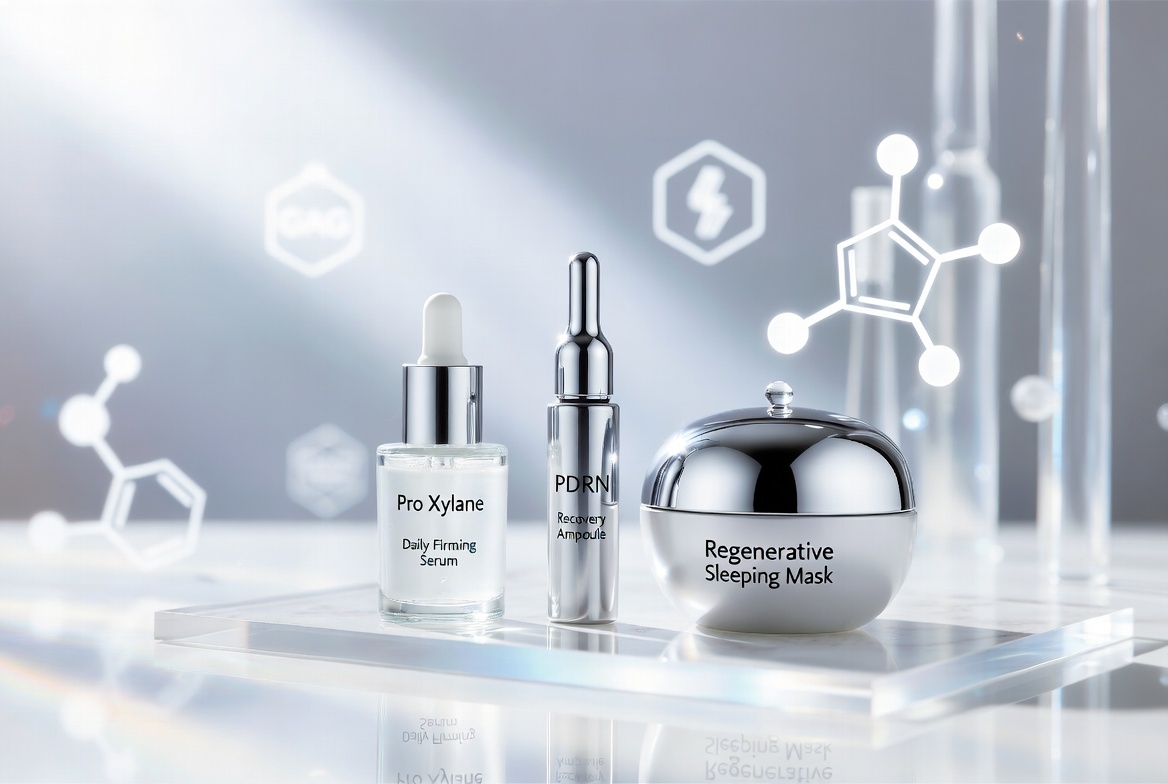
1. Core serum – Pro‑Xylane, hyaluronic acid, peptides
- Position: Daily anti‑aging and barrier support for patients before and after in‑clinic procedures.
- Claim focus: Firmness, hydration, fine line reduction via GAG and collagen support. [pmc.ncbi.nlm.nih]
2. Post‑procedure recovery ampoule – PDRN, centella, panthenol
- Position: Used immediately after fractional laser or microneedling in a cosmetic‑adjacent context, following local regulatory guidance.
- Claim focus: Visibly faster recovery, improved skin comfort, smoother texture after procedures, grounded in PDRN regeneration literature. [pmc.ncbi.nlm.nih]
3. Regenerative sleeping mask – Combined low‑dose PDRN + Pro‑Xylane
- Position: Night‑time repair step that bridges daily skincare and clinical support.
- Claim focus: Overnight renewal, improved elasticity, improved morning radiance through matrix optimization and regenerative signaling. [pmc.ncbi.nlm.nih]
This tiered ecosystem uses each ingredient where its biological strengths and clinical narratives are most relevant, while keeping the consumer journey intuitive.
For decision‑makers designing a new line or upgrading an existing formula, a simplified decision pathway is useful.
Consider leading with Pro‑Xylane if:
- Your hero claim centers on wrinkle reduction, firmness, and hydration within daily skincare.
- Your brand DNA emphasizes natural plant actives and sustainability.
- You are targeting retail or e‑commerce channels with consumers primarily seeking anti‑aging, not procedure‑related recovery.
Consider leading with PDRN if:
- You want regenerative, clinic‑adjacent positioning, especially for post‑procedure or sensitive‑skin recovery.
- You aim to leverage clinical literature on wound healing and tissue regeneration to strengthen expert endorsement. [pubmed.ncbi.nlm.nih]
- You are collaborating with dermatologists, aesthetic clinics, or medical‑beauty chains that value biotech and medical‑grade narratives.
In many cases, the optimal choice is a portfolio strategy where each active anchors different SKUs but shares a coherent story of multi‑level skin support.
Looking ahead, both Pro‑Xylane and PDRN are positioned to benefit from broader trends in evidence‑based, sustainable, and clinic‑inspired beauty.
- For Pro‑Xylane, expect more work on synergistic complexes with peptides, ceramides, and microbiome‑friendly humectants that reinforce barrier health and dermal density in a single system.
- For PDRN, the move toward non‑animal, fermentation or microalgal sources will support sustainability, traceability, and ethical sourcing narratives, while novel delivery systems like bio‑compatible hydrogels continue to enhance efficacy. [nature]
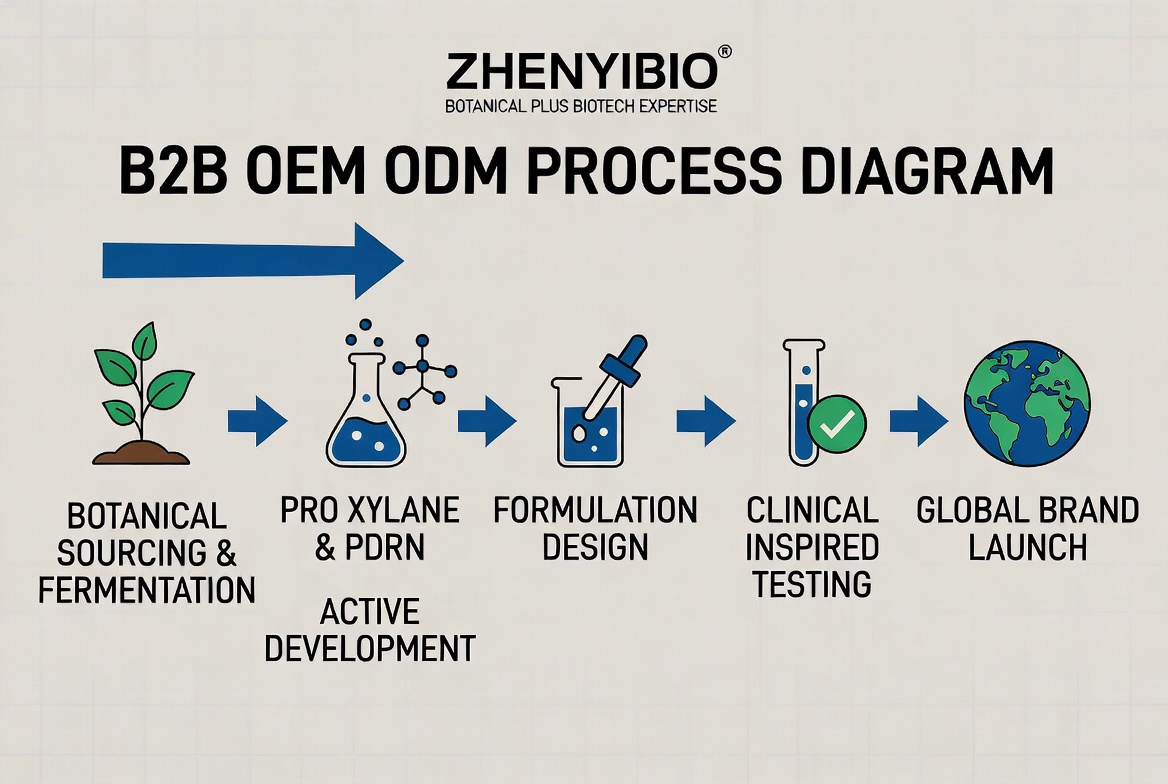
Brands that partner closely with OEM/ODM manufacturers capable of integrating botanical extraction, fermentation, and nucleic‑acid technology will be best placed to create next‑generation anti‑aging and regenerative lines with strong scientific backing.
If your brand is exploring next‑generation anti‑aging or regenerative formulations, collaborating with an OEM/ODM partner that understands both botanical GAG activation and DNA‑based tissue regeneration can significantly shorten your innovation cycle. Define your primary claim (daily anti‑aging vs. regenerative recovery), target channel (retail vs. clinic‑adjacent), and sustainability requirements, then brief your manufacturing partner to design evidence‑based Pro‑Xylane and PDRN systems around those strategic anchors.
Q1. Is Pro-Xylane suitable for daily use in all skin types?
Yes, Pro‑Xylane is typically formulated for daily use across most skin types, particularly in hydrating and anti‑aging serums and creams, when the formula is well balanced for sensitivity and barrier support. [zhenyibio]
Q2. Can PDRN be used in over-the-counter cosmetic products?
PDRN can be incorporated into topical cosmetic products where regulations permit, but claims must focus on cosmetic benefits such as improved appearance, comfort, and quality of skin, not on medical treatment of diseases. [pubmed.ncbi.nlm.nih]
Q3. Is it safe to combine Pro-Xylane and PDRN in one routine?
In a well‑designed regimen, Pro‑Xylane and PDRN can be complementary, with Pro‑Xylane focusing on GAG‑driven firmness and hydration while PDRN supports regenerative processes, provided the overall formula respects skin tolerance and regulatory guidelines. [pmc.ncbi.nlm.nih]
Q4. Which ingredient is better for post-laser or microneedling care?
For post‑procedure contexts, PDRN has stronger backing from preclinical and clinical models of wound healing and tissue regeneration, while Pro‑Xylane can still support hydration and structural integrity as a secondary active. [pubmed.ncbi.nlm.nih]
Q5. How should brands communicate these technologies to consumers without overwhelming them?
Brands can translate complex mechanisms into simple narratives—such as "GAG‑boosting cushion technology" for Pro‑Xylane and "DNA‑inspired regenerative care" for PDRN—while providing more detailed explanations and references on professional or educational pages for expert audiences. [pmc.ncbi.nlm.nih]
1. ChemicalBook. "Pro‑Xylane (Hydroxypropyl tetrahydropyrantriol) – INCI, mechanism and efficacy." Available at: [https://www.chemicalbook.com/SupplyInfo_586833.htm]
2. Tri‑Matix / product brochure snippets on Pro‑Xylane's role in GAG and collagen synthesis and anti‑aging skin benefits. Available via: [https://www.tri-matix.com]
3. PubMed. "The effects of polydeoxyribonucleotide on wound healing and tissue regeneration: a systematic review." Available at: [https://pubmed.ncbi.nlm.nih.gov/32757710/]
4. PMC. "Polydeoxyribonucleotide: A promising biological platform to accelerate tissue repair." Available at: [https://pmc.ncbi.nlm.nih.gov/articles/PMC8618295/]
5. PubMed. "Clinical evaluation of the trophic effect of polydeoxyribonucleotide (PDRN) in patients undergoing skin explants." Available at: [https://pubmed.ncbi.nlm.nih.gov/11759182/]
6. Scientific Reports. "Polydeoxyribonucleotide‑delivering therapeutic hydrogel for diabetic wound healing." Available at: [https://www.nature.com/articles/s41598-020-74004-0]
7. J Cosmet Laser Ther. "Polydeoxyribonucleotide improves wound healing of fractional laser resurfacing in rat model." Available at: [https://pubmed.ncbi.nlm.nih.gov/27762652/]
8. Review article. "Polydeoxyribonucleotide in skincare and cosmetics: mechanisms, therapeutic applications and advancements." Available at: [https://brieflands.com/journals/jssc/articles/159728.pdf]
9. General overview of hyaluronic acid's topical benefits for skin quality and signs of aging. Available at: [https://pmc.ncbi.nlm.nih.gov/articles/PMC10078143/]
10. ZHENYIBIO / Zhenyi group website – company background as a botanical cosmetic ingredient manufacturer. Available at: [https://www.zhenyibio.com/]