


Views: 210 Author: ZHENYIBIO Publish Time: 2026-09-29 Origin: Site
Content Menu
● What Does Barrier Protection Require?
● Silk Fibroin vs. Collagen at a Glance
● How Silk Fibroin Forms a Protective Film
>> Strengths for compromised skin
>> Limits of the silk evidence
● How Collagen Protects and Conditions Skin
>> What human findings suggest
>> Where collagen may be preferable
● Which Film Better Supports Barrier Care?
● Three Questions Brands Should Test
>> 1. Does the film survive normal use?
>> 2. Does it improve measured outcomes?
>> 3. Can the supplier explain the ingredient?
● Claims, Safety, and Sourcing
>> Is silk fibroin better than collagen for reducing TEWL?
>> Can topical collagen rebuild collagen inside the skin?
>> Are silk fibroin and silk sericin the same ingredient?
>> Can silk fibroin and collagen be used together?
>> Does a protein film replace ceramides?
>> Which ingredient suits a vegan skincare line?
>> What should a brand request before choosing a supplier?
Silk fibroin vs. collagen is not simply a choice between two natural proteins. For skincare designed for a compromised barrier, the more useful question is what kind of film each ingredient forms, how that film behaves on skin, and whether the finished formula measurably reduces moisture loss. Silk fibroin is a promising structural film former; collagen is valued for water binding and surface conditioning. Neither, on its own, replaces the skin's missing barrier lipids.

A compromised skin barrier may feel tight, rough, or unusually reactive. The outermost layer of skin normally limits water loss through an organized combination of skin cells and intercellular lipids. When that system is disturbed, a topical film can offer temporary surface protection while the formulation supplies moisture and supports a more comfortable skin feel.
That distinction matters. Covering the surface is not the same as rebuilding the barrier. A protein film may reduce direct exposure to friction and help retain moisture. But it does not become the ceramides, cholesterol, and fatty acids that make up the skin's intercellular lipid structure.
For a cosmetic product, formulators should therefore consider three jobs separately:
- Film formation: Does the deposited layer remain even and comfortable after the product dries?
- Moisture management: Does the complete formula improve hydration or reduce transepidermal water loss (TEWL)?
- Tolerance: Does the product feel acceptable on skin that already stings or reacts easily?
A successful barrier-care product must balance all three. A film that looks impressive in a laboratory but feels tight, flakes under sunscreen, or irritates users is unlikely to succeed as a daily skincare product.
The word "collagen" can describe materially different ingredients. Native collagen, soluble collagen, and hydrolyzed collagen do not necessarily produce the same film. The comparison below treats collagen as a formulation family rather than a single standardized raw material.
| Consideration | Silk fibroin | Collagen |
|---|---|---|
| Typical origin | Protein obtained from silkworm silk after processing | Usually animal-derived protein from sources such as fish, bovine, or porcine tissue; recombinant alternatives also exist |
| Main surface appeal | A cohesive, adjustable protein film | Water binding, conditioning, and a smooth surface feel |
| Critical processing variable | Purification, molecular form, and film structure | Source, degree of hydrolysis, and molecular-weight profile |
| Likely formulation challenge | Avoiding a film that feels stiff or changes on contact with water | Maintaining a useful film while achieving solubility and pleasant texture |
| Evidence most relevant to barrier care | Film-material research and limited human evidence from medical dressings | Cosmetic-formulation research and some human hydration and TEWL observations |
| Best starting concept | Lightweight protective serum or flexible leave-on film | Hydrating serum, cream, or mask where moisturization is the lead benefit |
There is no well-established clinical winner for ordinary cosmetic barrier care. Published silk and collagen studies use different materials, doses, vehicles, and test conditions. A fair purchasing decision requires finished-formula testing, not a comparison of ingredient names.
Silk fibroin is the principal structural protein in silk fiber. Processing can turn it into films, gels, sponges, or other materials. For skincare, its attraction lies in the ability to create a continuous surface layer whose properties can be adjusted through processing and formulation.
This is not a guarantee that every silk-containing serum forms the same protective coating. The form of fibroin matters. A product containing a fragmented silk protein may behave differently from a product designed around a coherent fibroin film. Concentration, surrounding polymers, drying conditions, and the final product vehicle also affect the result.
A well-designed silk fibroin film may suit a product that needs a light, elegant protective finish. Research on silk-based biomaterials demonstrates that fibroin can be made into films with useful mechanical properties and water-handling behavior. This gives formulators room to work on flexibility, adherence, and removal.
From a development perspective, that flexibility is valuable. A brand might want a serum that leaves little visible residue, a mask that holds moisture against the skin, or a cream that reduces the sensation of friction. Each concept calls for a different film rather than the highest possible protein loading.
Medical wound dressings provide useful information about silk's material properties, but they are not direct proof that a cosmetic serum repairs a compromised barrier. Dressings may be thicker, processed differently, and used under conditions unlike everyday skincare.
Human research on silk-based wound products exists, yet studies of finished fibroin cosmetics for routine barrier care remain more limited. Results from dressings containing silk, gelatin, or other components should not be credited to fibroin alone. Silk fibroin should also not be presented as inherently antimicrobial; additional ingredients are often responsible when a silk-based material shows that function.
Collagen is familiar to skincare buyers because it is a structural protein in the body. That familiarity creates a common misconception: applying collagen to the surface does not mean placing new collagen into the dermis.
Native collagen is a large molecule and primarily acts at the skin surface when used topically. Its relevant cosmetic properties include water binding, texture modification, and film formation. These can help skin feel smoother and better hydrated without implying that the ingredient replaces the body's own dermal collagen.
Hydrolyzed collagen consists of smaller protein fragments. It is often easier to incorporate into water-based products, but smaller fragments should not automatically be assumed to form a stronger continuous film—or to penetrate deeply. Hydrolysis changes the ingredient's behavior. Suppliers should specify the grade they are offering rather than treating "collagen" and "collagen peptides" as interchangeable.
A review of topical hydrolyzed-collagen research describes a lotion study involving 40 women with non-lesional, atopic-sensitive skin. After four weeks, investigators reported improvements in hydration and skin-surface appearance, as well as a TEWL measure of barrier function.
That is encouraging for product development, but it is not a head-to-head test against silk fibroin. It also evaluates a formulation containing collagen, not isolated collagen applied without a vehicle. The most defensible interpretation is that certain collagen-containing products can support cosmetic hydration and surface comfort; it is not evidence that all collagen grades perform alike.
Collagen can be a sensible starting point when a brand's priority is a moisturizing feel and a recognizable protein story. It may fit a richer cream or mask particularly well. Its animal source, however, needs to match the brand's sourcing policy and target-market requirements. A fish-derived material and a recombinant material, for example, raise different documentation and positioning questions.
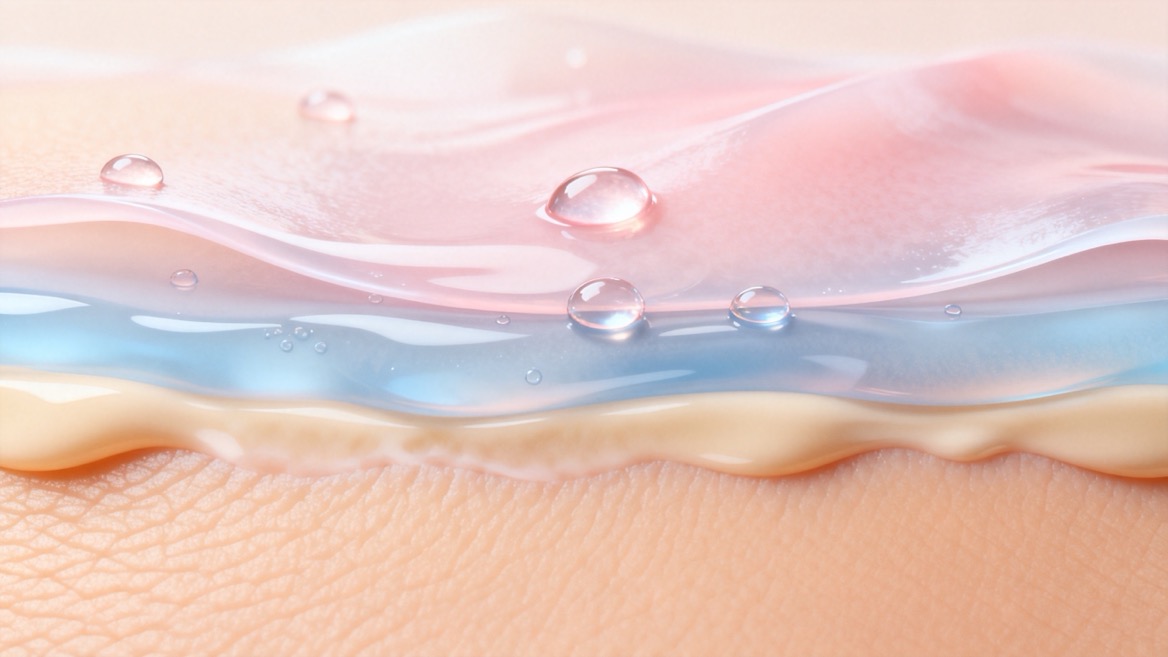
For film integrity as a design objective, silk fibroin may offer the more compelling starting platform. Its structural behavior has attracted substantial biomaterials research, including work on films and mixed-protein materials.
For hydration-led cosmetic positioning, collagen may be the simpler starting point, provided the chosen grade performs well in the final formula. Its water-binding and surface-conditioning properties are relevant to products aimed at dryness and rough texture.
Neither conclusion amounts to a proven clinical ranking. A resilient film is not necessarily the most moisturizing one. A highly hydrating formula may not leave the most durable film. More importantly, a lower TEWL reading immediately after application does not, by itself, show that underlying barrier lipids have been restored.
The strongest concept may combine a comfortable protein film with a suitable moisturizing base. Humectants can support water content, while an appropriate lipid system can address the skin's surface needs. Clinical literature on ceramide-containing formulations reinforces why barrier-focused development should look beyond protein alone.
A useful comparison should move beyond a supplier brochure. These three development questions can reveal differences that an ingredient description cannot.
Assess each prototype after drying and during ordinary facial movement. Check for tackiness, tightness, visible residue, pilling, and compatibility with moisturizer, sunscreen, and makeup. Repeat the assessment after exposure to water or humidity.
Test the complete products at realistic application amounts. A free-standing laboratory film can establish material behavior, but it may not predict how a thin layer of serum feels on skin.
For a controlled product comparison, assess TEWL alongside skin hydration and user-reported comfort. Include an appropriate vehicle control so the contribution of the protein-containing formula is not confused with the benefits of its base cream.
Decide when measurements will be taken before starting the test. An immediate post-application result answers a different question from a result measured after repeated use. Skin tolerance and reports of stinging are especially important for the intended audience.
Ask for the material's identity, origin, processing description, specifications, and relevant safety documentation. For silk, clarify whether the offering is fibroin, another silk-derived material, or a blend. For collagen, confirm whether it is native, soluble, hydrolyzed, or recombinant.
This step protects both product quality and claim accuracy. Similar marketing names do not establish equivalent chemistry or performance.
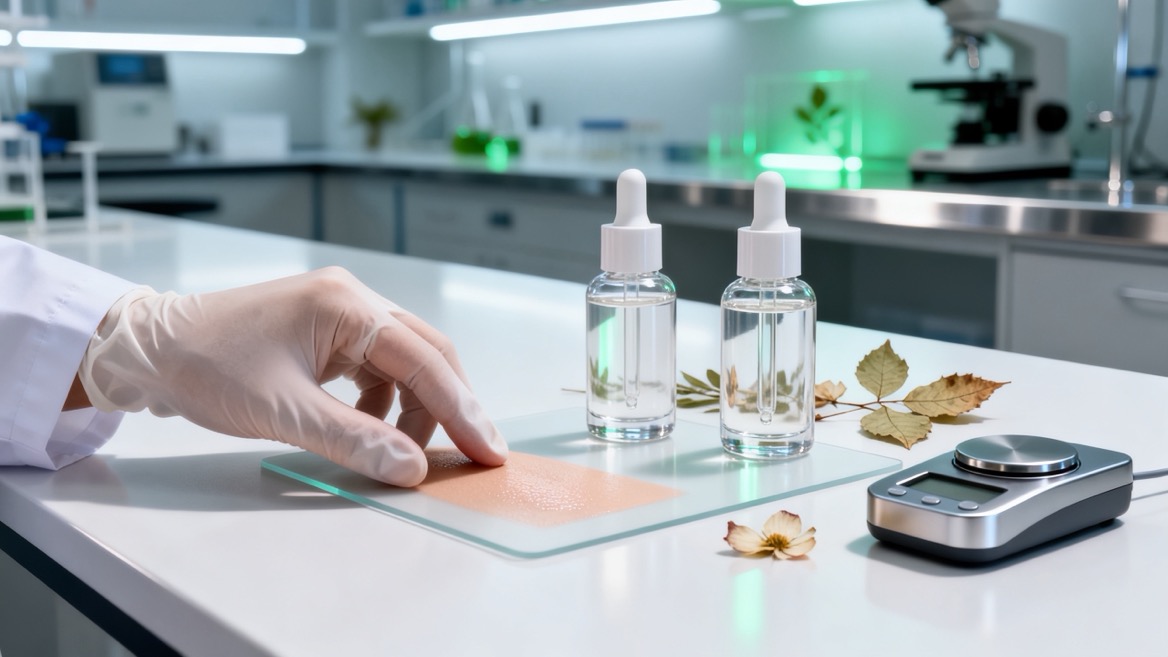
At ZHENYIBIO TECHNOLOGY INC, a brief for barrier-focused skincare should begin with the target user experience, not a predetermined protein percentage. The company's botanical-active and bio-fermentation focus can guide supporting-ingredient exploration, while each proposed active still needs its own compatibility and performance assessment.
A practical development sequence is:
1. Define the product job. Decide whether the priority is a light protective finish, richer moisturization, or both.
2. Select comparable prototypes. Keep the base formula as similar as practical when comparing silk fibroin and collagen versions.
3. Screen physical performance. Examine appearance, stability, spreadability, drying feel, and interaction with the package.
4. Screen skin experience. Check comfort, pilling, perceived tightness, and tolerance in the intended user group.
5. Validate proposed claims. Use finished-product evidence for statements about hydration, appearance, or reduced moisture loss.
A combined silk–collagen concept is also possible. Published work on hybrid materials shows that changing the blend can change physical characteristics. But results from engineered wound scaffolds should not be carried over to a cosmetic cream without testing that cream.
Finally, neither conventional silkworm fibroin nor conventional animal collagen is a plant-derived ingredient. A botanical brand can use these proteins within a broader plant-active formula, but it should describe their origins accurately. Fermentation-derived collagen is a distinct sourcing route, not a reason to relabel standard animal collagen as botanical.
The phrase "compromised barrier repair" is useful for discussing formulation goals, but product claims require care. In the United States, a cosmetic claim that a product treats disease or changes the skin's structure or function can place it under drug requirements. Wording such as "helps skin feel protected" or "improves the appearance of dry skin" should still be supported by the finished product's evidence.
For international buyers, documentation should also cover the exact ingredient supplied. Confirm origin and traceability, assess allergen-related concerns where relevant, and verify that the grade is appropriate for the intended market and product type. Do not infer that one protein is universally suitable for sensitive skin.
Sustainability deserves the same discipline. A bio-based protein is not automatically the lower-impact option. Sourcing, processing inputs, yields, packaging, and transport can change the picture. If sustainability is central to the brand story, request substantiation for the specific supply chain rather than making a blanket claim about either ingredient.
For brands, wholesalers, and manufacturers developing a barrier-focused serum, cream, or mask, share your target texture, sourcing requirements, market, and proposed claims with ZHENYIBIO TECHNOLOGY INC. An OEM/ODM brief built around those requirements can identify whether silk fibroin, collagen, or a different film-and-lipid system is the better prototype to test.
Not conclusively. Silk fibroin offers an adaptable film-forming platform, while collagen-containing formulations have shown moisturizing and TEWL-related results in some human research. No broadly applicable head-to-head cosmetic result establishes that one consistently reduces TEWL more than the other.
Native topical collagen mainly acts at the surface. It can contribute to hydration and a smoother feel, but applying it should not be equated with replacing collagen in the dermis. Claims about deeper effects require evidence for the specific ingredient and finished product.
No. They are different silk proteins. A study of a sericin-containing complex—or a dressing made with several silk components—should not be used as stand-alone proof of what a fibroin-only cosmetic will do.
Yes, in principle. Research on combined materials shows that blends can have different physical properties from either material alone. The relevant ratio and performance for a leave-on cosmetic still need to be established through stability, sensory, and finished-product testing.
No. A film can provide temporary surface protection, while ceramides are part of the skin's intercellular lipid matrix. A barrier-focused formula may need both moisture-management ingredients and a suitable lipid system.
Conventional silkworm fibroin and animal-derived collagen do not suit a vegan positioning. Recombinant collagen made through an appropriate animal-free production process may offer another route, but its exact composition, processing inputs, and claim support must be checked with the supplier.
Request the ingredient's origin, identity, processing details, specifications, and relevant safety and quality documents. Then ask how the supplier recommends testing film feel, TEWL, hydration, stability, and tolerance in the proposed finished formula.
- Mazurek, Ł., et al. (2022). "[Silk Fibroin Biomaterials and Their Beneficial Role in Skin Wound Healing]." *Biomolecules*, 12(12), 1852. Review of fibroin materials, processing, and preclinical and limited clinical wound-dressing findings. [pmc.ncbi.nlm.nih]
- Jadach, B., Mielcarek, Z., & Osmałek, T. (2024). "[Use of Collagen in Cosmetic Products]." *Current Issues in Molecular Biology*, 46(3), 2043–2070. Review of collagen forms, topical film formation, and cosmetic applications. [mdpi]
- Aguirre-Cruz, G., et al. (2020). "[Collagen Hydrolysates for Skin Protection: Oral Administration and Topical Formulation]." *Antioxidants*, 9(2), 181. Review including human findings on topical collagen-containing formulations. [pmc.ncbi.nlm.nih]
- Naomi, R., Ratanavaraporn, J., & Fauzi, M. B. (2020). "[Comprehensive Review of Hybrid Collagen and Silk Fibroin for Cutaneous Wound Healing]." *Materials*, 13(14), 3097. Review of mixed-material physical properties; its wound-scaffold findings are not direct evidence for cosmetic creams. [pmc.ncbi.nlm.nih]
- Kono, T., Miyachi, Y., & Kawashima, M. (2021). "[Clinical Significance of the Water Retention and Barrier Function-Improving Capabilities of Ceramide-Containing Formulations]." *The Journal of Dermatology*, 48(12), 1807–1816. Qualitative review of clinical barrier and hydration research. [pmc.ncbi.nlm.nih]
- Foppiani, J. A., et al. (2023). "[Clinical Use of Non-Suture Silk-Containing Products: A Systematic Review]." *Biomimetics*, 8(1), 45. Review distinguishing clinical silk-containing products and their varied compositions. [mdpi]
- U.S. Food and Drug Administration. "[Cosmetics Labeling Claims]." Guidance on truthful cosmetic claims and the boundary between cosmetic and drug claims. [fda]


