


Views: 258 Author: ZHENYIBIO Publish Time: 2026-10-01 Origin: Site
Content Menu
● Why Chemically Treated Cuticles Need More Than Protein
● What Are Yeast Protein and Keratin in Hair Care?
>> Hydrolyzed Yeast Protein: A Fermentation-Derived Option
>> Hydrolyzed Keratin: A Direct but Usually Animal-Derived Protein
● Yeast Protein vs. Keratin: The Practical Differences
>> Does Either Ingredient Penetrate the Cortex?
>> Which Performs Better on Bleached Hair?
● A Closer Look at Published Hair Data
● Three Decisions That Improve a Vegan Repair Formula
>> 1. Match Peptide Profile to the Damage Site
>> 2. Build the Whole System, Not a Protein-Only Story
● How Brands Should Test Yeast Protein Against Keratin
● Choose a Claim Your Formula Can Defend
● Develop a Repair Concept With ZHENYIBIO
>> Is yeast protein the same as vegan keratin?
>> Can yeast protein repair a bleached hair cuticle?
>> Is hydrolyzed keratin always animal-derived?
>> Does a smaller protein peptide always work better?
>> Can a yeast-protein conditioner claim to rebuild bonds?
>> Is fermented yeast protein automatically more sustainable?
For brands developing repair care for bleached, colored, permed, or relaxed hair, yeast protein vs. keratin is not simply a choice between two proteins. It is a choice about ingredient origin, peptide design, performance evidence, and what a product can honestly promise. Hydrolyzed yeast protein offers a route to vegan hair conditioning; conventional hydrolyzed keratin has a longer history of direct fiber testing but commonly comes from animal materials. Neither can regrow a missing cuticle. The better solution is the one that improves measurable performance in your finished formula on the hair your customers actually have.

The cuticle is the hair shaft's outer, overlapping protective layer. Beneath it, the cortex supplies much of the fiber's strength. Bleaching and permanent coloring expose hair to oxidative and alkaline conditions. Relaxing and perming also alter structural bonds. They can strip surface lipids, increase porosity and friction, and raise breakage risk.
A damaged cuticle does not heal like living skin. Cosmetic repair means reducing the practical consequences of damage: improving slip, limiting friction, smoothing irregular surfaces, and, where demonstrated, improving mechanical performance. It does not mean recreating every lost scale or permanently restoring the original fiber.
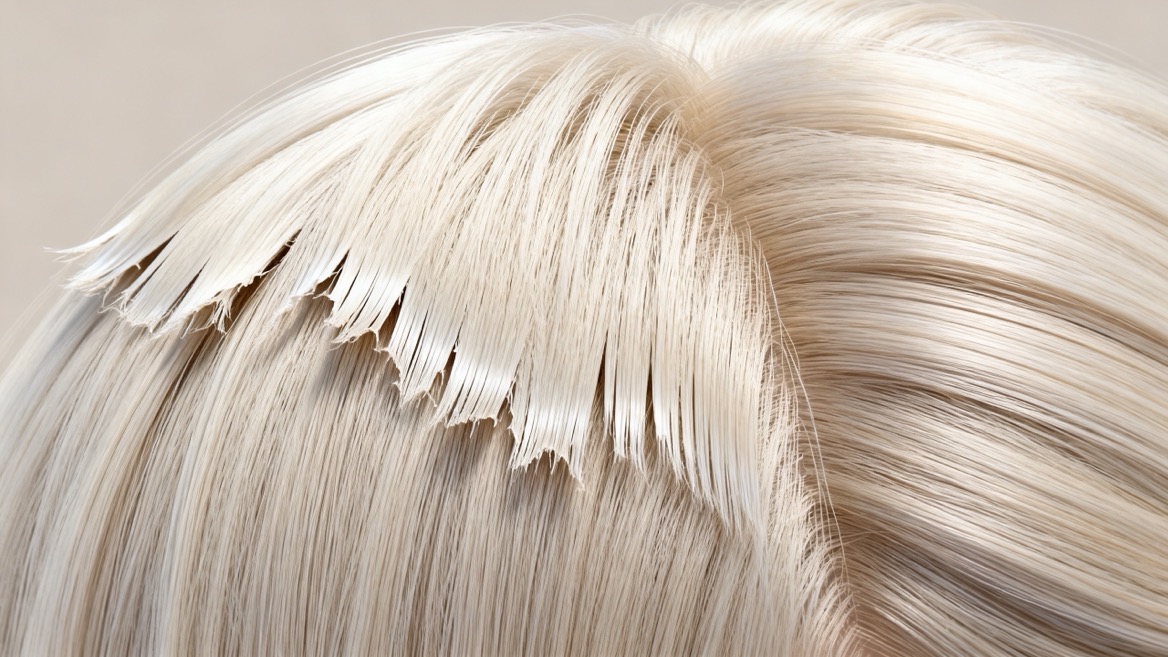
Yeast protein comes from yeast biomass; processing can break its proteins into mixtures of peptides and amino acids. The cosmetic ingredient name Hydrolyzed Yeast Protein is associated with hair-conditioning and antistatic functions. Commercial yeast-protein ingredients are offered for products such as leave-ins and scalp treatments.
Yeast is a fungus, not a plant. A yeast-derived ingredient can still be suitable for a vegan formula, but that depends on the complete supply chain, including growth media, processing aids, carriers, and the rest of the formulation. Fermentation also provides a manufacturing platform for tailoring ingredient specifications. It does not, by itself, prove lower environmental impact or superior hair repair.
Keratin is a major structural protein in hair. Cosmetic hydrolyzed keratin is keratin broken into smaller fractions. Conventional sources include wool and feathers; the precise origin must be checked with the supplier. A cosmetic safety review describes keratin from animal tissues and finds the assessed ingredients safe under its reviewed use conditions; that does not guarantee performance.
Because keratin is part of hair, its name sounds uniquely reconstructive. Yet simply adding keratin does not rebuild a damaged shaft into untreated hair. Its effects depend on molecular-weight distribution, chemistry, concentration, contact time, and formulation. A mask and leave-in may behave differently.
| Decision factor | Hydrolyzed yeast protein | Conventional hydrolyzed keratin |
|---|---|---|
| Typical origin | Yeast biomass; verify all processing inputs | Animal keratin, often wool or feathers |
| Vegan positioning | Possible with documented sourcing and full-formula checks | Generally unsuitable unless an exceptional non-animal origin is documented |
| Ingredient identity | Yeast-derived peptides and amino acids, not keratin | Hydrolyzed keratin peptides |
| Relevant benefit | Hair conditioning and antistatic performance; strength needs grade-specific proof | Conditioning plus published fiber-mechanics evidence for particular grades |
| Mechanistic variable | Peptide profile, charge, and deposition must be characterized | Peptide size and chemical treatment alter penetration and film formation |
| Best buying question | What finished-formula data support this exact grade? | Is the source acceptable, and do the test conditions match our use case? |
Neither column is a universal winner. Yeast protein answers an origin constraint; keratin offers more directly relevant published mechanical data for certain materials and test conditions. A comparison of one undefined "yeast protein" with one undefined "keratin" would hide the variables that actually determine performance.
A published study of wool-derived hydrolyzed keratins on relaxed textured hair compared fractions of approximately 221, 2,577, and 75,440 daltons. The smallest and middle fraction reached deeper regions, while the largest was concentrated at the surface or outer layers. Yet deeper access did not automatically mean the best breakage result: the middle and largest fractions reduced premature breakage in that experimental setting.
For formulators, the lesson is do not equate penetration with repair. A surface film can be valuable when the consumer's problem is friction and cuticle roughness. Smaller fragments may reach further into a damaged fiber without necessarily delivering the strongest measurable reinforcement. Do not transfer these findings to yeast peptides without testing.
There is no defensible universal ranking without matched, head-to-head tests on comparable bleached tresses. Selected keratin fractions can affect damaged fibers. Ingredient descriptions support yeast protein for conditioning, not universal equivalence on break stress.
For a vegan launch, the practical question is whether a yeast-protein formulation beats its protein-free control on the chosen outcome. For a non-vegan professional mask, keratin may be a useful benchmark, but compare finished formulas at matched use conditions. Do not describe the two as molecularly identical substitutes.
One keratin experiment offers a useful example of why test context matters. Researchers treated sodium-hydroxide-relaxed textured hair with 1% aqueous solutions of differently sized wool-keratin fractions, using prolonged soaking before tensile testing. At 20% relative humidity, the medium- and high-molecular-weight fractions raised break stress by roughly 18.6% and 16.3%, respectively, versus the relaxed control. At 80% relative humidity, the corresponding increases were approximately 40.0% and 31.6%.
Those are study-specific fiber results, not promised outcomes for a commercial shampoo or a yeast ingredient. The conditions differ from everyday use. Test dry and humid conditions, track breakage, and identify the exact fraction.
The evidence gap is equally informative. Public ingredient descriptions support the conditioning role of hydrolyzed yeast protein, and suppliers market yeast-derived grades for strength-related uses. But a supplier claim about its own material is not a published, controlled, head-to-head comparison against keratin. Brands should request the raw protocol before turning such language into a consumer claim.
Ask for molecular-weight distribution, not a single average. A blend with different fractions may combine surface coverage with smaller-peptide access, but that is a formulation hypothesis until tested. Request active-solids content and peptide characterization so a comparison at "1% ingredient" does not accidentally compare unequal protein doses.
If the target is rough, color-treated ends, measure wet-combing force and friction. If the target is relaxed hair prone to snapping, add single-fiber tensile testing. Include microscopy only when it answers a specific question about coverage or cuticle appearance; a striking image alone is not evidence of stronger hair.
Proteins are only part of a conditioning formula. Deposition aids, compatible conditioning agents, emollients, and the product format also influence slip and feel. A carefully designed base may outperform a high-protein formula that leaves hair stiff or coated.
For a vegan concept, verify the origin of every functional component, not just the featured active. Botanical oils or fermented extracts do not automatically replace a detangling system. Keep sensorial testing alongside mechanical testing so the formula works outside the laboratory.
For OEM or ODM development, use a staged comparison rather than choosing from marketing decks. The following is a proposed testing framework, not a report of completed ZHENYIBIO trials.
1. Define the substrate. Select standardized virgin, bleached, colored, or relaxed tresses that represent the intended customer. Record treatment history and baseline damage.
2. Set fair controls. Compare a protein-free base, a yeast-protein prototype, and, where the project permits animal ingredients, a keratin benchmark. Match protein solids where feasible.
3. Standardize use. Fix dosage, water quality, wash cycles, contact time, rinse procedure, drying method, and humidity. Test the marketed application, not just a long laboratory soak.
4. Measure distinct outcomes. Track wet- and dry-combing force, break stress or breakage, surface appearance, sensory feel, and performance after repeated washes.
5. Review the evidence. Report sample size and variation. Check stability, microbial quality, packaging compatibility, and label wording.
Suppose a leave-in with yeast protein improves wet-combing ease but does not change tensile strength. The honest claim is about detangling or manageability, not "rebuilding broken bonds." If it also reduces breakage against the matched base after repeated washes, the brand may consider a more specific, quantified claim once the study design supports it.
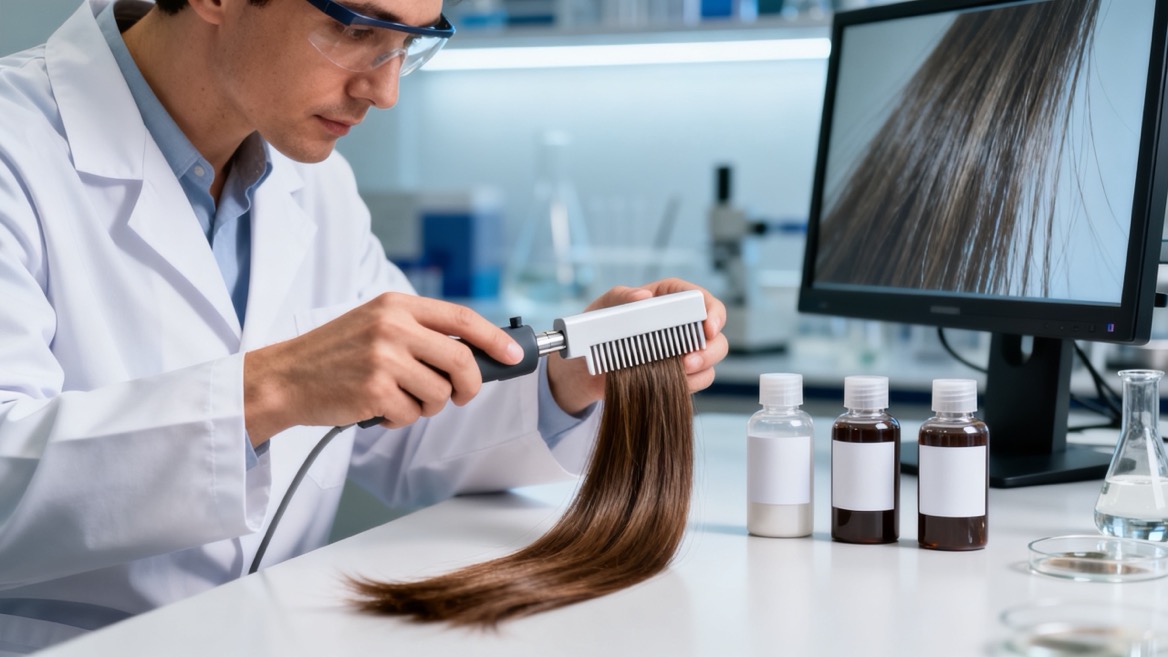
For international launches, ingredient evidence is not finished-product evidence. European cosmetic-claims rules require adequate, verifiable support and warn against implying that a finished formula has an ingredient's properties when it does not. That principle is useful for any market-facing technical copy.
Use language that mirrors the actual endpoint. "Helps hair feel smoother after bleaching" calls for sensory or instrumental support on relevant hair. "Reduces breakage during brushing" requires a defined breakage or grooming test. Avoid "permanently repairs cuticles," "restores all disulfide bonds," or numerical improvement claims borrowed from another supplier's grade.
If your brand needs a vegan hair-repair concept for chemically treated cuticles, contact ZHENYIBIO TECHNOLOGY INC with your target market, product format, hair-damage profile, vegan requirements, and intended claims. Request a documented sourcing review, prototype specifications, and a comparative testing plan for your proposed OEM or ODM product. The goal is a formulation and claim set supported by results from your actual finished product—not an unsupported promise attached to a fashionable ingredient.
No. Hydrolyzed yeast protein consists of yeast-derived material; it is not keratin. "Vegan keratin" is often shorthand for a non-animal alternative intended to deliver similar cosmetic benefits. Check the actual ingredient names and evidence rather than assuming molecular equivalence.
It may help condition damaged hair in a suitable formula. Whether it reduces combing friction, improves appearance, or limits breakage depends on the specific grade and finished-product tests. It cannot regrow cuticle scales that have been lost.
Conventional cosmetic hydrolyzed keratin is commonly sourced from animal materials such as wool or feathers. Request written source confirmation for any particular ingredient. Do not assume that a marketing phrase proves an animal-free origin.
No. In one keratin study, small fractions penetrated deeper, but medium and large fractions performed better on several breakage measures. Verify your chosen distribution in the final formula.
Only if the brand has rigorous evidence that the exact finished product produces the specific bond-related effect claimed. General conditioning evidence or an ingredient brochure does not establish that broken structural bonds have been restored.
No. Animal-free sourcing and environmental impact are different questions. Assess feedstocks, energy, processing, packaging, and transport before making a comparative sustainability statement.
- Fernandes, C., Medronho, B., Alves, L., and Rasteiro, M. G. "On Hair Care Physicochemistry: From Structure and Degradation to Novel Biobased Conditioning Agents." *Polymers* 15, no. 3 (2023): 608. [Full text]. [pmc.ncbi.nlm.nih]
- Malinauskyte, E., et al. "Penetration of Different Molecular Weight Hydrolysed Keratins into Hair Fibres and Their Effects on the Physical Properties of Textured Hair." *International Journal of Cosmetic Science* 43, no. 1 (2021): 26–37. [Full text]. [pmc.ncbi.nlm.nih]
- COSMILE Europe. "Hydrolyzed Yeast Protein." Ingredient database. [Ingredient entry]. [cosmileeurope]
- Cosmetic Ingredient Review Expert Panel. "Safety Assessment of Keratin and Keratin-Derived Ingredients as Used in Cosmetics." Final report, July 2016. [Report PDF]. [cir-safety]
- Ashland. "dynagen™ biofunctional." Supplier ingredient overview. [Product page]. [ashland]
- European Commission. "Commission Regulation (EU) No 655/2013: Common Criteria for Cosmetic Product Claims." *Official Journal of the European Union*, 2013. [Regulation PDF]. [eur-lex.europa]


