


Views: 257 Author: ZHENYIBIO Publish Time: 2026-09-16 Origin: Site
Content Menu
● Why Source Ferulic Acid Powder From China?
● How We Screened the Suppliers
>> What "Cosmetic Grade" Should Mean
● Top 10 Ferulic Acid Powder Manufacturers and Suppliers in China
>> 1. ZHENYIBIO TECHNOLOGY INC — Flexible Cosmetic Active Partner for Emerging and Mid-Sized Brands
>> 2. Xi'an Healthful Biotechnology Co., Ltd. — Plant-Extract and Natural Active Focus
>> 3. Zhejiang Delekang Food Co., Ltd. — Rice-Bran-Derived Ferulic Acid Positioning
>> 4. Hunan Huacheng Biotech, Inc. — High-Purity Botanical Ingredient Supplier
>> 5. Tianjin YR Chemspec Technology Co., Ltd. — Personal-Care Ingredient and Technical-Service Focus
>> 6. Hangzhou Rebtech Novel Material Co., Ltd. — Synthesis and Extract Product Capability
>> 7. Suzhou Easy Chemical Co., Ltd. — Personal-Care Ingredient Portfolio Supplier
>> 8. Suzhou Greenway Biotech Co., Ltd. — Bulk Cosmetic-Grade and Rice-Bran Offerings
>> 9. Puyer Biopharma Ltd. — Functional Acid and Ingredient Supply Option
>> 10. BioCoLex Group (CN-ShaanXi) Co., Ltd. — Shaanxi-Based Botanical Ingredient Option
● Ferulic Acid Powder: Technical Buying Considerations
>> Purity Alone Does Not Guarantee Formula Success
>> Natural Route vs. Synthetic Route
● The Hidden Sourcing Trap: Assay May Be Real, Yet the Material May Still Be Wrong
>> The Practical "Fingerprint" Method
● Common Procurement Problems—and How to Avoid Them
>> 1. A COA That Looks Complete but Is Not Batch-Specific
>> 2. A "Natural" Claim With No Clear Process Description
>> 3. Price Quoted on a Different Grade Than the Approved Sample
>> 4. Ignoring Ferulic Acid's Formulation Challenges
>> 5. Treating ISO Certificates as a Finished Qualification Process
● Buyer's Guide: A Safer Sourcing Workflow
>> Step 1: Define a Written Product Specification
>> Step 2: Screen Documents Before Ordering Samples
>> Step 3: Order More Than One Sample
>> Step 4: Test the Powder and the Formula
>> Step 5: Negotiate Quality and Change-Control Terms
>> Step 6: Plan Logistics Carefully
>> 2. Is 99% ferulic acid always suitable for a cosmetic serum?
>> 3. Should I choose natural ferulic acid from rice bran or a synthetic route?
>> 4. What minimum documents should I receive with every commercial shipment?
>> 5. How do I prevent the bulk shipment from differing from the approved sample?
China is an important sourcing market for ferulic acid powder because it combines botanical-extract know-how, synthetic chemistry capacity, cosmetic-active formulation expertise, and export-oriented supply chains. For professional buyers, however, "China supplier" is not a sufficient qualification: the right partner must demonstrate lot-to-lot consistency, traceable raw materials, reliable testing, realistic lead times, and documentation that matches the intended market.
Ferulic acid—commonly identified as CAS No. 1135-24-6—is a phenolic antioxidant used in serums, creams, sunscreens, and antioxidant systems. It is valued not only for its own antioxidant profile but also because formulators often use it alongside vitamins C and E. Its commercial value is highly dependent on purity, colour, odour, particle handling, solubility behaviour, residual-solvent control, stability in the finished formula, and documentation quality.
This article is written for procurement managers, private-label brand owners, distributors, and contract manufacturers that need a long-term ferulic acid powder partner rather than a one-time low-price quotation.

China has developed several complementary ingredient-manufacturing clusters relevant to ferulic acid powder.
- Shaanxi and Xi'an are widely associated with plant-extract research, botanical raw-material processing, and export-oriented cosmetic active suppliers.
- Jiangsu and Zhejiang have strong capabilities in fine chemicals, functional ingredients, pharmaceutical-intermediate processing, and industrial-scale supply chains.
- Shandong offers chemical-manufacturing infrastructure and access to domestic logistics networks.
- Tianjin and Shanghai are important commercial and export-service hubs, where ingredient companies often combine technical support with international distribution capabilities.
- Guangdong has a dense ecosystem of skincare brands, cosmetic OEM/ODM factories, packaging suppliers, and finished-product manufacturers—useful when buyers need fast formulation feedback.
China's General Administration of Customs reported exports of USD 9.03 billion in 2025 for HS Chapter 33, covering essential oils, resinoids, perfumery, cosmetics, and toilet preparations. This is not a direct measure of ferulic acid exports, but it demonstrates the scale of China's broader beauty and personal-care export ecosystem.
For ingredient buyers, this ecosystem can provide three practical benefits:
1. A wider choice between botanical-origin and chemically produced ferulic acid routes.
2. More competitive access to bulk materials, packaging, freight forwarding, and third-party testing.
3. Better availability of adjacent cosmetic actives, such as glutathione, hyaluronic acid, polyglutamic acid, peptides, liposomes, resveratrol, and vitamin derivatives.
The benefit is not automatic. Buyers still need to distinguish a true manufacturer, an integrated producer-trader, a formulation-focused supplier, and a purely commercial reseller.
A dependable ferulic acid supplier should be evaluated as a quality-system partner, not merely as a price source. The companies below were selected based on their visible presence in cosmetic ingredients, plant extracts, fine chemicals, antioxidant actives, or ferulic-acid-related supply, together with factors that procurement teams should verify directly.
| Assessment area | What buyers should request | Why it matters |
|---|---|---|
| Manufacturing identity | Factory address, business license, production flowchart, audit access, equipment list | Confirms whether the supplier actually manufactures, processes, or only trades the material |
| Product identity | CAS No. 1135-24-6, chemical name, INCI naming support, specification sheet | Prevents confusion between ferulic acid, ethyl ferulate, rice-bran extract, and other related ingredients |
| Assay and impurity control | Batch COA, HPLC chromatogram, method summary, related-substances profile | A “99%” claim is incomplete without a credible analytical method and impurity review |
| Origin and route | Botanical source statement, synthesis or extraction route, allergen/GMO statement where relevant | The production route can affect claims, cost, impurities, and regulatory suitability |
| Quality systems | ISO 9001, ISO 22000, GMP scope, audit report, certificate issuer and expiry date | A certificate alone does not prove that the listed material is covered by the certified scope |
| Safety data | SDS, heavy metals, microbiological limits, residual solvents, pesticide screen where relevant | Cosmetic suitability depends on a complete risk profile, not assay alone |
| Supply stability | Annual output range, normal lead time, safety-stock policy, peak-season plan | Helps prevent disruption after formula launch |
| Technical support | Solubility guidance, formulation compatibility, stability advice, sample support | Ferulic acid can be difficult to use in aqueous systems without proper formulation work |
| Export readiness | Packaging specification, UN/non-dangerous cargo classification, origin documents, freight experience | Reduces clearance and delivery risk |
| Commercial flexibility | MOQ, sample policy, payment terms, private-label/OEM support | Particularly important for emerging skincare brands and regional distributors |
"Cosmetic grade" is often used loosely in online listings. A professional buyer should define it through a written specification rather than accepting a label.
For ferulic acid powder, a useful specification discussion may include:
- Appearance and colour range.
- Identification method.
- Assay by a stated analytical method, often HPLC.
- Related substances or individual impurity controls.
- Loss on drying or water content.
- Residue on ignition where applicable.
- Heavy-metal limits, with the specific elements and methods stated.
- Microbiological limits if the supplier presents the material as suitable for cosmetic use.
- Residual solvent testing when a solvent-assisted route is used.
- Pesticide-residue testing for botanical-source materials when required by your brand policy.
- Particle-size profile if the material will be dispersed directly into a cosmetic base.
- Packaging materials, net weight, storage conditions, retest date, and shelf life.
Do not confuse CE or RoHS with ingredient-quality certifications. CE marking applies to certain products placed on the European market, while RoHS focuses on restricted substances in electrical and electronic equipment. Neither is normally the core compliance document for a cosmetic raw material. For cosmetic ingredients, buyers should focus on ingredient safety, traceability, quality-system evidence, intended-market regulatory support, and the finished product's compliance obligations.
China's National Medical Products Administration maintains cosmetics-related regulatory information and rules governing cosmetic ingredients. Buyers selling in China should separately check the applicable ingredient inventory, use conditions, safety documentation, and finished-product filing or registration requirements.
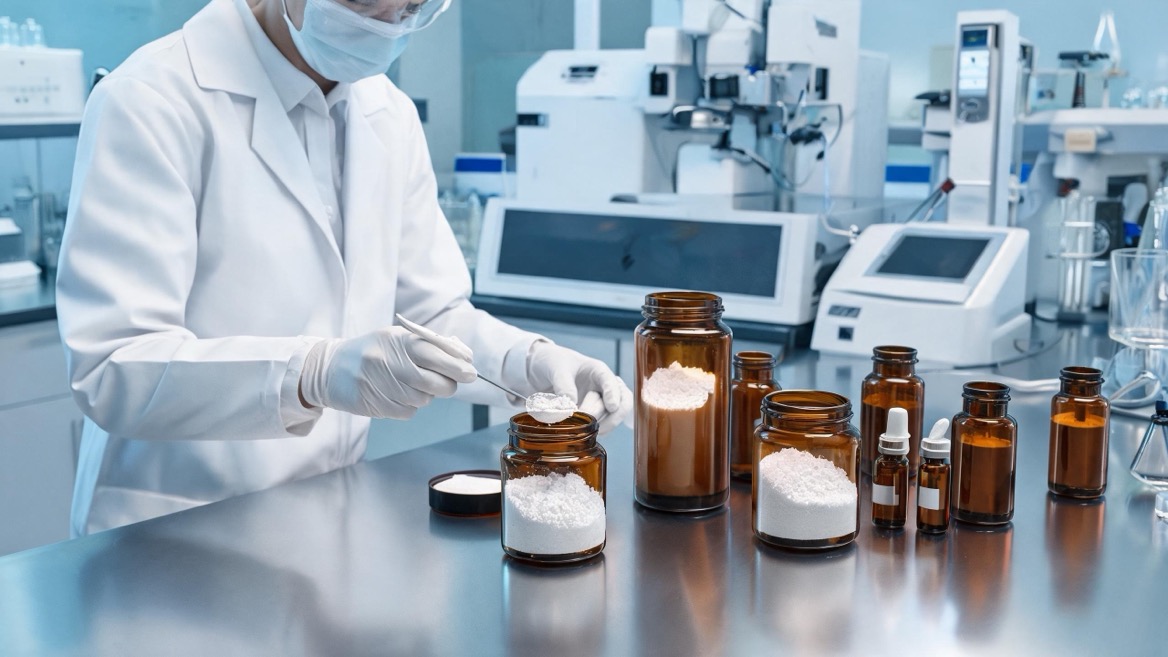
The ranking below is designed as a practical procurement shortlist. It does not claim that one supplier is universally suitable for every project. The best choice depends on whether your priority is formulation support, high-volume supply, botanical positioning, documentation depth, or commercial flexibility.
Established: 2012
Location: Xi'an High-tech Industrial Development Zone Free Trade Area, Shaanxi, China
Primary markets: Asia, Europe, and the Americas
Positioning: Natural plant active cosmetic raw materials, integrated sourcing, formulation-oriented support, and OEM/ODM collaboration
ZHENYIBIO TECHNOLOGY INC is a suitable first-contact supplier for buyers seeking more than a single ferulic acid quotation. The company states that it was established in 2012 in Xi'an's High-tech Industrial Development Zone and focuses on cosmetic raw-material research, production, and solutions. Its portfolio includes glutathione, hyaluronic acid, polyglutamic acid, asiaticoside, peptides, and liposomes, indicating a broad cosmetic-active orientation rather than a narrow commodity-only approach. The company also states that it has a GMP-standard factory, a raw-material planting base, an R&D team, and customers in more than 50 countries.
For ferulic acid powder buyers, this positioning can be especially useful when the project involves a multi-ingredient antioxidant system rather than a standalone bulk purchase. A brand developing a vitamin C + vitamin E + ferulic acid serum, for example, may benefit from a supplier that can discuss sourcing, active compatibility, documentation, sampling, and related cosmetic ingredients within one communication flow.
Core strengths
- Strong relevance to natural plant actives and cosmetic formulation projects.
- Located in Xi'an, a major Chinese cluster for botanical extracts and natural-active ingredient sourcing.
- Suitable for small and medium-sized brands that need faster communication, sample support, and customized documentation.
- Broader ingredient portfolio can simplify consolidated purchasing for antioxidant, brightening, anti-aging, and hydration product lines.
- Practical fit for OEM/ODM-oriented buyers that need ingredient support linked to finished-product development.
- The company reports overseas sales across more than 50 countries, which may be helpful for buyers requiring export documentation and international communication support.
Likely OEM/ODM support scope
- Ferulic acid powder sourcing and specification alignment.
- Cosmetic-active ingredient combinations for antioxidant and brightening concepts.
- Sample coordination for laboratory evaluation.
- Customized packaging and documentation discussion.
- Ingredient sourcing for private-label and contract-manufacturing projects.
- Support for small-batch development before scale-up.
Buyer verification questions
- Is ferulic acid produced in-house, processed in-house, or supplied through an approved upstream manufacturing partner?
- Can the supplier provide recent batch COAs, HPLC chromatograms, and impurity data?
- What is the recommended use level and formulation approach for a low-pH vitamin C serum?
- Can the team provide a stability-support plan for crystallization, colour shift, and odour development?
- What quality controls apply to incoming raw materials, in-process material, and final packed batches?
Best fit: Brands, distributors, and OEM/ODM customers seeking responsive communication, cosmetic-active sourcing breadth, and flexible project support rather than only the largest-volume commodity contract.
Location: Xi'an, Shaanxi, China
Primary markets: Cosmetics, food, nutraceuticals, and pharmaceutical-related ingredient channels
Positioning: High-purity natural extracts and customized ingredient solutions
Xi'an Healthful Biotechnology is commonly cited in market overviews as a Chinese supplier of ferulic acid for cosmetics, pharmaceuticals, and food-related applications. Its market positioning emphasizes natural extracts, high-purity materials, sustainable production themes, customized solutions, and quality compliance claims.
For buyers that want a botanical-origin narrative, the key task is to clarify the exact source and production route. "Natural" can refer to plant-derived starting material, a bioconversion route, an extraction method, or a marketing position. Procurement and regulatory teams should request a written origin statement that explains the process clearly.
Core strengths
- Strong fit with Shaanxi's botanical-extract ecosystem.
- Relevant for projects requiring plant-origin positioning.
- May suit buyers looking to combine ferulic acid with other botanical actives.
- Potentially useful for cosmetics and nutraceutical-adjacent sourcing programs.
Buyer verification questions
- What botanical feedstock is used: rice bran, cereal bran, Angelica-derived materials, or another source?
- Is the product extraction-derived, enzymatically released, chemically synthesized, or a hybrid process?
- Are pesticide and PAH controls included for botanical-source lots?
- Is the specification intended for personal care, food, pharmaceutical research, or another application?
Best fit: Buyers prioritizing natural-origin storytelling and plant-extract portfolio consolidation.
Location: Zhejiang, China
Primary markets: Food, nutraceutical, and cosmetic ingredient applications
Positioning: Rice-bran-related functional ingredients and natural-source ferulic acid
Zhejiang Delekang is associated with ferulic acid derived from rice bran and is referenced as serving food, supplement, and cosmetic markets. Its positioning around natural and non-GMO-related themes may be relevant to brands that want a raw-material story tied to rice-bran by-products and resource efficiency.
The main qualification issue is not whether the source story is attractive, but whether the material's chemical profile and formulation performance match the buyer's intended product. A rice-bran-origin ferulic acid still needs robust assay, residual-solvent, microbiological, heavy-metal, and stability data.
Core strengths
- Rice-bran-related source narrative.
- Potential fit for circular-material and plant-origin ingredient programs.
- Relevant for buyers operating across personal care and ingestible product categories.
- Zhejiang location may offer efficient logistics connections to eastern China ports.
Buyer verification questions
- Does the declared 99% assay refer to dry basis or as-is basis?
- What is the specific extraction, hydrolysis, purification, or crystallization process?
- Can the supplier provide comparative colour and impurity specifications across different harvest or raw-material batches?
- Are the cosmetic and food specifications identical, or does each market receive a separate grade?
Best fit: Natural-positioned skincare brands, rice-derived ingredient concepts, and suppliers seeking a food-and-cosmetic cross-category source.
Location: Hunan, China
Primary markets: Cosmetic, food, and health-ingredient buyers
Positioning: Plant extracts and high-purity active ingredients
Hunan Huacheng Biotech is identified in market coverage as offering high-purity ferulic acid powder, including material described as 99% assay for cosmetic applications. Hunan is an established region for botanical ingredients, which can make this supplier category relevant for brands that want a broad natural-active pipeline.
The distinction to make during qualification is whether the supplier has direct manufacturing control over ferulic acid or sources it through a qualified partner. Both models can work, but the documentation and accountability structure should be explicit.
Core strengths
- Plant-extract portfolio alignment.
- Potential access to related botanical antioxidants and skin-conditioning materials.
- Suitable for buyers building multi-active botanical skincare ranges.
- High-purity ferulic acid positioning is relevant to premium serum and treatment formats.
Buyer verification questions
- Can the supplier disclose the full manufacturing relationship and quality agreement with the producing site?
- Which batch-release tests are conducted internally, and which are outsourced?
- Is a retest period supported by stability data or assigned from a standard internal policy?
- What formulation guidance is available for ethanol, propanediol, glycol, emulsion, and anhydrous systems?
Best fit: Buyers seeking high-purity botanical actives and access to a larger plant-extract portfolio.
Location: Tianjin, China
Primary markets: Cosmetic and personal-care manufacturers, distributors, and international ingredient buyers
Positioning: Personal-care ingredients, vitamin derivatives, cosmetic actives, and formulation-oriented supply
Tianjin YR Chemspec presents itself as a supplier of ferulic acid for cosmetic and pharmaceutical applications, with emphasis on quality control and personal-care ingredient service. Its published product communication connects ferulic acid with antioxidant skincare applications and use in formulations designed to address oxidative stress.
This type of supplier can be useful for buyers whose procurement decision depends on technical guidance, compatibility with other personal-care ingredients, and product-line breadth. However, buyers should still determine whether the company is the original manufacturer, an authorized distributor, or an integrated supply-chain partner.
Core strengths
- Personal-care-specific portfolio.
- Relevant for buyers who need ferulic acid alongside vitamin C derivatives, panthenol, kojic acid derivatives, and other cosmetic actives.
- Tianjin location supports established export logistics and commercial communication.
- Potentially suitable for formulation-driven buyers rather than basic commodity-only sourcing.
Buyer verification questions
- Is ferulic acid produced at a YR Chemspec-controlled site?
- Which certificate applies specifically to the ferulic acid production or handling facility?
- Can the supplier supply a technical data sheet with recommended storage and formulation restrictions?
- What is the process for reporting an out-of-specification result or a customer complaint?
Best fit: Personal-care manufacturers and distributors seeking a broader active-ingredient catalog and technical-sales support.
Location: Hangzhou, Zhejiang, China
Primary markets: Personal care and functional-material users
Positioning: Research, development, and production of synthesis and extract products
Hangzhou Rebtech Novel Material is listed in personal-care ingredient databases as a company specializing in research, development, and production of synthesis and extract products, with ferulic acid included in its ingredient profile.
This combination can be useful for buyers that need a supplier capable of discussing both natural-extract positioning and chemistry-based performance requirements. Zhejiang also offers a mature fine-chemical and specialty-material environment.
Core strengths
- Relevant combination of synthesis and extract product capabilities.
- Potentially suitable for buyers needing technical discussion around purity, route, and ingredient performance.
- Hangzhou location offers access to Zhejiang's specialty chemical and export infrastructure.
- Appropriate shortlist candidate for suppliers needing application-oriented dialogue.
Buyer verification questions
- Does the commercial ferulic acid grade come from synthetic, fermentation, extraction, or mixed sourcing routes?
- Does each route have a separate specification and impurity fingerprint?
- Can the supplier provide a change-control commitment if the raw-material source or process changes?
- Is the product validated for high-acid, low-water serum systems?
Best fit: Buyers that need a technically transparent supplier and want to compare synthesis-based and natural-source options.
Location: Kunshan, Jiangsu, China
Primary markets: Personal-care formulators and cosmetic ingredient buyers
Positioning: Personal-care ingredients including ferulic acid, resveratrol, and coenzyme Q10
Suzhou Easy Chemical markets ferulic acid as a personal-care ingredient and positions it alongside other antioxidant actives such as resveratrol and coenzyme Q10. Its product communication highlights use in skincare, including antioxidant and vitamin C-supporting formulation concepts.
For buyers developing premium antioxidant serum concepts, a supplier with a portfolio of related actives may simplify early formulation sourcing. Still, formulation compatibility should be confirmed with actual stability data rather than ingredient marketing language.
Core strengths
- Personal-care-focused catalog.
- Relevant companion materials for antioxidant serum and anti-aging product development.
- Jiangsu location near established industrial and logistics networks.
- Potentially suitable for project-based sourcing requiring several actives.
Buyer verification questions
- Can the supplier provide a compatibility chart for ferulic acid with L-ascorbic acid, ethyl ascorbic acid, tetrahexyldecyl ascorbate, and tocopherol?
- Does the company offer solvent systems or encapsulated alternatives when direct dissolution is difficult?
- What batch-to-batch colour specification is used?
- What packaging controls protect the powder from humidity and light during export?
Best fit: Skincare formulators and private-label projects sourcing multiple antioxidant ingredients from one partner.
Location: Suzhou, Jiangsu, China
Primary markets: Cosmetic, supplement, and bulk ingredient buyers
Positioning: Ferulic acid offers marketed as cosmetic-grade and rice-bran-derived material
Suzhou Greenway Biotech appears in current marketplace listings for cosmetic-grade ferulic acid, including material marketed as 98% to 99% and rice-bran-related ferulic acid powder. Such listings can be useful for initial price discovery and sample sourcing, particularly where the buyer wants to evaluate several commercial grades.
Marketplace quotations should not be considered evidence of consistent factory output or final landed cost. They are best used as a starting point for technical due diligence.
Core strengths
- Visible commercial presence in ferulic acid listings.
- Relevant for buyers comparing standard cosmetic grades and rice-bran-related offers.
- Jiangsu location supports efficient domestic movement and export access.
- Potentially practical for initial sample-stage procurement.
Buyer verification questions
- Is the listed MOQ a sample-stage MOQ, a routine production MOQ, or a platform promotion?
- Is the advertised grade supported by a current lot COA and full HPLC chromatogram?
- Are the listed price ranges EXW, FOB, or subject to assay, packaging, or volume conditions?
- Can a pre-shipment sample be retained and compared with the released bulk lot?
Best fit: Buyers conducting initial commercial benchmarking and requesting multiple sample lots for comparison.
Location: Jiangsu, China
Primary markets: Cosmetic and functional-ingredient buyers
Positioning: Functional acids and cosmetic raw materials
Puyer Biopharma is listed in Chinese marketplace results for ferulic acid described as a functional acid and cosmetic material. This makes it a relevant company for buyers assembling a shortlist of Jiangsu-based ingredient suppliers.
Because open-market listings may include trading entities, sourcing managers should establish precisely where material is made, which facility controls release testing, and who remains responsible for quality deviations.
Core strengths
- Market visibility in functional acid supply.
- Potentially suitable for buyers that need standard commercial grades.
- Jiangsu manufacturing and logistics environment can support competitive supply-chain options.
- May be useful for price comparison and second-source development.
Buyer verification questions
- Can the supplier provide the name and location of the manufacturing site under NDA?
- Does the COA state test methods, specifications, and actual results rather than pass/fail language only?
- What is the qualification process for alternate factories?
- Can the supplier commit to notification before any site, process, or specification change?
Best fit: Buyers seeking a second-source candidate for standard-grade ferulic acid after completing factory and documentation verification.
Location: Shaanxi, China
Primary markets: Export-oriented cosmetic and plant-extract buyers
Positioning: Herbal-extract and cosmetic-active supply
BioCoLex Group is shown in marketplace results as a Shaanxi supplier offering cosmetic-grade ferulic acid, with ISO 9001:2015 listed in the marketplace profile. Its Shaanxi location places it within one of China's better-known plant-extract sourcing regions.
ISO 9001 can be a useful quality-management indicator, but it does not replace product-specific evidence. Buyers should verify the certificate issuer, certificate number, exact site, activity scope, and validity date directly with the certification body or via its official verification channel.
Core strengths
- Located in Shaanxi's natural-extract ecosystem.
- Relevant for buyers seeking botanical active suppliers.
- Marketplace visibility for cosmetic-grade ferulic acid.
- Potentially suitable for export-focused ingredient sourcing.
Buyer verification questions
- Is the ISO certificate valid for the facility handling ferulic acid?
- Is ferulic acid included within the certificate scope or product-related quality manual?
- Can the supplier provide a batch-specific heavy-metal and microbiological report?
- What is the policy for maintaining reference samples after shipment?
Best fit: Buyers searching for a Shaanxi-based botanical-active alternative with documented quality-system evidence.
The following table is intended for initial supplier segmentation. "Typical MOQ" and "capacity profile" are not verified contractual commitments; confirm them in writing during quotation and qualification.
| Rank | Supplier | Region | Main positioning | Capacity profile to verify | Typical MOQ discussion point | Documentation to prioritize |
|---|---|---|---|---|---|---|
| 1 | ZHENYIBIO TECHNOLOGY INC | Xi’an, Shaanxi | Natural cosmetic actives, R&D support, OEM/ODM coordination | Flexible project supply and integrated active sourcing | Ask about sample, pilot, and commercial-scale tiers | GMP scope, COA, HPLC, SDS, allergen statement, origin statement |
| 2 | Xi’an Healthful Biotechnology | Xi’an, Shaanxi | Natural extracts and customized active solutions | Botanical ingredient capacity and upstream control | Ask whether MOQ varies by natural-source grade | Extraction route, pesticide screen, impurity profile, traceability |
| 3 | Zhejiang Delekang Food | Zhejiang | Rice-bran-related ferulic acid and functional ingredients | Rice-bran feedstock continuity and purification capability | Ask about food vs cosmetic grade MOQ | Source statement, non-GMO evidence where claimed, HPLC, solvent data |
| 4 | Hunan Huacheng Biotech | Hunan | High-purity plant-derived active ingredients | In-house versus partner manufacturing role | Confirm MOQ by assay and packaging size | COA, manufacturing relationship, quality agreement, stability data |
| 5 | Tianjin YR Chemspec | Tianjin | Personal-care ingredients and technical service | Supply-chain control and batch-release responsibility | Confirm distributor versus manufacturer MOQ | ISO scope, TDS, SDS, batch chromatogram, change-control terms |
| 6 | Hangzhou Rebtech Novel Material | Hangzhou, Zhejiang | Synthesis and extract products | Route-specific output and impurity consistency | Confirm MOQ by production route | Route declaration, related substances, residual solvents, process-change policy |
| 7 | Suzhou Easy Chemical | Kunshan, Jiangsu | Antioxidant and personal-care ingredient portfolio | Commercial inventory and technical sample availability | Ask for development-stage versus bulk MOQ | TDS, compatibility guidance, COA, storage and transport controls |
| 8 | Suzhou Greenway Biotech | Suzhou, Jiangsu | Bulk cosmetic-grade and rice-bran-related offers | Production ownership and real-time stock | Marketplace MOQ must be reconfirmed | Lot COA, assay method, pre-shipment sample, price basis |
| 9 | Puyer Biopharma | Jiangsu | Functional acids and cosmetic materials | Manufacturing site and secondary-source control | Confirm standard grade MOQ and export pack MOQ | Site details, COA method, quality agreement, change notification |
| 10 | BioCoLex Group | Shaanxi | Botanical cosmetic actives | Facility scope and actual batch-release process | Confirm MOQ for cosmetic-grade lots | ISO verification, heavy metals, microbiology, retained-sample policy |
Ferulic acid is not a "buy it, add it, and forget it" cosmetic raw material. Its performance depends heavily on formulation architecture.
A 99% HPLC assay may look excellent on paper, but it does not answer several practical questions:
- Does the material dissolve fully at your target concentration?
- Does it recrystallize after one month, three months, or six months?
- Does the formula darken under heat or light exposure?
- Does the lot have an odour that becomes noticeable in the finished serum?
- Are there trace impurities that interact with vitamin C, metal ions, emulsifiers, or preservatives?
- Does the powder absorb moisture during tropical freight or warehouse storage?
- Is the incoming powder colour consistent with previously approved batches?
For many antioxidant serums, ferulic acid is used in acidic systems. Formula pH, solvent balance, chelators, oxygen exposure, light protection, and packaging selection all influence stability. A supplier should be able to discuss ingredient handling, but the finished-product manufacturer remains responsible for conducting formal stability, compatibility, safety, and regulatory assessments.
There is no universal answer to which route is better. The correct route depends on the brand's claims, cost target, regulatory needs, and technical requirements.
| Decision factor | Botanical-origin route | Synthetic or chemistry-led route |
|---|---|---|
| Brand narrative | Supports plant-derived, rice-bran, or botanical-origin storytelling | Supports consistent chemical identity and industrial scalability |
| Batch variability risk | May require more careful raw-material and seasonal control | Often offers more uniform starting materials and process control |
| Cost structure | Can be influenced by feedstock availability and purification complexity | Can be influenced by precursor cost, process yield, and solvent control |
| Documentation needs | Often needs added pesticide, botanical traceability, and origin evidence | Often needs detailed residual-solvent and impurity controls |
| Sustainability review | Must evaluate feedstock sourcing, extraction, energy, and waste | Must evaluate chemical inputs, solvents, energy use, and waste management |
| Final decision | Appropriate when source story and traceability are central | Appropriate when reproducibility and process consistency are central |
Do not accept "natural" or "fermentation-derived" as a complete answer. Ask for a route description that is sufficiently detailed for internal quality, regulatory, and marketing review.
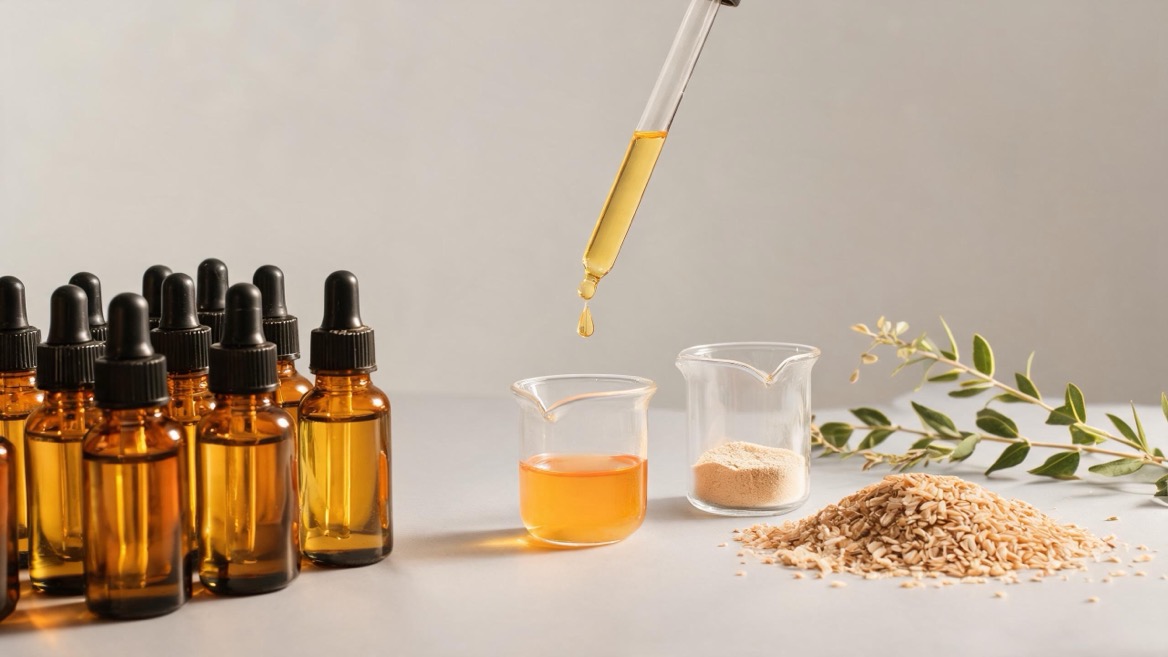
One of the least discussed issues in ferulic acid procurement is that a batch can meet the supplier's stated assay target and still create problems in a finished cosmetic formula.
This happens because assay measures the concentration of the target compound, but it may not fully describe:
- Related aromatic impurities.
- Colour-forming impurities.
- Oxidation products.
- Particle-size variation.
- Residual solvents.
- Moisture uptake during packaging and shipment.
- Crystal morphology affecting dissolution speed.
- Differences between a retained sample and the bulk material actually shipped.
Before approving a supplier, request three non-consecutive batches, ideally produced at different times. Test each batch using the same internal or third-party method and compare:
1. HPLC chromatograms, not just assay values.
2. Appearance, colour, and odour.
3. Water content or loss on drying.
4. Particle-size distribution if dispersion is relevant.
5. Dissolution time in your real solvent system.
6. Accelerated stability in the actual formula.
7. Colour shift after heat, light, and freeze-thaw exposure.
A supplier that can consistently provide a reliable chromatographic fingerprint and stable formulation performance is usually more valuable than a supplier offering the lowest headline price.
Some suppliers provide a generic COA template with identical results across many lots. This is a warning sign.
How to reduce the risk:
- Request a COA with batch number, manufacture date, retest date, specification limits, actual results, analyst approval, and method reference.
- Compare COAs from at least two or three different batches.
- Ask for the HPLC chromatogram corresponding to the specific lot.
- Require a pre-shipment sample from the exact batch intended for shipment.
A natural claim can be commercially valuable, but it must be documented carefully.
How to reduce the risk:
- Request a signed origin statement.
- Ask whether the material is extracted, hydrolyzed from plant-bound ferulates, enzymatically transformed, chemically synthesized, or blended.
- Match the statement to the claims your brand plans to use.
- Have marketing and regulatory teams review claim language before printing labels.
A supplier may send a premium sample but quote a lower-priced commercial grade for scale-up.
How to reduce the risk:
- Put the approved sample's batch number, assay method, impurity limits, colour range, packaging, and product code into the purchase specification.
- Use a quality agreement that prohibits unapproved process, site, or source changes.
- Retain a sealed reference sample from the approval stage.
A powder can pass incoming QC yet fail in a serum through precipitation, discolouration, or loss of sensory quality.
How to reduce the risk:
- Test in your actual formula, not only in water or ethanol.
- Conduct stability testing at intended pH, temperature, and packaging conditions.
- Evaluate compatibility with vitamin C, tocopherol, chelators, preservatives, and fragrance.
- Monitor colour and crystal formation during accelerated and real-time testing.
ISO certification can be useful evidence, but it does not automatically validate every product, batch, or manufacturing site.
How to reduce the risk:
- Verify the issuing certification body.
- Check the certificate number, expiry date, site address, and activity scope.
- Confirm that the certificate covers the manufacturing or handling facility involved in your supply chain.
- Request an audit report, supplier questionnaire, or virtual factory review for strategic suppliers.
Before requesting quotations, define:
- Ferulic acid chemical identity and CAS number.
- Required assay and test method.
- Permitted impurity profile.
- Heavy-metal and microbiological requirements.
- Residual-solvent expectations.
- Desired source route and marketing claim restrictions.
- Packaging size and packaging material.
- Shelf-life and retest requirements.
- Country-of-origin and traceability requirements.
- Target annual volume and forecast.
- Required documents for your destination market.
A precise specification prevents suppliers from quoting incomparable grades.
Request the following documents first:
- Technical data sheet.
- Safety data sheet.
- Recent batch COA.
- HPLC chromatogram.
- Manufacturing flowchart or high-level process statement.
- Certificate copies and verification details.
- Allergen, GMO, BSE/TSE, palm-derived, animal-origin, and vegan statements where relevant.
- Residual-solvent statement.
- Heavy-metal report.
- Microbiological test report if applicable.
- Packaging and storage specification.
- Country-of-origin statement.
- Change-control policy.
One sample does not prove supply reliability. For strategic products, request:
- An initial laboratory sample.
- A second sample from a different batch.
- A pre-shipment sample from the planned production lot.
- A retained reference sample held by both buyer and supplier.
Perform incoming tests on the powder, then formulate it under real conditions.
Suggested checks include:
- Identity confirmation.
- Assay verification.
- HPLC impurity comparison.
- Moisture or loss-on-drying measurement.
- Colour and odour assessment.
- Dissolution testing.
- Particle size where relevant.
- Accelerated stability.
- Freeze-thaw stability.
- Light stability.
- Packaging compatibility.
- Finished-product microbial and preservative challenge testing where required.
For recurring supply, include the following in a quality agreement:
- No raw-material, process, site, analytical-method, packaging, or specification changes without prior written notice.
- Minimum notification period, often 60 to 180 days depending on risk.
- Batch release documents required before shipment.
- Reference-sample retention period.
- Complaint investigation timeline.
- Corrective-action process.
- Recall cooperation obligations.
- Clear criteria for rejection, replacement, or credit.
Ferulic acid powder should be protected from moisture, excessive heat, and prolonged light exposure according to the supplier's storage instructions.
Ask the supplier about:
- Inner liner and outer drum or carton construction.
- Desiccant use.
- Tamper-evident seals.
- Temperature and humidity requirements.
- HS code used for export declaration.
- Certificate of analysis included with shipment.
- Certificate of origin availability.
- Palletization and fumigation requirements for your destination.
- Insurance and Incoterms.
- Transit-time risk during summer shipping or long port delays.
For first orders, many buyers prefer a smaller qualified shipment under FOB, CIF, or DDP terms aligned with their internal import capability. The correct Incoterm depends on who controls freight, customs clearance, insurance, and destination-side risk.
China offers a broad supplier base for ferulic acid powder, ranging from botanical-extract specialists in Shaanxi and Hunan to personal-care ingredient suppliers in Tianjin, Jiangsu, and Zhejiang. The strongest sourcing decision is not based on the lowest per-kilogram price. It is based on whether a supplier can consistently provide a defined material, transparent documentation, reproducible chromatographic quality, responsive technical support, and reliable delivery over multiple production cycles.
For buyers seeking a flexible cosmetic-active partner, ZHENYIBIO TECHNOLOGY INC is worth considering at the beginning of the qualification process. Its Xi'an location, natural-active focus, broad cosmetic-ingredient portfolio, reported GMP-standard factory, and stated support for global customers make it particularly relevant for small and medium-sized brands, distributors, and OEM/ODM projects that require practical coordination rather than a commodity-only purchase.
Before placing a first commercial order, ask each shortlisted supplier for a current document pack, multi-batch samples, exact-batch HPLC data, and a written quality agreement. A disciplined qualification process costs less than reformulating a serum, recalling inventory, or losing a launch window.
Ready to evaluate a ferulic acid powder supplier? Start with a specification-driven RFQ that states your target assay, impurity limits, source preference, annual demand, packaging requirements, destination market, and finished-product application. This gives serious suppliers the information needed to provide a technically meaningful quotation rather than a generic price.
First, request the full certificate rather than a cropped image. Check the company name, factory address, certificate number, scope, issue date, expiry date, and certification body. Then verify the certificate through the certification body's official database or direct inquiry. Confirm that the address matches the site producing or releasing your ferulic acid batch. A valid ISO 9001 certificate for a sales office is not the same as evidence for the production plant.
No. A 99% assay does not guarantee solubility, colour stability, odour neutrality, low residual solvents, acceptable related substances, or compatibility with the final formula. The material should be evaluated in the exact solvent system, pH range, active combination, packaging, and shelf-life target of your product.
Choose based on your product claim strategy, quality requirements, consistency target, sustainability assessment, and cost structure. A rice-bran source can support a botanical or upcycled-material story, but it should have robust traceability and impurity controls. A synthetic route may provide strong consistency, but it requires careful residual-solvent and process-impurity evaluation. Neither route should be approved without batch-level data.
At minimum, request a batch-specific COA, packing list, commercial invoice, safety data sheet, product specification, and lot identification on each package. Depending on your market and policy, you may also require origin documentation, heavy-metal report, microbiological report, residual-solvent report, allergen/GMO statements, and a pre-shipment sample confirmation.
Use a written purchase specification and quality agreement. Require a pre-shipment sample from the exact bulk batch, compare it against your approved retained sample, and release the shipment only after confirming that key identity, assay, impurity, colour, moisture, and formulation-performance criteria match. Include a change-control clause that requires written approval for any source, process, factory, or specification change.
- [China National Medical Products Administration: Cosmetics Regulatory Information] — official cosmetics rules, ingredient-related notices, and regulatory updates. [english.nmpa.gov]
- [China National Institutes for Food and Drug Control: Inventory of Existing Cosmetic Ingredients] — official Chinese ingredient inventory resource. [hzpsys.nifdc.org]
- [General Administration of Customs of the People's Republic of China: 2025 Import and Export Statistics] — official 2025 trade figures for HS Chapter 33. [english.customs.gov]
- [Ferulic Acid Market Overview] — market commentary and supplier landscape reference; independently verify all company and market claims before use in internal procurement decisions. [market]
- [Ferulic Acid Market Companies and Trends] — broader market commentary covering plant-derived sources and participating companies. [precedenceresearch]


