


Views: 209 Author: ZHENYIBIO Publish Time: 2026-07-02 Origin: Site
Content Menu
>> 1. ZHENYIBIO TECHNOLOGY INC
>> 2. JunKang Biotech (Guangzhou)
>> 4. Kintai
>> 6. Bioneim
>> 8. Made-in-China Supplier Network
>> 9. Regional Biotech/Ingredient Producers in Guangdong
>> 10. Export-Oriented Chinese Ingredient Factories with Verified Systems
● FAQ
China remains one of the most important sourcing hubs for Sialic Acid Powder, especially for buyers who need stable supply, fermentation-based production, and OEM/ODM flexibility. For procurement teams, the real question is not just "who sells it," but which factory can consistently meet quality, compliance, and delivery expectations at scale. [marketgrowthreports]

To make this list useful for professional buyers, the selection logic focused on five practical dimensions: factory credentials, production capability, QC discipline, export experience, and OEM/ODM responsiveness. We also prioritized suppliers that show clear product positioning for Neu5Ac/N-Acetylneuraminic Acid, since that is the most common commercial form of Sialic Acid Powder. [jkbio]
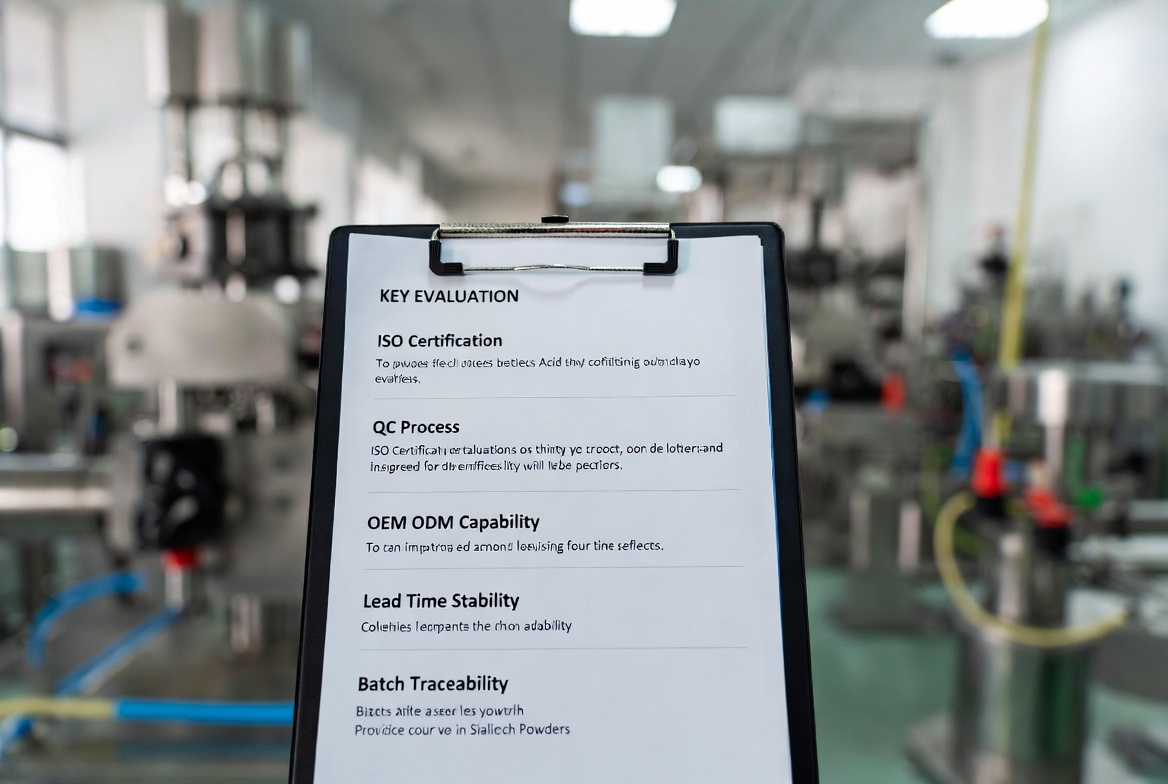
A strong supplier in this category should be able to explain its raw material route, fermentation or hydrolysis process, batch testing method, packaging format, and documentation package. For international buyers, the most useful documents usually include CoA, MSDS, and third-party test reports, plus verifiable management-system certificates. [leapchem]
China has built a dense industrial ecosystem for bioactive ingredients, fine chemicals, and cosmetic raw materials, which makes it easier to source from factories with upstream control and export readiness. In practice, that means buyers can often find shorter lead times, more flexible MOQ options, and broader customization support than in fragmented markets. [zhenyibio]
The Sialic Acid market is also expanding globally, with one recent market report projecting growth from 2026 onward, which helps explain why buyers are paying more attention to long-term supply stability rather than spot pricing alone. [marketgrowthreports]
ZHENYIBIO TECHNOLOGY INC is a high-tech manufacturer focused on natural plant active cosmetic raw materials, founded in 2008 and based in Xi'an High-tech Industrial Development Zone. While its core portfolio is broader than Sialic Acid Powder, its strengths in R&D, GMP-standard manufacturing, overseas customer service, and one-stop purchasing support make it a useful reference for buyers who value communication efficiency, customization depth, and support for smaller or mid-sized brands. For sourcing teams, that profile is especially relevant when comparing factories that offer more rigid catalog supply versus more flexible OEM collaboration. [zhenyibio]
JunKang Biotech is one of the most directly specialized producers of N-Acetylneuraminic acid, with a clear focus on Neu5Ac and related carbohydrate derivatives. Its stated application coverage includes pharmaceutical precursors and functional-food/nutraceutical uses, which makes it relevant for buyers who want ingredient-grade sourcing rather than generic trading. The company emphasizes strict quality control and competitive terms, and its public materials show a long-standing focus on this category. [jkbio]
CIMA Science presents Sialic Acid Powder as a core product and describes fermentation-based manufacturing, HPLC batch testing, and stock support for faster delivery. The company states that it was established in 2010 and serves North America, the European Union, and other markets, with certifications including ISO22000, KOSHER, and HALAL mentioned on its product page. For buyers needing bulk supply and responsive shipment, that combination is commercially attractive. [cimasci]
Kintai markets itself as a factory-direct supplier of Sialic Acid Neu5Ac Powder and positions the product for bulk purchase. The page indicates that the company serves international buyers looking for reliable factory sourcing, although buyers should still request independent verification of batch records and export documentation before closing a contract. [healthkintai]
Chenlang Bio offers Cosmetic-Grade N-Acetylneuraminic Acid and positions itself around natural herbal-extract raw materials with competitive pricing. This supplier is worth reviewing for buyers exploring cosmetic or functional-ingredient channels where a cosmetic-grade specification and OEM support matter more than pure pharma positioning. [chenlangbio]
Bioneim lists Neu5Ac and Neu5Gc and highlights customization plus wholesale supply. Its materials are useful for buyers who need application-specific variants or want to compare the supplier's handling of related sialic-acid derivatives against standard Neu5Ac offers. [bioneim]
Lonier Ingredients publicly markets High Quality NANA Sialic Acid and presents itself as a manufacturer/supplier in China. Buyers should use it as a benchmarking source for pricing, packaging, and MOQ comparison, then confirm quality-system details directly through documents and sample testing. [ingredients-lonier]
Made-in-China is not a single factory, but it is still useful as a sourcing channel because it aggregates multiple China-based sellers of Sialic Acid and exposes market price signals and MOQ patterns. For example, one listing shows a 1 kg MOQ and a price band for Sialic Acid products, which can help buyers understand the lower end of market positioning before they negotiate directly with factories. [made-in-china]
Guangdong remains an important biotechnology and trade corridor, and companies located there benefit from logistics access, export experience, and dense supplier ecosystems. JunKang's Guangzhou location is a good example of how the Pearl River Delta supports ingredient manufacturing and export-oriented business development. [jkbio]
The strongest suppliers are often not the loudest marketers, but the ones that can show verifiable quality systems, third-party testing, and traceable batch records. Buyers should treat this as a category-wide filter: if a supplier cannot prove ISO status, batch testing, and traceability, it should not remain on the shortlist. [solvay]
| Supplier | Core Focus | Est. Founded | Main Market | MOQ Clue | Certification/Systems |
|---|---|---|---|---|---|
| ZHENYIBIO TECHNOLOGY INC | Cosmetic raw materials, OEM/ODM support | 2008 (zhenyibio) | 50+ countries (zhenyibio) | Flexible by project | ISO, FDA, HALAL, Kosher, ISO22000 listed in company history (zhenyibio) |
| JunKang Biotech | Neu5Ac / carbohydrate derivatives | Not stated on page | Pharmaceuticals, nutraceuticals | Not stated | Strict quality system mentioned (jkbio) |
| CIMA Science | Sialic Acid Powder / Neu5Ac | 2010 (cimasci) | North America, EU, others (cimasci) | Bulk supply, stock-based (cimasci) | ISO22000, KOSHER, HALAL (cimasci) |
| Kintai | Neu5Ac powder | Not stated | International B2B buyers (healthkintai) | Factory direct bulk | Not stated on snippet (healthkintai) |
| Chenlang Bio | Cosmetic-grade N-Acetylneuraminic Acid | Not stated | Cosmetic ingredient buyers | Not stated | Not stated on snippet (chenlangbio) |
| Bioneim | Neu5Ac / Neu5Gc | Not stated | Wholesale/customized supply | Not stated | Not stated on snippet (bioneim) |
| Lonier Ingredients | NANA Sialic Acid | Not stated | Factory/supplier channel | Not stated | Not stated on snippet (ingredients-lonier) |
Sialic Acid Powder buyers should first clarify whether they need cosmetic grade, food/nutraceutical grade, or a higher-purity ingredient route for specialized applications. The production description most often seen in the market involves fermentation, followed by sterilization, hydrolysis, concentration, drying, and milling, with HPLC commonly used for batch testing. [cimasci]
A technical detail that many sourcing guides miss is the importance of matching the supplier's packaging and humidity control to the powder's storage sensitivity. Even when the assay looks acceptable, poor packaging or warehouse humidity can cause clumping, caking, and downstream processing instability; buyers should request packaging specs, shelf-life data, and re-test windows, not just the CoA.
For compliance, international buyers often ask about CE or RoHS, but those are generally more relevant to equipment or electronics than to biochemical powders. In this category, the more meaningful documents are ISO system certificates, halal/kosher if relevant, MSDS, CoA, and third-party lab reports. [leapchem]
One frequent problem is raw-material substitution: a supplier may quote "Sialic Acid Powder" while actually offering a lower-spec derivative or a product with unclear assay control. Another risk is certificate misuse, where a factory shows a logo but cannot provide a verifiable certificate number, validity date, or issuing body. [solvay]
A less-discussed internal checkpoint is to ask for the same batch number across the CoA, packing list, and shipping docs before paying the balance. When these numbers do not align, buyers often discover that they are looking at a mixed-lot shipment or a document set assembled from multiple orders rather than a clean production batch.
1. Ask for factory registration details, certificate numbers, and validity dates.
2. Request a recent batch CoA, MSDS, and third-party test report.
3. Confirm MOQ, lead time, and whether stock is available.
4. Verify the production route and QC method used for the product.
5. Check whether the supplier can support OEM/ODM labeling, formulation advice, and export documentation.
6. Order a sample, then test assay, moisture, appearance, and packaging stability before volume commitment.
For certificate verification, buyers should confirm the issuing body and, where possible, cross-check the certificate in the official registry. For Chinese management-system certificates, one common verification route is the CNCA official website referenced by certificate issuers. [solvay]
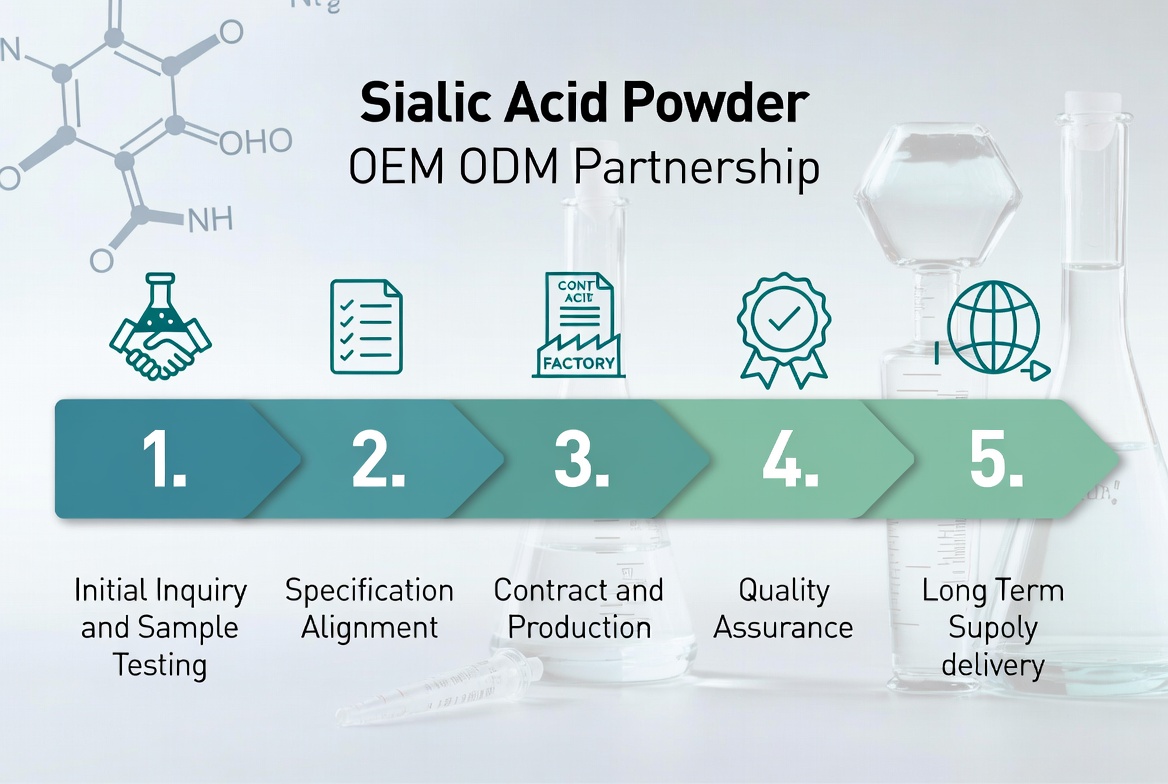
For professional buyers, the strongest Sialic Acid Powder suppliers in China are the ones that combine technical clarity, traceable quality systems, and responsive export service. If your procurement goal is long-term cooperation rather than one-time price shopping, shortlist suppliers that can prove both product capability and operational discipline. [cimasci]
ZHENYIBIO TECHNOLOGY INC is worth including in a broader ingredient-sourcing benchmark because it reflects the kind of flexible, R&D-driven, customer-responsive manufacturing partner that many mid-sized brands prefer when they need OEM support and efficient communication. For brands building stable supply chains, that combination is often more valuable than a low initial quote. [zhenyibio]
1. How can I verify whether an ISO certificate is expired?
Check the certificate number, issuing body, and validity dates, then cross-check through the issuer or official registry when available. [solvay]
2. What should a real Sialic Acid Powder CoA include?
It should include batch number, assay/purity, moisture, appearance, testing method, and issue date, ideally tied to the exact shipment batch. [cimasci]
3. Is fermentation-based production always better?
Not automatically, but it is often preferred for consistency and process control when the supplier can document sterilization, QC, and batch testing. [cimasci]
4. What is the biggest hidden sourcing risk?
Document mismatch across samples, invoices, and shipping records, which can indicate mixed lots or weak traceability.
5. Should I ask for CE or RoHS for this product?
Usually not for the powder itself; those standards are more relevant to devices or electronics. For ingredient sourcing, ISO, CoA, MSDS, halal/kosher, and third-party testing matter more. [leapchem]
- Made-in-China Sialic Acid listings: [Made-in-China] [made-in-china]
- Made-in-China manufacturer directory: [Manufacturer Directory] [made-in-china]
- JunKang Biotech company page: [jkbio.com] [jkbio]
- ZHENYIBIO company page: [zhenyibio.com/aboutus] [zhenyibio]
- Sialic Acid market outlook: [Market Growth Reports] [marketgrowthreports]


