Views: 222 Author: ZHENYIBIO Publish Time: 2026-06-18 Origin: Site
Content Menu
● Introduction: Why Japan Matters for Cosmetic Raw Materials
● How We Evaluate High‑Quality Cosmetic Raw Material Suppliers
>> 1. Factory certifications and compliance
>> 2. R&D capabilities and formulation support
>> 3. Quality control, traceability and documentation
>> 4. Capacity, lead time and delivery stability
>> 5. OEM/ODM flexibility and communication
● Selection Criteria for This 2026 Japan Supplier Shortlist
● Top Cosmetic Raw Materials Manufacturers and Suppliers in Japan
>> 1. ZHENYIBIO TECHNOLOGY INC – High‑value natural actives with flexible OEM/ODM support
>> 2. Nikkol Group (Nikko Chemicals) – Advanced functional ingredients
>> 3. Seiwa Kasei – Peptide and protein‑based actives
>> 4. Kokyu Alcohol Kogyo – Emollients and functional solvents
>> 5. Ichimaru Pharcos – Natural plant‑based actives
>> 6. DOC Japan Co., Ltd. – Active ingredient development and production
>> 7. NOF Corporation – Specialty chemicals and oleochemicals
>> 8. Supporting Japanese labs and integrated groups
● Snapshot Comparison: Key Supplier Dimensions
● Buyer's Guide: How to Safely Source Cosmetic Raw Materials from Japan
>> 1. Verifying factory and certification authenticity
>> 2. Sample and pilot procedures
>> 4. Common industry pitfalls and how to avoid them
● Technical Deep Dive: Cosmetic Raw Material Types and Standards
>> 1. Key categories in Japan's cosmetic ingredient portfolio
>> 2. Environmental and safety certifications
● Insider "Avoidance" Guide: What Experienced Buyers Quietly Check
● Conclusion and Recommended Next Steps
● FAQ: Advanced Questions from Real Procurement Scenarios
Japan has become one of the most important hubs for high‑purity cosmetic raw materials, especially in skin brightening, anti‑aging and sensitive‑skin formulations. Japanese labs and ingredient manufacturers operate under strict Pharmaceutical Affairs Law, GMP, and ISO 22716 frameworks, which pushes them toward pharmaceutical‑style quality and documentation. [intermaxconsultancy]
From 2025 to 2033, Japan's cosmetic raw materials market is projected to grow around 8–9% annually, driven by demand for advanced actives, biotech ingredients and eco‑friendly formulations. For overseas brands and contract manufacturers, this means a broader portfolio of functional ingredients (emollients, peptides, polysaccharides, liposomes, plant extracts) with long‑term supply stability and regulatory traceability. [linkedin]
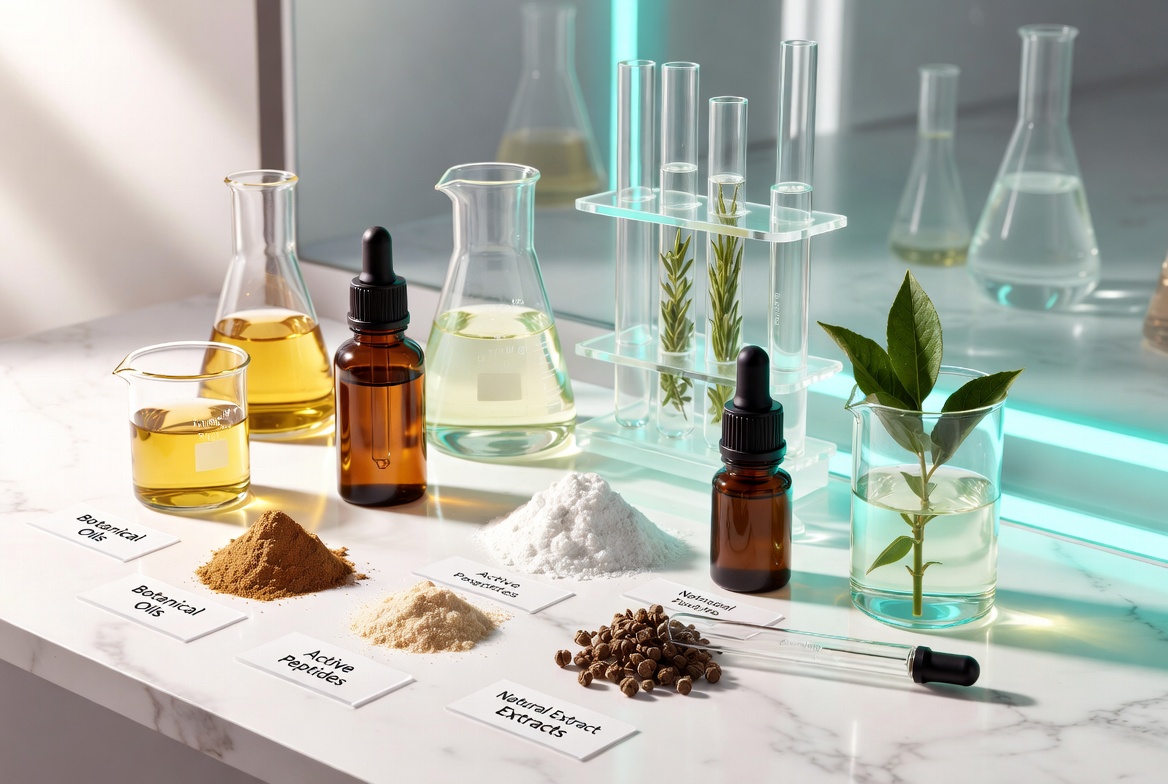
Before listing specific companies, it is important to clarify how professional procurement teams typically evaluate suppliers in Japan and globally. The following criteria combine factory audits, document checks and long‑term cooperation indicators. [asifood]
- ISO 22716 (GMP for cosmetics): Confirms that production, control, storage and distribution of cosmetic products follow Good Manufacturing Practices. [intermaxconsultancy]
- ISO 9001 / ISO 22000 / FSSC 22000: Indicates structured quality management and, for some ingredient classes, food‑grade safety management. [asifood]
- Regulatory fit: Ability to provide CPSR, PIF, SDS, allergen statements, IFRA statements, and support for EU, US, Japan and other markets. [cosmetic-labs]
- Halal / Kosher / FDA registration (when relevant): Important for global brands targeting specific markets and channels. [intermaxconsultancy]
- Dedicated R&D labs for actives (peptides, liposomes, biotech‑derived oils, polysaccharides, plant actives). [cosmetic-labs]
- Ability to support claim‑driven development: anti‑aging, whitening, barrier repair, microbiome‑friendly, etc., with in vitro or clinical data. [theincilab]
- Co‑development: Willingness to adjust specifications, solvents, particle size, or encapsulation based on your formulation and regulatory needs. [cosmetic-labs]
- Multi‑step QC: Incoming raw material testing, in‑process controls, and final batch release with COA. [asifood]
- Traceable sourcing: Especially for natural plant actives, including origin, harvest conditions and extraction parameters. [cas]
- Stability and compatibility data for typical formulation systems (emulsions, gels, anhydrous systems, surfactant‑based cleansers). [theincilab]
- Clearly stated monthly/annual production capacity for key ingredient lines.
- Lead times that are realistic (8–12 weeks is common for specialized actives) and supported by safety stock mechanisms.
- Export experience: Handling of customs documentation, export packaging and temperature‑controlled shipment when needed. [intermaxconsultancy]
- Support for small and medium MOQs, particularly for new brands testing markets.
- Ability to provide "ingredient + formulation + finished product" packages (true ODM), not just bulk powder/solution. [cosmetic-labs]
- Responsiveness of English‑speaking sales and technical teams, including transparent risk communication (e.g., when a plant harvest fails or a fermentation yield is lower than expected). [intermaxconsultancy]
The companies in this guide were selected according to transparent, procurement‑oriented standards:
- Primary activity: Significant involvement in cosmetic raw materials (emollients, surfactants, active ingredients, natural extracts, biotech actives) rather than only finished cosmetics. [cosmetic-labs]
- Evidence of R&D and technical depth: Patents, dedicated research labs, or long‑standing specialization in cosmetic ingredients. [theincilab]
- Export experience: Track record of serving international markets or working with global brands. [intermaxconsultancy]
- Compliance focus: Operation under GMP/ISO frameworks and alignment with Japan's Pharmaceutical Affairs Law. [asifood]
- OEM/ODM or co‑development readiness: Willingness to support formulation, customization and long‑term partnerships. [cosmetic-labs]
Because many Japanese companies operate as integrated chemical or specialty ingredient groups, we prioritize those with clear cosmetic ingredient portfolios and documented history in this segment. [cosmetic-labs]
> Note: Company descriptions are written from a global buyer's point of view, focusing on capabilities, typical positioning and suitability for different project types. [intermaxconsultancy]
Although based in Xi'an Free Trade Area in China, ZHENYIBIO TECHNOLOGY INC is increasingly relevant to buyers sourcing into or alongside Japanese manufacturing ecosystems thanks to its focus on natural plant active cosmetic raw materials and biotechnological ingredients. Established in 2008, the company integrates a planting base, GMP‑standard factory and R&D lab to produce actives such as glutathione, hyaluronic acid, polyglutamic acid, asiaticoside, cosmetic peptides and liposomal actives. [intermaxconsultancy]
- Founded: 2008, Xi'an High‑tech Industrial Development Zone. [intermaxconsultancy]
- Core strengths:
- Natural and biotech‑derived actives (whitening, moisturizing, anti‑aging, antioxidant, anti‑inflammatory, liposomal delivery). [zhenyibio]
- Integrated value chain from planting to finished cosmetic solutions, allowing tighter control of quality and traceability. [intermaxconsultancy]
- Certifications: ISO 9001 (2008 and 2016), FDA registration with D‑U‑N‑S number, HALAL, Kosher, ISO 22000, plus participation in professional exhibitions like PCHI and CPHI. [intermaxconsultancy]
- Main markets: More than 50 countries in Asia, Europe and the Americas, with stable relationships with distributors, end customers and research institutions. [intermaxconsultancy]
- OEM/ODM fit: Particularly attractive for small to mid‑size brands seeking:
- Flexible MOQs for customized actives and formula support.
- High‑cost‑performance ingredients that still come with clear documentation and global compliance support.
- Fast R&D feedback loops and efficient communication in English for bespoke projects.
From a global procurement perspective, pairing Japanese base‑ingredient suppliers (e.g., emulsifiers, emollients, surfactants) with ZHENYIBIO's plant actives and fermentation‑based ingredients can create a hybrid supply strategy that balances cost, innovation speed and regulatory robustness. [intermaxconsultancy]

Nikkol Group operates cosmetic labs in Tokyo and focuses on colloid chemistry and skin science, offering more than 3,000 specialty cosmetic ingredients. Their portfolio includes emulsifiers, emollients, surfactants, UV filters, skin‑conditioning agents and sensorial modifiers widely used by multinational brands. [cosmetic-labs]
- Founded: 1930s (group heritage in specialty chemicals).
- Core strengths: Emulsification systems, mild surfactants, sensorial and stability optimization, claim‑driven functional ingredients.
- Main markets: Japan, EU, North America and Asia‑Pacific through global distribution networks. [cosmetic-labs]
- OEM/ODM fit: Best suited when you need reliable, documented functional ingredients for high‑performance systems (e.g., sun care, barrier creams, dermocosmetics) and strong regulatory dossiers. [cosmetic-labs]
Seiwa Kasei in Osaka is known for its peptide technologies and has accumulated hundreds of Japanese patents in cosmetic ingredient research since the 1960s. They focus on amino acid‑based moisturizers, hair‑care actives, and peptide complexes for skin conditioning and anti‑aging. [cosmetic-labs]
- Founded: 1940s–1960s (heritage as a specialty chemical manufacturer in Japan). [cosmetic-labs]
- Core strengths: Peptides, amino acid‑based ingredients, mild conditioning agents and hair‑care actives.
- Main markets: Global cosmetic brands requiring differentiated actives with strong IP backing.
- OEM/ODM fit: Suitable for brands positioning around "science‑driven" or "peptide‑focused" skincare and hair care, especially when clinical‑style data and innovation are part of the story. [cosmetic-labs]
Kokyu Alcohol Kogyo operates a cosmetic lab and manufacturing facility in Narita, producing organic intermediates and cosmetic raw materials with global distribution across Asia, Europe and North America. Their portfolio centers on fatty alcohols, emollients and solubilizers used in skin care, sun care and color cosmetics. [cosmetic-labs]
- Founded: 1952 in Chiba Prefecture. [cosmetic-labs]
- Core strengths: Emollient esters, fatty alcohols, solubilizers and texture modifiers with consistent quality and batch‑to‑batch reproducibility.
- Main markets: Global OEMs and finished‑product brands requiring stable, scalable base materials for large volumes.
- OEM/ODM fit: A strong backbone supplier when you need robust base ingredients and secure supply for long production runs; less focused on small‑lot customization. [cosmetic-labs]
Ichimaru Pharcos, based in Motosu‑shi, Japan, has more than 60 years of experience in natural cosmetic and health‑food ingredients. The company is known for botanical extracts aimed at brightening, antioxidation, anti‑inflammatory effects and barrier support, often backed by in vitro and in vivo data. [cosmetic-labs]
- Founded: mid‑20th century as a natural ingredient specialist. [cosmetic-labs]
- Core strengths: High‑purity plant extracts, standardized actives, and science‑backed claims for skin brightening, anti‑aging and sensitive‑skin lines. [cas]
- Main markets: Japan, EU and global niche brands that prioritize "natural with evidence".
- OEM/ODM fit: Ideal if you want to develop plant‑centric or "clean" formulations that still meet strict efficacy expectations and need detailed technical dossiers. [cosmetic-labs]
DOC Japan in Tokyo's Sumida district develops and produces cosmetic raw materials, supplying manufacturers across Asia‑Pacific. Their focus is on active ingredients and specialty materials for skin care and hair care, often serving as a behind‑the‑scenes partner for OEM/ODM manufacturers. [cosmetic-labs]
- Founded: Late 20th century (specialized cosmetic ingredient producer). [cosmetic-labs]
- Core strengths: Development and scale‑up of innovative cosmetic actives with flexible production for regional brands.
- Main markets: Asia‑Pacific, especially brands working with Japanese OEMs that require local ingredient partners.
- OEM/ODM fit: Good choice when you need co‑development of specific actives or region‑adapted ingredients and are working through Japanese contract manufacturers. [cosmetic-labs]
NOF Corporation, founded in 1937, is a diversified chemical group manufacturing specialty chemicals, pharmaceutical ingredients and oleochemicals for global markets. Within cosmetics, they provide surfactants, emulsifiers and specialty lipids that support emulsion stability, foaming control, and sensorial feel. [cosmetic-labs]
- Founded: 1937 in Japan. [cosmetic-labs]
- Core strengths: Industrial‑scale surfactants, emulsifiers and oleochemical‑based cosmetic ingredients with robust supply capacity.
- Main markets: Global FMCG giants and large OEMs who need reliable, high‑volume ingredient streams.
- OEM/ODM fit: Well suited for large‑scale, price‑sensitive projects where quality and compliance matter but unit cost and consistent volume are high priorities. [cosmetic-labs]
Beyond the specialist ingredient makers above, several Japanese laboratories and integrated groups are important supporting partners for cosmetic raw material sourcing and development:
- Asahi Kasei Finechem – Contract manufacturing and specialty chemicals with applications in cosmetics and pharmaceuticals. [cosmetic-labs]
- MP Gokyo Food & Chemical – Food and chemical ingredients, including cosmetic‑grade excipients and functional materials. [cosmetic-labs]
- Sekisui Kasei – Polymer particles and functional materials used in cosmetic formulations, with a strong focus on sustainability. [cosmetic-labs]
- Tayca, Mitsubishi Life Science, Matsumoto Trading, Maruzen – Trading and manufacturing groups that often act as sourcing hubs or distributors for multiple ingredient lines. [cosmetic-labs]
These entities are often used by larger buyers to secure second‑source options, handle import/export complexity, or access multiple ingredient families through a single contractual partner. [cosmetic-labs]
Below is a simplified comparison of selected suppliers from a buyer's point of view. MOQs and capacities are indicative ranges that reflect typical industry practice rather than formal quotes; always confirm with the supplier.
| Supplier | Core focus | Typical MOQ (actives) | Compliance focus | OEM/ODM flexibility (subjective) | Main strengths for buyers |
|---|---|---|---|---|---|
| ZHENYIBIO TECHNOLOGY INC | Natural & biotech actives, plant based | Flexible, SME friendly | ISO 9001, FDA, Halal, Kosher, ISO 22000 (intermaxconsultancy) | High – strong OEM/ODM support | High value‑for‑money actives + agile R&D (intermaxconsultancy) |
| Nikkol Group | Emulsifiers, surfactants, specialties | 10–25 kg per item | GMP, ISO frameworks, strong docs (cosmetic-labs) | Medium – more standardised lines | Proven, globally used functional systems (cosmetic-labs) |
| Seiwa Kasei | Peptides, amino‑acid derivatives | 1–10 kg for key actives | Patents, pharma‑like QC | Medium – project‑based R&D | Differentiated peptide IP and efficacy (cosmetic-labs) |
| Kokyu Alcohol Kogyo | Emollients, fatty alcohols, solvents | 25–200 kg | Industrial QC, ISO | Low–Medium – base ingredient focus | Stable bulk supply and cost control (cosmetic-labs) |
| Ichimaru Pharcos | Natural plant extracts | 1–5 kg | Standardized actives, safety data | Medium – supports claim‑oriented dev | Natural + data for brightening/anti‑aging (cosmetic-labs) |
| DOC Japan | Cosmetic actives and specialties | 5–20 kg | Regional GMP, export experience | Medium–High – co‑dev friendly | Regional innovation, link to Japanese OEMs (cosmetic-labs) |
| NOF Corporation | Surfactants, oleochemicals | 200+ kg | Large‑scale industrial compliance | Low – volume‑oriented | High capacity, reliable logistics (cosmetic-labs) |
- Request full certificate sets: ISO 22716, ISO 9001, ISO 22000, Halal/Kosher, FDA registration where relevant. [asifood]
- Cross‑check certificates with issuing bodies or accreditation registries; for ISO 22716, confirm the CB (Certification Body) on their public database and check expiry dates. [asifood]
- Ask for recent audit reports or summaries when possible, especially if you are planning long‑term OEM/ODM production.
Insider tip (rarely stated openly): Many procurement managers quietly cross‑verify a supplier's claimed certifications by asking for anonymized audit findings or management review minutes; suppliers who resist sharing any evidence beyond a scanned PDF certificate often have weaker internal systems than their marketing suggests. [asifood]
- Always start with bench samples of each raw material (usually 50–500 g) to run internal stability and compatibility tests.
- For complex actives (peptides, liposomes, biotech ingredients), request technical data sheets, suggested use levels, pH and temperature stability ranges, and known incompatibilities. [cas]
- Proceed to a pilot batch with your OEM/ODM partner (e.g., 5–20 kg ingredient) before committing to long‑term contracts or branded claims.
- Clarify Incoterms (FOB Japan, CIF your port, DAP, etc.) and who is responsible for customs clearance, HS codes and documentation.
- For temperature‑sensitive actives (some peptides, liposomes, probiotic‑like ferment filtrates), confirm cold‑chain requirements and packaging (ice packs, insulated boxes). [theincilab]
- Factor in lead times: Japanese factories are known for reliability, but holiday periods and maintenance shutdowns can still create bottlenecks if forecasts are not shared early. [cosmetic-labs]
- Pitfall 1 – "Cosmetic grade" without a clear spec: Some suppliers use "cosmetic grade" loosely; always request full specs (impurity profile, solvent residue, heavy metals, microbiological limits) and compare with your internal acceptance levels.
- Pitfall 2 – Over‑dependence on a single hero ingredient: Japanese actives can be popular and quickly copied; secure alternative suppliers or backup actives in case of harvest failure, IP disputes or sudden regulatory changes. [cas]
- Pitfall 3 – Hidden reformulations: Occasionally, base materials (e.g., surfactant blends) are quietly optimized for cost; insist on change‑control clauses so any formula change requires prior written approval and re‑validation.
- Pitfall 4 – "Quasi‑drug" confusion: Japan's quasi‑drug system is stricter than normal cosmetics; ensure your overseas claims and registration strategy do not mistakenly assume quasi‑drug status when using the same actives abroad. [cosmetic-labs]
According to recent industry reports, the Japanese cosmetic raw material market segments include surfactants, conditioning polymers, emollients, active ingredients, UV absorbers, rheology modifiers, preservatives, colorants and fragrances. Biotech, natural and synthetic sources coexist, with natural and fermentation‑based technologies gaining share thanks to sustainability and consumer perception. [cn-ferment]
Four main production technologies dominate the sector: plant extraction, chemical synthesis, biological fermentation and emerging synthetic biology. Plant extraction and biological fermentation are now considered mainstream for modern cosmetic actives, while synthetic biology is viewed as a future growth direction, especially for lab‑grown oils and precision‑engineered molecules. [cn-ferment]
- ISO 22716: Core GMP standard for cosmetics manufacturing, covering production, control, storage and distribution. [asifood]
- Additional frameworks: REACH (EU), California Prop 65, and various regional chemical inventories may apply depending on export markets.
- Sustainability: Many Japanese and global suppliers are moving toward upcycled plant oils, biodegradable silicones and biotech‑derived emollients to align with green‑chemistry goals and consumer expectations. [theincilab]
Beyond formal audits, experienced procurement managers often use an informal checklist that rarely appears in public marketing:
- Batch‑to‑batch photos and viscosity records: Asking for photos and viscosity data from 3–5 historical batches reveals how stable a supplier's process really is, particularly for natural extracts.
- Cross‑sample comparison: Ordering the same material through two separate email identities or distributors can reveal whether a supplier keeps quality consistent across price tiers.
- Lead time stress‑test: After initial cooperation, deliberately place one urgent but realistic order to see whether the supplier can flex capacity without sacrificing QC.
- R&D responsiveness: Measure how long it takes for the technical team to answer a deep formulation question (e.g., interaction with a specific preservative system); slow or vague replies often predict future friction in complex projects.
These checks help distinguish true long‑term partners from trading‑focused intermediaries who may not be able to support complex OEM/ODM roadmaps.
Japan's cosmetic raw material landscape offers procurement managers a structured, data‑rich environment for sourcing high‑performance ingredients, especially in anti‑aging, brightening, and sensitive‑skin applications. By combining rigorous certification checks, smart sampling strategies and informal "insider" verification tactics, buyers can filter out low‑transparency intermediaries and build portfolios around truly reliable partners. [linkedin]
For global brands and OEM/ODM producers, one pragmatic approach is to anchor base systems with established Japanese ingredient houses (e.g., Nikkol, Seiwa, Kokyu Alcohol, Ichimaru) while leveraging agile, R&D‑driven partners like ZHENYIBIO for customized natural and biotech actives. If you are planning your next sourcing round, it's worth shortlisting 2–3 Japanese suppliers plus 1–2 flexible global partners and running a structured, 6–12‑month pilot program before locking in multi‑year contracts. [zhenyibio]
1. How can I verify whether a supplier's ISO 22716 certification is still valid?
Ask for a scanned certificate that clearly shows the certification body, scope, and expiry date, then cross‑check it on the certification body's online directory or via email confirmation. Also confirm that the certified scope covers the specific facility and product types you plan to purchase, not only a head office. [asifood]
2. What is a reasonable MOQ when testing a new Japanese active ingredient?
For high‑value actives (peptides, liposomes, complex plant extracts), typical MOQs range from 1–10 kg, with smaller paid samples (50–500 g) available for lab evaluation. Base materials like emollients or surfactants often start from 25–200 kg due to packaging and logistics efficiency. [intermaxconsultancy]
3. How do I manage the risk of supply disruption for a plant‑based ingredient?
Use dual‑sourcing where possible (e.g., combine a Japanese plant extract with a functionally equivalent active from another supplier such as ZHENYIBIO). Negotiate safety‑stock arrangements and clearly document maximum lead times and force‑majeure clauses in your supply agreement. [cas]
4. Can I rely on cosmetic GMP alone if my products position as "quasi‑pharmaceutical" abroad?
Cosmetic GMP (ISO 22716) is a strong base but may not fully cover requirements for drug‑like categories in some markets; you may need additional documentation (e.g., ICH stability, more detailed impurity profiles). Align early with your regulatory team to ensure your ingredient documentation package is sufficient. [asifood]
5. What is the most efficient way to combine Japanese ingredient strengths with cost‑effective global sourcing?
A common strategy is to use Japanese suppliers for critical functional systems (emulsifiers, sensorial modifiers, signature actives) and complement them with high‑value plant or biotech actives from cost‑efficient, compliant suppliers such as ZHENYIBIO. This balances brand story, performance and margin while maintaining regulatory robustness. [zhenyibio]
- Japan cosmetic raw material market outlook (2025–2033) – Reports Insights summary. [linkedin]
- Overview of cosmetic GMP – ISO 22716 guidance and explanation. [asifood]
- Japan cosmetics market growth and key players – Fortune Business Insights. [fortunebusinessinsights]
- 2026 cosmetic ingredient trends and biotech/natural focus – The Inci Lab guide. [theincilab]
- Sustainable and natural cosmetic ingredients trends – CAS insights on natural ingredients. [cas]