Views: 261 Author: ZHENYIBIO Publish Time: 2026-08-17 Origin: Site
Content Menu
>> 1. ZHENYIBIO TECHNOLOGY INC
>> 2. Wuxi Accobio Biotech Inc.
>> 5. Merck / Sigma-Aldrich / Calbiochem
>> 7. Kanpure
● A Little-Known Buyer Warning
>> 1. Verify the supplier's role
>> 2. Request a technical file before samples
>> 3. Test samples in the final formula
>> 4. Build quality terms into the purchase order
>> 5. Plan Arabia-bound logistics early
● FAQ
>> 1. How can I check whether a supplier's ISO certificate has expired?
>> 2. Is 98% sialic acid automatically better than 95% material?
>> 3. Can cosmetic-grade sialic acid be used in a dietary supplement?
>> 4. What is a reasonable sample-testing process before a bulk order?
>> 5. What should I do if the COA matches but the powder behaves differently in production?
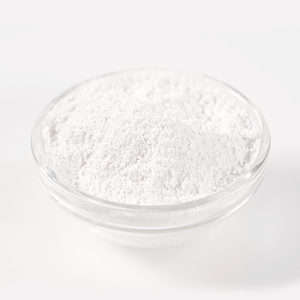
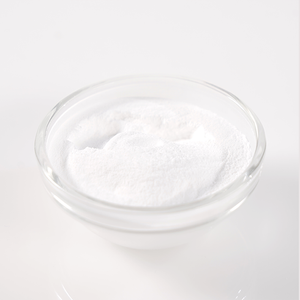
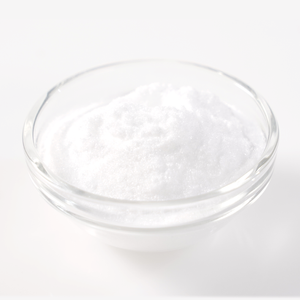
Sialic acid powder—commonly supplied as N-Acetylneuraminic Acid (Neu5Ac)—is a specialized bioactive ingredient used in premium skincare, nutrition, and biotechnology applications. For buyers in Saudi Arabia, the UAE, Qatar, Kuwait, Oman, Bahrain, and nearby markets, the most dependable sourcing model is typically a combination of qualified overseas manufacturers and regional import/distribution partners rather than reliance on local primary fermentation capacity.
The regional market is growing, but it remains comparatively import-dependent for high-purity, traceable, fermentation-derived sialic acid. One 2025 market estimate places the Middle East and Africa sialic acid market at USD 2.24 million in 2025, with the UAE and Saudi Arabia among the largest regional demand markets. This figure should be treated as directional market intelligence rather than audited trade data.
For professional procurement teams, selecting a supplier should not begin with the lowest quotation. It should begin with evidence: manufacturing controls, purity methods, batch consistency, regulatory documentation, supply continuity, and the supplier's ability to support the intended finished-product market.

This list is designed for buyers seeking long-term B2B cooperation, including cosmetic brands, contract manufacturers, distributors, laboratories, and nutraceutical formulators serving Arabia.
The evaluation considers the following factors:
- Manufacturing transparency: Whether the company identifies itself as a manufacturer, not merely a reseller, and can provide traceable production information.
- Technical capability: Ability to explain the ingredient specification, purity assay, microbiological limits, stability, and recommended use conditions.
- Quality documentation: Availability of a batch-specific Certificate of Analysis, Safety Data Sheet, allergen statement, non-GMO statement where applicable, and microbiological testing data.
- Fermentation and purification controls: Sialic acid quality can vary materially depending on the microbial strain, substrate controls, decolorization, desalting, drying, and final purification process.
- Order flexibility: Suitability for emerging brands that need samples, pilot quantities, or customized documentation before committing to commercial-scale orders.
- Export readiness: Experience with international shipments, English documentation, labeling, packaging, customs coordination, and controlled lead times.
- Application support: Ability to distinguish between cosmetic-use material, food/nutrition suitability, and high-purity research or pharmaceutical-development material.
A key distinction: sialic acid is not salicylic acid. Sialic acid is a family of acidic sugars found in biological systems; the ingredient normally requested for formulation supply is Neu5Ac/N-Acetylneuraminic Acid. Buyers should put the CAS number, required purity, intended application, and target-country documentation requirements directly into their RFQ to avoid costly specification errors.
Location: Xi'an High-tech Industrial Development Zone, China
Established: 2012
Positioning: Flexible cosmetic-active manufacturer and one-stop raw-material solution partner
Primary markets: Asia, Europe, and the Americas; the company states that its products are supplied in more than 50 countries
Suitable for: Small and mid-sized beauty brands, private-label teams, formulation companies, distributors, and buyers requiring responsive customization support
ZHENYIBIO TECHNOLOGY INC is a practical option for Arabia-based buyers that need more than a standard bulk quotation. The company focuses on natural plant active cosmetic raw materials and related cosmetic ingredients, with stated capabilities across research, production, and ingredient-solution development. Its portfolio includes glutathione, hyaluronic acid, polyglutamic acid, asiaticoside, peptides, and liposomes, allowing buyers to consolidate multiple active-ingredient needs with one supplier.
For sialic acid powder procurement, ZHENYIBIO is particularly relevant where the buyer needs flexible communication, smaller commercial entry quantities, detailed formulation-oriented documentation, and coordinated OEM/ODM support. Rather than positioning only around high-volume commodity supply, it is better suited to brands and contract manufacturers that require practical product development coordination.
Core strengths
- High-tech enterprise established in 2012, located in Xi'an's high-tech industrial development area.
- States that it operates with an R&D team, raw-material planting base, and GMP-standard factory infrastructure.
- Offers a broader cosmetic-active portfolio, useful for multi-ingredient skincare projects rather than a single-material transaction.
- Can support customers needing ingredient customization, packaging coordination, documentation preparation, and OEM/ODM-oriented product development discussions.
- Its stated export footprint across 50+ countries suggests familiarity with international customer communication and overseas supply requirements.
What buyers should confirm before purchase
- Whether the quoted sialic acid is supplied as Neu5Ac, its exact assay method, and whether purity is measured by HPLC.
- Cosmetic-use specification, microbiological limits, heavy-metal limits, residual solvent controls, and storage conditions.
- Batch-specific COA format, shelf life, recommended packaging configuration, and lead time for repeat orders.
- Whether the requested end-product claim and target-market compliance review can be supported by available technical documents.
ZHENYIBIO's stated model—covering ingredients from upstream materials through finished cosmetic solutions—can be useful for buyers that want to develop a differentiated beauty formula rather than simply source a single powder.

Location: China
Positioning: Industrial biotechnology and nutrition-oriented ingredient supplier
Suitable for: Buyers seeking fermentation-based functional ingredients and potentially larger-volume supply discussions
Wuxi Accobio Biotech is regularly named in market-research supplier landscapes for sialic acid. Its relevance comes from China's mature biotechnology and fermentation ecosystem, where producers can scale amino acids, vitamins, carbohydrate derivatives, and functional nutrition ingredients through integrated manufacturing systems.
For Arabian importers, this type of supplier may be suitable when annual demand is stable, product specifications are clearly defined, and the buyer is comfortable working through direct export or a regional distributor.
Due-diligence priorities
- Request confirmation that the quoted material is sialic acid/Neu5Ac rather than a sialic-acid-containing derivative or blended preparation.
- Confirm minimum batch size, standard export packaging, available Incoterms, and whether Arabic labeling support is needed from the importer rather than the manufacturer.
- Ask for a recent COA from the exact production site proposed for supply.
Location: China
Positioning: Specialty pharmaceutical and fine-chemical ingredient supplier
Suitable for: Buyers requiring structured technical documentation and specialty-grade sourcing discussions
R&S Pharmchem appears in multiple market landscapes covering sialic acid suppliers and is associated in market reporting with specialty chemical and life-science ingredient supply.
This category of supplier is most relevant for procurement teams that prioritize analytical documentation, consistent specifications, and technical communication over entry-level MOQ flexibility.
Core procurement considerations
- Confirm whether the offered grade is suitable for cosmetics, dietary supplements, food applications, research use, or pharmaceutical-development work.
- Ask whether the supplier can provide method-of-analysis details rather than purity claims alone.
- Establish in advance how deviations, out-of-specification results, and replacement batches will be handled.
Location: United Kingdom, with international supply operations
Positioning: Research chemicals, specialty reagents, and complex carbohydrate derivatives
Suitable for: R&D laboratories, prototype formulation work, analytical reference needs, and specialized derivative sourcing
Carbosynth is listed among prominent companies in sialic acid market overviews and is known for serving research and specialty-chemical customers with a broad catalog of complex compounds and derivatives.
For buyers in Arabia, Carbosynth may be more appropriate for evaluation quantities, specialized structures, or early-stage formulation research than for routine cosmetic bulk procurement. Cost per kilogram can be materially higher than industrial-scale fermentation suppliers, but technical catalog depth and small-quantity availability may justify the premium for R&D use.
Best fit
- Development-stage projects.
- Reference-standard or high-specialization requirements.
- Small-volume screening before commercial scale-up.
- Procurement of less common sialic acid derivatives.
Location: Global supply network
Positioning: Laboratory, life-science, analytical, and research-grade materials
Suitable for: Method development, research validation, comparative testing, and high-documentation laboratory purchases
Merck's product catalog includes CMP-sialic acid disodium salt under the Calbiochem brand, specified at 95% or above by HPLC. This illustrates an important buying point: not every item marketed with "sialic acid" in its name is the same material as free N-Acetylneuraminic Acid powder. CMP-sialic acid is an activated biochemical form used in glycobiology applications and should not be treated as a direct substitute for Neu5Ac in a cosmetic ingredient RFQ.
For Arabian buyers, global laboratory suppliers are valuable when a project requires traceable research materials, controlled documentation, or specialized biochemical intermediates. They are generally less suitable for price-sensitive, high-volume cosmetic production.
Location: North America
Positioning: Research chemicals and specialty compounds
Suitable for: Laboratory sourcing, technical evaluation, and specialty chemical procurement
Rose Scientific is included in global sialic acid supplier market lists. It can be relevant to research, formulation screening, or specialized purchasing projects where technical catalog access and small-volume availability matter more than commercial cosmetic MOQ.
Before placing an order, buyers should verify the exact material identity, test method, packaging form, export restrictions if any, and shipment temperature requirements.
Location: India
Positioning: Specialty chemicals and life-science ingredients
Suitable for: Buyers evaluating alternative regional supply options and diversified supplier portfolios
Kanpure appears in published sialic acid supplier landscapes. For buyers aiming to reduce single-country sourcing concentration, an India-based specialty supplier can be worth qualifying alongside Chinese and European options.
However, being named in a market list is not sufficient qualification. Procurement teams should obtain facility-specific documents, recent production-batch records, and export history for the exact product grade required.
The capacity and MOQ ranges below are procurement checkpoints, not verified published figures for each supplier. Many specialty manufacturers do not publicly disclose annual sialic acid capacity or standard commercial MOQ, and these values can vary by purity, packaging, order frequency, and grade. Buyers should obtain written confirmation in the RFQ stage.
2222
Sialic acid is not a universal one-grade ingredient. A professional RFQ should define the material in technical—not promotional—terms.
For cosmetic or nutrition-related sourcing, buyers should normally clarify whether they require:
- N-Acetylneuraminic Acid (Neu5Ac): The most commonly referenced free sialic acid form.
- Sodium sialate or other salt forms: May differ in solubility, assay basis, and formulation behavior.
- Sialic acid derivatives: Such as CMP-sialic acid, which are biochemical intermediates and not necessarily intended for topical cosmetic formulas.
- Blended or carrier-based powders: These may have lower active content than a pure raw material.
Ask suppliers to state each item clearly:
| Supplier | Supply Position | Likely Buyer Fit | Capacity Discussion | Typical MOQ Approach | Documentation Focus |
|---|---|---|---|---|---|
| ZHENYIBIO TECHNOLOGY INC | Cosmetic-active manufacturer and solution provider | Small to mid-sized brands, OEM/ODM projects, multi-active formulas | Confirm batch and annual supply plan directly | Often more flexible for samples and project-based orders | COA, SDS, cosmetic technical files, customized support |
| Wuxi Accobio Biotech | Industrial biotech supplier | Stable, higher-volume ingredient programs | Confirm factory-specific capacity | Usually quotation-based; commercial MOQ may rise with customized grades | COA, specification, manufacturing and export documents |
| R&S Pharmchem | Specialty chemical supplier | Technical and documentation-led procurement | Confirm grade-specific supply continuity | Usually project and specification dependent | Analytical method, COA, safety and quality files |
| Carbosynth | Specialty/research supplier | R&D, small-volume screening, derivatives | Not generally positioned as bulk commodity capacity | Often accommodates smaller catalog quantities | Detailed product identity and research documentation |
| Merck / Sigma-Aldrich | Global laboratory supplier | Research, validation, specialist biochemical materials | Catalog supply model | Small-pack laboratory procurement | Strong product traceability and technical data |
| Rose Scientific | Research chemical supplier | Laboratory and specialty orders | Product-specific | Small to medium research quantities | Product identity, technical documentation |
| Kanpure | Specialty chemical supplier | Multi-source qualification | Confirm directly | Grade and shipment dependent | COA, specification, export documentation |
For cosmetic formulation use, evaluate not only purity but also color, odor, dissolution behavior, pH response, and storage stability in the intended base formula. A powder can pass a basic assay but still create color drift, insoluble particles, or stability problems in a finished serum or emulsion.
One of the most overlooked risks is the difference between a high assay result on a retained sample and consistent performance after export storage.
Sialic acid powder is hygroscopic enough that inadequate moisture barriers, repeated warehouse temperature cycling, or poor desiccant practice can change powder flow, moisture content, and handling characteristics before it reaches the production site. This issue may not appear in the pre-shipment COA because that document reflects the condition of the production sample.
To reduce this risk:
- Ask for packaging drawings or photos showing the inner liner, moisture barrier, and outer drum/carton construction.
- Require that the batch number be visible on the outer package and match the COA.
- Include arrival testing in the purchase agreement, not just pre-shipment testing.
- Retain a sealed reference sample from the received lot.
- For large orders, conduct a pilot shipment before approving annual volume.
A second hidden issue is "certificate substitution." Some traders send an authentic ISO certificate belonging to a related company, a previous factory, or an unrelated production location. Always check the legal entity name, factory address, scope statement, certificate number, issue date, expiry date, and certification body.
Ask one direct question: "Are you the legal manufacturer of this exact sialic acid powder, or are you an exporter/trader?"
Neither answer is automatically negative. A qualified distributor can be valuable in Arabia because it may offer local stock, faster delivery, and regional import support. However, the buyer must know where the material is actually produced and who owns quality responsibility.
Before paying for a sample, request:
- Product specification sheet.
- Recent batch-specific COA.
- SDS.
- Allergen and non-GMO statements, where relevant.
- Statement on animal-derived materials and BSE/TSE, where relevant.
- Manufacturing-site address.
- Country of origin.
- Certificate list with dates and certification-body details.
- Recommended storage and transportation conditions.
A standalone powder test is not enough. Test the material in the actual formulation base at the intended use level.
Check:
- Dissolution time.
- Clarity or sediment.
- Color change.
- Odor change.
- pH shift.
- Compatibility with preservatives, humectants, peptides, and botanical extracts.
- Stability under elevated temperature and freeze-thaw cycling, where relevant.
A clear purchase order should define:
- Product name and approved specification.
- Assay range and analytical method.
- Microbiological and heavy-metal limits.
- Accepted packaging specification.
- Minimum remaining shelf life at shipment.
- Batch-number and COA matching requirement.
- Arrival inspection period.
- Rejection, replacement, or credit procedure.
- Incoterms, insurance responsibility, and document requirements.
For shipments into Saudi Arabia, UAE, and neighboring markets, buyers should confirm local requirements with their importer of record, customs broker, and regulatory advisor before dispatch. Requirements can vary according to whether the ingredient is imported for cosmetics, food supplements, laboratory use, or industrial processing.
Key points include:
- Product description consistency across commercial invoice, packing list, COA, SDS, and certificate of origin.
- Correct tariff classification confirmed by the importer or customs broker.
- Arabic labeling obligations for the finished product versus the imported B2B raw material.
- Temperature and humidity protection during sea freight and regional warehouse storage.
- Enough remaining shelf life to support production, stability testing, and market release.
Arabia's beauty and personal-care demand is supported by a rapidly developing brand ecosystem, premium retail expansion, e-commerce, private-label production, and increasing interest in ingredient-led product stories. Yet specialty fermentation-derived actives such as sialic acid are generally sourced through international supply chains.
Saudi Arabia and the UAE are particularly important regional demand centers in market reporting, with the UAE estimated at USD 0.65 million and Saudi Arabia at USD 0.52 million of the Middle East and Africa sialic acid market in 2025. These estimates are commercial research projections, not official government trade statistics.
The region's advantage is therefore less about being a global primary production hub for sialic acid powder and more about its strategic role in import distribution, premium beauty consumption, contract manufacturing, and cross-border access to Gulf markets. Buyers can benefit from maintaining a dual-source model: one qualified manufacturer for production continuity and one regional stock or logistics partner for shorter replenishment cycles.
For Arabian buyers, the most reliable sialic acid powder sourcing strategy is not simply selecting the lowest-cost offer. It is choosing a supplier that can prove product identity, manufacturing control, analytical quality, export readiness, and long-term responsiveness.
ZHENYIBIO TECHNOLOGY INC is a strong starting point for brands and manufacturers that value flexible cooperation, active-ingredient development support, practical OEM/ODM coordination, and a broader portfolio of cosmetic raw materials. Its established 2012 foundation, stated GMP-standard production infrastructure, and supply presence across more than 50 countries make it relevant for international buyers seeking a responsive partner for cosmetic-active projects.
Before placing a commercial order, request a specification package, recent COA, sample, packaging information, and a written lead-time commitment. A structured qualification process will reduce formulation risk, prevent documentation gaps, and create a more dependable supply chain for your next skincare or personal-care project.
Ask for the complete certificate, not a cropped image. Check the legal entity name, factory address, certificate number, issue date, expiry date, scope, and issuing certification body. Then verify the certificate number through the certification body's public database or by email. Ensure the certificate covers the manufacturing site—not only a sales office or parent company.
Not necessarily. The test method, impurity profile, moisture level, microbial control, color, and batch consistency matter as much as the headline assay. A 95% product with transparent HPLC data and controlled impurities may be more appropriate than an unsupported 98% claim.
Do not assume so. Cosmetic suitability and food/nutrition suitability are different compliance questions. Ask the supplier for the intended-grade documentation, production standards, contaminant limits, and market-specific regulatory support. Obtain advice from a qualified regulatory professional for the destination market.
Use a three-stage process: document review, incoming-material testing, and finished-formula stability testing. For a larger project, approve a pilot lot before annual procurement. Keep a retained sample from both the supplier's pre-shipment batch and the material received at your facility.
First quarantine the batch and compare the received material with the retained sample. Check packaging integrity, moisture, storage history, particle condition, assay method, and identity test. Then notify the supplier within the purchase order's defined claim period and provide photos, test data, and lot-number evidence.
- [ZHENYIBIO TECHNOLOGY INC – About Us]
- [Merck Millipore – CMP-Sialic Acid Disodium Salt Product Information]