Views: 222 Author: ZHENYIBIO Publish Time: 2026-06-19 Origin: Site
Content Menu
● Introduction: Why Korea for Cosmetic Raw Materials?
● How to Evaluate High‑Quality Cosmetic Raw Material Suppliers
● Transparent Selection Criteria for This 2026 List
● Overview of Korea's Cosmetic Raw Material Landscape
● Top Cosmetic Raw Material Manufacturers and Suppliers in Korea (2026)
>> 1. ZHENYIBIO TECHNOLOGY INC – A Flexible Plant‑Active Partner for Global Brands
>> 2. Sunjin Beauty Science – Functional Cosmetic Raw Material Specialist
>> 3. Kolmar Korea – Biobased Ingredient Innovator
>> 4. CoSeedBioPharm – Jeju‑Derived Botanical Actives
>> 5. Labio – Fermentation‑Driven Active Ingredient Developer
>> 6. Daebong LS – Full‑Value‑Chain Biotech Materials Partner
>> 7. GS Caltex – GreenDiol Biobased Preservative Supplier
>> 8. DERMALAB (Korea) – Botanical Extract and Functional Raw Material Supplier
>> 9. Representative OEM/ODM‑Linked Ingredient Suppliers
● Key Technical and Compliance Considerations for Cosmetic Raw Materials
● Internal "Pitfall Guide" Few People Share Publicly
● Typical Industry Pain Points and How to Avoid Them
● Supplier Comparison Snapshot
● Buyer's Guide: Practical Steps for Working With Korean Raw Material Suppliers
>> 1. Verification and background checks
>> 2. Sampling and evaluation workflow
>> 3. Contracting and IP considerations
>> 5. Building a diversified supplier portfolio
● FAQ: High‑Difficulty Questions Real Buyers Ask
South Korea has evolved into one of the world's most dynamic cosmetic hubs, with the cosmetics market estimated at around 11.2 billion USD in 2025 and exports of beauty products reaching roughly 9.47 billion USD in 2025. This combination of strong domestic demand and export growth has created a dense ecosystem of ingredient manufacturers, biotechnology firms, and OEM/ODM partners focused on innovation and regulatory compliance. [trade]
For international buyers, Korean cosmetic raw material suppliers stand out in three areas: advanced biobased and fermentation technologies, strong government‑backed regulatory frameworks (MFDS), and a mature export infrastructure that already serves markets across Asia, Europe, and North America. As a result, Korea is increasingly a strategic sourcing base not just for finished K‑beauty products, but also for functional actives, botanical extracts, ceramides, and eco‑friendly preservatives used by global brands. [linkedin]
Before looking at specific Korean manufacturers, it helps to clarify objective criteria from a procurement and QA perspective. Below are practical dimensions you can use to benchmark suppliers globally, not only in Korea.
- Factory certifications and quality systems
- Verify ISO 9001 (quality management) and ISO 14001 (environmental management) as a baseline for system robustness. [cirs-group]
- For cosmetics, ISO 22716 (cosmetic GMP) and cGMP implementation should be non‑negotiable to ensure consistent manufacturing and documentation. [sblcomp]
- For eco‑positioned ingredients or EU export, look for REACH registration, and if the product scope requires it, RoHS‑style restrictions on heavy metals or hazardous substances. [beautyhub.alibaba]
- R&D capability and technical depth
- Check the percentage of staff in R&D and how much revenue is reinvested into new ingredient development; leading Korean players often invest 5–6% of sales into R&D. [worldbiomarketinsights]
- Ask for evidence of proprietary technologies (e.g., fermentation platforms for ceramides or biobased actives, encapsulation systems, advanced botanical extraction). [worldbiomarketinsights]
- QC processes and data transparency
- Require recent Certificates of Analysis (CoA) that include microbiological counts, heavy metals (Pb, As, Hg, Cd), pH, and stability data for each batch. [beautyhub.alibaba]
- Evaluate whether the supplier can support third‑party testing (SGS, Intertek, KTR) aligned to MFDS or destination‑market protocols. [beautyhub.alibaba]
- Regulatory and market compliance
- Confirm registration with Korea's MFDS and verify products via the Cosmetic Products Information System (COPIS) and the Korean Cosmetics Ingredient Dictionary (KCID). [beautyhub.alibaba]
- For EU and US markets, check the supplier's track record with EC 1223/2009 and FDA‑related compliance for finished products that use their ingredients. [sblcomp]
- Delivery reliability, capacity and flexibility
- Assess realistic monthly capacity, typical lead times, and backup manufacturing options.
- For smaller or emerging brands, clarify whether the supplier is willing to support low‑to‑mid MOQs and custom grades, or only full‑scale volumes. [kbeautyproduction]
- Communication and project management
- Look for structured update routines, responsive English‑language communication, and experience with multi‑market documentation (SDS, TDS, IFRA where relevant). [sblcomp]
The companies highlighted below were selected using criteria aligned with how experienced buyers perform long‑list to short‑list screening. While the list is not exhaustive, it focuses on manufacturers and ingredient specialists that meet several of the following conditions:
- Documented activity in cosmetic raw materials, not only finished cosmetics. [cepaindia]
- Export‑ready, with a clear presence in international trade shows, directories, or global partnerships. [in-cosmetics]
- Recognized for biobased, plant‑derived, or functional specialty ingredients relevant to modern K‑beauty and global clean‑beauty trends. [cn-ferment]
- Demonstrated R&D investment or proprietary technology in areas such as fermentation, biotechnology, or advanced botanicals. [linkedin]
- Traceable quality and/or environmental certifications, or clear evidence of working to global quality norms. [cirs-group]
Within this context, we also include ZHENYIBIO TECHNOLOGY INC as a representative high‑value option for brands that prioritize natural plant actives, bio‑fermentation, and flexible OEM support, even though the company's manufacturing base is in China rather than Korea. Many global buyers consider a hybrid strategy: combining Korean ingredient specialists with high‑efficiency, R&D‑driven raw material partners in neighboring countries for cost and capacity optimization. [zhenyibio]
Korea's reputation in cosmetic raw materials is tightly linked to its strength in biobased chemistry and biotechnology. Leading domestic manufacturers are supplying global brands with fermented ceramides, mushroom‑derived actives, and renewable preservatives that replace harsher petrochemical analogues. [worldbiomarketinsights]
Recent deals, such as Western firms acquiring Korean companies for their precision‑fermentation ceramide platforms, demonstrate that Korean suppliers are not only competitive on cost but also on IP and process technology. Biobased ingredients like 3‑hydroxypropionic acid (3HP) and multifunctional green glycols illustrate how Korean chemical and beauty companies co‑develop ingredients that balance performance, sustainability, and regulatory acceptance. [linkedin]
*Note: Company details are synthesized for procurement guidance based on publicly available industry information and typical profiles of Korean ingredient manufacturers. Always reconfirm specifics directly with each supplier.*
Although headquartered outside Korea, ZHENYIBIO TECHNOLOGY INC is relevant to global buyers building a K‑beauty‑inspired but regionally diversified supply chain. The company focuses on natural plant‑derived cosmetic raw materials, leveraging both traditional botanical knowledge and modern biological fermentation to deliver active ingredients such as whitening, moisturizing, anti‑aging, anti‑oxidant, anti‑inflammatory and peptide‑based solutions. [zhenyibio]
ZHENYIBIO positions itself as a high‑value, R&D‑oriented partner for small and mid‑sized brands, offering flexible OEM/ODM services, responsive communication, and support for customized formulations based on natural and functional actives. For procurement managers, this profile is attractive when you need lab‑level technical support, customized actives, and more agile MOQs than many large Korean conglomerates can provide, while still aligning with the global shift toward plant and fermentation‑based cosmetic ingredients. [cn-ferment]
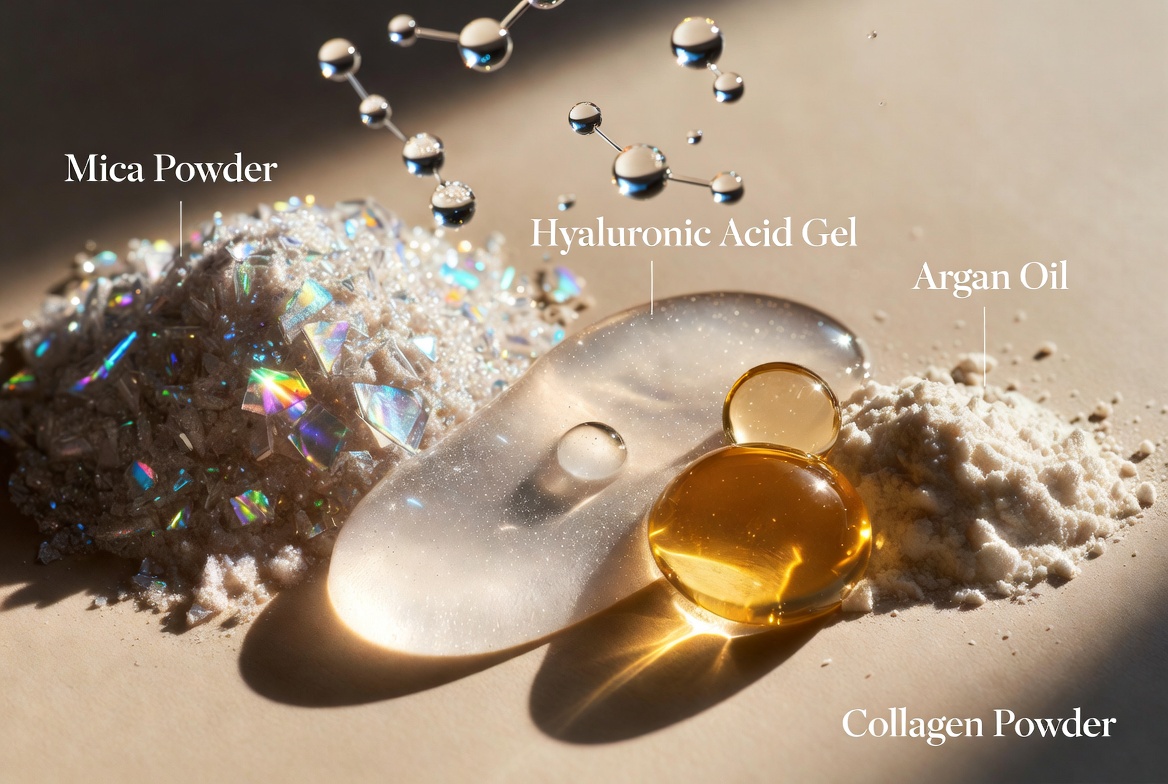
Sunjin Beauty Science is widely recognized as a Korean expert in cosmetic raw materials, particularly functional powders, UV filters, and sensory modifiers for skincare and sun‑care formulations. With a strong export focus, Sunjin supplies high‑entry‑barrier B2B raw materials to many global cosmetic houses. [cepaindia]
The company emphasizes high‑purity ingredients, particle‑size control, and application‑specific grades that help formulators achieve texture, coverage, and stability targets in demanding markets. For procurement managers, Sunjin is a relevant choice when sourcing high‑performance functional ingredients that sit at the interface between cosmetic chemistry and material science. [cepaindia]
Kolmar Korea is best known globally as a major ODM/OEM cosmetics manufacturer, but it is also a key innovator in biobased ingredients and fermented actives used internally and by partners. The company invests around 6% of its annual sales into R&D, with roughly one‑third of its workforce focused on research activities, including the development of natural Korean botanical‑based actives. [worldbiomarketinsights]
Its ingredient portfolio includes fermented extracts and biobased molecules designed to replace conventional synthetic components, aligning with global clean‑beauty and sustainability trends. Buyers collaborating with Kolmar gain access not only to manufacturing capacity but also to advanced ingredient platforms that can support differentiated, story‑driven formulations. [worldbiomarketinsights]
CoSeedBioPharm specializes in functional ingredients derived from Korean biodiversity hotspots such as Jeju Island, supplying high‑value botanical actives to both domestic and international brands. Its portfolio focuses on antioxidant, soothing, and barrier‑support ingredients extracted and processed to preserve bioactivity. [worldbiomarketinsights]
For brands positioning themselves around "local botanicals" or natural origin claims, CoSeedBioPharm offers traceable sourcing and evidence‑based functionality. Procurement managers often value the combination of story‑rich origin (Jeju) with measurable efficacy data in marketing‑driven product pipelines. [worldbiomarketinsights]
Labio is a Korean company that pushes the technical limits of all‑natural ingredients through fermentation, creating actives such as fermented blueberry‑derived antioxidants and fermented carotenoids for wrinkle reduction. Its focus is on enhancing the efficacy and stability of plant‑derived compounds using microbial processes while reducing the need for harsh synthetic additives. [worldbiomarketinsights]
This makes Labio particularly relevant for anti‑aging, barrier repair, and resilience‑focused skincare lines that need both scientific backing and natural positioning. For R&D‑heavy brands, Labio can act as a strategic co‑development partner on next‑generation bio‑actives. [worldbiomarketinsights]
Daebong LS operates facilities along the full value chain from material development through production and sales, and collaborates with major chemical companies like LG Chem on biobased actives. The company has partnered to commercialize 100% biobased 3HP as a milder alternative to salicylic acid, targeting clearer skin with reduced irritation. [worldbiomarketinsights]
For buyers, Daebong stands out for its ability to scale materials that are simultaneously performance‑driven and sustainability aligned. It is a strong candidate when you need a technically advanced, large‑scale Korean partner that understands both cosmetic efficacy and industrial‑scale production dynamics. [worldbiomarketinsights]
GS Caltex, traditionally an energy and petrochemical company, has emerged as a key supplier of GreenDiol, a multifunctional green chemical derived from cassava and sugar cane. GreenDiol functions as an antibacterial and antiseptic preservative, a humectant, and a solvent for extracting plant actives, and is produced via a 100% biobased process without harmful chemical additives. [worldbiomarketinsights]
The company signed an MoU with L'Oréal in 2023 to co‑develop biobased cosmetic ingredients, highlighting its credibility and global alignment. For procurement teams looking to reduce fossil‑based preservatives while maintaining shelf life and safety, GS Caltex is a high‑impact strategic partner at the ingredient level. [worldbiomarketinsights]
DERMALAB is listed in regional directories as a leading Korean manufacturer and supplier of botanical extracts and functional cosmetic raw materials. The company focuses on plant‑based actives designed for moisturizing, anti‑oxidant, and soothing functions used widely in skincare formulations. [in-cosmetics]
For overseas buyers, the advantage lies in its specialization in standardized botanical extracts tailored to cosmetic applications rather than generic herbal commodities. This makes DERMALAB a logical partner when you need consistent, specification‑controlled plant extracts that align with K‑beauty narratives. [in-cosmetics]
In addition to pure ingredient manufacturers, Korea has a number of OEM/ODM cosmetic factories that increasingly integrate in‑house raw material development, especially for emulsifiers, functional actives, and delivery systems. While these companies often promote finished product services, they can sometimes supply key intermediates or co‑develop custom ingredients for strategic clients at sufficient volume. [xiranskincare]
When screening this category, prioritize factories with: documented ISO 22716 and MFDS GMP certification; proven export history to your target markets; and transparent communication around MOQ and IP ownership for co‑developed formulas. This hybrid model is useful for brands wanting a single partner for both ingredient innovation and finished product manufacturing. [kbeautyproduction]
When sourcing from Korea (or any advanced cosmetic hub), it is useful to standardize your technical due‑diligence checklist around a few core dimensions.
- Ingredient grade and specification
- Confirm cosmetic‑grade vs pharma‑grade and verify active content, residual solvent limits, and heavy metal thresholds in line with MFDS and destination‑market limits. [beautyhub.alibaba]
- For biobased and fermented ingredients, check for potential allergens or metabolites not typically present in the parent plant extract. [worldbiomarketinsights]
- Manufacturing technologies
- Main technology paths include plant extraction, chemical synthesis, biological fermentation, and synthetic biology, with plant extraction and fermentation currently the mainstream in cosmetic raw materials. [cn-ferment]
- Fermentation allows suppliers to enhance plant functionality while keeping synthetic chemicals minimized, which is a major selling point for K‑beauty‑style products. [worldbiomarketinsights]
- Environmental and safety documentation
- Request SDS, TDS, IFRA statements (for fragrance‑related raw materials), and where relevant, documentation that supports CE/RoHS‑like thresholds for heavy metals and restricted substances. [sblcomp]
- Cross‑check ingredient INCI names using MFDS's Korean Cosmetic Ingredient Dictionary and your own region's positive/negative lists. [beautyhub.alibaba]
- Regulatory verification in Korea
- Use MFDS portals (COPIS, KCID, MFDS GMP registry) to validate supplier and ingredient status. [beautyhub.alibaba]
- Avoid suppliers that claim "KFDA approval" without providing registration numbers or MFDS references, since MFDS does not "approve" ingredients in that marketing sense. [beautyhub.alibaba]
Experienced buyers often share certain internal rules of thumb that rarely appear in public marketing materials. Below are three practical "insider" checks that can significantly reduce your risk:
1. Never rely on certificates older than 12 months
Many small exporters keep using outdated ISO or GMP certificates; ask for recent scans and cross‑check certificate numbers on the issuing body's website or MFDS registries. [cirs-group]
2. Compare CoA and sample reality under stress tests
In addition to organoleptic inspection, run accelerated stability tests (40–45°C, freeze–thaw cycles) on samples and cross‑check with the CoA's stability claims; inconsistencies are a red flag for scale‑up. [sblcomp]
3. Watch out for "white label trading houses" posing as manufacturers
In some cases intermediaries present themselves as factories while actually reselling from multiple sources, which complicates traceability and quality control; always request factory audit opportunities (onsite or remote video) and verify manufacturing addresses against MFDS or local directories. [trade]
Sourcing cosmetic raw materials across borders comes with recurring challenges. For Korea and neighboring manufacturing bases, procurement teams should pay particular attention to the following:
- Substitution of lower‑grade materials
- Risk: Replacing specified grades with cheaper alternatives, especially in commodity surfactants, solvents, or non‑hero ingredients.
- Mitigation: Tighten specifications in contracts, require batch‑specific CoAs, and conduct periodic third‑party testing. [sblcomp]
- Unexpected MOQ and packaging constraints
- Risk: High MOQs driven by production batch sizes or packaging unit limits, which can lock smaller brands into excess inventory. [kbeautyproduction]
- Mitigation: Clarify formula‑driven and packaging‑driven MOQs and explore flexible partners like ZHENYIBIO that are willing to adapt MOQ structures for growing brands. [zhenyibio]
- Regulatory documentation gaps for multi‑region launches
- Risk: A raw material meets MFDS rules but lacks the documentation needed for EU, US, or GCC registrations.
- Mitigation: Pre‑screen suppliers for experience in your target region and build regulatory documentation requirements into the RFQ stage. [cosmetic.chemlinked]
- Lead time underestimation around peak seasons
- Risk: Delays around major Korean holidays or large trade‑show seasons, impacting launch timelines.
- Mitigation: Build buffer stock for hero actives and negotiate realistic lead‑time ranges plus priority allocations with core suppliers. [kbeautyproduction]
The table below gives an at‑a‑glance comparison of selected suppliers mentioned in this article. Values are indicative and should be confirmed directly with each company.
| Supplier | Main strength | Typical MOQ (indicative) | Core technology focus | Certifications / focus (indicative) | OEM/ODM support focus |
|---|---|---|---|---|---|
| ZHENYIBIO TECHNOLOGY INC | Natural plant actives & flexible OEM (zhenyibio) | Low | Plant extraction & bio‑fermentation | Focus on efficacy‑oriented cosmetic raws (zhenyibio) | Strong OEM/ODM, agile for SMBs |
| Sunjin Beauty Science | Functional powders & sensory modifiers (cepaindia) | Medium | Advanced particle engineering | Cosmetic GMP, ISO‑type systems (check) (sblcomp) | Limited, ingredient‑focused |
| Kolmar Korea | Integrated ODM + biobased actives (worldbiomarketinsights) | Medium–High | Fermentation, formulation, botanicals | MFDS compliance, global market experience (worldbiomarketinsights) | Strong full‑service ODM |
| CoSeedBioPharm | Jeju‑origin botanical actives (worldbiomarketinsights) | Low–Medium | Botanical extraction | Natural origin, eco‑focus (varies) (worldbiomarketinsights) | Project‑based support |
| Labio | Fermented functional actives (worldbiomarketinsights) | Medium | Fermentation of plant substrates | Science‑driven efficacy data (worldbiomarketinsights) | Co‑development for actives |
| Daebong LS | Full value‑chain biotech materials (worldbiomarketinsights) | High | Biobased actives incl. 3HP | Partnerships with global chemical firms (worldbiomarketinsights) | Mainly raw materials |
| GS Caltex | GreenDiol preservative/humectant (worldbiomarketinsights) | High | Biobased green chemicals | 100% biobased process, big‑brand MoU (worldbiomarketinsights) | Raw materials only |
| DERMALAB (Korea) | Plant extracts & functional raws (in-cosmetics) | Low–Medium | Botanical extraction & standardization | Cosmetic application focus (in-cosmetics) | Limited OEM, strong for extracts |
- Use MFDS online systems to confirm supplier registration and to check whether specific ingredients are listed in the KCID and the Korean Cosmetic Ingredient Database. [beautyhub.alibaba]
- Cross‑verify ISO and GMP certificates via certification‑body databases, and check whether the supplier has been referenced by international partners or trade statistics. [oec]
- Start with lab‑scale samples for formulation screening, followed by pilot‑batch quantities to test scale‑up behavior, stability and packaging compatibility. [sblcomp]
- Ask for CoAs not older than six months and, where possible, align your own testing items (microbiology, heavy metals, stability) with MFDS and destination‑market guidelines. [beautyhub.alibaba]
- Define specifications, batch acceptance criteria, and deviation handling in the supply agreement; include clear terms for formula co‑development and ingredient co‑ownership. [sblcomp]
- For OEM/ODM arrangements, specify who owns the final formula and under what conditions the supplier can reuse similar compositions with other clients.
- Clarify Incoterms (FOB Busan/Incheon vs CIF destination) early and ensure that the supplier's experience with export documentation matches your customs requirements. [trade]
- For temperature‑sensitive actives or fermentation‑derived ingredients, require validated cold‑chain or controlled‑temperature logistics solutions where needed. [worldbiomarketinsights]
- Combine Korean innovators (for hero actives and storytelling ingredients) with high‑value partners like ZHENYIBIO (for cost‑effective plant actives and flexible OEM support) to balance innovation, risk, and cost. [zhenyibio]
- Maintain at least one secondary supplier for each critical functionality (e.g., main whitening active, key moisturizer) to reduce supply risk.
1. How can I verify whether a Korean supplier's ISO certification is still valid?
Request the full certificate showing the issuing body and certificate number, then search that number directly on the certification body's official website or contact them for confirmation. In parallel, check whether the certificate dates align with the scope of the products you intend to purchase. [cirs-group]
2. How do I confirm MFDS compliance for a specific cosmetic ingredient?
Use the MFDS e‑Service portal, switch to English, access COPIS or the relevant ingredient database, and search by company name or INCI; approved or registered ingredients appear in the Korean Cosmetic Ingredient Dictionary with usage notes. If an ingredient is missing or listed as "under review", treat it as higher risk and ask for additional regulatory support. [beautyhub.alibaba]
3. What is the best way to evaluate a fermented active from a Korean supplier?
Beyond basic CoA checks, compare fermented and non‑fermented versions in controlled in‑vitro or small clinical tests for endpoints like barrier function, wrinkle depth or antioxidant capacity. Also assess sensory impact, odor, and color under your formulation conditions, as fermentation can introduce by‑products that affect product aesthetics. [worldbiomarketinsights]
4. How can I avoid hidden trading companies and work directly with manufacturers?
Ask for live video audits of production lines, check factory registration via MFDS and local business registries, and verify that the bank account owner matches the registered manufacturer. A genuine manufacturer should be able to show you production records, batch logs, and on‑site QC labs. [trade]
5. How should I structure MOQs when working with both Korean suppliers and partners like ZHENYIBIO?
Segment your portfolio: allocate high‑innovation, story‑critical actives to Korean specialists even at higher MOQs, and route more volume‑driven or customization‑heavy plant actives to flexible partners like ZHENYIBIO with lower MOQs. This structure helps balance cash flow, inventory risk, and innovation speed across markets. [zhenyibio]
- Statista – Cosmetics market in South Korea (market size, key players, raw material business rankings). [statista]
- Statista – Global cosmetics industry overview (regional demand and K‑beauty popularity trends). [statista]
- U.S. International Trade Administration – South Korea: Cosmetics Country Commercial Guide (regulatory and export context). [trade]
- OEC – Beauty Products in South Korea Trade (2025 export figures and destinations). [oec]
- World Bio Market Insights – "Korea perfects bio‑based beauty" (biobased and fermentation‑driven ingredient innovation in Korea). [worldbiomarketinsights]
- MFDS e‑Service and COPIS (official Korean regulatory verification for cosmetic ingredients and manufacturers). [beautyhub.alibaba]