


Views: 238 Author: ZHENYIBIO Publish Time: 2026-09-17 Origin: Site
Content Menu
● Ectoin vs. Asiaticoside at a Glance
● What Is Ectoin and Why Does Osmoprotection Matter?
>> How Ectoin Supports Eczema-Prone Skin
>> Clinical Relevance of Ectoin for Atopic Skin
● What Is Asiaticoside and Why Is It Called a Healing Triterpenoid?
>> Asiaticoside and Skin Recovery Pathways
● Ectoin vs. Asiaticoside: Mechanism-by-Mechanism Comparison
>> 1. Hydration and Water Management
>> 2. Barrier-Support Positioning
>> 3. Visible Redness and Skin Discomfort
>> 4. Recovery After Skin Stress
● Evidence Quality: Where Brands Must Be Careful
>> Practical Claim Framework for Brand Owners
● Formulation Guide for Eczema-Prone Skin Products
>> When to Choose Asiaticoside
>> When a Combination Formula Is Better
● Expert Checklist for OEM and ODM Development
● Safety Considerations for Sensitive Skin
● Final Verdict: Ectoin or Asiaticoside for Eczema-Prone Skin?
● FAQ
>> Is ectoin better than asiaticoside for eczema-prone skin?
>> Can ectoin and asiaticoside be used together?
>> Does asiaticoside cure eczema?
>> What concentration of ectoin is suitable for a sensitive-skin formula?
>> Is asiaticoside the same as Centella asiatica extract?
>> Which ingredient is better for a post-procedure skincare product?
>> Can a botanical ingredient cause skin sensitivity?
For eczema-prone skin, ingredient selection should begin with the dominant skin need: is the primary concern persistent dryness, tightness, barrier stress, and environmental reactivity—or is it visible irritation, compromised recovery, and post-flare skin discomfort? In this comparison of ectoin vs. asiaticoside, ectoin stands out as an osmoprotective, hydration-focused active, while asiaticoside offers a triterpenoid-led approach associated with soothing, antioxidant support, and skin-recovery pathways.
For product developers, beauty brands, and formulators, the practical question is not simply "Which ingredient is better?" It is: Which active system best matches the product position, user profile, formula texture, claims strategy, and evidence threshold? In many advanced formulations, ectoin and asiaticoside can also be complementary rather than mutually exclusive.
At ZHENYIBIO TECHNOLOGY INC, we see increasing demand from international beauty brands for high-performance botanical actives that unite traditional plant knowledge with modern biotechnology, reproducible quality standards, and scalable OEM/ODM development. Ectoin and asiaticoside are two highly relevant examples for the sensitive-skin and barrier-care categories.

| Comparison Point | Ectoin | Asiaticoside |
|---|---|---|
| Ingredient category | Natural extremolyte / compatible osmolyte | Pentacyclic triterpenoid glycoside |
| Primary source | Microorganisms adapted to extreme environments | Centella asiatica |
| Main product story | Osmoprotection, hydration retention, barrier comfort | Botanical repair support, soothing, collagen-related skin recovery |
| Best fit for | Dry, dehydrated, stressed, reactive, climate-exposed skin | Irritated-looking, compromised, post-stress, uneven-feeling skin |
| Core mechanism | Helps organize water molecules and support biological structures under stress | Supports antioxidant and inflammation-modulating pathways; linked with fibroblast and collagen-related activity |
| Evidence strength for eczema-prone skin | Relatively stronger direct topical clinical support | Promising botanical and wound-recovery evidence; direct eczema evidence is less developed |
| Typical formulation role | Barrier-support serum, moisturizer, post-procedure comfort care, anti-pollution care | Calming cream, recovery serum, repairing mask, botanical barrier support |
| Sensory/formulation value | Water-compatible active for lightweight hydration systems | Often used in botanical active complexes or targeted repair formulas |
Short conclusion: ectoin is generally the more direct choice when a formula is built around moisture retention and barrier comfort. Asiaticoside is especially compelling when a brand wants a plant-derived recovery narrative focused on visible soothing, resilience, and skin-repair support.
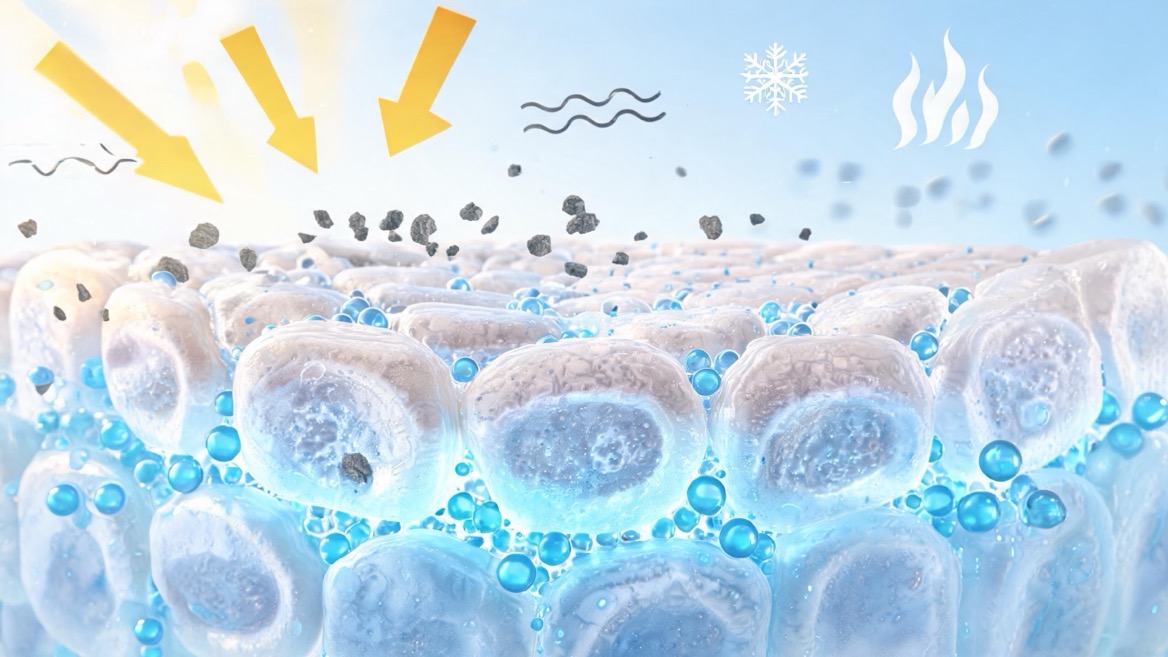
Ectoin, also written as ectoine in scientific literature, is a small natural molecule produced by certain microorganisms that survive in challenging environments, including high salinity, heat, dryness, and intense UV exposure. It is commonly described as a compatible osmolyte or extremolyte.
This classification matters because ectoin's biological role is not based on aggressive exfoliation, rapid cell turnover, or strong antimicrobial action. Instead, it helps organisms cope with environmental stress by interacting with surrounding water molecules and helping preserve the stability of proteins, membranes, and other cellular structures.
For skincare, this creates a highly relevant proposition: support the skin's comfort under stress without relying on a harsh corrective mechanism.
Eczema-prone skin often experiences a cycle of dryness, increased transepidermal water loss, sensitivity, itching, and visible redness. The skin may react more strongly to temperature shifts, cleansing, indoor heating, air conditioning, pollution, low humidity, and friction.
Ectoin is particularly suited to this profile because it is associated with three formulation-relevant benefits:
- Hydration support: Ectoin can help build a water-associated protective environment around skin structures.
- Barrier comfort: By supporting hydration and reducing dehydration-related stress, it may help skin feel less tight and uncomfortable.
- Environmental resilience: It fits products positioned around urban stress, dry climates, frequent cleansing, seasonal discomfort, and post-treatment care.
A 2025 study of ectoin-containing cosmetic emulsions reported reductions in transepidermal water loss, redness, and improvements in skin hydration compared with a base formulation. While the result cannot be transferred automatically to every ectoin formula, it reinforces the ingredient's relevance for hydration-led barrier products.
Ectoin has an advantage in the eczema-prone category because it has been studied in topical products for mild-to-moderate atopic dermatitis. In a randomized, intra-individual, double-blind multicenter trial involving 65 adults, an ectoin-containing cream used twice daily for 28 days was well tolerated and showed efficacy comparable to a non-steroidal reference cream designed to support skin-barrier function.
Additional evidence summarized in dermatology literature suggests that formulations containing approximately 5.5% to 7% ectoin improved dryness, itch-related symptoms, and dermatitis-specific assessments in people with atopic dermatitis. These findings support ectoin as a valuable supportive skincare active, rather than a replacement for medically indicated treatment.
That distinction is essential for responsible product communication. A cosmetic moisturizer may help manage dryness and support barrier comfort, but moderate, severe, infected, widespread, or persistently flaring eczema requires assessment by a qualified healthcare professional.
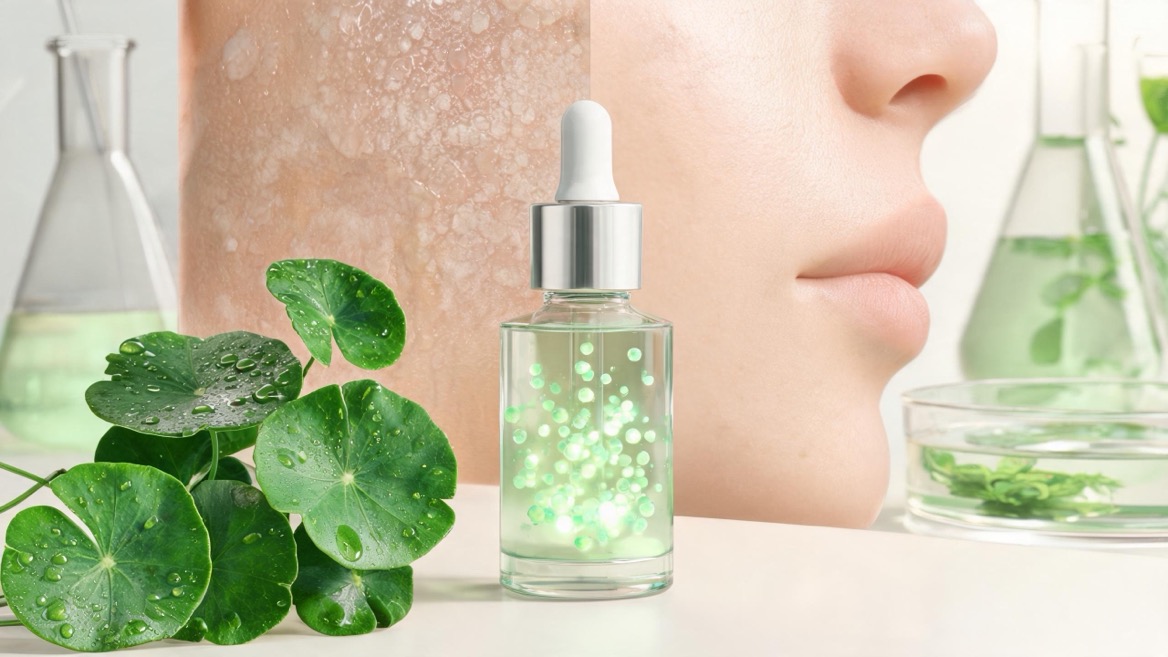
Asiaticoside is one of the best-known bioactive compounds associated with *Centella asiatica*, a botanical used for generations in traditional wellness practices and now widely used in modern skincare. It belongs to the family of pentacyclic triterpenoid saponins.
In cosmetic development, asiaticoside is valued because it offers more than a simple "natural" story. It is connected with a broad body of research on skin recovery, collagen-related processes, antioxidant activity, and inflammation-modulating pathways.
However, formulators should use precise language. Asiaticoside is not a medical cure for eczema, and "healing" should not be interpreted as a guarantee of treatment for a dermatological disease. In a cosmetic context, more appropriate benefit language includes:
- Supports the appearance of calm, comfortable skin.
- Helps care for skin exposed to environmental or mechanical stress.
- Supports a resilient-looking skin barrier.
- Helps improve the appearance of dry, rough, or compromised-feeling skin.
- Complements recovery-focused skincare routines.
Asiaticoside has attracted scientific interest for its relationship with fibroblast activity, collagen formation, angiogenesis, and inflammatory signaling. These mechanisms are highly relevant to wound-recovery research and to the cosmetic idea of skin resilience.
Research reviews indicate that *Centella asiatica* constituents, including asiaticoside, may support collagen synthesis, antioxidant defense, and inflammation-modulating activity. These effects are part of why Centella-derived ingredients are frequently included in products for post-sun discomfort, dryness, visible redness, stressed skin, and skin-recovery routines.
A systematic review examining *Centella asiatica* and wound healing concluded that the plant may enhance healing through improved angiogenesis and possible effects on collagen I, fibroblast growth factor, and vascular endothelial growth factor. Yet it also noted an important limitation: high-quality clinical research in human wound-healing settings remains limited.
For responsible formulation and marketing teams, this is a key lesson: the biological rationale is compelling, but the commercial claim should stay proportional to the quality and type of evidence.
Ectoin is the clearer lead active when the product's primary promise is long-lasting hydration and defense against dehydration-related discomfort. Its osmoprotective behavior makes it particularly useful in formulas designed for dry environments, frequent cleansing, retinoid routines, travel, cold weather, or air-conditioned workplaces.
Asiaticoside can support a moisturizing system, but it is not primarily an osmolyte. Its role is more closely associated with the overall recovery and soothing profile of a botanical complex.
Best choice for dehydration: Ectoin.
Best combined strategy: Ectoin with humectants such as glycerin, sodium hyaluronate, betaine, or polyglutamic acid, plus emollients and barrier lipids.
Both ingredients can fit barrier-support products, but they arrive there through different stories.
Ectoin supports barrier comfort through hydration retention and protection against external stressors. It is a strong fit for minimalist formulas aimed at reactive users who want lightweight, fragrance-free, daily support.
Asiaticoside supports barrier-focused positioning through botanical recovery, soothing potential, and its links to collagen- and repair-related pathways. It works well in richer creams, overnight masks, recovery serums, and products designed for visibly stressed skin.
Best choice for a minimalist daily barrier serum: Ectoin.
Best choice for a botanical recovery cream: Asiaticoside.
Redness is multifactorial. It may arise from dryness, friction, heat exposure, irritation, inflammatory conditions, rosacea, contact reactions, or overuse of potent skincare products. No single cosmetic active should be presented as a universal solution.
Ectoin may be useful where redness accompanies dehydration and compromised barrier comfort. In one cosmetic emulsion study, ectoin-containing formulas were associated with lower redness measurements than the control formulation.
Asiaticoside is attractive when brands want a calming botanical active with antioxidant and inflammation-modulating associations. Still, products containing asiaticoside should be evaluated as final formulas, not only as isolated ingredients. A soothing claim depends on the complete system: pH, preservative selection, fragrance level, surfactants, essential oils, alcohol content, and consumer use conditions.
For post-exposure, post-procedure, or "skin reset" concepts, asiaticoside can offer a more intuitive narrative due to Centella's long association with skin recovery. It may be especially relevant in formulas developed for the appearance of skin after dryness, environmental exposure, shaving, mask friction, or non-medical cosmetic procedures.
Ectoin is also relevant in recovery products, particularly when the product's focus is moisture retention, comfort, and protection from dehydration. A high-performing post-stress formula may use both actives: ectoin for immediate water-centered comfort and asiaticoside for a broader botanical resilience story.
One of the most common formulation mistakes is treating all "calming" ingredients as equally proven. They are not.
Ectoin has relatively direct clinical support in topical products for atopic dermatitis and skin-barrier outcomes. This makes it a strong candidate for brands that need substantiated language around hydration, dryness, comfort, and barrier support.
Asiaticoside and *Centella asiatica* have extensive preclinical, mechanistic, and wound-recovery literature. However, direct evidence specifically focused on eczema is more limited and frequently based on preclinical models or broader Centella extracts rather than isolated asiaticoside in finished cosmetic products. A review of Centella in dermatologic conditions describes eczema-related potential as promising but emphasizes that the ingredient should currently be viewed as an adjunctive option rather than a primary therapy.
Use the following framework when developing claims:
| Claim Direction | Ectoin Suitability | Asiaticoside Suitability |
|---|---|---|
| Helps improve skin hydration | Strong | Moderate in a complete moisturizing formula |
| Helps reduce feelings of tightness | Strong | Moderate |
| Supports the skin barrier | Strong | Strong when positioned as part of a botanical recovery system |
| Helps soothe dry, stressed skin | Strong | Strong |
| Supports the appearance of skin recovery | Moderate | Strong |
| Supports collagen-related skin resilience | Limited | Stronger scientific rationale |
| Treats eczema or atopic dermatitis | Avoid for cosmetic claims | Avoid for cosmetic claims |
| Cures inflammation or repairs wounds | Avoid | Avoid |
The safest commercial approach is to test the final formula, including repeat-insult patch testing, stability testing, preservative challenge testing, compatibility testing, and consumer or instrumental efficacy studies where applicable.
A strong formula is not created by choosing one fashionable active. It is created by balancing efficacy, tolerability, sensory performance, stability, and claim relevance.
Choose ectoin as the hero active when developing:
- Lightweight barrier serums for dry and sensitive skin.
- Daily moisturizers for consumers exposed to indoor heating or air conditioning.
- Fragrance-free lotions for reactive-feeling skin.
- Moisture-support products for retinoid users.
- Urban-defense or anti-pollution hydration concepts.
- Family-oriented products where a simple, evidence-led story is preferred.
- Post-cleansing products designed to reduce tightness and dehydration discomfort.
A practical concept could pair ectoin with glycerin, panthenol, ceramide complexes, cholesterol, fatty acids, beta-glucan, and a low-irritation emulsifier system.
Choose asiaticoside as the lead active when developing:
- Botanical recovery creams.
- Calming facial serums with Centella positioning.
- Overnight masks for stressed-looking skin.
- Post-sun comfort products.
- Repair-focused body lotions.
- Sensitive-skin products with a premium plant-science narrative.
- Scar-appearance or texture-support concepts, subject to compliant claim review.
A practical concept could combine asiaticoside with madecassoside, ectoin, panthenol, bisabolol, allantoin, ceramides, and a well-designed emollient phase.
For many premium sensitive-skin products, the most commercially compelling solution is not ectoin versus asiaticoside. It is ectoin plus asiaticoside.
This combination can create a layered benefit story:
1. Ectoin supports water balance and stress resilience.
2. Asiaticoside strengthens botanical soothing and recovery positioning.
3. Panthenol and beta-glucan add comfort and hydration support.
4. Ceramides, cholesterol, and fatty acids reinforce a barrier-lipid narrative.
5. A fragrance-free base reduces avoidable sensory risk.
The result can be positioned as a sophisticated "hydration + resilience + recovery" system rather than a single-ingredient product.
Before moving into sampling, brand teams should clarify the following points:
1. Define the user scenario. Is the product designed for dry indoor environments, seasonal sensitivity, post-procedure comfort, facial redness, body eczema-prone areas, or pediatric-family positioning?
2. Choose the hero claim. Avoid trying to communicate hydration, anti-aging, acne, whitening, repair, anti-pollution, and medical eczema management all in one product. Focus creates a more credible product story.
3. Select a suitable format. Ectoin works well in serum, gel-cream, lotion, and emulsion formats. Asiaticoside is versatile but often performs best in recovery serums, creams, masks, and emulsion systems.
4. Control irritation variables. Keep fragrance, essential oils, high levels of drying alcohol, aggressive surfactants, and unnecessary colorants under close review.
5. Test the finished formula. Ingredient data is valuable, but a final product needs its own stability, microbial, compatibility, and consumer-tolerance evaluation.
6. Build compliant language early. Cosmetic claims should emphasize hydration, comfort, appearance, and barrier support rather than disease treatment or wound-healing promises.
7. Plan ingredient traceability. International buyers increasingly expect documentation covering identity, purity, microbial control, heavy metals, residual solvents where relevant, allergen management, and batch consistency.
Sensitive and eczema-prone skin is not automatically allergic skin, but it can be more vulnerable to irritation. Therefore, even well-regarded ingredients should be incorporated carefully.
Ectoin is generally considered well tolerated in the topical studies cited above, including longer-term use contexts. However, tolerability still depends on the entire formula and the user's individual condition.
Centella-derived cosmetic ingredients have been assessed as safe in current cosmetic practices and concentrations when formulated to be non-sensitizing. Still, a botanical origin does not guarantee universal tolerance. Consumers with a history of contact allergy, active dermatitis, or multiple product sensitivities should patch-test new products and consult a healthcare professional when appropriate.
For people experiencing weeping lesions, infection, substantial pain, rapidly worsening redness, sleep disruption from itching, or poor response to basic skincare, cosmetic products should not delay professional care.
Choose ectoin when the product's central purpose is intensive hydration, osmoprotection, barrier comfort, and support against dehydration-related stress. It has the clearer direct evidence base for topical atopic-skin support and is ideal for restrained, modern, science-led sensitive-skin formulas.
Choose asiaticoside when the brand seeks a high-value botanical active connected with soothing, antioxidant support, and skin-recovery pathways. It is particularly suitable for premium Centella-based creams and serums that focus on resilient-looking, comfortable, and visibly calmer skin.
Choose both when creating an advanced barrier-recovery product. Ectoin can provide the water-centered protection layer, while asiaticoside enriches the formula with a sophisticated botanical repair-support profile.
ZHENYIBIO TECHNOLOGY INC supports global beauty brands, wholesalers, and manufacturers with customized natural plant active ingredients, fermentation-enabled innovation, and OEM/ODM development for sensitive-skin, barrier-care, and recovery-focused cosmetic products. If you are developing an ectoin serum, asiaticoside repair cream, Centella recovery mask, or multi-active eczema-prone skin concept, contact our technical team to discuss ingredient selection, prototype development, documentation, and scalable manufacturing options.
Ectoin is usually the more direct choice for dryness, dehydration, tightness, and compromised barrier comfort because its main strength is osmoprotection and hydration support. Asiaticoside is more relevant for a botanical soothing and recovery-oriented concept. The best choice depends on the product's main purpose.
Yes. They are complementary ingredients. Ectoin can support hydration and resilience against environmental stress, while asiaticoside can strengthen the formula's botanical soothing and recovery story. The combination is especially suitable for premium barrier-repair creams and serums.
No. Asiaticoside should not be presented as a cure or treatment for eczema. It may support cosmetic goals such as soothing dry, stressed-looking skin and improving the appearance of skin comfort, but active eczema requires appropriate medical guidance.
The ideal concentration depends on the formula type, product category, supporting ingredients, target market, and claim strategy. Published topical studies have included ectoin-containing products in different concentrations, including formulations around 5.5% to 7% in dermatitis-related contexts. Product developers should validate efficacy and tolerance in the finished formula.
No. Asiaticoside is a specific triterpenoid compound found in *Centella asiatica*. Centella extract is a broader botanical material that may contain asiaticoside, madecassoside, asiatic acid, madecassic acid, and other plant constituents depending on its extraction and standardization method.
Both can be appropriate, depending on the product's intended use and applicable regulatory requirements. Ectoin is highly suitable for hydration and comfort. Asiaticoside supports a botanical recovery concept. For sensitive post-procedure applications, brands should prioritize formula simplicity, fragrance-free design, safety testing, and professional claim review.
Yes. Natural origin does not automatically eliminate the possibility of irritation or allergy. A well-designed formula, raw-material quality control, appropriate preservative selection, and patch testing are important for products intended for sensitive or eczema-prone skin.
1. Marini A, Reinelt K, Krutmann J, Bilstein A. "Ectoine-containing cream in the treatment of mild to moderate atopic dermatitis: A randomised, comparator-controlled, intra-individual double-blind, multi-center trial." *Skin Pharmacology and Physiology*. Available via [PubMed].
2. Załęska I, et al. "The Influence of Ectoine on the Skin Parameters Damaged by External Factors." *International Journal of Molecular Sciences*. Available via [PubMed Central].
3. Biedermann T, et al. "Retinoid Dermatitis." Review including evidence on ectoine-containing topical formulations and atopic dermatitis. Available via [PubMed Central].
4. Park KS, et al. "Pharmacological Effects of *Centella asiatica* on Skin Diseases: Evidence and Possible Mechanisms." *Evidence-Based Complementary and Alternative Medicine*. Available via [PubMed Central].
5. Witkowska K, et al. "Topical Application of *Centella asiatica* in Wound Healing." *International Journal of Molecular Sciences*. Available via [PubMed Central].
6. Arribas-López E, et al. "A Systematic Review of the Effect of *Centella asiatica* on Wound Healing." *International Journal of Environmental Research and Public Health*. Available via [MDPI].
7. Johnson W Jr, et al. "Safety Assessment of *Centella asiatica*-Derived Ingredients as Used in Cosmetics." *International Journal of Toxicology*. Available via [PubMed].
8. Sidbury R, et al. "Guidelines of Care for the Management of Atopic Dermatitis in Adults With Topical Therapies." *Journal of the American Academy of Dermatology*. Available via [PubMed].


