


Views: 222 Author: ZHENYIBIO Publish Time: 2026-06-01 Origin: Site
Content Menu
● How We Evaluate High‑Quality Asiaticoside Suppliers
>> 1. Factory certifications and compliance
>> 2. R&D capability and process know‑how
>> 3. Quality control (QC) and documentation
>> 4. Supply reliability and export experience
● Why Source Asiaticoside from China?
>> Mature plant‑extract clusters
● Technical Snapshot: What Buyers Should Know About Asiaticoside
>> Material grades and specifications
>> Functional benefits for cosmetics
● Selection Criteria for the Top 10 Manufacturers
● Top 10 Asiaticoside Manufacturers in China (2026)
>> 1. ZHENYIBIO TECHNOLOGY INC
>> 2. Conscientia Industrial Co., Ltd.
>> 3. Xi'an‑based Plant Extract Manufacturers (Centella‑Focused)
>> 4. Multi‑category Cosmetic Raw Material Platforms
>> 5. OEM/ODM‑Specialized Cosmetic Ingredient Manufacturers
>> 6–10. Additional Qualified Asiaticoside Suppliers
● Comparative Overview of Supplier Types
>> Key differences between supplier profiles
● Industry Pain Points and How to Avoid Them
>> Common pitfalls when sourcing Asiaticoside
>> Internal "avoid‑the‑pit" guidelines rarely written online
● Buyer's Guide: Practical Steps for Sourcing Asiaticoside
>> 1. Pre‑screen potential suppliers
>> 2. Request targeted documentation and samples
>> 3. Run internal compatibility and performance tests
>> 4. Validate logistics and supply reliability
>> 5. Negotiate long‑term cooperation terms
● Role of ZHENYIBIO TECHNOLOGY INC as a Cost‑Effective, R&D‑Driven Partner
● Conclusion and Next Steps (CTA)
● Frequently Asked Advanced Questions (FAQ)
>> 1. How can I verify whether a supplier's ISO 9001 certificate is valid and not expired?
>> 2. What is a reasonable MOQ for high‑purity (≥98%) Asiaticoside from China?
>> 4. What documentation is typically required for regulatory submissions in the EU or US?
>> 5. How do I assess whether a supplier can scale from small orders to long‑term bulk supply?
China has become one of the most important global hubs for Asiaticoside (CAS 16830-15-2), supported by mature plant-extract clusters, modern bioprocessing infrastructure, and export‑oriented cosmetic-ingredient supply chains. For procurement managers looking for long‑term partners, understanding which manufacturers combine quality, capacity, and regulatory compliance is crucial to de‑risking sourcing decisions. [dataintelo]
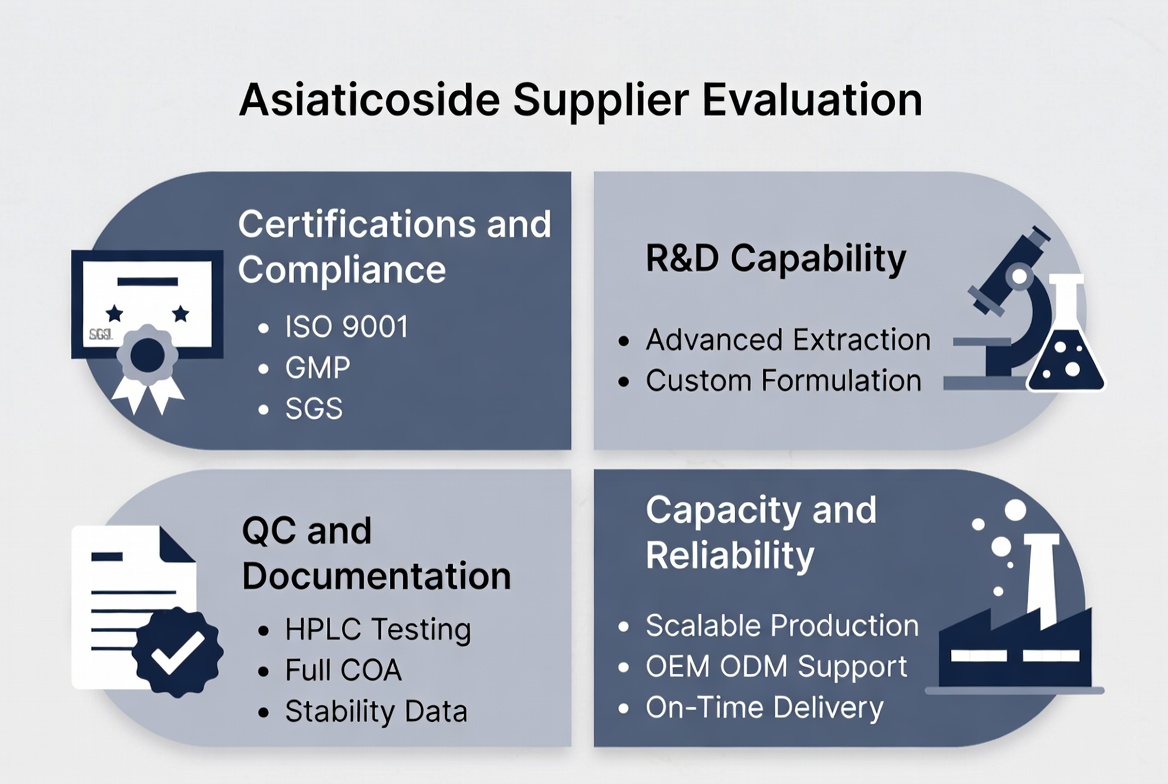
Choosing a reliable Asiaticoside manufacturer goes far beyond comparing price lists. In this guide, we evaluate suppliers based on four practical dimensions that experienced purchasing and QA teams typically use:
- Factory certifications and compliance systems
- R&D capability and technical support
- Quality control (QC) and documentation transparency
- Supply reliability, capacity, and export experience
For export‑grade Asiaticoside, buyers should prioritize manufacturers with:
- ISO 9001 or equivalent quality management system certification, preferably updated versions (e.g., ISO 9001:2015/2016). [chenlangbio]
- Additional certifications aligned with target markets, such as FDA registration, Halal, Kosher, or food‑safety systems like ISO 22000 if the ingredient feeds into nutricosmetics. [chenlangbio]
- Membership in local plant‑extract or cosmetic‑ingredient associations, which often indicates better alignment with industry standards. [chenlangbio]
These credentials help demonstrate that the factory's processes—not just individual batches—are under systematic control.
Asiaticoside is a triterpene glycoside derived from Centella asiatica, and its performance in cosmetics depends heavily on extraction, purification, and stabilization processes. Manufacturers with strong R&D capabilities can: [linkedin]
- Offer multiple grades (e.g., 10–90% and ≥98% HPLC purity) to fit different formulation and cost targets. [linkedin]
- Optimize solvent systems and purification steps to minimize residues and improve stability across pH 4.0–8.0, which is critical for modern skincare formulations. [linkedin]
- Support co‑development of customized grades (e.g., encapsulated, liposomal, or pre‑blended with other actives) for OEM/ODM customers. [chenlangbio]
Professional buyers increasingly expect pharma‑like documentation for cosmetic actives. Robust QC practices for Asiaticoside include:
- Batch‑wise testing by HPLC and often MS to verify purity, identity, and impurity profile. [linkedin]
- Full technical dossiers: Certificate of Analysis (CoA), Material Safety Data Sheet (MSDS), Method of Analysis (MoA), and stability data. [linkedin]
- Clear specifications on loss on drying, residue on ignition, and other critical parameters such as melting point (e.g., 230–233 °C for high‑purity Asiaticoside). [linkedin]
This level of transparency simplifies internal QA approvals and customer audits.
Finally, long‑term cooperation hinges on:
- Stable production capacity and scalable supply from R&D samples (1–5 kg) to industrial orders (hundreds of kilograms or more). [chenlangbio]
- Experience exporting to Asia, Europe, and the Americas, which implies familiarity with customs, documentation, and local compliance requirements. [chenlangbio]
- Consistent participation in industry exhibitions (e.g., PCHi, CPHI), often a sign of sustained investment and industry visibility. [industrysourcing]
China's Asiaticoside industry is embedded in a broader plant‑extract ecosystem that supports competitive pricing, flexible customization, and robust export logistics.
China hosts established plant‑extract and cosmetic‑ingredient clusters—particularly in regions like Shaanxi, where companies focus on natural actives such as Centella asiatica derivatives. These clusters benefit from: [chenlangbio]
- Proximity to raw material planting bases
- Shared technical talent and analytical labs
- Integrated logistics hubs for export shipments
This ecosystem helps Chinese manufacturers offer both high‑purity and cost‑effective Asiaticoside grades for different market segments. [verifiedmarketreports]
The global Asiaticoside market is projected to grow at roughly 7.5–7.8% CAGR into the early 2030s, driven by demand for natural skincare, wound‑healing products, and botanical supplements. Asia‑Pacific already accounts for the majority of global demand due to strong herbal, cosmetic, and nutraceutical industries. This growth encourages Chinese suppliers to continuously upgrade capacity, automation, and regulatory alignment. [dataintelo]

Typical commercial offerings include:
- High‑purity Asiaticoside: ≥98% HPLC, white to off‑white powder, often used for premium skincare and dermatological research. [linkedin]
- Standardized extracts: 10–90% Asiaticoside content blended with other Centella triterpenes, for cost‑optimized cosmetic and nutraceutical formulations. [linkedin]
Key parameters buyers should request:
- Purity (HPLC), impurity profile
- Loss on drying (often ≤3.0%) and residue on ignition (e.g., ≤0.1%)
- Melting point range and stability under processing temperatures (Asiaticoside can remain structurally stable up to around 80 °C in relevant formulations). [chenlangbio]
From a formulation perspective, Asiaticoside offers:
- Strong collagen‑stimulation and wound‑healing properties, with reported increases in type I collagen production in dermal fibroblasts. [chenlangbio]
- Anti‑inflammatory and soothing effects via modulation of NF‑κB pathways and reduced pro‑inflammatory mediators, making it suitable for sensitive‑skin applications. [chenlangbio]
- Good stability across typical cosmetic pH ranges (4.0–8.0), enabling use in toners, serums, creams, and masks. [chenlangbio]
To select the top Asiaticoside manufacturers in China for this 2026 guide, we applied transparent criteria aligned with procurement best practices:
1. Core product focus
- Demonstrated experience in plant extracts and cosmetic active ingredients, specifically including Asiaticoside or closely related Centella extracts. [linkedin]
2. Certification and compliance
- Valid ISO 9001 or similar quality management system, complemented where applicable by FDA registration, Halal, Kosher, or ISO 22000. [chenlangbio]
3. R&D and OEM/ODM capability
- Ability to customize grades (purity, carriers, encapsulation) and support OEM/ODM services for international brands. [linkedin]
4. Export footprint
- Track record of exports to multiple regions (Asia, Europe, Americas), indicating familiarity with cross‑border compliance and logistics. [chenlangbio]
5. Documentation transparency
- Availability of CoA, MSDS, MoA, and technical support for regulatory dossiers (e.g., cosmetic ingredient submissions). [linkedin]
6. Value for money
- Not necessarily lowest price, but balanced pricing relative to purity, documentation, support, and flexibility—especially important for small and mid‑sized brands. [linkedin]
Below is an expert‑curated list combining larger industrial suppliers and flexible OEM‑friendly factories, suitable for different buyer profiles and project scales.
ZHENYIBIO TECHNOLOGY INC is a high‑tech enterprise dedicated to natural plant active cosmetic raw materials, established in 2008 in Xi'an's High‑tech Industrial Development Zone. The company focuses on actives such as glutathione, hyaluronic acid, polyglutamic acid, Asiaticoside, peptides, and liposomes, with integrated capabilities from raw‑material planting bases to GMP‑standard factories. [chenlangbio]
For international buyers, ZHENYIBIO distinguishes itself as an R&D‑driven, high‑value supplier with:
- Over 13 years of experience in cosmetic raw materials and a high‑education workforce (90%+ hold at least a bachelor's degree). [chenlangbio]
- A strong certification portfolio, including ISO 9001 (updated to 2016 version), FDA registration with D‑U‑N‑S number, Halal, Kosher, and ISO 22000. [chenlangbio]
- Broad export coverage to more than 50 countries across Asia, Europe, and the Americas, with long‑term cooperation with distributors, end customers, and research institutions. [chenlangbio]
From a buyer's perspective, ZHENYIBIO is particularly attractive for small and mid‑sized brands needing:
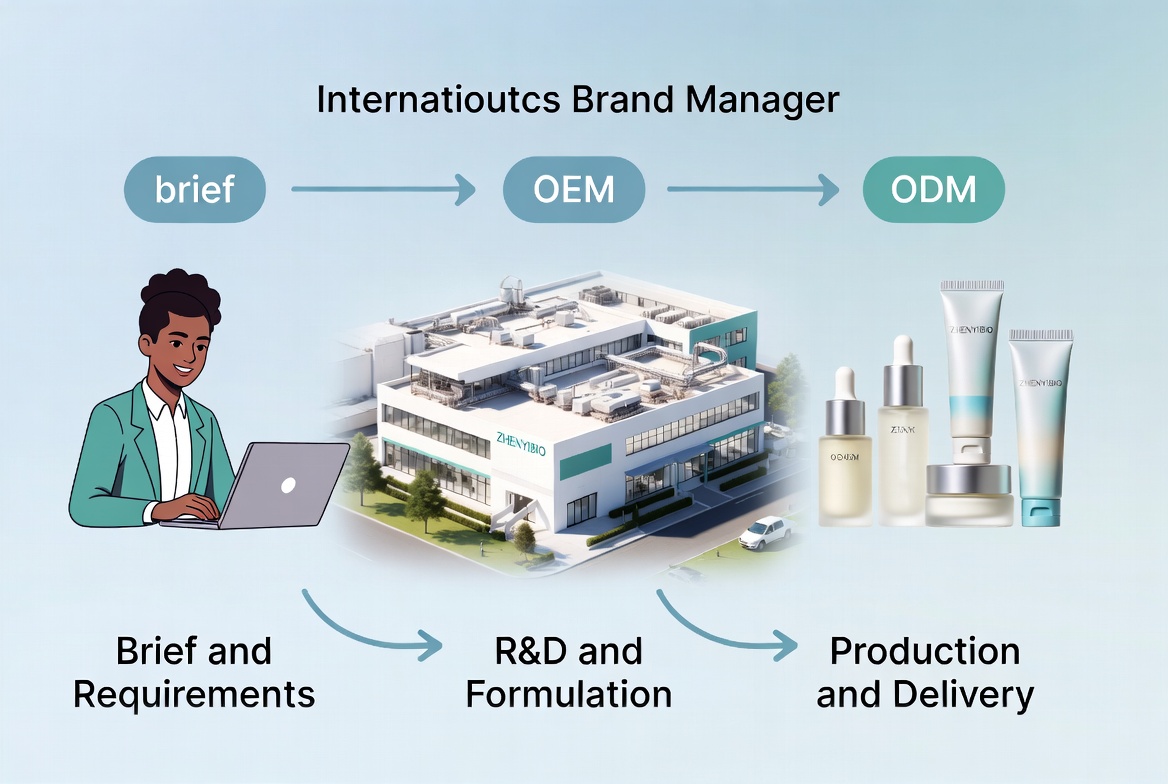
- Flexible OEM/ODM services, from active selection and formulation guidance to finished cosmetic products. [chenlangbio]
- Responsive communication and project‑oriented service, making them suitable for pilot projects, niche brands, and multi‑SKU pipelines.
Conscientia Industrial positions itself as a specialized manufacturer and supplier of plant extracts and cosmetic ingredients, with high‑purity Asiaticoside (CAS 16830‑15‑2) as a key product. The company emphasizes high‑purity extraction and purification technologies and offers factory‑direct pricing for global customers. [linkedin]
Key buyer‑relevant strengths:
- High‑purity Asiaticoside (≥98% HPLC) and tailored specifications from 10%–90% content, suitable for both cost‑sensitive and premium applications. [linkedin]
- Advanced QC, with each batch verified by HPLC and MS and supported by complete documentation (CoA, MSDS, MoA). [linkedin]
- Scalable industrial supply and logistics capable of delivering from lab‑scale to bulk orders via courier, air, or sea. [linkedin]
This profile makes Conscientia Industrial a solid option for buyers prioritizing documentation transparency and high‑purity requirements.
Xi'an and broader Shaanxi province host numerous plant‑extract companies specializing in herbal actives, including Centella asiatica derivatives. These firms benefit from: [industrysourcing]
- Established planting bases and raw material aggregation in the region
- Shared technical expertise in triterpenoid extraction and purification
- Integration with local plant extract industry associations in Shaanxi [chenlangbio]
Such companies often offer:
- Multiple grades of Asiaticoside and Centella extracts
- OEM/ODM support for cosmetic brands targeting "natural active" marketing claims
- Competitive pricing due to cluster effects and logistics advantages
Several Chinese manufacturers and trading‑cum‑manufacturing platforms focus on broad portfolios of cosmetic actives, including Asiaticoside, glutathione, peptides, and hyaluronic acid. For buyers running diverse product lines, these platforms can: [linkedin]
- Consolidate sourcing across multiple active ingredients
- Provide cross‑ingredient formulation guidance (e.g., combining Asiaticoside with HA or peptides)
- Offer unified documentation and consolidated shipping
This type of supplier is ideal for brand owners streamlining supplier management and documentation workflows.
Some Chinese factories position themselves primarily as OEM/ODM service providers, supporting:
- Ingredient selection and benchmarking
- Custom premixes of Asiaticoside with other actives
- Turnkey finished‑product development for private‑label brands
These suppliers are best suited to buyers seeking not just a raw material, but full product solutions—especially for time‑to‑market sensitive projects.
Beyond the above categories, the Chinese market includes:
- Pharmaceutical‑leaning plant‑extract manufacturers focusing on dermatology and wound‑healing applications, where Asiaticoside is used in medical and quasi‑medical formulations. [conscientia-industrial]
- Nutraceutical‑oriented extract producers that integrate Asiaticoside into oral supplements and functional foods, aligning with global herbal supplement growth trends. [verifiedmarketreports]
- Regionally specialized exporters with strong relationships in Europe and North America, experienced in meeting stricter regulatory and documentation expectations. [verifiedmarketreports]
Buyers should evaluate these suppliers using the criteria described above, matching each one's core strengths with project needs.
| Supplier type | Typical strengths | MOQ tendency | Documentation level | OEM/ODM depth |
|---|---|---|---|---|
| R&D‑driven plant‑active specialist (e.g., ZHENYIBIO) | Strong R&D, multiple actives, flexible customization, global exports. (chenlangbio) | Moderate, negotiable | High (CoA, MSDS, ISO, Halal, etc.). (chenlangbio) | Deep OEM/ODM, supports small‑mid brands. (chenlangbio) |
| High‑purity extractor (e.g., Conscientia Industrial) | High‑purity grades, strong analytical QC, factory‑direct pricing. (linkedin) | Often higher for ≥98% | Very high (HPLC/MS, MoA, CoA). (linkedin) | Limited OEM, stronger at raw materials. (linkedin) |
| Cluster‑based Xi’an extract manufacturers | Competitive pricing, cluster synergies, Centella focus. (chenlangbio) | Flexible | Medium‑to‑high, varies by company | Moderate OEM, good for standard SKUs |
| Broad‑portfolio cosmetic raw platforms | One‑stop sourcing for multiple actives. (chenlangbio) | Moderate | Medium‑to‑high | Moderate OEM/ODM |
| OEM/ODM‑centric factories | Turnkey product development, private label focus | Negotiable, project‑based | Medium (improving) | Very deep OEM/ODM, full product solutions |
Professional buyers frequently encounter several recurring issues:
- Variable purity behind generic claims: Some suppliers label products as "high‑purity" without clear HPLC specs or impurity profiles, leading to inconsistent performance in formulations. [linkedin]
- Material substitution or downgrading: In some cases, lower‑grade Centella extracts are supplied instead of declared high‑grade Asiaticoside, which undermines efficacy and branding. [chenlangbio]
- Incomplete documentation: Lack of MoA, stability data, or updated certificates slows down regulatory approvals and can trigger re‑sampling or audits. [linkedin]
- Unclear stability under processing: Without validated stability data (e.g., up to 80 °C), processing conditions may degrade the active, causing product‑to‑product variability. [chenlangbio]
An internal best practice among experienced buyers—often shared informally but rarely published—is to demand full batch‑level HPLC chromatograms for the first 3–5 lots, not just summarized CoA data. By comparing chromatograms across early batches, buyers can: [linkedin]
- Detect consistent minor impurities that may impact color, odor, or stability
- Identify any gradual drift in process control (e.g., changes in minor peaks over time)
- Push suppliers to stabilize processes before scaling up orders
This extra step dramatically reduces the risk of mid‑contract quality surprises and helps align QC expectations.
- Shortlist suppliers with clear Asiaticoside listings, technical specs, and stated purity levels. [conscientia-industrial]
- Check their certification portfolio (ISO 9001, FDA registration, Halal, Kosher, ISO 22000, etc.). [chenlangbio]
- Verify membership in local plant‑extract or cosmetic‑ingredient associations where possible. [chenlangbio]
For each shortlisted supplier:
- Request CoA, MSDS, MoA, and, ideally, representative HPLC chromatograms. [linkedin]
- Ask for small R&D samples (e.g., 100–500 g) of target grades (10–90% or ≥98%) for internal testing. [linkedin]
- Confirm stability data: pH range, temperature tolerance, and recommended storage conditions (cool, dry, protected from light and moisture). [linkedin]
- Assess solubility and compatibility in your base formulations (e.g., serums, creams, gels).
- Evaluate color, odor, and sensory impact at different inclusion rates.
- Test stability under your process conditions, including heating phases and cooling cycles. [chenlangbio]
- Clarify standard packaging (e.g., 1 kg bags, 25 kg fiber drums) and lead times. [linkedin]
- Confirm INCOTERMS, shipping methods (courier vs. air/sea), and documentation for customs. [linkedin]
- Discuss typical MOQs and flexibility for ramping up orders as products scale.
- For strategic products like Asiaticoside, consider framework agreements with price‑review mechanisms tied to raw material trends. [dataintelo]
- Include quality clauses covering re‑testing, non‑conformities, and batch‑replacement procedures.
- Align on communication protocols (e.g., technical contact, sales contact, and response SLAs) to avoid delays during product launches. [chenlangbio]
ZHENYIBIO is particularly well positioned for:
- Small and medium brands needing flexible MOQs, high documentation standards, and strong technical support. [chenlangbio]
- Multi‑ingredient projects, combining Asiaticoside with glutathione, hyaluronic acid, polyglutamic acid, peptides, and liposomes in modern skincare concepts. [chenlangbio]
- OEM/ODM collaborations, from raw‑material supply to finished cosmetic products, leveraging their planting bases and GMP‑standard facilities. [chenlangbio]
For buyers balancing budget and innovation, this makes ZHENYIBIO a pragmatic choice as a "high‑value" rather than purely "low‑cost" partner.
Asiaticoside has evolved into a strategic cosmetic active, and China's plant‑extract clusters offer a broad spectrum of suppliers—from high‑purity specialists to flexible OEM partners—capable of supporting global brands at different stages of growth. By applying structured selection criteria, demanding transparent QC data, and building cooperative long‑term relationships, procurement managers can significantly reduce sourcing risk and unlock more value from their formulations. [verifiedmarketreports]
If you are evaluating potential partners for Asiaticoside or broader natural cosmetic actives, consider shortlisting R&D‑driven, export‑experienced suppliers such as ZHENYIBIO TECHNOLOGY INC for technical validation and pilot projects, then building a multi‑supplier strategy to balance innovation and supply security. [chenlangbio]
Would you like this article adapted into a template format (e.g., reusable for other actives like Madecassoside or Polyglutamic Acid) to streamline your future content production?
Ask the supplier for a scanned copy of their ISO 9001 certificate, including the issuing body and certificate number. Then, visit the certification body's website or contact them directly to confirm status and expiry date using that number. For larger issuing bodies, online databases often allow direct lookup. [chenlangbio]
MOQs for ≥98% Asiaticoside vary by manufacturer but are often higher than standard extracts due to purification costs. As a rule of thumb, many factories start at 1–5 kg per order for high‑purity grades, with more flexibility when combined with other ingredients in a broader order. [linkedin]
Beyond CoA, request batch‑level HPLC chromatograms and perform periodic third‑party testing of incoming batches. Maintain a retained‑sample program and compare new batches against the original qualified lots to detect deviations in purity and impurity profiles. [linkedin]
For cosmetic applications, you will usually need a detailed CoA, MSDS, MoA, and, depending on the jurisdiction, toxicological and stability data. Many Chinese manufacturers experienced in exporting to Europe and the Americas already maintain these dossiers and can provide them upon request. [linkedin]
Evaluate their historical export footprint, participation in industry exhibitions, and production capacity disclosures. Ask for references, examples of long‑term projects, and evidence of multiple production lines or facilities that support scaling without compromising quality. [industrysourcing]
- Global Asiaticoside market reports showing 7.5–7.8% CAGR and a market size projected to almost double from mid‑2020s to early 2030s. [dataintelo]
- Industry trend articles from trade media highlighting growing demand for natural, plant‑derived cosmetic actives and the rise of biotechnological extraction methods. [en.jiemian]


