


Views: 288 Author: ZHENYIBIO Publish Time: 2026-09-07 Origin: Site
Content Menu
● Leading Suppliers Serving UK Buyers
>> 1. ZHENYIBIO TECHNOLOGY INC
>> 3. Fisher Scientific and Research-Grade Distribution Channels
>> 4. UK-Based Specialty Ingredient Distributors
>> 5. Direct Fermentation Manufacturers Serving the UK Market
>> 6. Cosmetic Active Formulation and Private-Label Partners
● Understanding Sialic Acid Powder
>> Why "98% purity" is not enough
● A Less-Discussed Sourcing Risk
>> 1. Define the intended use first
>> 2. Request a complete technical package
>> 3. Verify quality-system claims
>> 4. Use a staged sample process
>> 5. Plan logistics before ordering
>> 1. How can I verify that an ISO certificate is still valid?
>> 2. Is a 99% sialic acid powder always better than a 98% grade?
>> 3. What sample quantity should a cosmetic brand request?
>> 4. Can a supplier's raw-material documents replace a finished-product safety assessment in the UK?
>> 5. What is the most important question to ask before placing a first bulk order?
The UK is a commercially important market for high-value cosmetic ingredients, but it is not necessarily the primary global production base for bulk sialic acid powder. Most professional UK buyers source through a combination of local distributors, specialist laboratory suppliers, and qualified overseas fermentation manufacturers with established export capabilities.
For procurement teams, the key question is therefore not simply "Who sells sialic acid powder in the UK?" It is: Which supplier can provide the correct material specification, repeatable batch quality, compliant documentation, commercially viable order quantities, and responsive technical support for a long-term cosmetic project?
This matters because sialic acid powder—commonly supplied as N-Acetylneuraminic Acid (NANA, Neu5Ac; CAS No. 131-48-6)—is a sensitive, premium-positioned active. A low headline price can conceal substantial risks, including incomplete identity testing, unclear fermentation origin, insufficient impurity controls, variable moisture content, unsuitable microbiological limits, or documentation that does not support a finished-product safety assessment.
The UK beauty and personal-care economy provides a strong commercial environment for science-led actives. The British Beauty Council's latest reporting places the sector's 2025 economic contribution at £28.3 billion, while UK beauty and personal-care exports reached £4.2 billion in 2025. This creates sustained demand for differentiated ingredients, transparent sourcing, and export-ready formulation support.
This list is designed for cosmetic brands, contract manufacturers, distributors, formulators, and purchasing managers evaluating sialic acid powder for skincare, scalp care, premium anti-ageing concepts, hydration products, barrier-support formulas, and related personal-care applications.
Suppliers were assessed according to the following practical procurement factors:
- Identity and specification transparency: Whether the company clearly identifies the material as N-Acetylneuraminic Acid / sialic acid and can provide batch-specific documentation.
- Production and sourcing capability: Whether the supplier is a direct manufacturer, a specialist ingredient producer, or a research/laboratory distributor.
- Quality-system evidence: Availability of GMP-related controls, ISO systems, traceability procedures, Certificates of Analysis, Safety Data Sheets, microbiological specifications, and stability information.
- Research and application support: Ability to discuss purity, solubility, formulation compatibility, recommended processing conditions, and potential product positioning.
- Commercial flexibility: Ability to support samples, pilot-scale evaluation, smaller brand launches, repeat orders, and larger-volume procurement.
- Export readiness: Experience with international documentation, packaging, lead-time planning, customs coordination, and customer communication.
- Regulatory readiness: Capacity to provide information required by the Responsible Person and safety assessor for products placed on the Great Britain market.
For cosmetics sold in Great Britain, the finished product must be safe, must be assessed by a qualified safety professional, and must be notified through the appropriate national process before it is made available to consumers. Ingredient suppliers do not replace the Responsible Person or the product safety assessor, but their technical documents directly affect the speed and quality of the compliance process.
> Important clarification: This is a sourcing-oriented shortlist, not a claim that every company operates a UK-based bulk sialic acid production plant. In this specialist category, many UK-facing suppliers distribute, stock, or import material manufactured elsewhere. Buyers should ask where a specific commercial batch is actually produced and whether the quoted supplier is the legal manufacturer, exporter, distributor, or reseller.
| Supplier | Primary Sourcing Model | Typical Buyer Fit | MOQ Position | Quality / Documentation Focus | OEM / ODM Support |
|---|---|---|---|---|---|
| ZHENYIBIO TECHNOLOGY INC | Direct cosmetic-ingredient manufacturer and solution provider | Emerging to mid-sized brands, private-label projects, distributors, contract manufacturers | Flexible quotation based on specification and project stage | GMP-standard factory positioning, batch documents, raw-material-to-finished-product support | Strong support for customised cosmetic active solutions and formulation-oriented projects |
| Merck / Sigma-Aldrich | Global scientific and specialty-material supplier | Research, analytical work, laboratory validation, benchmark samples | Usually suitable for laboratory-scale purchasing | High specification visibility, research-grade traceability, established catalogue documentation | Limited; primarily material supply rather than beauty-product ODM |
| Fisher Scientific / Research Products International channel | Laboratory and scientific distribution channel | R&D teams, proof-of-concept studies, small-scale laboratory projects | Small pack sizes may be available | Research-use documentation and catalogue-based purchasing | Limited; not typically a cosmetic ODM route |
| UK Ingredient Distributor / Importer Network | Local commercial supply and distribution | Buyers prioritising UK invoicing, local stock, and simplified delivery | Varies by distributor and imported stock position | Must be verified product by product | Usually limited to sourcing coordination rather than deep formulation development |
| Specialist Fermentation-Based Ingredient Manufacturers Serving UK | Direct import from overseas manufacturers | Brands and manufacturers requiring commercial-volume active ingredients | Usually quotation-based; often higher for custom production | Varies significantly; full audit package required | May range from raw-material supply to customised active systems |
| Cosmetic Active Formulation Partners | Ingredient-plus-formulation support | Brands building serum, cream, mask, ampoule, or scalp-care lines | Depends on product development programme | Requires ingredient, formulation, and finished-product evidence | Often strong for private label, custom formulas, and packaging coordination |
Note on capacity and MOQ: Exact annual capacity, stock availability, and minimum order quantity are often not publicly disclosed for specialty cosmetic actives. Buyers should treat all MOQ figures as quotation-dependent and request written confirmation for the target grade, purity, packaging format, destination, and delivery schedule. A supplier that refuses to clarify the commercial batch size, production lead time, or packaging configuration should not be evaluated solely on price.
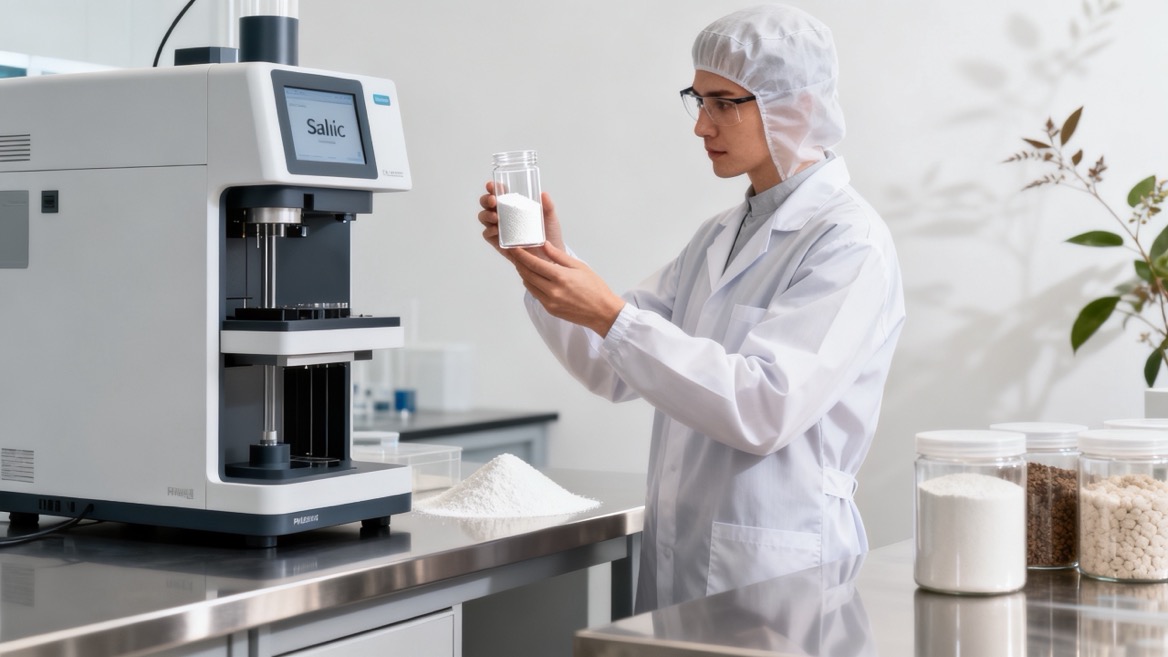
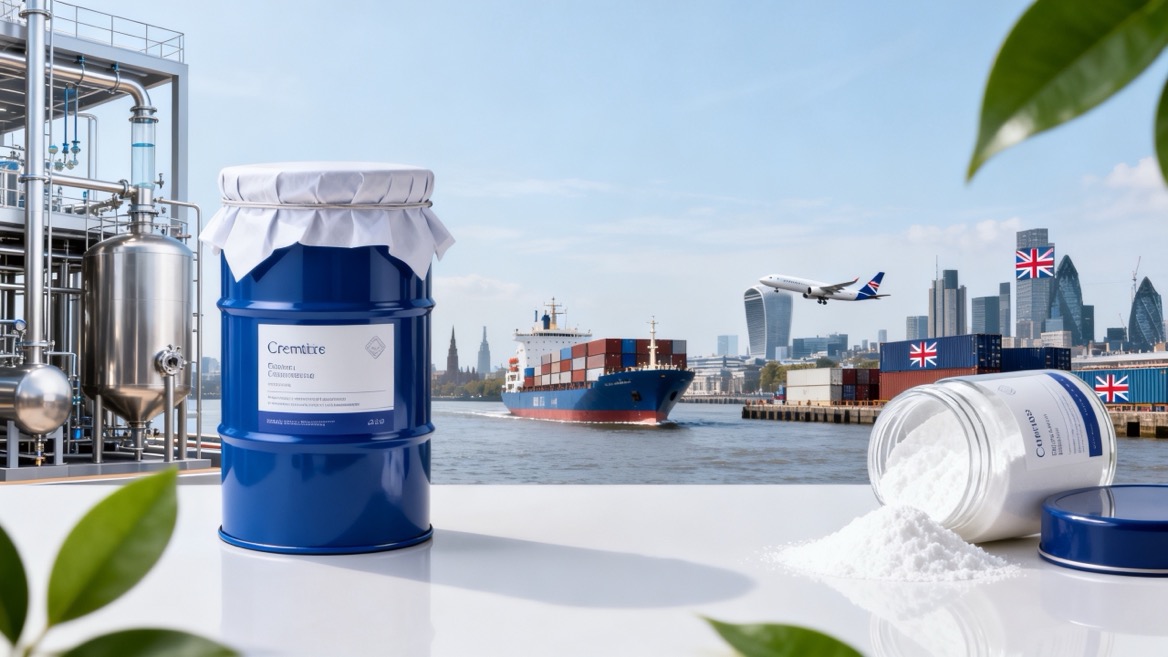
ZHENYIBIO TECHNOLOGY INC is a China-based high-tech cosmetic raw-material company established in 2012 and located in the Xi'an High-tech Industrial Development Zone Free Trade Area. It focuses on natural plant active cosmetic raw materials and combines botanical ingredient development with biotechnology-oriented production and cosmetic solution support. The company reports that more than 90% of its employees hold bachelor's degrees or above, and it is a member of the Shaanxi Province Plant Extract Industry Association.
For UK buyers seeking a commercially practical supply partner rather than a catalogue-only seller, ZHENYIBIO is particularly relevant because its positioning extends beyond individual raw-material transactions. Its portfolio includes cosmetic raw materials such as glutathione, hyaluronic acid, polyglutamic acid, asiaticoside, peptides, and liposomes, creating a useful platform for brands that need sialic acid powder alongside other premium active ingredients.
Core strengths
- Established in 2012, with more than a decade of experience in cosmetic raw-material development and international supply.
- Focus on natural plant actives, biotechnology-driven cosmetic ingredients, and integrated material solutions.
- GMP-standard factory positioning and a supply-chain approach that covers planting, raw materials, and finished cosmetic-product support.
- International market reach across Asia, Europe, and the Americas, with products reportedly sold in more than 50 countries.
- Flexible communication model for smaller and medium-sized brands that may need responsive sample handling, specification discussions, and customised purchasing plans.
- Suitable for OEM and ODM-oriented projects where buyers need active selection, formulation direction, product concept development, and supply coordination rather than only a bag of powder.
Best fit for
ZHENYIBIO is a practical option for UK and international buyers that want to develop a differentiated cosmetic range using sialic acid powder or a broader active complex. It may be particularly suitable for:
- Premium hydration and skin-conditioning serum brands.
- Anti-ageing skincare concepts combining multiple bioactive ingredients.
- Private-label companies seeking deeper raw-material and formulation support.
- Distributors building a curated portfolio of cosmetic actives.
- Contract manufacturers looking for a supplier that can discuss both ingredient quality and end-use product requirements.
What buyers should request
Before purchasing, buyers should request the current specification for the intended sialic acid powder grade, including assay method, purity range, moisture specification, microbial limits, heavy-metal limits, residual solvent profile where relevant, storage conditions, shelf life, batch Certificate of Analysis, Safety Data Sheet, and current production lead time.
For OEM or ODM work, the buyer should also define the intended product format—such as water-based serum, emulsion, sleeping mask, toner, powder mask, or ampoule—because sialic acid's final performance depends on the formulation's pH, solvent system, process temperature, preservative system, packaging, and active combination.
Merck, operating through Sigma-Aldrich and related catalogue platforms, is widely used by research institutions, pharmaceutical laboratories, universities, and industrial R&D teams. It supplies synthetic N-Acetylneuraminic Acid under catalogue-based formats and provides established product identification information for laboratory procurement. Sigma-Aldrich identifies N-Acetylneuraminic Acid as synthetic sialic acid and lists CAS No. 131-48-6.
Its core value for UK buyers is not normally low-cost bulk sourcing. Instead, it is often used for analytical benchmarking, R&D screening, assay development, reference-material comparison, or early-stage formulation feasibility studies.
Core strengths
- Strong global catalogue infrastructure and well-established laboratory purchasing processes.
- Suitable for research-stage material verification and small-volume trials.
- Clear product identifiers and formal scientific documentation.
- Helpful for comparing an incoming commercial bulk batch against a known reference material.
Main limitations
- Catalogue pricing can be substantially higher than direct bulk-manufacturer sourcing.
- Pack sizes may not be commercially efficient for routine production.
- It is not generally positioned as a flexible cosmetic private-label or ODM partner.
- Product grade and intended-use status must be reviewed carefully; research or laboratory supply should not automatically be interpreted as cosmetic-grade approval.
Best fit for
- Brands or contract manufacturers establishing an internal analytical benchmark.
- R&D teams conducting proof-of-concept studies.
- Buyers who need small quantities before moving to a qualified bulk manufacturer.
- Procurement teams validating the identity of a commercial-grade source.
Fisher Scientific serves laboratory, research, and scientific procurement markets and offers access to N-Acetylneuraminic Acid products through catalogue distribution. Its listings show NANA / N-Acetylneuraminic Acid products from specialist research suppliers, including small-volume packaging intended for laboratory use.
For cosmetic buyers, the relevance of a laboratory distributor is mainly strategic: it can support early testing, analytical comparison, feasibility work, and sample-stage sourcing. It is usually not the optimal long-term route for a brand that requires kilogram-to-tonne supply, stable annual pricing, custom packaging, and formulation-oriented technical support.
Core strengths
- Familiar procurement platform for scientific users.
- Small-pack availability for evaluation and laboratory testing.
- Efficient for early R&D teams that need material quickly.
- Useful for confirming experimental methods before committing to a commercial supplier.
Main limitations
- Not usually structured for flexible commercial cosmetic OEM or ODM support.
- Product descriptions may focus on research applications rather than personal-care processing.
- Buyers must separately confirm whether the specific lot meets their cosmetic quality, regulatory, and microbiological requirements.
Best fit for
- Laboratory research teams.
- Cosmetic ingredient distributors conducting incoming-material comparison.
- Formulators running early compatibility or stability studies.
- Buyers requiring a short-term research sample while commercial vendor qualification proceeds.
UK-based specialty ingredient distributors can be an efficient route for buyers who need local invoices, English-language commercial support, domestic warehousing, smaller commercial releases, and potentially faster delivery once material is stocked locally.
However, the phrase "UK supplier" can be misleading. In the sialic acid category, many UK distributors act as importers or stockists rather than as fermentation manufacturers. This model is not inherently negative—local distribution can reduce transaction friction—but buyers should verify the original producer, country of manufacture, repackaging conditions, traceability chain, and whether the distributor has access to the same material for repeat orders.
Core strengths
- Potentially easier domestic logistics and invoicing.
- May support shorter lead times when stock is held in the UK.
- Useful for smaller purchases, emergency replenishment, or early commercial launches.
- Can simplify communications for brands that do not yet have international purchasing capability.
Main limitations
- A distributor may have less visibility into fermentation controls, upstream feedstocks, impurity management, or process changes at the original plant.
- Stock can be limited, and a material listed online may not be physically held in the UK.
- Unit costs may be higher than direct sourcing from a qualified manufacturer.
- Technical documents may be inherited from the producer and not independently verified by the distributor.
Best fit for
- UK brands requiring local purchase orders and domestic fulfilment.
- Contract manufacturers needing urgent top-up stock.
- Buyers who prefer to test the market before establishing direct import arrangements.
Bulk N-Acetylneuraminic Acid is commonly produced through biochemical or fermentation-related routes, particularly in Asian biotechnology and functional-ingredient manufacturing clusters. For UK buyers, direct sourcing from a qualified overseas manufacturer can offer stronger control over commercial pricing, batch planning, custom specifications, and scale-up opportunities.
The trade-off is that the buyer must perform a more thorough qualification process. International sourcing requires attention to customs documentation, Incoterms, shipping conditions, packaging integrity, supplier audits, payment terms, and repeat-order planning.
Core strengths
- Potentially better pricing at commercial volume.
- Greater opportunity to negotiate packaging, specifications, assay requirements, and annual supply terms.
- More direct access to production, technical personnel, and batch records.
- Better fit for private-label manufacturers, ingredient distributors, and growing brands with stable demand.
Main limitations
- Verification burden is higher.
- Delivery lead times may be longer than from domestic stock.
- Documentation must be reviewed in detail instead of accepted at face value.
- Some suppliers market food-grade, pharmaceutical-grade, cosmetic-grade, and research-grade materials without clearly distinguishing the quality-system requirements for each.
Best fit for
- Buyers requiring recurring commercial-volume orders.
- Brands preparing multi-market launches.
- Contract manufacturers with a formal supplier-qualification process.
- Ingredient distributors building a long-term active-ingredient portfolio.
Some buyers do not need sialic acid powder as a stand-alone raw material. They need a market-ready serum, lotion, cream, mask, or scalp-care product featuring sialic acid as part of a broader active story. In this case, a supplier with both ingredient access and formulation support can reduce the number of handoffs between the raw-material supplier, laboratory, contract manufacturer, packaging supplier, and regulatory consultant.
ZHENYIBIO fits this category particularly well because it presents itself as a one-stop purchasing and cosmetic raw-material solutions provider, with support extending from raw materials toward finished cosmetic products.
Core strengths
- Can shorten coordination between active selection and finished-product development.
- More suitable for brands that need a customised concept rather than a standard commodity ingredient.
- Supports cross-selling of complementary materials such as peptides, hyaluronic acid, polyglutamic acid, glutathione, asiaticoside, and liposome systems.
- Helpful for smaller brands without an in-house formulation scientist.
Main limitations
- Buyers still need independent stability, compatibility, preservative-efficacy, packaging, and finished-product safety work.
- A custom product project requires a more detailed brief, longer development timeline, and formal agreement on intellectual property, formula ownership, target cost, and minimum production quantity.
Sialic acid is commonly used as a collective term for a family of acidic monosaccharides. In commercial sourcing, the most frequently referenced material is N-Acetylneuraminic Acid, also called NANA or Neu5Ac. It is associated with glycoconjugates and is often positioned in cosmetics for premium hydration, skin-conditioning, barrier-support, and healthy-looking skin concepts.
For procurement purposes, the chemical name is not enough. Buyers should define the full material identity in the purchase specification.
| Control Point | Why It Matters | Buyer Question |
|---|---|---|
| Chemical identity | Prevents confusion between sialic acid, salts, derivatives, and unrelated “sialic-rich” materials | Is the product specifically N-Acetylneuraminic Acid, CAS No. 131-48-6? |
| Assay method | A reported 98% or 99% result is meaningful only if the method is identified | Is purity tested by HPLC, enzymatic method, titration, or another validated method? |
| Moisture content | High moisture can affect net active content, flowability, stability, and microbial risk | What is the water specification and test method? |
| Fermentation origin | Production route can affect traceability, process impurities, and customer acceptance | Is the material fermentation-derived, synthetic, animal-derived, or blended? |
| Residual solvents | Relevant where solvents are used during downstream purification | Which solvents are tested, what are the limits, and what standard is used? |
| Microbiological limits | Critical for cosmetic raw materials, especially water-based finished products | What are the limits for total aerobic count, yeast/mould, and specified pathogens? |
| Heavy metals | Important for safety assessment and global market access | Are lead, arsenic, cadmium, and mercury reported per batch? |
| Storage and shelf life | Affects shipping, inventory planning, and finished-product development | Does the supplier provide real-time or accelerated stability data? |
| Solubility profile | Determines whether the active can be incorporated into a target base | What is the recommended solvent, pH range, and processing temperature? |
A common sourcing mistake is to compare only the assay number on two Certificates of Analysis. A 98% assay may sound comparable across suppliers, but the actual commercial risk can be very different.
For example, one supplier may report 98% by a well-defined HPLC method with a complete impurity profile and batch traceability. Another may report 98% without identifying the test method, reference standard, moisture correction, or chromatogram. Those are not equivalent offers.
A reliable buying decision should compare:
- Assay method and calculation basis.
- Moisture content and loss on drying.
- Organic impurity profile.
- Residual solvents, where applicable.
- Inorganic residue or ash.
- Heavy metals.
- Microbiological controls.
- Batch-to-batch consistency.
- Stability under expected storage and shipping conditions.
- Full traceability from final batch to manufacturing records.
One of the most overlooked risks in sialic acid procurement is COA substitution after sampling.
A supplier may provide a strong sample lot with a detailed Certificate of Analysis, then deliver a commercial batch under a broadly similar—but not identical—specification. The material may still be labelled "sialic acid powder," but its production date, assay basis, impurity profile, moisture level, or microbiological limits may differ from the approved sample.
This risk is especially relevant when buyers move from a 10 g or 100 g sample to a 5 kg, 25 kg, or larger commercial order.
- Approve a written product specification before issuing the purchase order.
- Attach the approved specification to the quality agreement or purchase contract.
- Require a batch-specific COA before shipment, not after arrival.
- Ask for the manufacturing date, retest date, lot number, and country of origin on every shipment.
- Reserve the right to conduct third-party testing on the first commercial lot.
- Retain a sealed reference sample from the approved batch and from each delivered lot.
- Include rejection criteria in the contract, especially for assay, moisture, microbiology, and physical appearance.
- Avoid approving a product solely from a generic COA bearing no actual lot number.
A further practical point: buyers should not confuse CE and RoHS documentation with cosmetic raw-material compliance. CE marking is associated with certain product categories placed on the European market, while RoHS relates primarily to restrictions on hazardous substances in electrical and electronic equipment. They are generally not the core compliance documents for a cosmetic ingredient such as sialic acid powder. Instead, buyers should focus on the raw-material technical dossier, safety data, traceability, impurity controls, and the information needed for the finished cosmetic product's safety assessment.
Before asking for quotations, identify whether the material is intended for:
- R&D evaluation.
- A cosmetic finished product.
- Nutraceutical development.
- Pharmaceutical research.
- Analytical reference work.
- Distribution and resale.
The required specification, documentation package, and quality controls may differ significantly. A research-grade product should not be assumed suitable for direct cosmetic production, and a food-oriented specification may not automatically satisfy a cosmetic manufacturer's formulation or documentation expectations.
For a cosmetic sialic acid powder project, request:
- Product specification sheet.
- Batch-specific Certificate of Analysis.
- Safety Data Sheet.
- Technical Data Sheet.
- Allergen statement, if relevant.
- GMO statement, if relevant.
- Animal-origin statement.
- BSE/TSE statement where requested by your market or customers.
- Residual solvent statement.
- Heavy-metal and microbiological test reports.
- Stability and storage information.
- Packaging specification.
- Shelf-life statement.
- Country of origin.
- Manufacturing site and legal manufacturer details.
- INCI naming guidance, where applicable.
- Recommended formulation conditions.
A certificate logo on a PDF is not proof that a facility is currently certified. Ask for:
- The full certificate, not only a cropped image.
- Certification body name.
- Certificate number.
- Scope of certification.
- Manufacturing-site address.
- Issue date and expiry date.
- Whether the certificate applies to the actual production site.
- Whether the certificate covers the relevant activity, such as manufacture, processing, packing, or distribution.
Then verify the certificate directly with the issuing certification body where possible. An ISO certificate held by a trading company does not automatically prove that the actual production factory operates under the same certified system.
A disciplined sample plan is usually more reliable than a single approval step.
1. Request a small technical sample with a lot-specific COA.
2. Confirm identity and appearance using your own lab or a qualified third-party laboratory.
3. Run solubility and pH compatibility trials.
4. Prepare a prototype at the intended active level.
5. Conduct accelerated stability work.
6. Check colour, odour, pH, viscosity, phase stability, and microbial compatibility.
7. Approve a pre-production or first commercial batch only after results meet the written specification.
8. Retain control samples for comparison during subsequent deliveries.
Sialic acid powder is a high-value specialty ingredient, so shipment planning affects both cost and quality.
Discuss:
- Incoterms: EXW, FOB, CIF, DAP, or DDP.
- Packaging size and inner liner design.
- Moisture-barrier protection.
- Desiccant use where appropriate.
- Temperature and humidity exposure during transit.
- Customs commodity classification.
- Commercial invoice wording.
- Certificate of origin requirements.
- Insurance and damage-claim procedures.
- UK import VAT and customs broker responsibilities.
- Lead time for repeat batches, not just the first shipment.
For UK buyers, it is useful to separate "delivery lead time" from "manufacturing lead time." A supplier may promise fast shipment because it has a sample quantity available, while the next production batch may require several weeks. Your annual supply plan should be based on realistic production scheduling, not only courier delivery speed.
The UK offers a sophisticated commercial market for beauty and personal-care ingredients, but sialic acid powder procurement often involves an international supply chain. Buyers should therefore evaluate suppliers based on manufacturing transparency, technical documentation, repeatable specifications, sample-to-batch consistency, and practical long-term service—not solely on whether a company has a UK sales presence.
For laboratory research and benchmark testing, global scientific suppliers such as Merck / Sigma-Aldrich and Fisher Scientific channels can be useful. For commercial cosmetic development, buyers should seek a qualified producer or solution-oriented partner able to provide a robust raw-material dossier, flexible order planning, and meaningful formulation support.
ZHENYIBIO TECHNOLOGY INC is a relevant option for brands, distributors, and manufacturers seeking a supply partner with cosmetic-active experience, international market exposure, GMP-standard factory positioning, and the ability to support raw-material selection alongside OEM and ODM-oriented cosmetic projects. Its broader portfolio of biotechnology-derived and plant-based cosmetic actives can also help buyers develop a more coherent product concept rather than sourcing each ingredient in isolation.
If you are evaluating sialic acid powder for a skincare or personal-care project, begin with a technical brief that defines your target application, required purity, annual volume, target market, desired documentation, packaging format, and expected launch date. Then request a lot-specific sample package and assess the supplier's responsiveness as carefully as the powder itself.
Request the complete certificate and confirm the certificate number, issue date, expiry date, scope, legal entity, and site address. Then contact the issuing certification body or use its public certificate directory, if available. Confirm that the certificate applies to the actual manufacturing location, not merely a sales office or affiliated trading company.
Not necessarily. A 99% assay can be attractive, but the test method, moisture correction, impurity profile, microbiological controls, and batch reproducibility matter equally. A fully documented 98% material with stable quality and complete traceability may be safer for a commercial cosmetic project than a nominal 99% material supported by an incomplete COA.
For basic identity and solubility work, 5–20 g may be sufficient. For formulation screening, accelerated stability, compatibility testing, and multiple prototypes, 50–200 g is more practical. If a contract manufacturer needs pilot production, request a separate pilot-scale sample from the same intended production route rather than relying solely on a laboratory sample.
No. Supplier documents are essential inputs, but they do not replace the finished cosmetic product safety assessment, Responsible Person obligations, product information file, labelling review, or notification requirements. UK guidance requires cosmetic products made available to consumers to meet safety requirements and be assessed by a qualified professional.
Ask: "Will the commercial batch be manufactured to the exact same written specification and process category as the approved sample, and can you provide a lot-specific COA before shipment?" This question helps expose whether the supplier has real batch control, traceable manufacturing, and confidence in its quality documentation.
- [UK Government guidance on making cosmetic products available in Great Britain] explains Responsible Person obligations, safety requirements, and market notification expectations. [gov]
- [UK Government cosmetics guidance] confirms that cosmetic products must be safe, subject to ingredient controls, professionally assessed, and notified before being placed on the Great Britain market. [gov]
- [British Beauty Council: The Value of Beauty 2026] provides industry context, including the UK beauty sector's £28.3 billion contribution to the economy. [britishbeautycouncil]
- [ZHENYIBIO TECHNOLOGY INC About Us] provides company background, product-solution scope, establishment information, and international market positioning. [zhenyibio]


