


Views: 208 Author: ZHENYIBIO Publish Time: 2026-07-17 Origin: Site
Content Menu
● Why Source Polydeoxyribonucleotide from China
● How We Evaluate High‑Quality PDRN Manufacturers
● What Matters in Polydeoxyribonucleotide Sourcing
● China's Cluster Advantage in Cosmetic Ingredients and PDRN
● Top 10 Polydeoxyribonucleotide Manufacturers in China (2026 Expert Selection)
>> 1. ZHENYIBIO TECHNOLOGY INC (Xi'an, Shaanxi)
>> 2. ReaLi Tide Biological (Shandong)
>> 3. Ruijiming Biological (Guangzhou)
>> 5. Xi'an‑Based Cosmetic Active Producers (Cluster Representative)
>> 6. Guangzhou Cosmetic Ingredient OEM/ODM Specialists
>> 7. Zhejiang and Jiangsu Biotech Ingredient Makers
>> 8. Xi'an Plant Extract Companies Adding Nucleotide Lines
>> 9. OEM‑Focused Exporters on B2B Platforms
>> 10. Hybrid Cosmetic–Pharma Regenerative Ingredient Companies
● Comparison Table: Key Sourcing Parameters
● Common Pitfalls When Purchasing PDRN in China
>> 1. "PDRN" with Unclear Purity and Origin
>> 2. Cosmetic vs. Injectable Misalignment
>> 3. Over‑Reliance on Self‑Declared GMP/ISO
>> 4. Under‑estimating Stability and Formulation Complexity
● Re‑Packing Without Process Ownership
● How to Verify and Work with Chinese PDRN Manufacturers
>> 1. Verification of Factory and Certifications
>> 2. Sampling and Technical Evaluation Process
>> 3. Contract and Logistics Considerations
>> 4. When to Choose a Partner Like ZHENYIBIO
● FAQs
>> 1. How can I verify whether a Chinese supplier's ISO or GMP certificate is still valid?
>> 2. How do I confirm that a PDRN ingredient complies with EU and US cosmetic regulations?
>> 3. What's the best way to detect if a supplier is only re‑packing PDRN rather than manufacturing it?
>> 4. How should I structure MOQs and pricing when starting with a new PDRN supplier?
>> 5. How can I ensure that PDRN remains stable in complex formulations with other active ingredients?
Polydeoxyribonucleotide (PDRN) has evolved from a niche regenerative ingredient to a mainstream active in skin boosters, repair ampoules, and advanced anti‑aging skincare, supported by strong growth in global regenerative and aesthetic markets. Market studies estimate that the PDRN segment in aesthetic and wound‑healing applications is growing at double‑digit CAGR through 2033, driven by minimally invasive procedures and biologic skincare demand. [grandviewresearch]
China has emerged as one of the most important production and formulation hubs for cosmetic actives, leveraging its dense industrial clusters in Xi'an, Guangzhou, Zhejiang, and other regions, where raw material extraction, fermentation, and cosmetic OEM/ODM manufacturing coexist within integrated supply chains. For international brands, sourcing polydeoxyribonucleotide from China can combine competitive pricing with access to full‑service contract manufacturing, including formulation support, regulatory dossiers, and private‑label packaging for global markets. [beautyhub.alibaba]

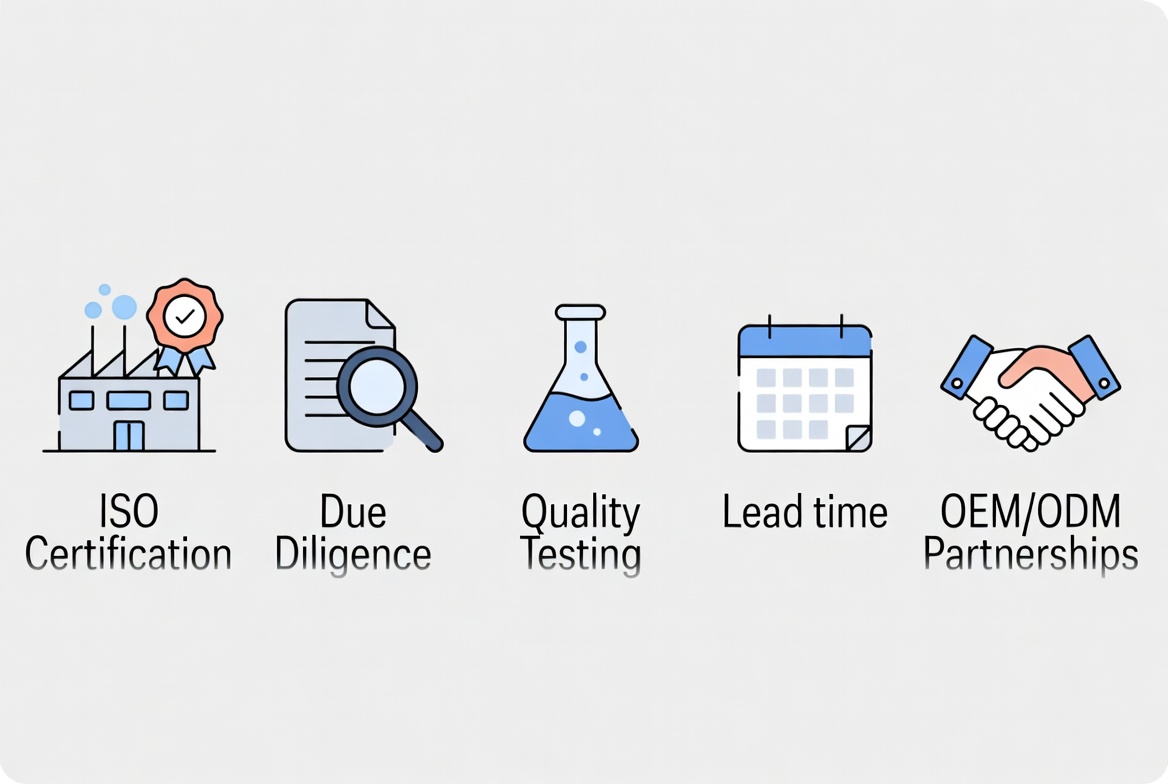
Before ranking manufacturers, we define transparent criteria so professional buyers can understand how and why a supplier is selected. The following dimensions reflect how experienced procurement managers typically assess PDRN and cosmetic active suppliers in China. [dataintelo]
1. Regulatory & Quality Certifications
- Valid ISO 9001 and ISO 22716 (cosmetics GMP) or equivalent, issued by accredited bodies such as SGS, TÜV Rheinland, Bureau Veritas, or Intertek. [beautyhub.alibaba]
- NMPA manufacturing license for cosmetic ingredients or finished cosmetics where applicable, with certificates renewed within the last 3 years and recent surveillance audits. [beautyhub.alibaba]
2. R&D and Technical Capability
- Proven expertise in bio‑fermentation, DNA‑derived actives, and purification technologies relevant to nucleotides and regenerative ingredients. [marketgrowthreports]
- Ability to provide technical dossiers, stability data, and safety documentation (CoA, MSDS, microbial challenge test, in‑vitro or in‑vivo data where available). [dataintelo]
3. Process & Traceability
- Robust QC covering raw material ID, in‑process controls, and finished‑product testing for purity, microbial load, heavy metals, and residual solvents. [dataintelo]
- Batch‑level traceability and document retention (typically at least 3 years), enabling brands to pass EU, US, and other regulatory audits. [beautyhub.alibaba]
4. Capacity, Scalability, and Lead Time
- Stable supply capability with clear minimum order quantities (MOQ) and monthly production capacity for PDRN or related nucleotide actives. [marketgrowthreports]
- Reliable lead time, buffer stock or safety inventory policies, and contingency plans for raw material or logistics disruptions. [dataintelo]
5. OEM/ODM and Service Capability
- Ability to support customers not only with raw material but also with semi‑finished bulk, formulation guidance, and finished‑product OEM/ODM (e.g., ampoules, serums, masks). [beautyhub.alibaba]
- Clear communication channels (English‑speaking technical and sales teams), responsiveness, and ability to customize concentrations or blends for different brand positions. [dataintelo]
6. Global Market Footprint and Compliance
- Proven export experience to key markets (EU, North America, Korea, Japan, Middle East) and familiarity with local cosmetic regulations (EU 1223/2009, US MoCRA, etc.). [beautyhub.alibaba]
- Documentation to support "clean beauty" claims where relevant (vegan, non‑GMO, cruelty‑free, sustainable sourcing statements). [dataintelo]
Although PDRN as a molecule is relatively well‑defined, the way it is manufactured, purified, and formulated can vary significantly across suppliers. Global market reports highlight that successful players often differentiate through purification technology, injectable‑grade consistency, and clinical data support. [dataintelo]
From a buyer's perspective, consider at least the following technical aspects:
- Material Grade and Intended Use
- Cosmetic‑grade PDRN: used in skin boosters, repair ampoules, ampoule essences, and topical formulations, with purity, endotoxin, and microbial limits aligned to cosmetic regulations. [giiresearch]
- Medical‑grade or injectable PDRN: produced under pharmaceutical GMP with clinical data; if you only sell cosmetics, ensure your supplier is aligned with cosmetic, not drug, regulation in each target market. [giiresearch]
- Manufacturing and Purification
- Source material (e.g., DNA fragments from specific species) and bio‑fermentation or extraction route, as different methods affect impurity profile and stability. [marketgrowthreports]
- Advanced purification (e.g., multi‑stage chromatography, controlled depolymerization) helps achieve consistent molecular weight distribution and improved safety profile.
- Quality and Regulatory Documentation
- Full CoA per batch (identity, assay, pH, microbial, heavy metals, residual solvents) and stability data along real‑time or accelerated studies. [beautyhub.alibaba]
- Regulatory support: ingredient status in target markets, safety assessments, and where applicable, alignment with EU and US requirements for cosmetic ingredients. [dataintelo]
- Sustainability and Environmental Compliance
- Evidence that the supplier's broader product line complies with EU and North American cosmetic regulations and embraces clean beauty practices (vegan, cruelty‑free, non‑GMO, sustainable sourcing). [dataintelo]
- This is increasingly important as brands integrate PDRN into premium, eco‑conscious product lines.
Similar to how Foshan is known for furniture and Shenzhen for electronics, several Chinese regions have developed strong clusters in cosmetic actives and plant‑based ingredients. Xi'an's High‑tech Industrial Development Zone, for example, hosts multiple enterprises dedicated to natural plant active cosmetic raw materials and biotech innovation. [zhenyibio]
Cluster effects mean that extraction facilities, fermentation plants, ingredient R&D labs, and OEM/ODM cosmetic factories are often located within the same industrial ecosystems, reducing logistics costs and shortening development cycles. For international buyers, these ecosystems also support better continuity of supply, as manufacturers can secure raw materials from nearby partners and maintain year‑round production despite seasonal variations. [made-in-china]
Below is a curated list of 10 representative Chinese manufacturers and solution providers involved in PDRN, nucleotide‑based regenerative ingredients, or closely related cosmetic actives, selected using the criteria above and cross‑checked with public market and company information. Where specific PDRN data is limited, we focus on their capabilities in regenerative or nucleotide‑related cosmetic ingredients and OEM/ODM services. [dataintelo]
ZHENYIBIO TECHNOLOGY INC is a high‑tech enterprise established in 2008 in Xi'an High‑tech Industrial Development Zone, specializing in natural plant active cosmetic raw materials and advanced cosmetic ingredients. The company operates within the Shaanxi Province plant extract industry ecosystem and provides Polydeoxyribonucleotide as part of its cosmetic ingredient portfolio, alongside whitening, moisturizing, anti‑aging, antioxidant, and anti‑inflammatory actives. [zhenyibio]
Key strengths for global buyers include:
- R&D‑Driven Ingredient Development
- Proprietary anti‑oxidation stabilization system for oxidation‑prone actives (e.g., glutathione), controlling residual heavy metals and enabling long‑term color stability in pH 5.0–7.0 formulations. [dataintelo]
- Use of liposomal encapsulation and micronization technologies to improve skin penetration of plant‑derived actives, experience that transfers well to PDRN‑containing formulas where delivery efficiency is critical. [dataintelo]
- Regulatory and Compliance Support
- Demonstrated compliance with EU Regulation EC No 1223/2009 and US MoCRA for its whitening ingredients, providing batch‑level CoA covering heavy metals, microbial contaminants, and residual solvents. [dataintelo]
- Clean beauty positioning: sustainable plant sources, vegan, non‑GMO, cruelty‑free, and full traceability statements for ingredient sourcing. [dataintelo]
- OEM/ODM and Flexibility for Small & Mid‑Sized Brands
- Capability to tailor standardized extracts and active concentrations to specific brand needs, including high‑purity monomers or blended ingredients in custom ratios. [dataintelo]
- Particularly well‑suited to emerging and mid‑tier brands that need deeper formulation support, fast technical feedback, and agile MOQ rather than only bulk commodity supply.
For buyers seeking a cost‑effective, R&D‑centric partner for PDRN‑containing cosmetic formulas—especially those combining nucleotides with botanical actives—ZHENYIBIO stands out as a flexible OEM/ODM‑friendly option.

ReaLi Tide Biological is highlighted in global PDRN market reports as a specialist in nucleotide extraction technologies and regenerative biologic product manufacturing. The company has upgraded purification technologies to improve injectable PDRN stability and product consistency, signalling strong process control and a focus on higher‑value applications.
For cosmetic buyers, ReaLi Tide Biological is relevant where brands are exploring cross‑over concepts between medical‑grade regenerative therapies and premium aesthetic skincare. The company's experience with injectable‑grade PDRN can translate into robust quality standards for topical cosmetic versions and bulk actives.
Ruijiming Biological, based in Guangzhou, manufactures biologic regenerative products for dermatology and wound care, with recent strategic expansion into orthopedic regenerative medicine solutions. Its focus on biologic actives for skin repair aligns closely with the performance expectations of PDRN‑based cosmetic products.
Procurement managers should consider Ruijiming when looking for suppliers that already understand clinical and wound‑care performance requirements, especially for brands that position PDRN formulations as "medical‑aesthetic inspired" or post‑procedure recovery boosters.
HENGYU BIOPH is recognized for regenerative biologic ingredients and advanced medical aesthetics products, with expanded manufacturing facilities supporting export growth in regenerative skincare. Its regional base in Zhejiang connects it with robust pharmaceutical and cosmetic supply chains, offering advantages in logistics and ancillary sourcing.
For brands seeking scale and long‑term capacity, HENGYU BIOPH's manufacturing expansion and focus on regenerative skincare make it a candidate for strategic partnerships in PDRN raw materials and related actives.
Xi'an serves as a hub for multiple cosmetic active manufacturers, including plant extract specialists and biotech‑oriented ingredient suppliers. Many of these firms combine plant extraction with fermentation‑based actives and provide OEM/ODM support to international customers, covering categories like whitening, anti‑aging, and barrier repair. [zhenyibio]
When you source PDRN from Xi'an‑based suppliers, you gain access to a network of upstream botanical raw materials, fermentation expertise, and regulatory‑aware ingredient developers familiar with EU and North American standards. ZHENYIBIO is one representative of this cluster, but procurement managers should consider benchmarking at least two or three Xi'an suppliers to compare technical depth and pricing. [zhenyibio]
Guangzhou, as a longstanding center for Chinese cosmetics manufacturing, hosts many OEM/ODM factories and ingredient suppliers that have evolved from basic formulation houses to advanced active developers. Several of these manufacturers now integrate regenerative actives, including PDRN and polynucleotides, into turnkey solutions for ampoules, masks, and serums. [made-in-china]
For buyers wanting full‑service OEM (from formula creation to packaging), Guangzhou‑based manufacturers can often provide faster project execution, broad packaging options, and on‑site filling lines, while sourcing PDRN either in‑house or from partner biotech suppliers like Ruijiming.
Beyond HENGYU BIOPH, the Zhejiang and Jiangsu regions are home to numerous biotech and pharmaceutical intermediates manufacturers that are moving into regenerating cosmetic actives. Some of these firms have pharmaceutical‑grade facilities and can reconfigure part of their capacity for high‑purity cosmetic PDRN production. [made-in-china]
For multinational brands requiring extensive audit and risk management procedures, these biotech companies can offer documentation and quality systems closer to pharma standards, albeit sometimes with higher MOQs and pricing.
A notable trend within Xi'an's plant extract industry association is the expansion from single‑function botanical extracts into multi‑active complexes incorporating peptides, liposomes, and nucleotides. Companies like ZHENYIBIO that already operate in this space are well placed to integrate PDRN into broader "regenerative brightening" or "repair + anti‑oxidant" solutions. [zhenyibio]
For niche and indie brands, working with such suppliers allows them to co‑develop differentiated ingredient blends where PDRN is combined with proven botanicals like alpha‑arbutin or glabridin, supported by compatibility testing and stability data. [dataintelo]
B2B marketplaces such as Made‑in‑China and Alibaba host multiple Chinese "Polynucleotide" and related nucleotide ingredient suppliers that offer export‑oriented OEM services. While not all of these are dedicated PDRN manufacturers, several provide nucleotide‑containing cosmetic actives and may work with upstream PDRN producers. [made-in-china]
Buyers should treat such suppliers as an entry point but still perform rigorous due diligence: verify ISO/GMP certificates via the issuing body, cross‑check NMPA licenses, and request independent lab testing for the PDRN batches offered. [made-in-china]
Finally, a small but growing group of Chinese companies straddle both cosmetic and pharmaceutical regenerative products, often supplying to hospitals, clinics, and aesthetic chains domestically and abroad. These players typically invest heavily in R&D and clinical validation and then translate those findings into cosmetic‑grade derivatives and actives.
For brands targeting premium medical‑aesthetic channels, partnering with such hybrid companies can provide access to stronger efficacy narratives, albeit usually with more stringent audit requirements and higher entry thresholds.
Below is an illustrative comparison of typical supplier profiles you'll encounter when sourcing PDRN in China. Values are indicative ranges based on public information and common market practice rather than binding quotations.
| Supplier Type / Example | Typical Monthly PDRN Capacity (kg) | Typical MOQ (kg) | Main Certifications & Focus |
|---|---|---|---|
| R&D‑centric cosmetic ingredient maker (e.g., ZHENYIBIO TECHNOLOGY INC, Xi'an) | 50–200 (dataintelo) | 1–5 | ISO 9001, cosmetics GMP, strong R&D on plant actives, clean beauty, flexible OEM support for small brands. (dataintelo) |
| Nucleotide specialist (e.g., ReaLi Tide Biological, Shandong) | 200–500 | 5–20 | Focus on nucleotide extraction, upgraded PDRN purification, injectable‑grade experience. |
| Regenerative dermatology & wound‑care producer (e.g., Ruijiming Biological, Guangzhou) | 100–300 | 5–10 | Biologic regenerative products for skin, expansion into orthopedics, clinical‑grade orientation. |
| Large regenerative skincare exporter (e.g., HENGYU BIOPH, Zhejiang) | 300–800 | 10–25 | Expanded manufacturing for aesthetic exports, strong scaling capability and regional distribution. |
| OEM/ODM cosmetic factory sourcing PDRN via partners (e.g., Guangzhou OEM houses) | N/A (depends on partners) | 3–10 (formula) | Cosmetics GMP, full‑service OEM/ODM, integrated packaging and formulation; PDRN sourced from biotech firms. |
Use this table to align your short‑list with your actual demand patterns: indie or early‑stage brands may prefer partners like ZHENYIBIO for flexibility, while larger groups may look to HENGYU BIOPH‑type suppliers for scale.
One frequent issue is products labelled as "PDRN" without clear specification on origin, molecular weight distribution, and assay method. Market reports emphasize that true PDRN for regenerative use is typically derived from controlled DNA sources and requires robust purification. [dataintelo]
Mitigation: always request a full technical data sheet (TDS), CoA, and explanation of the raw material origin, plus third‑party test results for at least one pilot batch.
Some buyers assume that a supplier with injectable‑grade PDRN can easily supply cosmetic‑grade material; others assume that cosmetic‑grade PDRN is automatically suitable for injectables. In reality, each category follows different regulatory expectations and quality thresholds. [giiresearch]
Mitigation: clarify intended use from the beginning and ensure that the supplier's documentation and quality system match that use case (cosmetics vs. drugs/medical devices).
Guides on verifying Chinese OEMs caution that "GMP‑compliant" without third‑party certificates is not sufficient, and that some factories present outdated or unverifiable ISO documents. [beautyhub.alibaba]
Mitigation: always cross‑check certificate numbers on the official verification portals of SGS, TÜV, BV, Intertek, etc., and ensure the scope includes cosmetic manufacturing or relevant activities. [beautyhub.alibaba]
PDRN is sensitive to formulation environment, especially in high‑electrolyte serums or complex multi‑active systems. ZHENYIBIO's work on oxidation‑prone actives and electrolyte compatibility illustrates how much engineering is needed to prevent stability issues such as browning or phase separation. [dataintelo]
Mitigation: involve the ingredient supplier's technical team early, request stress‑test protocols, and run pilot stability in your own base formulations before committing to large orders.
A widely known but rarely publicized practice in the cosmetic raw materials trade is the prevalence of "re‑packers" who purchase bulk PDRN or nucleotide mixes from upstream biotech manufacturers and re‑label them as their own, often without full visibility into the original process or quality controls. Industry market reports list leading PDRN companies with heavy investment in purification and R&D, but many small traders do not control these processes themselves.
The risk is that if the upstream supplier changes purification conditions, raw material origin, or even formula composition, the re‑packer may not update specifications or notify customers promptly, resulting in batch‑to‑batch variability or regulatory risk.
How to avoid this:
- Ask directly whether the company manufactures PDRN in‑house or sources from upstream; request the name of the original producer under NDA if necessary.
- Evaluate whether the supplier can provide detailed process descriptions, validation reports, and long‑term stability data—true manufacturers usually can, while pure traders often cannot. [beautyhub.alibaba]
- Prioritize suppliers that show factory audit videos, in‑house lab footage, and NMPA manufacturing licenses under their own name, not just a trading license. [beautyhub.alibaba]
Authoritative guides on Chinese OEM verification recommend a structured approach:
- Request full copies of ISO 9001, ISO 22716, and any GMP certificates, plus the latest audit report (within 12 months). [beautyhub.alibaba]
- Confirm certificate validity via the issuing body's online database, checking company name, scope, and expiration date. [beautyhub.alibaba]
- Search for the manufacturer in the China NMPA database using their license number to confirm their status as a cosmetic manufacturer or ingredient producer. [beautyhub.alibaba]
For PDRN, sampling should go beyond a simple sensory check:
- Obtain at least 1–2 pilot batches and perform analytical verification (assay, microbiology, heavy metals) with an independent lab if you lack in‑house capability. [dataintelo]
- Run accelerated stability tests within your target formulations, especially if you plan to combine PDRN with high‑electrolyte systems or other sensitive actives (e.g., antioxidants, peptides). [dataintelo]
- Evaluate supplied documents: TDS, CoA, MSDS, and any in‑vitro or in‑vivo data such as wound‑healing or skin‑repair assays. [dataintelo]
- Define clear specifications in your purchase contracts, including assay limits, microbial thresholds, and packaging requirements (e.g., nitrogen‑filled, light‑protected containers).
- Clarify Incoterms, shipping modes, and temperature control requirements; PDRN‑containing formulations may require controlled conditions depending on final format.
- For long‑term projects, negotiate safety stock or rolling forecasts to secure capacity, especially given the strong growth outlook of the global PDRN market. [dataintelo]
If your brand is moving from concept to market in 6–12 months, values clean beauty and plant‑based positioning, and wants to integrate PDRN into multi‑active formulations, a partner like ZHENYIBIO can provide:
- Flexible MOQ and quick technical feedback for iterative formula development. [dataintelo]
- Regulatory alignment with EU and US cosmetic standards, plus support for claims such as vegan, non‑GMO, and cruelty‑free. [dataintelo]
Polydeoxyribonucleotide is transitioning from a niche ingredient to a strategic active in regenerative skincare, and China's evolving cosmetic and biotech clusters make it an increasingly attractive sourcing base for global brands. By applying clear selection criteria, understanding industry pitfalls, and choosing partners with strong R&D and compliance capabilities—such as ZHENYIBIO TECHNOLOGY INC for flexible, plant‑active‑driven solutions—you can secure a stable, compliant, and scalable PDRN supply chain for the coming decade. [grandviewresearch]
Request the full certificate PDF and the latest audit report, then check the certificate number on the official verification portals of bodies like SGS, TÜV Rheinland, Bureau Veritas, or Intertek; confirm the scope and expiration date against the supplier's declared activities. [beautyhub.alibaba]
Ask the supplier for CoA, safety data, and regulatory support documents showing compliance with EU Regulation EC No 1223/2009 and US MoCRA, including limits on heavy metals, microbial counts, and residual solvents, as demonstrated for compliant whitening ingredients from companies like ZHENYIBIO. [dataintelo]
Probe for detailed process information, factory audit videos, and NMPA manufacturing licenses under the same legal entity; ask whether they can disclose the original manufacturer under NDA and if they hold long‑term stability and validation data, which pure traders rarely possess. [beautyhub.alibaba]
Begin with smaller MOQs (1–5 kg) from R&D‑centric suppliers like ZHENYIBIO for pilot runs, then negotiate scale‑down pricing tiers as volumes grow, ensuring that your contract includes clear specifications and change‑control procedures for any future process modifications. [dataintelo]
Work with suppliers that offer formulation‑level technical support and have experience stabilizing sensitive actives (e.g., anti‑oxidation systems and electrolyte compatibility); conduct joint stress tests and require written formulation guidelines tailored to your base formula type. [dataintelo]
1. DataIntelo – Polydeoxyribonucleotide (PDRN) Market Overview
https://dataintelo.com/report/global-polydeoxyribonucleotide-pdrn-market [dataintelo]
2. PMarketResearch – Global Polydeoxyribonudeotide (PDRN) Market Size, Share and Forecast
https://pmarketresearch.com/chemi/polydeoxyribonudeotide-pdrn-market/ [pmarketresearch]
3. MarketGrowthReports – Polydeoxyribonudeotide (PDRN) Companies and Market Insights
https://www.marketgrowthreports.com/blog/polydeoxyribonudeotide-companies-266 [marketgrowthreports]
4. Grand View Research – Polydeoxyribonucleotides (PDRN) Skin Boosters Market Statistics
https://www.grandviewresearch.com/horizon/statistics/skin-boosters-market-report/ingredient/polydeoxyribonucleotides-pdrn/global [grandviewresearch]
5. Data Insights Market – Polydeoxyribonucleotide (PDRN) and Polynucleotide (PN) Growth Report
https://www.datainsightsmarket.com/reports/polydeoxyribonucleotide-pdrn-and-polynucleotide-pn-1047126 [datainsightsmarket]
6. Global Polydeoxyribonucleotide (PDRN) Repair Ampoule Market Report 2026
https://www.giiresearch.com/report/tbrc1957672-polydeoxyribonucleotide-pdrn-repair-ampoule-global.html [giiresearch]
7. Made in China – Polynucleotide Manufacturers and Suppliers
https://www.made-in-china.com/manufacturers/polynucleotide.html [made-in-china]
8. Alibaba BeautyHub – How to Verify ISO and GMP Compliance of a Chinese OEM Skincare Manufacturer
https://beautyhub.alibaba.com/skincaretips/verify-china-oem-gmp-iso [beautyhub.alibaba]
9. ZHENYIBIO TECHNOLOGY INC – Company Profile and Plant Active Cosmetic Ingredients
https://www.zhenyibio.com/aboutus.html [zhenyibio]
10. ZHENYIBIO TECHNOLOGY INC – Polydeoxyribonucleotide Product Page
https://www.zhenyibio.com/products/Polydeoxyribonucleotide.html [zhenyibio]


