


Views: 224 Author: ZHENYIBIO Publish Time: 2026-09-26 Origin: Site
Content Menu
● What Are Phytosterols and Lanolin?
>> Phytosterols: Plant-derived barrier-care ingredients
>> Lanolin: A familiar wool-derived emollient
● Phytosterols vs. Lanolin at a Glance
● Which Ingredient Is Better for Cracked Skin?
>> For everyday dryness, start with the desired experience
>> What the barrier study does—and does not—show
>> When neither ingredient is the whole answer
● What Changes for Breastfeeding Nipple Care?
>> Lanolin has more direct research, but results are mixed
>> Phytosterol evidence cannot simply be transferred to nipples
>> Product advice must not replace feeding support
● Three Decisions Brands Often Miss
>> 1. Compare evidence by endpoint, not ingredient reputation
>> 2. Treat plant-based substitution as a formulation project
>> 3. Write claims for the actual market and use
● A Practical Development Checklist for Buyers
● Which Option Should Your Brand Choose?
>> Are phytosterols the same as lanolin?
>> Can phytosterols replace lanolin in a cracked-skin balm?
>> Are phytosterols proven to relieve breastfeeding nipple pain?
>> Is lanolin always better for cracked nipples?
>> Does "plant-based" mean safe to leave on before feeding?
>> Can a balm containing phytosterols be labeled vegan?
>> What should an OEM or ODM brief request first?
For brands developing products for cracked skin, phytosterols vs. lanolin is not simply a plant-versus-animal decision. It is a choice between different ingredient behaviors, evidence bases, textures, and intended uses. Lanolin is an established, wool-derived emollient used in many nipple-care products. Phytosterols are plant-derived lipids with promising skin-barrier research, but substantially less direct evidence in breastfeeding nipple care.
The practical answer: phytosterols can help a brand develop a lanolin-free barrier-care product, but replacing lanolin gram for gram is unlikely to reproduce the same balm. For nipple applications, the finished formula—not the plant origin of one ingredient—must be assessed for tolerance and potential infant exposure.

Phytosterols are sterols found in plants. Cosmetic materials may come from sources such as soy, rapeseed, or other vegetable-oil streams. They can be supplied as free sterols or as sterol esters, and different forms do not necessarily perform alike in a finished product.
For a formulation team, that distinction matters. An ingredient described broadly as "phytosterols" could differ in botanical source, sterol composition, processing, and how readily it can be incorporated into a balm or cream. Its performance should be judged in the proposed formula, not inferred from its name alone.
Phytosterols offer a clear route to a plant-derived ingredient story. They do not, by themselves, establish that an entire product is vegan. Wax, emulsifiers, fragrance components, and processing aids must also be checked against the brand's claim.
Lanolin is obtained from sheep's wool. Its rich, persistent feel has made it a familiar ingredient in products designed to soften dry areas and protect skin from further moisture loss. Highly purified grades have also been used in breastfeeding nipple-care products.
Lanolin's familiarity is an advantage, but its grade matters. A cosmetic ingredient intended for a general hand balm should not automatically be treated as interchangeable with a highly purified material selected for nipple care. Brands need to review the relevant specifications, impurities, and intended-use documentation.
Lanolin is animal-derived, even though obtaining wool does not require slaughter. It therefore does not meet vegan product requirements. For a brand whose brief prioritizes a completely plant-based ingredient list, that point settles one part of the decision—but not the question of whether its alternative will feel or perform the same.
| Decision factor | Phytosterols | Lanolin |
|---|---|---|
| Origin | Plant-derived; source varies by supplier | Derived from sheep's wool |
| Typical formulation role | Skin-conditioning lipid in a designed barrier-care system | Rich emollient and protective component |
| Texture contribution | Depends strongly on sterol form and supporting ingredients | Characteristically dense and persistent |
| Cracked-skin evidence | Human barrier-recovery research exists, but product-specific claims need testing | Long history of use in dry-skin products; performance still depends on the formula |
| Breastfeeding nipple-care evidence | Direct clinical evidence for phytosterol-based products is limited | Studied in breastfeeding trials, with mixed findings |
| Vegan positioning | Possible if the whole formula qualifies | Not suitable for a vegan claim |
| Main development challenge | Achieving a smooth, stable, protective texture | Selecting the right purity grade and assessing individual tolerance |
The key distinction is ingredient evidence versus product evidence. A promising study on one phytosterol formulation cannot prove that every plant-based nipple balm works. Equally, lanolin's long use does not prove that every lanolin product relieves nipple pain.
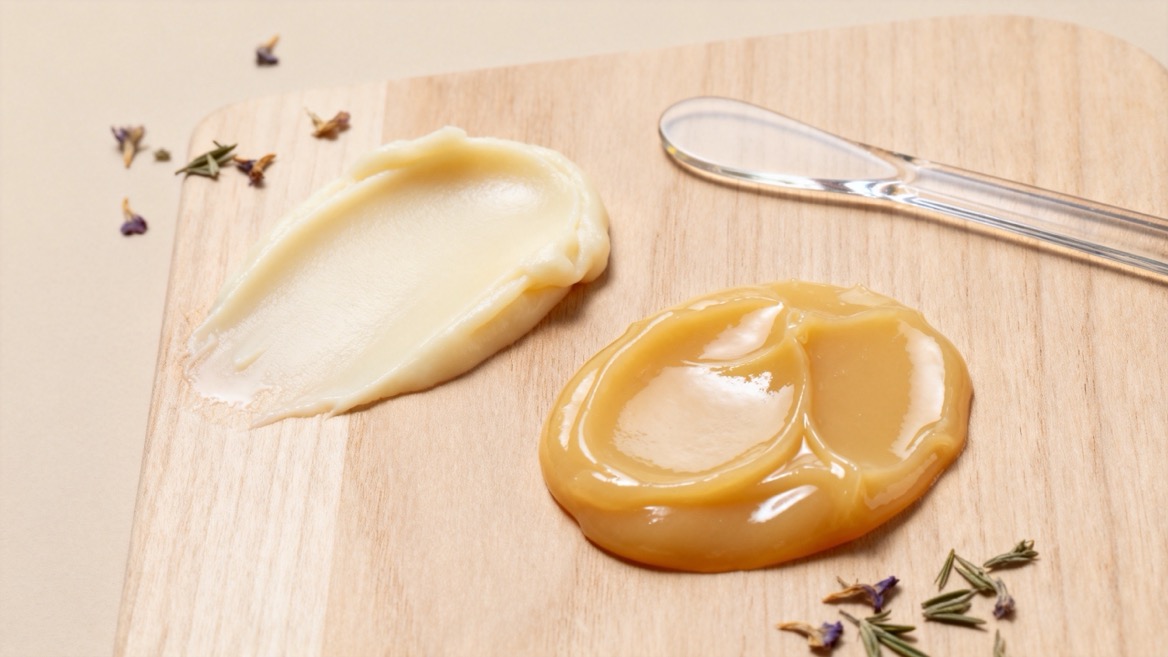
"Cracked skin" can describe anything from rough hands to painful fissures. For a cosmetic balm aimed at dryness, brands should first define the experience they want to deliver: a cushiony coating, easy spread, low greasiness, or long-lasting comfort after application.
Lanolin may suit a brief centered on a dense, protective balm. Its distinctive feel can be useful for small, exposed areas such as hands or heels. A consumer who dislikes tackiness, however, may prefer a lighter product even if a heavier balm feels more protective at first.
Phytosterols suit a different development approach. Rather than asking one ingredient to provide the entire balm structure, a formulator can build a plant-based system around them. The finished texture will depend on the other lipids and structural ingredients selected. That flexibility can help brands create several formats, from a firm balm to a softer cream, but it also makes careful prototype testing essential.
In a human study, a formulation containing soybean phytosterols showed better recovery of experimentally disrupted skin-barrier function than its vehicle control three days after tape stripping. This is useful evidence that a phytosterol-containing formula merits attention in barrier-care development.
The study does not establish that phytosterols heal every type of crack. Tape-stripped skin is not the same as a painful heel fissure or a breastfeeding-related nipple injury. It also does not tell a manufacturer that any concentration, supplier grade, or delivery system will produce the same result.
That gap is important for product copy. "Formulated with plant-derived phytosterols for dry-skin care" communicates ingredient choice. A specific promise to heal fissures would require a different level of evidence and a review of how the product is regulated in its target market.
A balm can reduce discomfort associated with dryness while the cause of repeated damage remains unchanged. Frequent washing, friction, and other ongoing exposures can continue to challenge the skin. In nipple care, repeated trauma during feeding or pumping can likewise continue despite applying a moisturizer.
From a product-development perspective, this means the most useful benchmark is not "Which raw material wins?" It is: Which finished product meets the user's need, within its intended use, with appropriate evidence and instructions?
Lanolin has been studied specifically among breastfeeding women. In a randomized trial involving 186 participants with nipple pain and visible damage, adding lanolin to usual care did not significantly reduce pain compared with usual care alone at the study's principal assessment. More participants using lanolin reported satisfaction with their care.
That result should not be flattened into "lanolin does not work." Research summarized by the LactMed database includes studies with differing outcomes, including trials reporting benefits and others finding no consistent advantage over alternative approaches. A later trial of a product combining lanolin, beeswax, and olive oil reported favorable symptom results, but a multi-ingredient formula cannot establish the effect of lanolin alone.
For buyers, the fair conclusion is narrower: lanolin is an established nipple-care ingredient, while confidence in a particular product's benefit depends on its formulation, study design, and the outcome being measured.
Plant origin may be attractive to breastfeeding consumers seeking a lanolin-free option. Yet the soybean phytosterol barrier study was not a breastfeeding nipple-care trial. It did not assess infant contact during feeding, the experience of application to nipples, or relief of breastfeeding-related pain.
That does not rule out phytosterols. It defines the work still needed. A phytosterol-based nipple balm should be evaluated as a complete, intended-use product, including the rest of its ingredient list and its directions. A "natural" or "plant-based" description cannot substitute for that assessment.
The same caution applies to other appealing plant ingredients. Adding botanical extracts may strengthen a marketing story, but each addition introduces another material to assess for tolerance, quality, and suitability for the use area.
Persistent nipple pain can have more than one cause. A product may offer comfort without resolving repeated mechanical trauma or another underlying problem. For consumers, severe, worsening, or persistent pain—and cracks that do not improve—warrants assessment by a qualified breastfeeding or healthcare professional.
For brands, this is a reason to avoid copy suggesting that a balm alone solves breastfeeding difficulties. Instructions should be clear about intended use and whether product residue needs to be removed before feeding. That direction must come from the assessment of the specific finished formula, not from assumptions about lanolin-free or plant-based products as a category.
A strong comparison separates at least three questions:
- Does the formula improve an instrumental skin-barrier measure?
- Do users report less dryness or discomfort?
- Does it improve breastfeeding-related nipple pain or damage?
Those outcomes are related, but they are not interchangeable. A barrier result on forearm skin cannot be presented as proof of nipple-pain relief. Conversely, satisfaction with a nipple balm is valuable consumer feedback, but it is not the same as a measured difference in pain.
An expert review of supplier claims should therefore ask: What was tested, on whom, against what comparator, and for how long? If a supplier provides only ingredient literature, a brand should not present it as finished-product clinical evidence.
A direct swap is tempting: remove lanolin, add phytosterols, and retain the rest of the formula. In practice, a new prototype may spread differently, feel less protective, or develop an unwanted grainy texture. Phytosterols present solubility and crystallization challenges, so the ingredient grade and the overall lipid system deserve attention.
A more useful brief describes the target experience first: for example, a fragrance-free balm that applies smoothly, remains comfortable between uses, and does not feel excessively sticky. Formulators can then select and test a suitable plant-based structure rather than expecting phytosterols to imitate every property of lanolin by themselves.
This is also where supplier consistency matters. Botanical origin alone says little about batch-to-batch sterol composition or how a material behaves during storage. Specifications and retained-sample checks give a manufacturer more useful information than a broad "natural active" description.
"Moisturizes dry skin" and "treats painful nipple fissures" make different promises. In the United States, claims about treating a condition or affecting the body's structure or function can change how a product is regulated. For products placed on the European Union market, a product safety assessment and supporting product information are part of the applicable cosmetic framework.
The development sequence should therefore begin with the intended claim, not end with it. Decide where the product will be sold, who will use it, and what its label will say. Then design testing and documentation that fit those decisions. This approach is especially important for nipple-care concepts because breastfeeding introduces potential infant contact and a more specific use context than an ordinary hand balm.
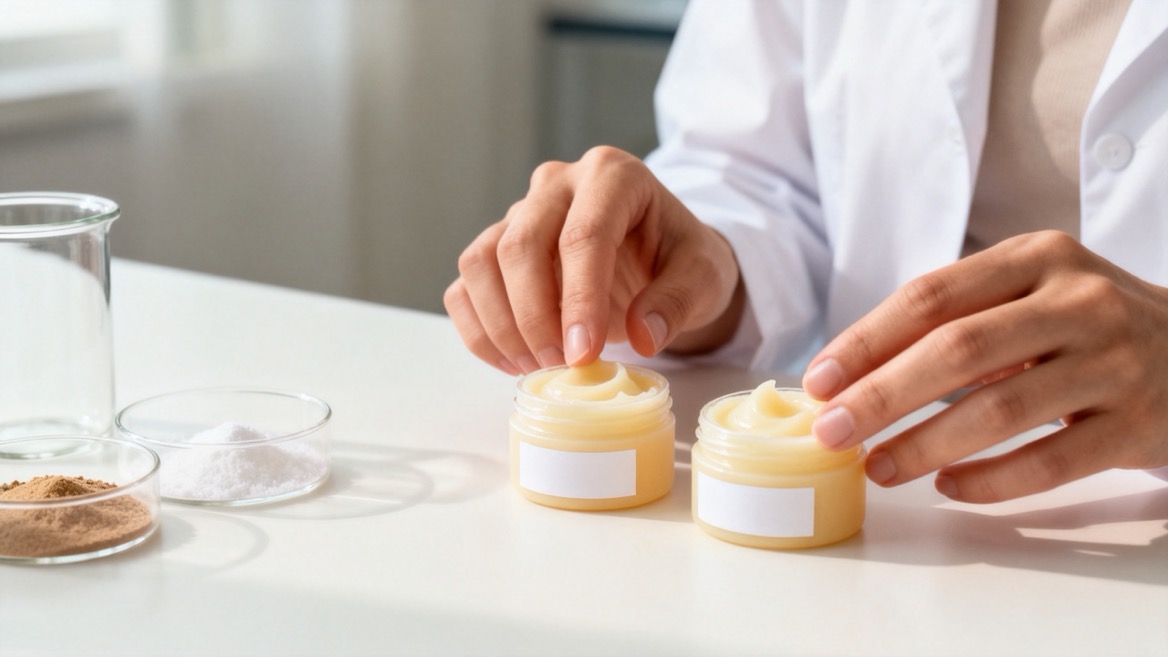
For a brand owner, wholesaler, or contract manufacturer comparing phytosterols with lanolin, the following sequence can make an ingredient discussion more productive:
1. Define the application. Separate a general dry-skin balm from a breastfeeding nipple-care product. The same marketing language and assessment plan may not suit both.
2. Specify the ingredient position. Decide whether "lanolin-free," "vegan," a particular plant source, or a certain texture is a non-negotiable requirement.
3. Request material documentation. Ask for source, composition, relevant specifications, impurity information, and batch consistency for the proposed ingredient grade.
4. Build more than one prototype. Compare spread, residue, sensory feel, appearance, and stability instead of approving the first formula that meets an ingredient list.
5. Test the finished product. Match tolerance and performance assessments to the exact formula, use area, directions, and claim.
6. Review instructions and copy. Make sure a consumer can understand how to use the product, and that the marketed benefit does not exceed the evidence gathered.
Two example briefs illustrate the difference. A vegan hand balm for rough knuckles might prioritize a smooth plant-lipid texture and consumer perception of dryness. A breastfeeding nipple balm requires additional attention to its full composition, use instructions, and potential infant contact. Both could contain phytosterols; they should not be treated as the same project.
Choose lanolin when a wool-derived ingredient fits the brand, a rich balm texture is desirable, and the selected grade and finished product are appropriate for the intended use. Its established place in nipple care is relevant, but specific relief claims still need to reflect the evidence.
Choose phytosterols when plant-derived positioning is central to the brief and the team is prepared to develop a complete alternative lipid system. They are a credible ingredient to investigate for barrier-focused skin care—not a clinically proven one-for-one replacement for lanolin in breastfeeding nipple care.
For either route, make the purchasing decision on the finished formula, documentation, and claim plan. That is more defensible than choosing by origin alone.
Develop a plant-based concept with ZHENYIBIO TECHNOLOGY INC. Share your target market, intended use, texture brief, ingredient exclusions, and proposed claims with our OEM/ODM team. We can use that brief to discuss a phytosterol-led prototype and the finished-product evaluation it would require—without assuming that ingredient origin alone proves performance.
No. Phytosterols are plant-derived sterols or related materials, while lanolin comes from sheep's wool. Both may appear in skin-care formulas, but they differ in origin and how they are typically formulated.
They can form part of a lanolin-free alternative. They should not be treated as a guaranteed one-for-one replacement: the product's protective feel, smoothness, and stability depend on the complete formulation.
Not on the basis of the barrier study discussed here. That study evaluated recovery after experimentally disrupting skin. A breastfeeding nipple-care product needs evidence and safety assessment suited to its own intended use.
No single ingredient can be declared best for every person. Lanolin has more direct breastfeeding research than phytosterols, but trial results differ, and persistent nipple pain may require assessment beyond selecting a topical product.
No. The direction depends on the complete product and its intended-use assessment. Brands should provide explicit instructions rather than assuming that a plant-derived ingredient makes a formula suitable for infant contact.
Potentially, but only if the full formula and relevant sourcing meet the brand's vegan criteria. Phytosterols alone cannot establish that claim for every other ingredient in the product.
Start with the intended market, use area, desired claims, ingredient exclusions, texture target, and documentation needs. Those decisions allow a manufacturer to propose relevant prototypes and an appropriate testing plan.
1. Puglia, C., and Bonina, F. "In vivo spectrophotometric evaluation of skin barrier recovery after topical application of soybean phytosterols." *Journal of Cosmetic Science*, 2008, 59(3), 217–224. [PubMed record]. [pubmed.ncbi.nlm.nih]
2. Cosmetic Ingredient Review Expert Panel. *Safety Assessment of Phytosterols as Used in Cosmetics*. Final report, 2014. [Full report]. [cir-safety]
3. National Library of Medicine. "Lanolin." *Drugs and Lactation Database (LactMed).* [Database entry]. [ncbi.nlm.nih]
4. Jackson, K. T., and Dennis, C.-L. "Lanolin for the treatment of nipple pain in breastfeeding women: a randomized controlled trial." *Maternal & Child Nutrition*, 2017, 13(3), e12357. [Full article]. [onlinelibrary.wiley]
5. Modarresy, S. Z., et al. "Efficacy of a Topical Lanolin–Beeswax–Olive Oil Blend in Preventing Nipple Fissures in Breastfeeding Women: A Randomized Controlled Trial." *Journal of Cosmetic Dermatology*, 2025, 24(9), e70409. [Full article]. [pmc.ncbi.nlm.nih]
6. Academy of Breastfeeding Medicine. *Clinical Protocol #26: Persistent Pain with Breastfeeding*, 2016. [Protocol PDF]. [abm.memberclicks]
7. U.S. Food and Drug Administration. "Cosmetics Labeling Claims." [Agency guidance]. [fda]
8. European Parliament and Council. *Regulation (EC) No 1223/2009 on Cosmetic Products*. [Regulation text]. [eur-lex.europa]
9. Cosmetic Ingredient Review Expert Panel. *Safety Assessment of Lanolin and Lanolin-Derived Ingredients as Used in Cosmetics*. [Assessment document]. [cir-safety]


