


Views: 202 Author: ZHENYIBIO Publish Time: 2026-07-18 Origin: Site
Content Menu
● Understanding the Dermal‑Epidermal Junction in Aging and Sagging Skin
● Matrix‑Rebuilding C‑Glycoside for DEJ Support
>> Mechanism of Action Relevant to the DEJ
>> Clinical and Sensory Outcomes in Sagging Skin
● Triterpenoid Glycoside Driving Repair and Collagen Remodeling
>> Mechanism of Action Related to Repair and Tensile Strength
>> Cosmetic Relevance in Sensitive and Compromised Skin
● Side‑by‑Side Comparison: Pro‑Xylane vs. Asiaticoside for Sagging Skin
● When to Prioritize Each Active
● Integrating Actives into Modern Ingredient Portfolios
● Practical Guidelines for Sagging‑Skin Formulation Design
● DEJ‑Focused Innovation for Global Anti‑Aging Lines
● Frequently Asked Questions (FAQ)
The dermal‑epidermal junction (DEJ) is a critical interface that keeps the epidermis firmly anchored to the dermis and maintains skin resilience, elasticity and structural integrity. As skin ages and begins to sag, this junction thins and weakens, making targeted actives essential in advanced cosmetic formulations. Within this context, Pro‑Xylane and asiaticoside emerge as two high‑value actives, each offering a distinct pathway to support and rebuild the DEJ in sagging skin profiles.
From a formulation and manufacturing perspective, leveraging these actives in modern dermocosmetic systems allows brands to synchronize traditional plant wisdom with cutting‑edge bio‑fermentation and skin‑biology insights. As a high‑tech cosmetic ingredient manufacturer focused on natural plant actives and bio‑fermented solutions, our perspective bridges laboratory data, industrial application and real‑world performance on aging skin.
The dermal‑epidermal junction is more than just a boundary; it is a sophisticated structural and biochemical platform that orchestrates adhesion, signaling and nutrient exchange between the epidermis and dermis. It consists of multiple layers and molecular complexes, including hemidesmosomes, integrins, laminin‑rich basement membrane components and collagens that form a continuous anchoring network.
In young, healthy skin, the DEJ has pronounced undulations, sometimes described as rete ridges, which increase surface area and distribute mechanical stress. As intrinsic aging and environmental exposure progress, these ridges flatten, the DEJ becomes thinner and key components such as collagen IV, collagen VII, collagen XVII and laminin‑332 are reduced. This structural decline manifests as loss of firmness, reduced elasticity, increased fragility and visible sagging, especially around the cheeks, jawline and nasolabial folds.
For advanced cosmetic formulations, rebuilding the DEJ is a strategic priority. The goal is to restore the three‑dimensional architecture of the junction, reinforce anchoring fibrils and improve communication between epidermal keratinocytes and dermal fibroblasts. This is precisely where Pro‑Xylane and asiaticoside offer complementary routes to meaningful skin benefits.

Pro‑Xylane (hydroxypropyl tetrahydropyrantriol) is a specialized C‑glycoside, derived from xylose, designed to interact with the skin's extracellular matrix and promote the synthesis of key structural molecules. Unlike conventional saccharides, the C‑glycosidic bond confers greater stability, allowing this molecule to exert sustained biological effects in topical systems.
Pro‑Xylane has become an important anti‑aging active due to its ability to stimulate matrix components, particularly glycosaminoglycans (GAGs) and proteoglycans, which contribute to dermal volume and hydration. By acting on these molecules, it improves the quality and density of the dermis and supports the DEJ's structural integrity.
In skin models and cosmetic research, Pro‑Xylane has been associated with:
- Stimulation of GAG synthesis, increasing matrix hydration and volume.
- Enhanced deposition of proteoglycans and structural collagens in the dermis.
- Upregulation of key DEJ components, including collagen IV, collagen VII, laminin and perlecan.
This combination of effects helps rebuild the skin's internal scaffold. By supporting collagen IV and laminin in the basement membrane, as well as collagen VII in the anchoring fibrils, Pro‑Xylane contributes to a more robust, better‑anchored junction between epidermis and dermis. For sagging skin profiles, this translates into improved firmness, smoother contours and more resistance to mechanical stress.
Professionally designed formulations containing Pro‑Xylane typically aim for benefits such as:
- Reduction in the appearance of deep wrinkles and folds.
- Improved firmness and elasticity, especially in areas prone to lifting concerns.
- Thicker, more homogeneous skin texture, with better support under the surface.
Users often report a gradual perception of higher density and stronger "support" from within the skin, rather than a purely surface plumping effect. This structural focus makes Pro‑Xylane particularly suitable for mature skin profiles where sagging reflects deeper matrix and junction changes.
Asiaticoside is a triterpenoid glycoside obtained from *Centella asiatica*, a plant long valued in traditional medicine for wound healing and tissue repair. In modern cosmetology, asiaticoside is recognized as one of the principal bioactive constituents responsible for the regenerative and skin‑normalizing properties of Centella extracts.
Unlike Pro‑Xylane, which primarily targets matrix volume and DEJ structuring, asiaticoside is best known for its impact on wound healing, collagen dynamics and vascular support. These processes are highly relevant for skin that is not only sagging but also compromised by micro‑damage, scarring, irritation or post‑procedure stress.
Research on asiaticoside demonstrates several key actions:
- Promotion of fibroblast proliferation, leading to increased collagen production.
- Enhancement of hydroxyproline content and tensile strength, indicating stronger, better‑organized collagen networks.
- Stimulation of angiogenesis, improving blood supply to regenerating tissues.
- Modulation of signaling pathways such as TGF‑β/Smad, which regulate matrix remodeling and scar formation.
These effects support more efficient repair and improved mechanical properties of the skin. While asiaticoside is not typically described as a dedicated DEJ‑targeting molecule, its influence on collagen quality, dermal structure and re‑epithelialization indirectly benefits the junction and the surrounding basement membrane zone.
Asiaticoside‑rich formulas are widely used in:
- Post‑procedure care, where enhanced repair and reduced risk of abnormal scarring are desirable.
- Sensitive and reactive skin profiles, thanks to a balancing, normalizing effect on barrier function.
- Scar‑prone or blemish‑prone skin, where collagen remodeling helps soften irregularities over time.
For sagging skin that also presents a history of micro‑injuries, inflammation or texture irregularities, asiaticoside helps create a more even, resilient canvas on which structural DEJ‑focused actives can perform optimally.
The following table summarizes key differences and complementary strengths between Pro‑Xylane and asiaticoside in the context of rebuilding the DEJ and addressing sagging skin.
| Aspect | Pro‑Xylane | Asiaticoside |
|---|---|---|
| Origin | Synthetic C‑glycoside derived from xylose | Plant‑derived triterpenoid glycoside from Centella asiatica |
| Primary focus | Extracellular matrix and DEJ structuring, GAG stimulation | Wound healing, collagen remodeling, tensile strength and regeneration |
| Key targets | GAGs, proteoglycans, collagen IV, collagen VII, laminin, perlecan | Fibroblasts, collagen I and III, hydroxyproline, angiogenesis pathways |
| Main benefits for sagging skin | Rebuilds internal scaffold, reinforces DEJ, improves firmness and contour | Normalizes damaged tissue, supports repair, improves mechanical strength and texture |
| Typical positioning | Anti‑aging serums and creams targeting lifting, firmness and deep wrinkles | Soothing, reparative and post‑procedure care, scar‑care systems and barrier support |
| Best skin profiles | Mature, sagging, structurally thinned skin with pronounced laxity | Compromised or sensitive skin with scars, micro‑damage or recovery needs |
In practice, Pro‑Xylane is the more structural choice in sagging‑skin formulations, while asiaticoside is the more reparative choice. Used together, they form a powerful combination: one rebuilding the architecture of the skin, the other enhancing recovery and resilience.
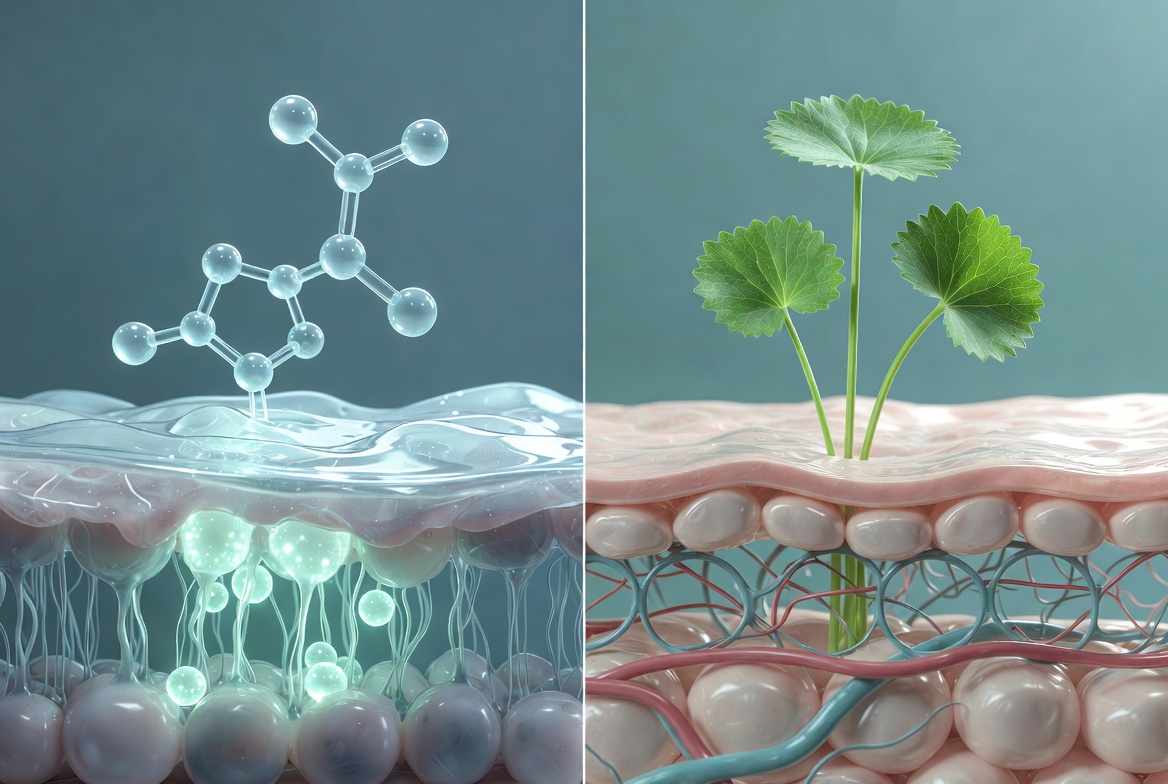
From the viewpoint of a formulation strategist working with global brand partners, the decision to prioritize Pro‑Xylane or asiaticoside depends on the dominant skin narrative.
For profiles characterized by:
- Deep nasolabial folds
- Loss of jawline definition
- Visible DEJ flattening and dermal thinning
a Pro‑Xylane‑centric approach makes sense. The objective is to restore anchoring strength and matrix volume so the skin can better resist gravitational and mechanical forces. The emphasis here is on firmness, lifting effect and internal density.
For profiles characterized by:
- Post‑procedure recovery
- Micro‑scarring and uneven texture
- Visible signs of past inflammation or irritation
asiaticoside takes the lead role. The priority becomes restoring tissue quality, collagen organization and barrier stability, ensuring that the skin has a more uniform and robust baseline before structural anti‑aging measures are layered on top.
In many real‑world scenarios, sagging skin is both structurally weakened and functionally compromised. In such cases, combining Pro‑Xylane and asiaticoside allows formulators to target the DEJ and deeper matrix while simultaneously supporting repair and resilience at the surface.
As a manufacturer specializing in natural plant active ingredients and bio‑fermentation technologies, integrating Pro‑Xylane and asiaticoside into an ingredient portfolio involves both scientific and branding considerations.
Key industry insights include:
- Alignment with modern skin biology: Pro‑Xylane is often presented as a support for the skin's own matrix production, fitting well with narratives around self‑reinforcing skin architecture and long‑term structural care.
- Connection to traditional plant wisdom: Asiaticoside links directly to the historical use of Centella asiatica in wound care and regeneration, which resonates with consumers looking for plant‑based solutions backed by contemporary evidence.
- Integration into multi‑active systems: In advanced formulas, these actives are rarely used alone. They are combined with bio‑fermented hyaluronic acid, peptides, ceramides and antioxidant complexes to create synergistic profiles that cover hydration, structural reinforcement, repair and protection.
For OEM and ODM partners, a clear technical narrative around each active's mechanism, application scenarios and data support is essential. Well‑structured documentation allows brand owners, wholesalers and producers to translate scientific properties into credible claims and consumer‑friendly messaging.

When designing sagging‑skin profiles that incorporate Pro‑Xylane and asiaticoside, several practical guidelines help optimize performance:
1. Define the primary challenge in the target profile
Is the focus predominantly on structural sagging and loss of firmness, or on a combination of sagging with visible micro‑damage, sensitivity or recovery needs?
2. Match actives to the challenge
Use Pro‑Xylane where DEJ flattening and dermal thinning are central. Use asiaticoside where repair, normalization and scar‑related concerns play a major role.
3. Consider layered texture architectures
Lightweight, fast‑absorbing serums rich in Pro‑Xylane can be paired with more emollient or soothing emulsions containing asiaticoside, ensuring both deep action and surface comfort.
4. Mind tolerability for sensitive profiles
Although both actives are generally well tolerated, overall formulations may also include exfoliants or retinoid‑like ingredients. Balancing these with soothing, plant‑based components is crucial to maintain comfort and adherence.
5. Monitor measurable outcomes
Internal testing should track parameters such as firmness, elasticity, wrinkle depth, scar visibility, barrier quality and recovery speed over defined periods, aligning ingredient choice with observable benefits.
These guidelines translate complex mechanism‑of‑action data into practical development rules that can be implemented in R&D pipelines and scaled across product lines.
The future of high‑performance anti‑aging is moving toward precision targeting of the DEJ and deeper matrix rather than relying solely on surface hydration strategies. Actives like Pro‑Xylane and asiaticoside illustrate this shift from generic moisturizing approaches to mechanism‑driven design, where each molecule contributes to a specific part of the skin's structural or reparative network.
For international brand owners, this evolution opens opportunities to create:
- Dedicated sagging‑skin lines centered on DEJ reinforcement.
- Recovery‑focused lines highlighting plant‑derived repair pathways.
- Hybrid systems that respond to the complex reality of mature skin, where structural weakness and micro‑damage often coexist.
By combining traditional botanicals with advanced glycosides and bio‑fermented ingredients, manufacturers can deliver science‑anchored yet sensorially refined solutions to global markets, supporting partners in building differentiated and high‑value product portfolios.
Pro‑Xylane and asiaticoside represent two powerful, complementary strategies for rebuilding and supporting the dermal‑epidermal junction in sagging skin profiles. One focuses on the deep matrix, anchoring fibrils and structural proteins that determine firmness and contour. The other concentrates on repair, collagen quality, tensile strength and the normalization of compromised tissue.
For brands and manufacturers committed to plant‑inspired, high‑tech cosmetic ingredients, these actives offer a robust foundation for next‑generation anti‑aging systems. Through thoughtful formulation design, clear scientific narratives and collaborative development with global partners, it is possible to create dermocosmetic solutions that respond to the complex needs of sagging, mature and recovering skin in a credible and future‑ready way.
1. Can Pro‑Xylane be used on younger skin that shows early signs of sagging?
Yes, Pro‑Xylane can be integrated into routines for early sagging and loss of firmness. In younger profiles, it acts as a preventive and reinforcing agent for the matrix and DEJ, supporting long‑term structural resilience.
2. Is asiaticoside suitable for daily use in sensitive skin that is prone to redness?
Asiaticoside is commonly used in formulations targeting sensitive and reactive skin. When formulated correctly and combined with gentle bases, it can support daily use, helping improve recovery and overall skin comfort.
3. Do Pro‑Xylane and asiaticoside require special delivery systems to be effective?
Both actives benefit from optimized delivery strategies. Pro‑Xylane performs well in water‑rich serums and emulsions, while asiaticoside is often incorporated into Centella‑based complexes or advanced carriers that improve stability and penetration.
4. Can a single product effectively combine Pro‑Xylane and asiaticoside?
Yes, a single product can combine both actives, provided the formulation balances solubility, stability and skin feel. This creates a dual‑action profile addressing both structural sagging and repair, especially useful for mature and compromised skin.
5. How long does it typically take to observe visible benefits from these actives?
Visible improvements depend on concentration, formulation, skin condition and routine consistency. Generally, users may begin to notice changes in firmness, texture and recovery over several weeks of continuous use, with more pronounced benefits appearing over longer periods.
1. Helena Rubinstein – "Pro‑Xylane™: The science behind one of Helena Rubinstein's star actives" https://www.helenarubinstein.com/int/blog/pro-xylane%E2%84%A2--the-science-behind-one-of-helena-rubinstein%E2%80%99s-star-active
2. ScienceInsights – "What Is the Dermal‑Epidermal Junction?" https://scienceinsights.org/what-is-the-dermal-epidermal-junction/
3. TargetMol – "Pro‑xylane | Hydroxypropyl tetrahydropyrantriol" https://www.targetmol.cn/compound/pro-xylane
4. ChemicalBook – "(S)‑Pro‑xylane | 868156‑46‑1" https://www.chemicalbook.com/ChemicalProductProperty_IN_CB46222228.htm
5. Zhberi – "Let's talk about the new star in anti‑aging – Pro‑Xylane (Part…)" https://en.zhberi.com/blog_detail/16.html
6. BenchChem – "Pro‑xylane (Hydroxypropyl Tetrahydropyrantriol)" https://www.benchchem.com/product/b1679797
7. PubMed – "In vitro and in vivo wound healing activity of asiaticoside isolated from Centella asiatica" https://pubmed.ncbi.nlm.nih.gov/10350364/
8. NIH PMC – "Centella asiatica in cosmetology" https://pmc.ncbi.nlm.nih.gov/articles/PMC3834700/
9. NIH PMC – "Centella asiatica and Its Metabolite Asiatic Acid" https://pmc.ncbi.nlm.nih.gov/articles/PMC9966672/
10. Hindawi – "Identification of Major Active Ingredients Responsible for Burn Wound Healing of Centella asiatica Herbs" https://onlinelibrary.wiley.com/doi/10.1155/2012/848093
11. NIH PMC – "Topical Application of Centella asiatica in Wound Healing" https://pmc.ncbi.nlm.nih.gov/articles/PMC11510310/
12. NIH PMC – "A Systematic Review of the Effect of Centella asiatica on Wound Healing" https://pmc.ncbi.nlm.nih.gov/articles/PMC8956065/
13. ScienceDirect – "In vitro and in vivo wound healing studies of methanolic fraction of Centella asiatica extract" https://www.sciencedirect.com/science/article/pii/S0254629916302617
14. Spandidos Publications – "Palmitoyl‑RGD promotes the expression of dermal‑epidermal junction components in HaCaT cells" https://www.spandidos-publications.com/10.3892/mmr.2022.12836?text=fulltext
15. SkinPaths – "Histology of normal skin (module 5): The dermoepidermal junction" https://www.skinpaths.com/en/students-and-residents/Histology-of-normal-skin-module-5-the-dermoepidermal-junction-composition-st
16. University of Valencia – "Anatomy of dermo‑epidermal junction" https://www.uv.es/derma/CLindex/CLdiscromias/eb001/target0.html
17. ZHENYIBIO Technology Inc – Company Profile https://www.zhenyicos.com/company-profile
18. ZHENYIBIO – Pro‑Xylane Powder Product Information https://www.zhenyi-cos.com/anti-aging/pro-xylane.html
19. ZHENYIBIO – Asiaticoside Product Information https://www.zhenyicos.com/anti-inflammatory/asiaticoside.html
20. NIH PMC – "The Importance of Mimicking Dermal‑Epidermal Junction for Skin…" https://pmc.ncbi.nlm.nih.gov/articles/PMC8614934/


