


Views: 217 Author: ZHENYIBIO Publish Time: 2026-09-05 Origin: Site
Content Menu
● Understanding "Fungal Acne" Redness and Discoloration
● Undecylenoyl Glycine: A Sebum-Balancing Daily Care Active
>> Where Undecylenoyl Glycine Fits Best
>> Strengths for Brand Development
● Piroctone Olamine: A More Direct Antifungal-Focused Option
>> Why Piroctone Olamine Is Often Chosen
>> Strengths for Brand Development
● Undecylenoyl Glycine vs. Piroctone Olamine
● How These Ingredients Relate to Redness and Marks
>> Redness: Addressing the Inflammation Cycle
>> Discoloration: Managing Expectations Correctly
● Formulation Blueprint for Global Beauty Brands
>> Option 1: Daily Oil-Balance Cleanser
>> Option 2: Anti-Flake Scalp and Hairline Shampoo
>> Option 3: Lightweight Redness-Comfort Gel Cream
>> Option 4: Post-Workout Body Mist
● Expert Product Development Considerations
>> Build a Tolerance-First Formula
>> Test the Whole Formula, Not Only the Active
● A Practical Routine for Consumers
● The Best Ingredient Strategy
● FAQ
>> Is Undecylenoyl Glycine good for "fungal acne"?
>> Is Piroctone Olamine effective for redness-prone skin?
>> Which is better for oily skin: Undecylenoyl Glycine or Piroctone Olamine?
>> Can Piroctone Olamine remove post-inflammatory dark spots?
>> Can these ingredients be used in a facial cleanser?
>> Can these ingredients be used in a scalp product?
>> Are "fungal acne" and regular acne the same condition?
>> When should a consumer see a dermatologist?
When consumers search for solutions for "fungal acne" related discoloration and redness, they are often describing a complex pattern of oiliness, recurring uniform bumps, itch, irritation, and visible post-inflammatory marks. For beauty brands, this creates a formulation challenge: the product must support a more balanced skin environment while also delivering a pleasant, non-stripping sensory experience.
Undecylenoyl Glycine and Piroctone Olamine are two relevant cosmetic actives for formulations targeting oily, blemish-prone, scalp-prone, and Malassezia-associated skin concerns. However, they should not be treated as interchangeable ingredients. Piroctone Olamine is generally the more direct choice where a formula is designed around visible yeast-associated flaking, redness, and recurrent discomfort. Undecylenoyl Glycine offers a broader sebum-balancing and cleansing-oriented profile that can be particularly valuable in daily maintenance products.
For global beauty brands, wholesalers, and private-label manufacturers, the strongest development approach is usually not to ask which ingredient is "better" in isolation. The better question is: Which ingredient profile best fits the product format, target consumer, claim strategy, skin-feel requirement, and intended use frequency?

"Fungal acne" commonly refers to Malassezia folliculitis, an acne-like follicular condition associated with an overgrowth of Malassezia yeast. It can resemble conventional acne, yet its presentation often differs in ways that matter for product development.
Typical consumer-reported features include:
- Small, similar-looking bumps rather than a mixture of blackheads, whiteheads, and inflammatory pimples
- Itching or burning, which is less typical of standard acne
- Redness around follicles
- Flare-ups in hot, humid conditions
- Increased discomfort after sweating, occlusive clothing, heavy cosmetic layers, or unsuitable oily formulations
- Recurrence on the forehead, hairline, chest, back, shoulders, neck, or upper arms
The visible color changes that follow are not always caused by the yeast itself. They can emerge from the skin's inflammatory response, scratching, barrier disruption, repeated flare-ups, or irritation caused by overly aggressive cleansing. In lighter skin tones, this may appear as prolonged redness. In deeper skin tones, it may be more likely to appear as post-inflammatory hyperpigmentation, uneven tone, or persistent darker marks.
This distinction is essential. A formulation designed only to reduce surface oil without considering irritation, barrier comfort, and visible recovery may not meet consumer expectations. Likewise, a product that focuses solely on soothing redness without addressing the oil-rich conditions that can support Malassezia-related concerns may offer incomplete value.
From an ingredient-development perspective, the goal is to create a routine that supports four formulation priorities:
1. Manage the conditions associated with unwanted microbial proliferation
2. Reduce excess sebum and heavy residue without over-cleansing
3. Support a more comfortable, less visibly irritated skin appearance
4. Encourage consistent use through elegant texture and compatibility with daily routines
Undecylenoyl Glycine is an amino acid-derived ingredient created from glycine and undecylenic-acid-related chemistry. In cosmetic ingredient databases, it is associated with antimicrobial, anti-sebum, anti-seborrheic, cleansing, hair-conditioning, and deodorant functions.
For formulators, its appeal lies in its multifunctional positioning. It can fit naturally into skin-cleansing, scalp-care, body-care, deodorant, and blemish-prone skincare concepts where oil management and sensory performance are both important.
Undecylenoyl Glycine is particularly relevant for products positioned around:
- Oily or combination skin
- Excess sebum and visible shine
- Congested-feeling skin
- Daily cleansing for blemish-prone consumers
- Scalp oiliness and dandruff-support concepts
- Back, chest, and body wash products for active lifestyles
- Freshness-oriented deodorant or body-care products
- Lightweight maintenance care between more targeted treatment steps
Its anti-sebum orientation makes it especially compelling for consumers whose flare-ups appear connected to oiliness, humidity, workout routines, helmets, masks, hats, or dense leave-on products. Because Malassezia is lipid-dependent and commonly associated with sebaceous areas, managing excess oil and residue can be a logical part of a broader product strategy.
For a brand building an everyday "clear skin environment" message, Undecylenoyl Glycine provides several advantages:
- Versatility across categories: It can support face wash, shower gel, scalp cleanser, toner, mist, deodorant, and targeted body-care concepts.
- Sebum-focused positioning: It aligns well with claims around fresh, clean, balanced-looking, less shiny skin.
- Compatible story for botanical and biotechnology brands: Its amino-acid association can support a modern, skin-conscious ingredient narrative.
- Useful in routine-based systems: It can be integrated into regular-use formats rather than reserved only for occasional intervention products.
- Potential value in sensory-led formulas: A well-designed cleanser or lightweight emulsion can help consumers maintain consistency without the harshness often associated with aggressive blemish care.
Undecylenoyl Glycine should not be positioned as a replacement for medical diagnosis or prescription antifungal treatment. While it is recognized for antimicrobial and anti-seborrheic cosmetic functions, the publicly available evidence base for direct clinical treatment of Malassezia folliculitis is less robust than the body of evidence supporting established antifungal agents.
This makes claim discipline crucial. Brands should avoid implying that a cosmetic product can diagnose, cure, or treat a medical condition. A more appropriate communication framework may include phrases such as:
- "For oily, blemish-prone skin"
- "Helps support a balanced-looking complexion"
- "Helps reduce the appearance of excess shine"
- "Designed for skin prone to visible redness and discomfort"
- "Supports a fresh, purified skin feel"
- "Suitable for scalp and body areas prone to oiliness"
In practice, Undecylenoyl Glycine is best viewed as a routine-support active. It can help build the daily conditions that are less favorable to excess oil, visible shine, and recurring discomfort.
Piroctone Olamine is a hydroxamic-acid-based ingredient widely recognized in scalp and skin formulations for its antifungal activity. It is especially familiar in anti-dandruff shampoos, scalp tonics, facial care, and products for oily or seborrheic-prone skin.
Its core relevance to "fungal acne" related redness and discoloration comes from its activity against fungal organisms, including Malassezia-associated concerns. In published dermatology literature on facial seborrheic dermatitis, Piroctone Olamine is described as an ingredient that inhibits ergosterol synthesis, a critical component of most fungal cell membranes.
For brands seeking a more focused solution for yeast-associated skin and scalp concerns, Piroctone Olamine has a clearer functional fit. Literature discussing cosmetic and non-pharmacological care for seborrheic dermatitis notes its use in creams and shampoos, commonly in the 0.5% to 1% range, and reports improvement in visible erythema, scaling, stinging, burning, and itch in relevant product contexts.
This makes it particularly useful when a product brief includes:
- Visible redness in sebaceous areas
- Recurrent scalp flakes and discomfort
- Oily forehead, hairline, chest, or back concerns
- Post-workout scalp and body cleansing
- Seasonal humidity-related flare-up concerns
- Consumers seeking gentle maintenance after professional treatment
- A need for an established anti-dandruff or anti-seborrheic product story
Piroctone Olamine provides a strong technical foundation for targeted product categories:
- Clear antifungal positioning: It is well aligned with Malassezia-related scalp and skin concerns.
- Relevance to redness and irritation: Published reviews report benefits for erythema, scaling, itching, and burning/stinging in facial seborrheic dermatitis contexts.
- Suitable for multiple formats: Shampoo, scalp serum, facial cleanser, cream, gel-cream, body wash, and targeted spray applications are all possible depending on regional regulations and formulation design.
- Strong consumer familiarity in scalp care: Brands can build confidence by connecting facial and body-care concepts to a recognized scalp-care active.
- Useful in maintenance systems: It can be positioned as part of a recurring-care strategy for consumers prone to oily, flaky, or irritated skin patterns.
Piroctone Olamine is not a universal answer to every red bump. Acne vulgaris, bacterial folliculitis, contact dermatitis, rosacea, eczema, allergic reactions, and Malassezia folliculitis can overlap in appearance. A formula containing Piroctone Olamine should therefore not promise that all acne-like lesions will improve.
In addition, the final formula matters as much as the headline active. A high-performing Piroctone Olamine product may disappoint if it is paired with an overly occlusive vehicle, strong fragrance, harsh surfactants, excessive alcohol, or a residue-heavy texture that consumers cannot tolerate.
The active ingredient is only one part of the performance story. Delivery system, pH, solubilization, preservation, sensory profile, packaging, and compatibility with other actives all influence real-world product success.
| Comparison Area | Undecylenoyl Glycine | Piroctone Olamine |
|---|---|---|
| Primary formulation role | Sebum-balancing, antimicrobial, anti-seborrheic, cleansing support | Antifungal-focused care, especially for Malassezia-associated scalp and skin concerns |
| Best brand positioning | Oily, shiny, congested-feeling, daily purification, freshness care | Flaking, visible redness, itch, scalp discomfort, seborrheic-prone care |
| Relevance to “fungal acne” routines | Helpful as a daily environment-support ingredient | More directly relevant where yeast-associated concerns are a central product focus |
| Strongest formats | Cleansers, body washes, scalp cleansers, toners, mists, deodorants | Shampoos, scalp treatments, facial gel-creams, cleansers, targeted body products |
| Role in redness strategy | Indirect support through oil-management and gentle cleansing | More direct relevance through antifungal-focused and symptom-support positioning |
| Role in discoloration strategy | Helps reduce conditions that may contribute to recurring irritation | Helps address recurring yeast-associated triggers, but does not directly erase pigment marks |
| Consumer profile | Oily, active, humid-climate, shine-conscious, daily-care user | Flake-prone, itchy, redness-prone, scalp-and-skin concern user |
| Key formulation concern | Avoid overpromising direct therapeutic effects | Ensure a gentle vehicle and accurate cosmetic claims |
| Recommended product system role | Daily maintenance and oil-control foundation | Targeted active-care or maintenance treatment step |
The practical conclusion is simple: Piroctone Olamine is usually the stronger lead active for a Malassezia-focused concept, while Undecylenoyl Glycine is a highly useful complementary active for oil-control, purification, and daily maintenance.
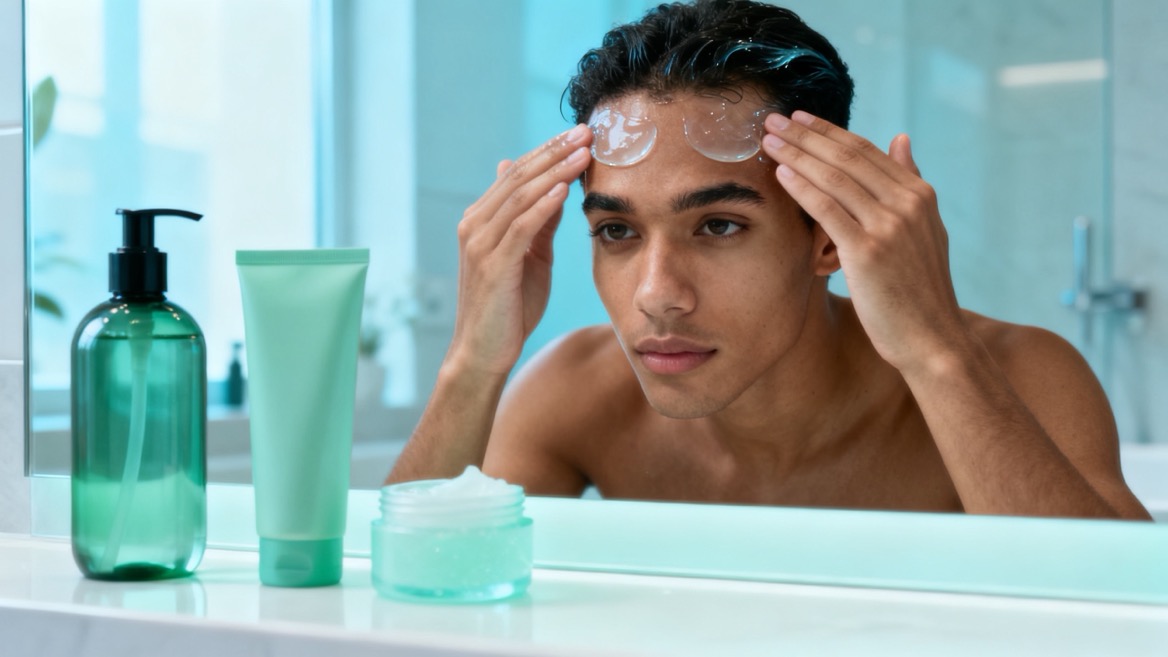
Redness and discoloration require more nuanced communication than "antifungal" or "anti-acne" claims alone.
When Malassezia-associated irritation occurs, redness may be linked to follicular inflammation, barrier disruption, scratching, and irritation from unsuitable products. An ingredient strategy should therefore combine microbial-balance support with barrier-conscious formulation.
Piroctone Olamine may be the more relevant choice for a product intended to help manage visible discomfort associated with yeast-prone skin. However, the complete formula should also consider soothing and barrier-supportive ingredients such as:
- Panthenol
- Ectoin
- Beta-glucan
- Madecassoside
- Oat-derived soothing ingredients
- Allantoin
- Bisabolol
- Sodium hyaluronate
- Ceramide-supportive systems
- Lightweight humectant complexes
The objective is not merely to make the skin feel "dry." It is to create a calmer-looking, more comfortable, less reactive skin appearance.
Post-inflammatory marks can remain after the original bumps or redness improve. Consumers may describe these marks as dark spots, uneven tone, lingering redness, or acne scars, even though these concerns require different approaches.
Neither Undecylenoyl Glycine nor Piroctone Olamine should be framed as a primary pigment-correcting active. Their greatest contribution is indirect: by helping reduce repeated flare-up conditions, they may reduce the ongoing cycle of irritation that can lead to new marks.
For a more complete discoloration-support concept, brands may consider carefully selected complementary ingredients such as:
- Niacinamide
- N-acetyl glucosamine
- Azelaic-acid derivatives where permitted and appropriate
- Licorice-derived ingredients
- Tranexamic-acid-inspired cosmetic positioning where compliant
- Stable vitamin C derivatives
- Gentle exfoliation systems designed for skin tolerance
- Broad-spectrum daily sun protection in the overall routine
A product brief should distinguish between preventing new visible marks through better flare-up control and improving the appearance of existing uneven tone over time. This distinction leads to more credible claims and better consumer satisfaction.
For ZHENYIBIO TECHNOLOGY INC and international partners developing OEM or ODM products, a high-value concept can be built as a multi-step, routine-oriented system rather than a single "miracle" product.
Hero active: Undecylenoyl Glycine
Support actives: Zinc PCA, panthenol, beta-glucan, mild amino-acid surfactant system
Format: Low-foam facial gel cleanser or body wash
Consumer need: Oily skin, humid climates, post-exercise cleansing, chest and back concerns
Brand message: "Purifies excess oil and daily buildup while helping skin feel fresh, comfortable, and balanced."
This is an excellent entry product because it offers broad use, high repurchase potential, and easy integration into existing routines.
Hero active: Piroctone Olamine
Support actives: Zinc PCA, botanical fermentation filtrate, gentle surfactants, soothing humectants
Format: Silicone-light shampoo or scalp-cleansing gel
Consumer need: Flakes, scalp oiliness, hairline bumps, itch-prone scalp, humid-weather discomfort
Brand message: "Helps reduce visible flakes and supports a fresher, more comfortable scalp environment."
Hairline and forehead concerns often overlap in consumer perception. A scalp-first concept can therefore become a powerful cross-category opportunity.
Hero active: Piroctone Olamine
Complementary active: Undecylenoyl Glycine
Support actives: Ectoin, panthenol, beta-glucan, niacinamide, non-oily humectants
Format: Oil-light gel cream or water-based emulsion
Consumer need: Oily but sensitive skin, visible redness, recurring discomfort, humid climates
Brand message: "A lightweight daily gel cream that helps skin look calmer, feel less oily, and maintain a balanced appearance."
Hero active: Undecylenoyl Glycine
Support actives: Piroctone Olamine where appropriate, niacinamide, humectant complex, low-irritation preservation system
Format: Fine-mist body spray for chest, shoulders, back, neck, and helmet-contact areas
Consumer need: Sweat, friction, body oiliness, and active lifestyle concerns
Brand message: "A quick-dry body mist for fresh-feeling skin after heat, sweat, and movement."

A strong ingredient story can fail if the finished formula does not respect how consumers actually use products. From a product-development perspective, several decisions deserve early attention.
For oil-prone and Malassezia-concerned consumers, light textures are often better tolerated than heavy, waxy, or residue-rich systems.
Consider:
- Water-based gels
- Light gel-creams
- Oil-in-water emulsions
- Fast-rinse cleansers
- Low-residue sprays
- Light lotions for body application
Avoid assuming that every natural oil or rich butter belongs in a product marketed to this consumer group. "Natural" does not automatically mean suitable for an oily, flare-prone routine.
Consumers with redness and repeated bumps often overuse exfoliants, scrubs, strong acids, alcohol-heavy toners, or abrasive cleansing tools. Their skin may already be sensitized.
A high-quality formula should prioritize:
- A skin-comfortable pH strategy
- Low irritation potential
- Fragrance-free or low-fragrance options
- Non-stripping surfactants
- Transparent use instructions
- Patch-test guidance
- Clear warnings for broken or severely irritated skin
Finished-product testing should evaluate more than microbial or chemical stability. Brands should consider:
- Stability under heat, cold, and transport conditions
- Compatibility between active ingredients and packaging
- Preservative efficacy
- Sensory testing across target consumer groups
- Patch testing or tolerance studies where appropriate
- Instrumental measurements for sebum, redness appearance, hydration, or flake reduction where suitable
- Consumer-use testing in humid and high-sweat environments
For export-oriented brands, these data points can support more credible product dossiers, distributor presentations, and compliant marketing copy.
A simple, low-friction routine is more likely to be followed consistently than a complicated ten-step protocol.
1. Cleanse gently once or twice daily. Choose a mild cleanser designed for oily or blemish-prone skin. Avoid harsh scrubbing and over-washing.
2. Use a targeted scalp or skin product consistently. A Piroctone Olamine shampoo, cleanser, or lightweight leave-on formula may fit consumers with visible flakes, recurring itch, or redness-prone oil-rich areas.
3. Moisturize with a light texture. Oily skin can still have a compromised barrier. Use a gel or light emulsion rather than skipping moisture altogether.
4. Avoid heavy layering when flare-prone. Thick oils, heavily occlusive products, and long-wear residue can be unsuitable for some individuals, particularly in heat and humidity.
5. Protect skin from ultraviolet exposure. Daily broad-spectrum sunscreen can help reduce the persistence and darkening of post-inflammatory marks.
6. Seek professional evaluation when needed. Painful lesions, spreading eruptions, scarring, significant itch, persistent discoloration, or lack of improvement should be evaluated by a dermatologist.
For brands addressing "fungal acne" related discoloration and redness, Piroctone Olamine should be the primary candidate when the concept centers on Malassezia-associated flaking, itch, visible redness, and scalp-to-face concerns. Its antifungal-focused profile and established use in anti-dandruff and seborrheic-prone applications provide a strong foundation for targeted cosmetic development.
Undecylenoyl Glycine is especially valuable as a daily sebum-balancing and purification-support ingredient. It can strengthen formulas for oily skin, active lifestyles, humid climates, scalp oiliness, and body-care routines where consumers need a fresh, clean feel without aggressive stripping.
The most differentiated opportunity is a two-active product system: use Piroctone Olamine for targeted yeast-associated care and Undecylenoyl Glycine for oil-control, cleansing, and long-term maintenance. When paired with barrier-supportive biotechnology ingredients and evidence-led finished-product testing, this approach can help global brands create more credible, comfortable, and commercially compelling skincare and scalp-care solutions.
ZHENYIBIO TECHNOLOGY INC can support international brands, wholesalers, and manufacturers with customized OEM and ODM development for anti-dandruff shampoos, scalp serums, facial cleansers, lightweight gel creams, body washes, and post-workout sprays designed for oily, redness-prone, and blemish-prone consumer needs. Contact our formulation team to discuss active selection, texture design, stability testing, private-label packaging, and market-specific product positioning.
Undecylenoyl Glycine can be useful in cosmetic formulas for oily, seborrheic-prone, and blemish-prone skin because it is associated with anti-sebum, anti-seborrheic, antimicrobial, and cleansing functions. It is best positioned as a daily maintenance ingredient rather than as a medical treatment for Malassezia folliculitis.
Piroctone Olamine is widely used in scalp and skin products intended for yeast-associated concerns. Published literature on facial seborrheic dermatitis reports that products containing Piroctone Olamine may help reduce visible erythema, flaking, itch, burning, and stinging when appropriately formulated.
Undecylenoyl Glycine is often the more natural fit for daily oil-control and purification products. Piroctone Olamine may be more suitable when oiliness appears alongside flakes, itch, recurrent redness, or other yeast-associated scalp and skin concerns. Combining both can create a more comprehensive solution.
Piroctone Olamine is not primarily a pigment-correcting active. It may help address contributing flare-up conditions, but existing dark marks often require a separate tone-evening strategy, gentle barrier care, and consistent daily sun protection.
Yes. Both ingredients can be considered for facial-cleansing concepts, depending on the desired positioning, regional regulations, formula stability, concentration, sensory target, and claim strategy. A mild surfactant system is essential to avoid worsening dryness or irritation.
Yes. Piroctone Olamine is particularly established in anti-dandruff and scalp-care products. Undecylenoyl Glycine can complement scalp formulas by supporting oil-control, cleansing, freshness, and anti-seborrheic product positioning.
No. "Fungal acne" is a common consumer term for Malassezia folliculitis, which is associated with yeast overgrowth in hair follicles. Conventional acne involves different biological processes and may include comedones such as blackheads and whiteheads. The two conditions can also occur together.
Consumers should seek medical advice if bumps are painful, spreading, persistent, scar-forming, severely itchy, associated with infection symptoms, or unresponsive to a gentle routine. Professional evaluation is also important when the diagnosis is uncertain.
1. Rubenstein, R. M., & Malerich, S. "Malassezia (Pityrosporum) Folliculitis." *Journal of Clinical and Aesthetic Dermatology*, 2014. [Read the full article]
2. Piquero-Casals, J., Hexsel, D., Mir-Bonafé, J. F., & Rozas-Muñoz, E. "Topical Non-Pharmacological Treatment for Facial Seborrheic Dermatitis." *Dermatology and Therapy*, 2019. [Read the full article]
3. Cleveland Clinic. "Fungal Acne: Malassezia Folliculitis." [Read the clinical overview]
4. COSMILE Europe. "Undecylenoyl Glycine: Ingredient Functions and Cosmetic Background." [Read the ingredient profile]
5. Granger, C., Balato, A., Goñi-de-Cerio, F., Garre, A., & Narda, M. "Novel Non-Steroidal Facial Cream Demonstrates Antifungal and Anti-Inflammatory Properties in an Ex Vivo Model for Seborrheic Dermatitis." *Journal of Drugs in Dermatology*. [Read the related evidence]
6. Gupta, A. K., Batra, R., Bluhm, R., Boekhout, T., & Dawson, T. L. "Skin Diseases Associated with Malassezia Species." *Journal of the American Academy of Dermatology*, 2004. [Read the publication record]
7. Durdu, M., Güran, M., & Ilkit, M. "Epidemiological Characteristics of Malassezia Folliculitis and Use of the May-Grünwald-Giemsa Stain to Diagnose the Infection." *Diagnostic Microbiology and Infectious Disease*, 2013. [Read the publication record]


