Home
Home / News
NEWS

News

  • What is coenzyme Q10?
    Coenzyme Q10, also known as ubiquitin ketone, has a simple structure, is ubiquitous in animals and most bacteria, and belongs to the coenzyme family. In the human body, the most common form is coenzyme Q10 or ubiquitin 10, which is fat-soluble, similar to vitamins, and can be synthesized in small amounts by the human body.
    2022-02-21
  • Palmitoyl tripeptide-5 skin benefits
    At the same time, the feature of syn colls that "lose weight without reducing breasts" is unmatched by other slimming methods. syn coll is the main component of connective tissue. In connective tissue, syn coll and polysaccharide proteins are often intertwined into a network structure, which produces a certain mechanical strength.
    2022-02-04
  • The role of syn coll peptide in skin care
    Syn coll is the main component to maintain skin and muscle elasticity. It forms a tight elastic network in the skin, locks in moisture, supports the skin like a scaffold, and makes the skin full of elasticity, moisturizing, delicate and smooth.
    2022-02-02
  • What is syn coll?
    syn colls can directly penetrate into the bottom layer of the skin, and have good reconciliation with surrounding tissues, which can help cells to produce syn coll and promote the normal growth of skin cells. It also has anti-inflammatory and skin rejuvenating properties.
    2022-01-31
  • Syn coll benefits skin whitening
    Syn coll is a kind of repairing syn coll, which mainly locks the moisture of the skin, enhances the elasticity of the skin, prevents skin aging, dryness and relaxation, whitens the skin and delays aging.
    2022-02-07
  • What is lactobionic acid?
    Lactobionic acid refers to the acid generated by the replacement of the terminal hydroxyl group on lactose by a carboxyl group. The structure of lactobionic acid has eight groups of hydroxyl water groups, which can capture a large number of water molecules.
    2022-02-18
  • What is sodium polyglutamate and its main function?
    Sodium polyglutamate, also known as natto gum, is also known as sodium polyglutamate. It is a substance that can dissolve water, and can be converted into microbial polymer materials according to alcohol.
    2022-02-16
  • What is 4 benzyloxy phenol and how to use?
    4 benzyloxy phenol is mainly used as a pharmaceutical intermediate, and is also a topical depigmenting agent, which can decompose melamin in the skin, prevent the formation of melanin in the skin, and restore the skin to a healthy color without destroying melanocytes.
    2022-02-14
  • The main benefits of hydroxytyrosol
    Hydroxytyrosol, antioxidant and free radical scavenging ability is higher than some other synthetic and natural compounds. According to an authoritative data from the Brunswick Laboratory in Boston, Massachusetts, USA.
    2022-02-11
  • Gallic acid (GA) application and production method
    Gallic acid (GA), also known as gallic acid, is a natural product chemical constituent, chemically named 3,4,5-trihydroxybenzoic acid, with high medicinal value. It is widely found in rhubarb, eucalyptus, dogwood, celandine, mulberry, incense tree, tallow, pomegranate, yellow grass, arabian acacia and other plants.
    2022-02-09
  • What are the applications of silk fibroin
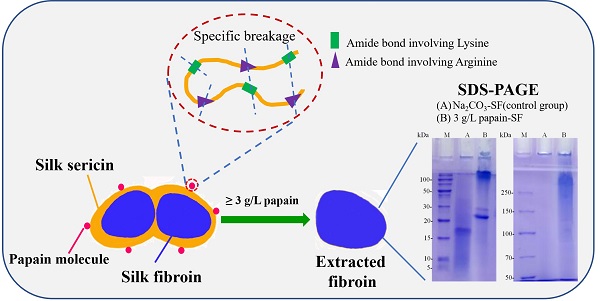
    Silk fibroin contains 18 kinds of amino acids, of which glycine, alanine and serine account for about 85% of the total number of amino acids. chain, about 26 kD) of natural macromolecular fibrin.
    2022-01-28
  • The hexapeptide-10's function and mechanism
    Hexapeptide-10 is a synthetic hexapeptide from the alpha chain. This peptide is thought to be a chemotactic region on laminin that induces cell aggregation. Thereby stimulating basement membrane cell adsorption, growth, migration and regeneration.
    2022-01-24
  • What is the application of 4-Methoxyphenol (HQMME)?
    4-Methoxyphenol (HQMME) is mainly used as polymerization inhibitor, UV inhibitor, dye intermediate for vinyl-type plastic monomer, and for synthesizing edible oil and cosmetic antioxidant BHA, etc.
    2022-01-21
  • The pro-xylane's main function and application notes
    Hydroxypropyl tetrahydropyrantriol,also called Boseine, Pro-xylane. Hydroxypropyl tetrahydropyrantriol is mainly used in cosmetics and skin care products as skin conditioning agent and antioxidant.
    2022-01-17
  • The acetyl octapeptide-3's application and advantage in cosmetical formulas
    Acetyl octapeptide-3 is especially suitable for use in areas with concentrated expression muscles, such as the corners of the eyes, face, forehead, etc. It is used in the eye area, facial care products and various anti-aging products.
    2022-01-14
  • The Copper peptide's mechanism and application
    Copper peptide, also called Blue copper peptide,copper peptide, tripeptide-1 copper, abbreviated as GHK-Cu in English, has a rare structural sequence glycyl-L-histidyl-L-lysine-Cu (II).
    2022-01-10
  • The main function of dragosantol bisabolol in cosmetics
    Bisabolol is a hemiterpenoid extracted from chamomile, with a CAS number of 515-69-5. Alpha-bisabolol at a concentration of 1% can inhibit skin irritation by 54%. It has good antibacterial and anti-inflammatory properties.
    2022-01-07
  • The argireline's mechanism, application and usage
    Argireline, also known as acetyl hexapeptide-8, is an oligopeptide that mimics the N-terminus of SNAP-25 protein and consists of six amino acids. Since akirelin is a scientifically and reasonably designed anti-wrinkle active raw material polypeptide based on modern biochemical mechanism, it has become a popular cosmetic raw material for anti-wrinkle in the world.
    2022-01-03
  • What is the mechanism and application of acetyl pentapeptide-18?
    Acetyl Pentapeptide-18 has a good skin conditioning effect. When used in cosmetics, it can penetrate the dermis and increase collagen. It can effectively reshape the skin, delay the aging process of the skin, and maintain the skin's youthful state.
    2022-01-26
  • Efficacy of vc ethyl ether and its effect on the skin
    Vitamin C ethyl ether is a lipophilic and hydrophilic vitamin C derivative, which not only makes it extremely convenient to use in formulas, but also makes it easier to penetrate the stratum corneum and enter the dermis.
    2022-01-19
  • Total 21 pages  Go to Page
  • Go